

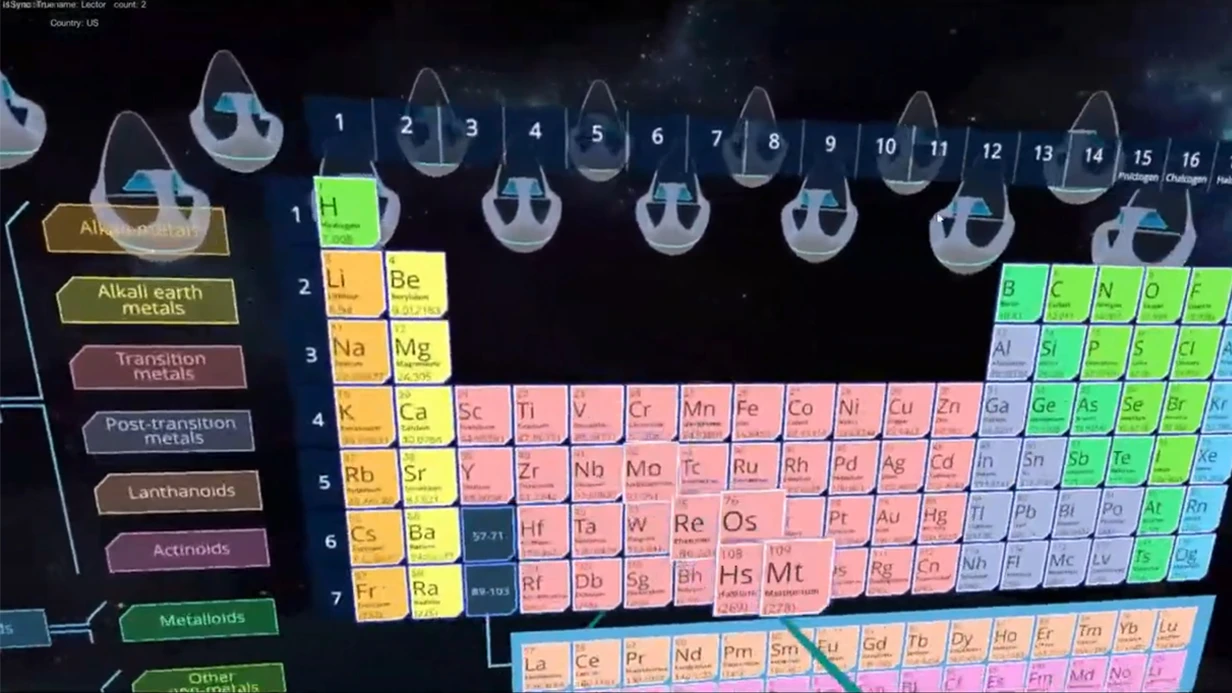


MR Applications for Insurance: Why Clients Switch to Competitors
An insurance product is invisible by nature — it cannot be touched, tried on, or seen in action before purchase. The client buys a promise, and as long as that promise remains abstract, they compare only price. And price can always be found lower — that is the main reason why clients switch to competitors.
Competition in the insurance market is not won with discounts but with clarity. The winner is the one who manages to explain the value of protection faster and more clearly.
This is where mixed reality in insurance comes in: MR applications for insurance put the client into a situation where the policy becomes a solution, not a formality.
Visualization of insurance products using mixed reality shows clients their own home, car, or office with modeled risks. They see exactly what the policy covers and make an informed decision — based on value, not price. This removes objections, shortens the sales cycle, and increases brand trust.
MR applications for insurance deliver what brochures and websites cannot: experience and emotion. Clients remember the company that let them "live through" the situation before an insured event occurs.
This is how mixed reality in insurance becomes a tool for client retention and differentiation from competitors — and this is exactly what we help implement.
What Mixed Reality Gives the Insurance Business: 5 Key Benefits
An insurance product often seems abstract to clients: terms are hard to imagine, and the policy cannot be "touched." Mixed reality transforms it into a tangible object that people can see right in front of them.
This immediately changes brand perception — clients remember the company that explained the complex simply.
The first benefit is insurance brand recognition. When a visitor at an exhibition or in an office sees through an MR application how their risks are covered, it sparks genuine emotion and the desire to share.
Each such experience generates 2–3 social media posts, meaning reach grows without additional advertising spend.
The second is engagement of clients and agents. Instead of a boring booklet, a person gets an interactive journey through the policy: it is clearly visible what will happen when an insured event occurs.
Attention is held far longer, clients remember the terms better, and they feel personally connected to the product.
The third is understandable products. Within a couple of minutes, a buyer understands which risks are covered and which are not. Disputes at the sales stage decrease, trust in the terms grows, and the client makes a purchase decision faster. The result is fewer cancellations after detailed policy review.
The fourth is growth in lead applications. When a person has "lived through" an insured event scenario, it is easier for them to file a claim or leave contact details for a consultation.
The interactive showcase works as an ongoing source of leads, converting curiosity into real clients.
The fifth is savings on agent training. New employees practice conversations with policyholders in a safe digital environment, without risking relationships with real people. The onboarding time shrinks, and the workload on mentors drops noticeably. Together, this delivers measurable savings already on the first cohort of trainees.
MR Application Formats for Insurance to Match the Client's Task
Insurance products are hard to convey with words: the client cannot see the policy until an insured event occurs.
An MR application turns an abstract service into a visual scenario — a person "lives through" the situation in which the insurance kicks in and makes a decision faster.
The format is matched to the task: sales, training, or internal communications. The same product can be shown as an interactive presentation for a client, a training simulator for staff, or a visualization for partners. Here is how it looks in practice.
| MR Application Format | For Whom | What It Delivers to the Business |
|---|---|---|
| Insurance product demonstration | Clients at a meeting or in the office | Shows a risk and payout scenario in 3–5 minutes, reduces time spent explaining terms |
| Interactive presentation for agents | Sales managers | Turns a standard meeting into a memorable showcase, increases conversion to policy issuance |
| Staff training in mixed reality | New employees and call center | Practice handling objections and policy issuance on virtual cases, reach work quality faster |
| Insurance program visualization for partners | Corporate clients and agencies | Clearly shows risk coverage and terms, simplifies partnership negotiations |
The choice of format depends on the channel where you work with the client. For a short meeting, an interactive presentation is enough; for training, a full simulator with action verification is needed.
We select the option for your task and integrate it into your current sales processes — without restructuring the department's work.
How MR Application Development Works: 6 Steps from Brief to Launch
Developing an MR application for an insurance company is not a "black box" but a clear and manageable process. We have broken it down into six steps from brief to launch, so that at every stage you understand what is happening and when you will see the result.
-
Development brief. You tell us about your goals, insurance products, and scenarios: agent training, client demonstrations, loss assessment. We record the requirements, audience, and success criteria.
-
Concept and user scenario. We propose how the MR application will fit into your business processes. We align the logic: what the agent does, what the client sees.
-
Project approval and work plan. You approve the MR development stages, timelines, scope, and areas of responsibility. You receive a transparent plan with checkpoints.
-
Development and interim demonstrations. We build a working prototype that you can see within a few weeks. At each stage you give feedback — this prevents unexpected outcomes.
-
Testing in real-world conditions. We test the application on-site: in the office, during loss settlement, with different lighting conditions. We fix bugs and prepare instructions for employees.
-
Launch and support. We install the application on your headsets and train the team. We provide post-launch support: updates, refinements, and technical assistance.
The result is a working MR solution integrated into your company's processes. We handle all stages of application creation — from brief to ongoing support.
What Is Included in the Delivery of an MR Solution for an Insurance Company
When ordering an MR solution for insurance, it is important to understand: you are getting not just a program, but a ready-made tool that can be used immediately in your work.
We structure the delivery so that your team can quickly start using it and achieve results — increased sales, faster loss assessment, or quicker onboarding of new employees.
The standard package includes everything needed for launch and stable operation:
- Ready-to-use MR application — tailored to your tasks: agent training, visualization of insured events, product demonstrations to clients, or a loss assessment simulator.
- Use-case scenarios — how to apply the application in your business processes, what steps employees take, and where the solution delivers the greatest effect.
- Complete documentation — clear instructions for users and administrators: how to launch, configure, add new objects, or edit scenarios.
- Employee training — hands-on sessions with your team so they can confidently work with the solution without getting distracted by technical issues.
- Technical support after launch — maintenance, updates, and prompt assistance, so the application runs without interruptions.
- Integration with your systems — if needed, we connect the application to your internal database or CRM, and data flows automatically into the right processes.
We are responsible for results from day one. We deliver everything turnkey — with the project, instructions, and support — so you don't have to think about the technical side and can use the MR solution as a working tool for your goals.
Case Study: How an MR Application Cut an Insurance Company's Costs
Insurance company "Vector" approached us with a typical pain point: clients did not understand policy terms, and agents spent 20–30 minutes explaining a single product.
Presentations and brochures failed to hold attention, sales conversion remained low, and training new employees took weeks.
We developed an MR application for the office demonstration area. A client puts on a headset and literally sees how insurance works: risks, coverage limits, typical situations — from a minor car accident to serious damage. Meanwhile, the agent is not lecturing but answering specific questions.
Implementation Results
- Conversion in the demonstration area grew 2.4 times — from 18% to 43% of requests for cost calculation.
- Product familiarization time dropped from 25 to 7 minutes — clients understand what suits them faster.
- Agent training costs were reduced by 60%: instead of two weeks of internship, three days of working with the application are enough.
The department head noted: "Clients have stopped asking the same questions — they see the answers themselves. Agents get up to speed faster and are no longer afraid of complex products.
We plan to roll this solution out to other offices." And this is not an isolated case — we can achieve the same effect for your company.
How to Choose the Right MR Development Format for Your Task?
Choosing a format is not a technology question but a task question: whom you want to engage, what action you need from the user, and what result you consider success.
For insurance companies, MR is most often the right fit — it combines the real world with digital overlays without making the client "retreat" into virtuality.
To avoid overpaying for unnecessary options, ask three questions: where will the person use the application (in the office, at home, in the field), how much time are they willing to spend, and what result should they get — from training to product demonstration. The answers immediately eliminate what is not needed and leave one or two suitable scenarios.
A compact table helps to navigate:
| Project Goal | Audience | Suitable Format | What the Client Gets |
|---|---|---|---|
| Training employees on complex products or services | New agents, sales managers | VR (full immersion) | Fast skill practice without client risk |
| Showing an insurance product "from the inside" at an exhibition or office | Potential clients | AR (overlay on reality) | Live demonstration, easy engagement |
| Collaborative work on an object that has not been built yet | Designers, investors | MR (hybrid of real and digital) | Accurate understanding of the future object before work begins |
| Client support during loss settlement | Client with a mobile phone | MR or AR with remote assistance | Fast claim filing, fewer disputes |
The key is not to pick a format "head-on" but to start from the scenario. For example, training agents in sales is more effective in VR because full immersion isolates from distractions.
For increasing reach at an exhibition, AR is better — it works on the visitor's smartphone without additional equipment.
We help you make this choice: at the brief stage we analyze your goal, audience, and desired result, then propose a specific MR development format with a transparent cost estimate. You get a solution that solves a business problem, not just a "tech demo."
Frequently Asked Questions About Implementing Mixed Reality in a Company
Implementing mixed reality in an insurance company is not an experiment for technology's sake, but a working tool that reduces costs and increases client loyalty.
But before making a decision, it is important to get answers to practical questions: how long the project will take, what equipment is needed, and how new solutions will coexist with your current systems.
Below we have gathered what is most often asked before starting an MR project in insurance. If your question is not here — ask it directly: we will develop a scenario for your tasks and show how it will work in practice.
How long does MR application development take?
A standard pilot project takes 6–10 weeks — from brief to a working prototype you can show to management and key clients. For launching a full solution with integration into your business processes, plan for 3–5 months.
Timelines directly depend on scenario complexity. A simple AR visualization of an insurance product on a client's smartphone is one scope of work. A full MR system for loss settlement inspection integrated into your accounting system is a different scale.
At the start, we fix the exact plan and milestones in the contract — you always see what is happening and when the result will come.
What equipment will be needed and what will it cost?
We select hardware for your task and budget, not "for the sake of technology." For client scenarios, regular smartphones are usually enough — AR features work through the device camera, which 95% of users already have. No additional purchases are required from the company.
For loss settlement and employee training scenarios, professional-grade MR headsets are used. The cost of a single unit is comparable to a good laptop, and training takes no more than one day.
What matters is this: we handle setup, testing, and support, so your employees start working right away instead of figuring out manuals.
How does the MR solution integrate with our current systems?
There will be no "digital revolution" with the dismantling of current processes. The MR application connects to your systems through standard data exchange protocols — 1C, CRM, document management systems, or proprietary solutions. These are dozens of integrations we have already performed in other projects.
Technically, it works like this: the MR scenario receives data about the insured object, augments it with visual layers, and returns the result back to your system. The agent sees the full history of the object, the client sees a clear 3D diagram of their coverage. No additional "manual entry" or document duplication is required.
What happens if the MR application fails in the middle of a workflow?
Your core system does not stop — the MR solution works as an additional layer. If the application is unavailable, the employee continues working in familiar interfaces. It is like mobile banking: if the app does not open, you use the web version.
We provide a support guarantee: technical assistance during the pilot, compatibility updates, and regular stability checks. In 10 years, we have not lost a single client due to failures — because every project undergoes load testing before launch.
Which insurance tasks does MR cover best?
Three areas deliver the fastest results. The first is visual selling: clients see their risks and coverage in 3D instead of abstract tables, and policy purchase conversion grows.
The second is loss settlement: a specialist inspects the object remotely, obtaining accurate measurements and photo documentation without a site visit.
The third is employee training: new agents practice sales scenarios on virtual clients and become job-ready in weeks, not months.
--- **We are ready to show you how this works on your data.** In a 30-minute demonstration, you will see an MR scenario for an insurance product that fits your specifics and receive an implementation plan with concrete timelines and metrics.Discuss an MR Project for Your Business: Get a Cost Estimate and Plan
Implementing mixed reality in insurance is not buying a "box" — it is a project that must fit your processes and budget.
To understand whether an MR solution is right for you, a preliminary analysis is needed: what to automate, which format to choose, how quickly it will pay off. We conduct this consultation without obligations, speaking the language of your task.
Leave a request for MR development — and on the next business day you will receive a document with a project plan and a budget range. This is not a "price-list" commercial offer, but an individual cost estimate calculated after audit of your situation.
What is included in the initial estimate:
- Analysis of your task: which operations or scenarios the MR application will speed up and simplify.
- Format selection: employee training, remote assistance, loss settlement visualization, or client service.
- Timeline assessment: a phased plan from prototype to launch with control points.
- Preliminary cost: investment range and what it depends on — with no hidden charges.
- Pilot recommendations: how to run a small test and verify the effect before full implementation.
After the discussion, you will get a clear picture: what we will do, at what cost, in what sequence, and what result will be measurable in your business metrics. Then you decide — whether to proceed with development or leave the project for a better time. No pressure, only facts and options.
To get a cost estimate and MR project plan, fill out a short form or message us in a messenger. We will respond within one business day, ask follow-up questions, and prepare a proposal tailored to your task.