



Existing Shipbuilding Technologies Can't Keep Up with Market Demands
Shipbuilding is one of the most complex industries, where every stage — from design to launch — demands high precision and flawless coordination.
Traditional shipbuilding technologies (drawings, flat schematics, physical mock-ups) can't keep up with market demands: customers want faster, cheaper, and with guaranteed results. As a result, shipyards lose competitive advantages, face downtime, forced rework, and rising costs.
These problems in shipbuilding are especially acute in ship repair. When a vessel is already in dry dock, every hour of downtime is expensive, and a planning error leads to delivery delays and a damaged reputation.
Specialists have to rely on experience and limited information — instead of seeing the full picture before work even begins.
Staff training is just as difficult: old simulators don't reflect real conditions, and hands-on sessions on a live facility pose risks to both people and equipment.
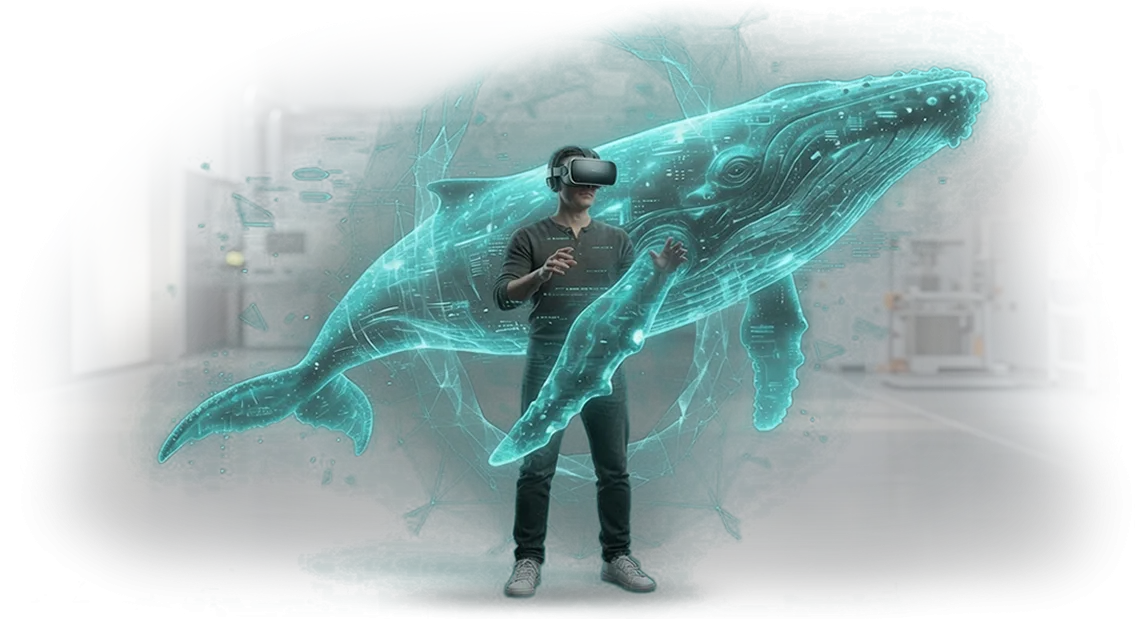
This is where VR and AR come in — technologies that move complex processes into a safe digital environment.
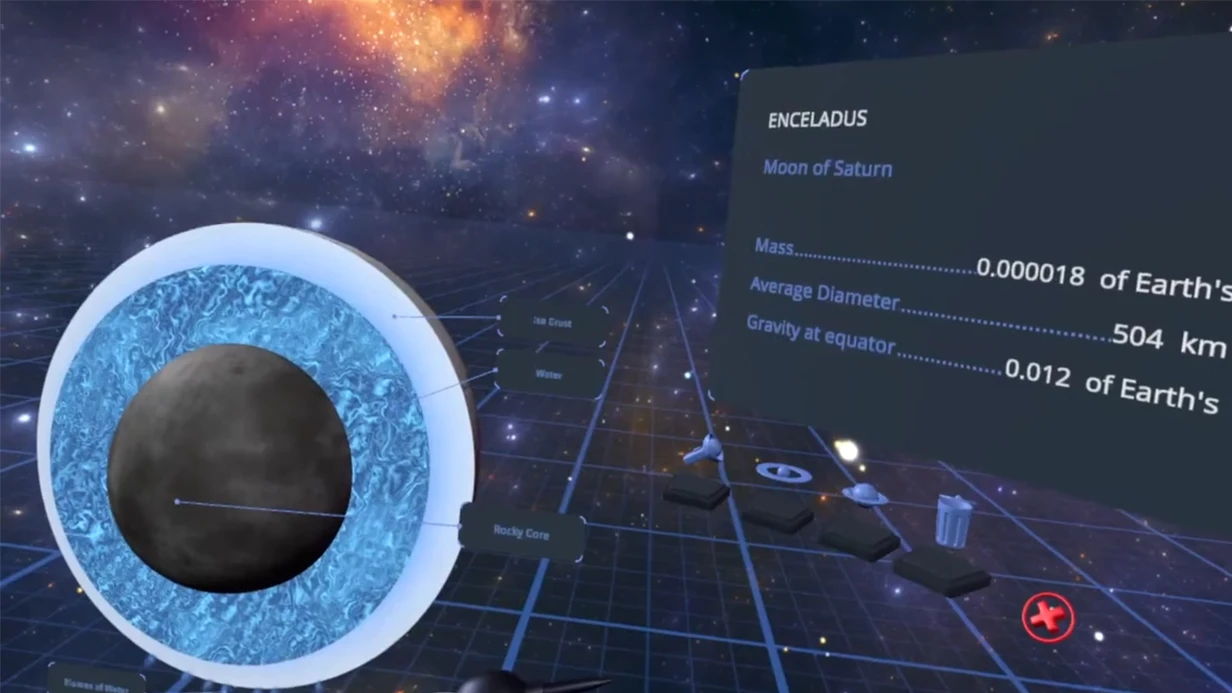
VR for shipbuilding makes it possible to create a virtual copy of a vessel or an individual assembly, "assemble" it in advance, check access to mechanisms and the sequence of operations.
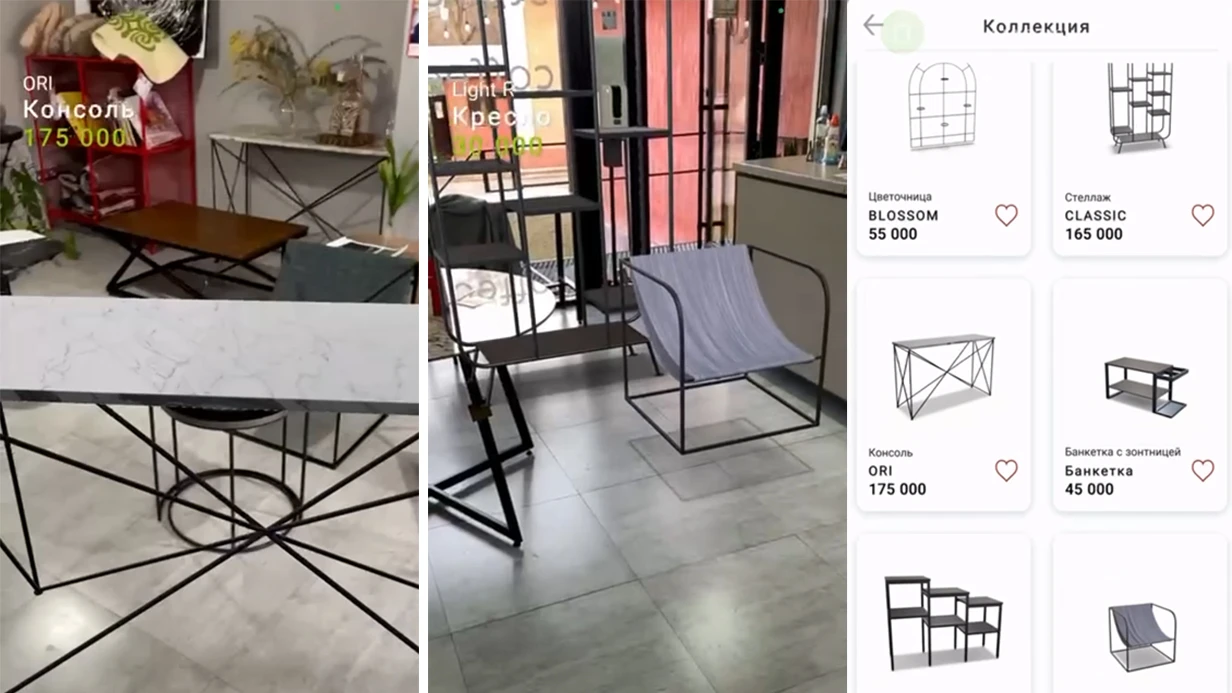
AR augments the real object with digital instructions: a worker in the workshop sees directly on the hull where to cut, what to fasten, and in what order.
This approach directly reduces timelines and budgets. Decisions that used to be made by intuition are now validated on virtual models — before the first sheet of metal is cut.
Staff training becomes safe and effective: employees practice skills in conditions as close to real as possible, without stopping production or risking equipment.
Enterprises that adopt modern shipbuilding technologies today gain a serious edge over competitors tomorrow. They plan more accurately, repair faster, train more consistently, and make fewer mistakes.
Implementing VR/AR/MR is not an experiment for the sake of technology — it is a tool that saves time, money, and the expertise of your best specialists.
Key Benefits of VR/AR/MR for Production Processes and Training
In shipbuilding, every mistake is costly: reworking an assembly, a crew idle, a delayed order. VR/AR/MR remove these risks — they allow operations to be practiced before they are performed on a real facility. our team creates mixed reality applications that integrate into existing production processes.
Saving Time at Every Stage
Employees master new operations faster, and technologists no longer need to build physical mock-ups. Assembly, welding, pipe installation — all of this is practiced in a virtual model before going to the slipway.
Clients reduce specialist training time by up to 30% and launch new assemblies into production faster.
Better Quality and Control
Projecting a digital instruction directly onto the workstation guides the sequence of actions and highlights errors. The worker sees where to install a part, with what torque to tighten a connection. The result is less scrap and higher assembly accuracy.
Quality control moves from paper checklists into the digital environment — data is recorded automatically.
Risk-Free Training Without Downtime
Trainees learn on complex equipment without stopping production or endangering themselves or expensive machinery. The same operation can be repeated as many times as needed until it becomes automatic. Errors in the virtual environment don't lead to injuries or rework costs.
Preparation for Customer Handover
Another VR benefit is demonstrating the future vessel or its assemblies before physical construction. The customer sees the final result and makes changes at the design stage, not after assembly. This accelerates commissioning and reduces the number of claims during acceptance.
VR/AR/MR Application Formats for Specific Shipbuilding Tasks
Shipbuilding is a chain of different tasks — from hull design to systems assembly and service. One application can't cover them all, so we distinguish three formats — VR, AR, and MR — and match them to the specific stage.
| Format | For Whom | What It Gives the Client |
|---|---|---|
| VR | Designers, project office, customer | A volumetric model of the vessel before construction: changes are visible immediately, revisions don't require physical mock-ups |
| AR | Assemblers, site supervisors, quality control department | Instructions and schematics over real parts: the worker doesn't get distracted by drawings, fewer errors |
| MR | Engineers working on complex assemblies, acceptance committee, remote experts | A digital model aligned with the real vessel: deviations invisible to the eye become visible |
This separation helps avoid overpaying: you don't need full MR where AR hints on a tablet are enough. And vice versa — VR is indispensable for project reviews at an early stage when changes can still be made without losing budget.
For example, for series-produced vessels, AR instructions at every workstation reduce assembly time and lessen dependence on a specific specialist's experience.
At our team we select the format for your task, not the other way around. We identify where the process loses time and money, and propose a solution that quickly pays for itself by reducing errors, downtime, and speeding up approvals.
How VR/AR/MR Implementation Works: From Brief to Support
Implementing VR/AR/MR in shipbuilding is a structured process, not a "boxed product" purchase: from the first brief to post-launch support, we walk the entire path with you so the result can be measured in money and time.
-
Brief and task immersion. We study drawings, assembly units, and training scenarios. We identify the places where the solution will pay off fastest.
-
Agreeing on the plan and acceptance criteria. We lock down goals, timelines, and the scope of work. You know in advance which operations will become faster and by what metrics we'll measure success.
-
Prototype on real data. We build a working version based on your vessel's 3D model. We show key scenarios before full development — revisions fit into the schedule without rebuilding.
-
Development and testing. We build the application for your VR/AR/MR format on professional equipment. We test the launch in conditions close to the workshop so workers understand the interface without long manuals.
-
On-site implementation. We run a pilot at your site, adjusting lighting, product dimensions, and scenarios. We train employees — it takes hours to get up to speed, not weeks.
-
Support and evolution. After launch, we stay in touch: we update scenarios, add new assemblies, and monitor stability. If needed, we scale to other workshops.
This sequence reduces risk: you see results as early as the prototype stage and make further investment decisions based on facts, not promises.
What's Included in the VR/AR/MR Project Delivery Package
A complete delivery package is not just a "working program" in an archive. The client gets a turnkey solution: an installed and configured system, documentation, code ownership, staff training, and warranty obligations.
No hidden dependencies on the developer, no "black box" that can't be evolved without the original team.
Here's what's included in the project package:
- A ready VR/AR/MR solution deployed on the client's hardware — from workstations to mixed reality headsets. For shipbuilding, this can be interactive hull review scenes, assembly training simulators, or instructions for workshop personnel.
- Source code and ownership rights — the application stays with the client, and further development doesn't require mandatory involvement of our team.
- Full documentation: user manuals, scenario descriptions, update and backup procedures. Shipbuilding departments can integrate the system into their internal document flow.
- Staff training: a hands-on course for operators and a short session for management. Shipyard personnel start working without a long ramp-up.
- Warranty support for the operational period: bug fixes, consultations, assistance with failures. After the warranty ends, a post-warranty agreement with fixed terms.
- Test scenarios and acceptance protocols — you see how the system was verified and can repeat the verification yourself.
- Backup copies and recovery procedures — protection against accidental data loss and downtime in the production cycle.
In effect, you get not an abstract application but a ready-made tool embedded in the vessel's design and operation processes. This kind of package is what allows the solution to be launched in weeks rather than months, and to deliver return on investment quickly.
Case Study: How VR Simulators Accelerated Equipment Commissioning in Shipbuilding
Launching new equipment at a shipbuilding plant is always an expensive process. Commissioning requires experienced specialists, who are in short supply, and any operator error on a real machine results in downtime and repair costs.
Traditional instructions don't provide practical experience, and training stands only vaguely replicate reality. We proposed moving the training into a virtual environment.
Our Solution
For the "Okean" Shipyard, we developed a VR simulator that fully replicates the crane operator workstations.
In a safe virtual environment, employees practiced standard and emergency scenarios, while the instructor could see every action of the student in real time and correct mistakes instantly. Training took place right in the workshop, without interrupting production.
Implementation Results
- Equipment commissioning time dropped from 45 days to 12 days — the plant started generating revenue from the new line sooner.
- Personnel error rates in the first months of operation fell by 38%, virtually eliminating operator-related downtime.
- More than 200 employees were trained in six months, without needing to stop production.
- The client was so convinced of the effectiveness that they ordered simulators for two more workshops.
- Development costs were recouped in less than two quarters thanks to lower scrap and downtime costs.
How to Choose Between VR, AR, and MR for Your Production Task?
There's no universal "which is better" answer: the same format can be ideal for training and useless for quality control at an assembly site.
The choice comes down to a simple question — what does the employee do with the real object: study the process away from the workshop, or verify data directly on the part. That determines whether the technology brings value or turns out to be an expensive toy.
VR completely isolates the user from the physical world. This format suits tasks that need to be practiced without access to the real object: emergency drills on a vessel, crew actions in abnormal situations, practicing complex operations before going near expensive equipment. In shipbuilding, this is effective for training personnel who must act without room for error.
AR is a digital hint overlaid on the real object. The employee sees the actual hull with drawings, tolerances, connection diagrams, and step-by-step instructions on top of it.
The format has proven itself in assembly, parts acceptance, and repair: the specialist doesn't flip through papers or compare a model to the physical object, but immediately sees where and what to do. Errors and operation time drop noticeably.
MR combines both approaches: virtual elements are not just displayed over reality — they are anchored to it, reflect part geometry, and react to changes.
This solution is indispensable when you need to check the mating of large assemblies, route communication lines through bulkheads, or see how engineering systems will fit into an existing hull.
Mixed reality provides a level of clarity that neither an on-screen 3D model nor a paper drawing can offer.
In short: if you need complete isolation from the workshop, choose VR; if you need to work with the real object and data on site, choose AR; if you need interactive geometry verification, choose MR.
If you're unsure, we'll start with a pilot site: we'll help you define the task, choose the format for a specific production process, and demonstrate the result on your parts before scaling.
What Happens After VR/AR/MR Implementation: Answers to Common Concerns
A client rarely doubts the technology itself — what holds them back are specific questions: "how long will it take, how will it fit into our production, what happens if something goes wrong." That's normal: before changing processes, you need to understand risks and benefits. Below we address the most common concerns shipbuilding companies bring to us.
Integrating digital solutions into existing workflows is not about replacing what already works — it's about strengthening it. We don't "rewrite" production; we add a tool that reduces errors, speeds up approvals, and makes training safer.
That's why both timelines and costs are calculated for the specific task — transparently and before launch.
How long does implementation take and when will we see the first result?
On average, the first working prototype appears within 2-4 weeks after the brief — enough to evaluate the effect on a real operation. A full solution for a specific site or product takes 1 to 3 months.
We lock the exact timeline into the contract and don't drag out intermediate stages: you see progress every week.
How will this affect current processes? Will we have to rebuild everything?
We integrate into existing procedures rather than breaking them. Employees work in the familiar environment, and AR hints or VR simulators complement it. All you need to start is a tablet or headset — no need to change equipment or shut down the workshop.
A pilot site shows the effect within the first month, and only then do you decide whether to scale the solution.
What about support and development after launch?
After project delivery, we stay in touch: we update content, adapt to new products, and help train an internal team. We handle administration — you don't need a dedicated specialist.
If a drawing or process changes, revisions are made in a short timeframe, without a long tender or hunting for a contractor.
Is there a guarantee it will pay off and won't just be a "toy"?
We calculate the economics before starting: how much time and material each operation saves, how much scrap is reduced, how quickly training pays off. After the pilot, you get numbers from your own site — not abstract promises.
We've worked with shipbuilding plants for years and always start with a narrow task so you see a measurable result before scaling.
If the concern remains or a new question comes up, we're ready to answer it personally. Just write to us, and an engineer will explain how the technology fits your process and what's needed to launch.Let's Discuss VR/AR/MR for Shipbuilding and Prepare a Commercial Proposal
Shipbuilding projects are difficult because any mistake at the design or training stage is expensive. Mixed reality makes it possible to check ergonomics, assemble units, and train personnel before metal ever goes into production.
But to get such a tool, it's important to first clearly define the task — and that's exactly why we're offering to discuss your project.
How we work: from request to implementation Every project starts with a VR consultation. From there, you don't just "order development" — you get a transparent path with fixed stages and a clear result at each step.
- Discussing the task. You tell us what you want to speed up, make cheaper, or make safer. We identify the points where mixed reality applies to your processes.
- Express analysis and demo. We show how the solution will look using similar projects. We choose the format — training, visualization, assembly control, or something else.
- Preparing a commercial proposal. A clear scope of work, timelines, stages, and cost. You see what you're paying for and what result you'll get.
- Development and approval. We work in iterations: you see intermediate versions and adjust details before the solution goes into final assembly.
- Pilot implementation. We test at real workstations and train your employees. We remove what gets in the way and keep what delivers results.
- Support and evolution. We stay in touch: we update content for new tasks, add modules, and provide support after launch.
This approach minimizes risk and makes the value visible immediately. You're never left asking "what do we actually get" — every stage confirms the benefit.
If you'd like to understand how mixed reality solves your production task, send us a description of the problem. We'll get back to you within a day and show the path to the result. Together, we'll prepare a solution that will pay off at your enterprise.