



Why VR/AR Solutions Are Essential for Railway Transport
Railway transport is an industry where the cost of a mistake is measured not just in expenses but in the safety of people and the reliability of operations.
Training locomotive drivers, dispatchers, and maintenance personnel the traditional way requires access to real equipment, instructor involvement, and significant time.
Any mistake by a trainee on an active section means the risk of an accident, schedule disruptions, and serious financial losses for the carrier.
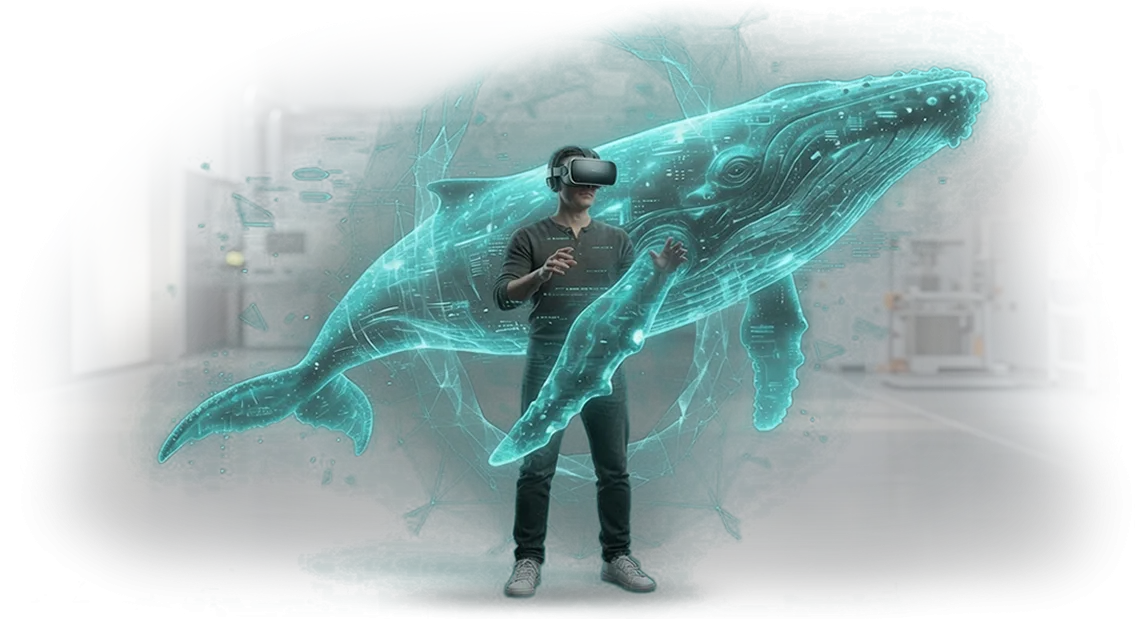
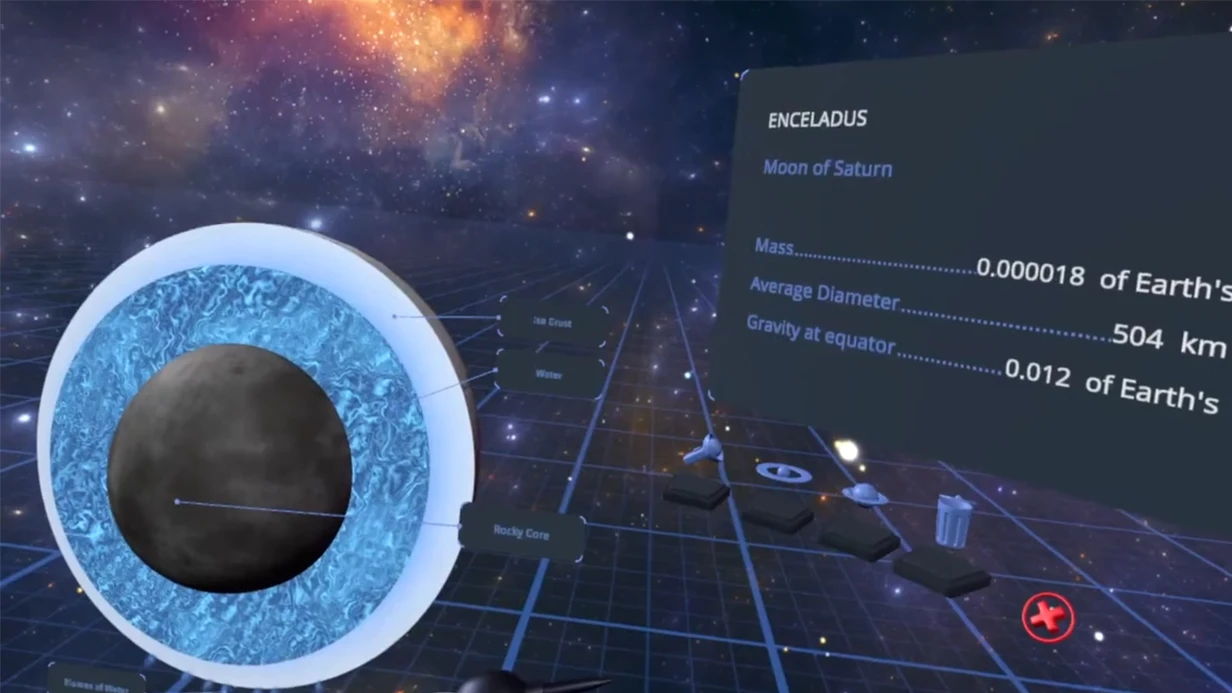
Virtual reality removes this contradiction: the employee practices actions in a safe digital copy of a depot, station, or locomotive cab.
Emergency situations, non-standard scenarios, equipment failures — all of this can be trained repeatedly, with no risk to people or infrastructure. The result is high-quality staff training that takes less time and does not depend on the availability of free equipment.
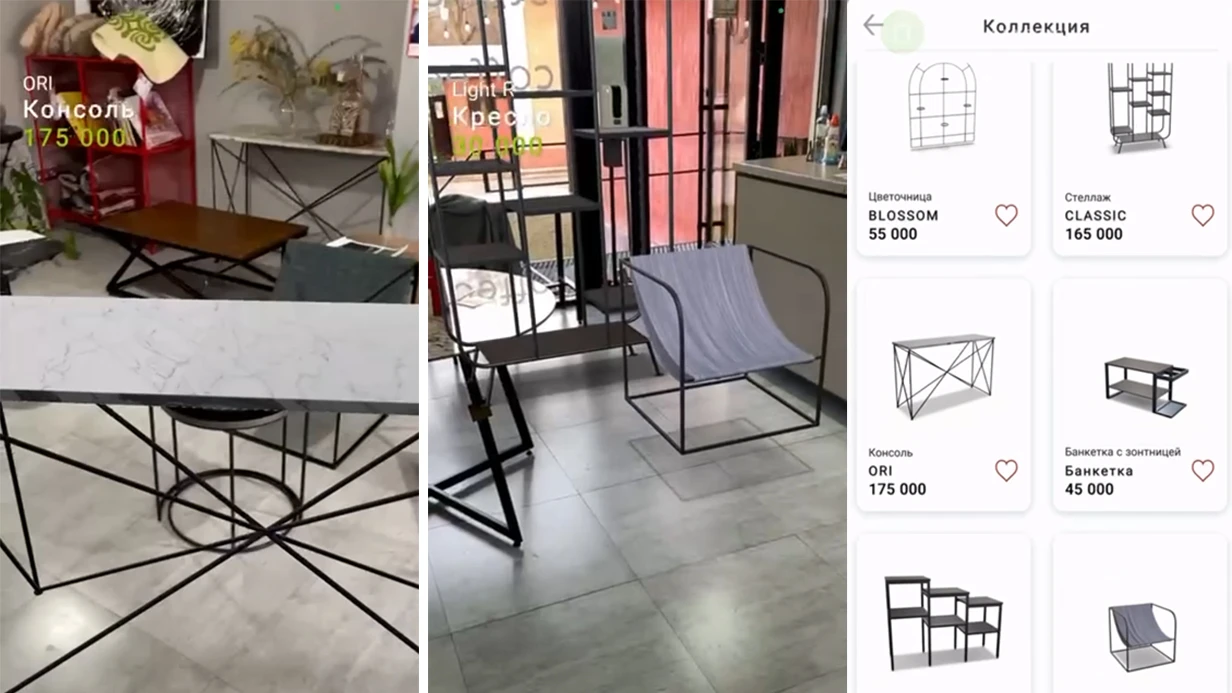
Augmented and mixed reality solve the second problem — not stopping equipment operation for training. An inspector, maintenance worker, or mentor sees prompts and diagrams directly on the asset without being distracted from the process.
For the railway industry, this has a double effect: lower accident rates and higher productivity without equipment downtime.
Companies that have already integrated VR/AR into their digitalization are noticeably ahead of competitors in the speed of staff training and safety culture.
We have been designing and implementing VR/AR solutions for transport and industry for 10 years. We will help you assess the impact on your tasks, launch a pilot, and scale the solution across all departments — with clear timelines and measurable results.
What Benefits VR/AR Solutions Bring to Your Enterprise
Implementing VR/AR solutions in railway transport is not a trendy experiment but a tool with clear business metrics. The technology helps reduce costs, improve safety, and accelerate employee training — without stopping production processes.
Here is what an enterprise gets after launch:
- Reduced training costs: personnel master skills in a virtual environment without spending on consumables or equipment downtime. Mistakes are practiced safely, and results are retained faster.
- Improved safety: employees train to act in non-standard situations — from a wagon derailment to a fire — without risk to life or equipment. This reduces injuries and accident rates.
- Higher engagement: interactive simulators and AR instructions hold attention better than paper briefings. Employees study regulations more willingly, and knowledge is absorbed more deeply.
- Faster commissioning: new equipment or routes are mastered in a virtual copy before launch. Staff arrives on site already prepared, without long downtime.
- Stronger image: modern technology signals to partners and clients that the enterprise keeps up with the times. This builds trust and opens new tender opportunities.
Each of these points is backed by measurable metrics at the pilot stage. Our team develops solutions for the specific tasks of a depot or carrier — from virtual simulators to AR prompts for maintenance crews. We accompany the project from audit to launch and provide a guarantee on the result.
Formats of VR/AR Projects for Railway Transport
In railway transport, the cost of an error is high: train downtime, risk to people, and staff training expenses. Practicing emergency scenarios on a real facility is expensive and dangerous.
VR, AR, and MR transfer the experience into a safe digital environment: the employee acts as in reality, and the client gets a measurable result — fewer mistakes, faster onboarding, and visual approval.
Below are three formats that we adapt to railway transport tasks. They do not compete; they cover different needs.
| Format | For whom | What it delivers |
|---|---|---|
| VR simulator | Locomotive drivers, dispatchers | Practice of emergency situations without risk. Skills are retained quickly. |
| AR instruction | Fitters, maintenance teams | Step-by-step prompts on assemblies — fewer errors and less repair time. |
| MR prototype | Design engineers, clients | Model overlay on the object before purchase — compatibility is visible. |
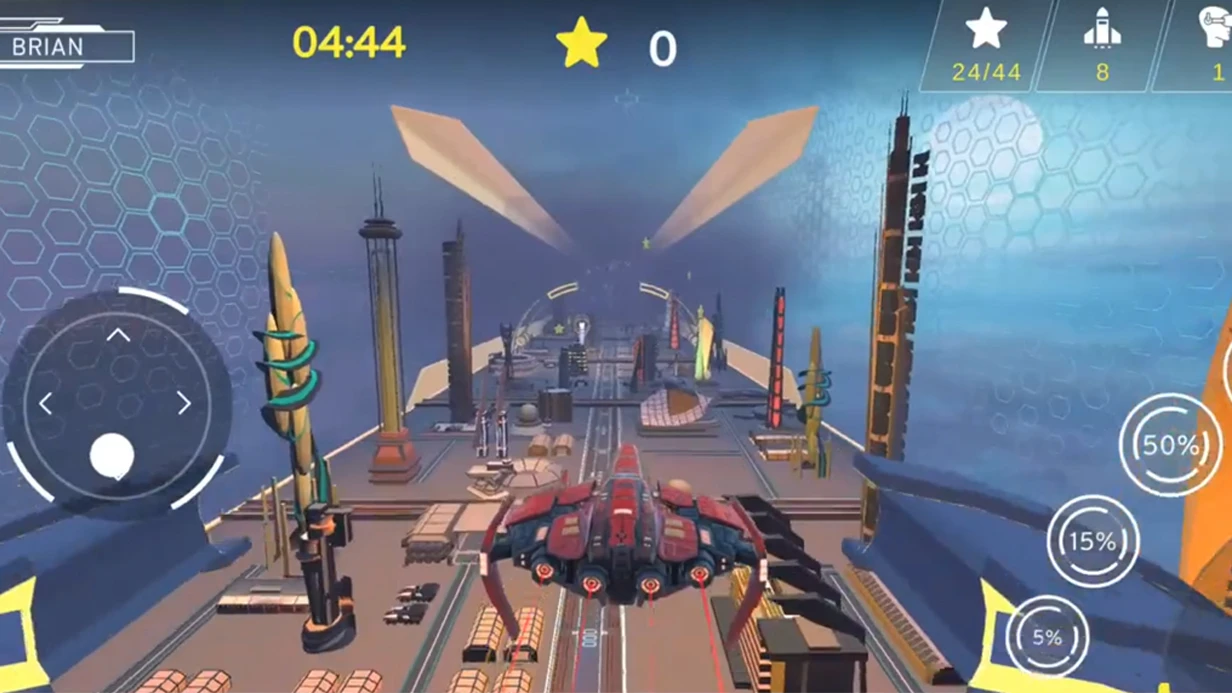
A VR simulator cuts training time and reduces the human factor: here teams practice actions during brake failures, signal failures, and passing points.
An AR instruction accelerates repairs and preserves knowledge when staff changes — digital prompts remain even after an experienced specialist leaves.
An MR prototype prevents errors at the design stage: before purchase, you can see how new equipment will fit into existing rolling stock.
How to choose? For mass training, a VR simulator is suitable. For repair crews in the field, an AR instruction is the right choice: it requires no dedicated room and guides step by step. Before purchasing equipment, an MR prototype provides clear arguments for management.
We select the format for your task, create a demo on your data, and support the implementation. If needed, we combine formats. Tell us about your situation — we will propose an option.
How We Develop VR/AR Applications: Stages of Work
A transparent development process is a guarantee that you get exactly what your business needs, not an abstract product. We have structured the stages so that you always control progress, make corrections in time, and know precisely when the application will be launched.
- Brief and immersion into the task. We study your business process, target audience — drivers, dispatchers, repair crews — and the specifics of railway transport. We determine which problem the MR application solves: training, maintenance support, or safety control.
- Work plan and estimate. We show timelines, stages, cost, and expected results. We agree everything in advance to eliminate unexpected expenses and delays.
- Prototype and scenario. We create a visual layout: what the user sees, how they move, what data is displayed on screen. You review the logic and adjust it before a single line of code is written.
- Review of intermediate versions. Every 1–2 weeks, we demonstrate a working fragment. You test it and give feedback — revisions are made immediately, without double payment.
- Development and testing. We assemble the complete solution and test it against real scenarios — for example, on a locomotive simulator or in a switch shop. We eliminate errors and verify stability.
- Launch and employee training. We deploy the application on your equipment and conduct instruction. Staff can start using it on the first day.
- Support and development. We stay in touch after release: we update scenarios, add new elements, and help with technical issues. You develop the system as your tasks grow.
What Is Included in a VR/AR Solution Delivery: Full Package
When you order the development of a VR/AR solution, it is important to understand in advance what exactly you receive and how it will work in your daily practice.
We deliver not just an application but a complete package that can be introduced into staff training or presentations for partners immediately after project completion.
Here is the full delivery scope:
- Ready-made application for your tasks — for instruction, practicing actions in non-standard situations, presentations, or employee training. The solution runs on the equipment you already have and requires no special technical knowledge from staff.
- Documentation package — user guide, launch and administration regulations, operator instructions. Everything is written in plain language, without internal technical jargon, so any employee can quickly get up to speed.
- Training for your team — we conduct sessions with administrators and operators and bring them to confident, independent use. Usually one or two days is enough; after that, the team works on its own.
- Technical support after launch — we stay available, answer questions, and help with configuration and updates. You are never left alone with a problem.
- Adaptation to your scenarios — we refine the interface, logic, and content to fit your enterprise specifics: routes, equipment, and safety regulations.
- Usage rights and source materials — you receive the full set of rights and access to the content, so you can develop the solution with other contractors or in-house if needed.
Training is built on the principle of "made and handed over for operation." We visit you or conduct remote sessions and show on real scenarios how to launch the system, work with sessions, and handle data. Your employees receive clear memos and checklists, so staff turnover does not stop the processes.
Support does not end when the acceptance certificate is signed. Throughout the support period, we monitor the solution, update content if regulations or procedures change, and remain available for consultations.
This is insurance that gives you not a faceless product but a long-term partner in digitalizing training.
Case Study: VR Simulator for Training Locomotive Drivers
Every locomotive driver must practice dozens of non-standard situations, but you cannot stop a real train for that.
Traditional training takes months and requires experienced mentors, and a beginner's mistake in the cab costs too much — both for the company and for passenger safety.
For the training center ZhD-Academy, we built a VR simulator that immerses the student in an exact copy of an electric locomotive cab. Instead of theory — scenario practice: emergency braking, signal failure, poor visibility in a snowstorm.
The instructor sees the trainee's actions in real time and corrects habits before they become entrenched.
In numbers, the effect looks like this: the initial training period was reduced by 40% — from three months to two. The number of errors on final tests dropped by 2.5 times, and over two years of simulator operation, the accident rate among graduates fell by a third.
The company received a tool that pays for itself as early as the first intake: lower costs for fuel, testing grounds, and instructor salaries.
What This Means for the Client
The simulator runs around the clock, does not require a separate driver-instructor for each group, and allows training twice as many employees without expanding staff.
The training center received a complete package: scenarios tailored to its routes, a skill assessment system, and certification protocols.
We support the project after launch: we update scenarios for infrastructure changes and add new situations on request. This is not a one-off mockup but a working tool that integrates into your training program and delivers measurable results.
How to Choose the Right VR/AR Solution Format?
Choosing between virtual, augmented, and mixed reality is not a question of "what is trendier" but a question of your specific task.
For the railway industry, these three formats cover different needs: one immerses you in an environment from scratch, another overlays data onto the real world, and the third combines both approaches for collaborative work.
We help clients determine the right format at the briefing stage — so that you do not overpay for unnecessary complexity and get exactly what solves your problem.
Virtual reality (VR) is the choice when you need to fully simulate a process that is dangerous, expensive, or impossible to show live.
Training locomotive drivers, practicing actions in non-standard situations, simulators for station duty officers — here the employee is immersed in an environment where they can make mistakes without consequences.
For railway transport, this is direct savings: less downtime, safer work permits, and higher staff readiness for real situations.
Augmented reality (AR) works the other way — instead of replacing the world, it helps within the real world. For example, a maintenance worker sees through a tablet or glasses a diagram of an assembly overlaid on real equipment and understands exactly what needs to be checked.
This reduces time spent searching for information, lowers the risk of errors during servicing, and eliminates the need to carry documentation. The format is especially useful in the field, where every extra hour of train downtime is costly.
Mixed reality (MR) combines the strengths of both formats: virtual objects exist in real space and interact with it.
This is the key format for complex tasks where you need to see both the physical environment and the digital model at the same time — for example, checking equipment installation, approving a project with a client, or remote specialist support. MR allows you to "try on" an upgrade on a real facility before money is spent on it.
The final choice depends on what you want to achieve: employee training, faster operations, or visibility for investors.
We accompany the client from problem definition to format selection: we analyze the scenario in which the solution will be used, calculate the load, and propose the optimal option.
In most cases, a single short briefing is enough to understand which technology will bring maximum benefit to your enterprise.
Frequently Asked Questions About Implementing VR/AR Applications
Implementing VR/AR applications in the railway industry raises questions: it is new technology, so there are doubts about timelines, compatibility with existing processes, and economic return.
We have collected the most common ones — no technical details, only what matters for decision-making.
Below we answer the main objections and show how we structure our work so that you get a predictable result.
How long does implementation take?
A typical project for a training ground or simulator takes 6–10 weeks. The timeline depends on the number of scenarios and workstations. We start with a pilot version: you see the first result within two weeks and can adjust your tasks before the main stage.
We fix the timeline in the contract and stick to it — in ten years of practice, we have never missed a single launch.
Is your solution compatible with our infrastructure?
Yes. We adapt the application to your enterprise's technical conditions, work on professional equipment, and take railway industry requirements into account. For example, for closed-loop facilities, an autonomous mode without external internet is provided.
Integration with accounting systems is configured through standard data exchange formats — you get a single working space without "patchwork" automation.
How quickly do investments pay off?
The key savings come from staff training. One instructor can manage up to ten employees at once instead of two or three with the traditional approach. Costs for training grounds and the risk of errors when working with real equipment are reduced.
As a result, most clients recover their investment within the first year through lower accident rates and fewer repeated instructions.
What about warranty and support?
We provide a warranty on the application and free support for the first three months. We train your employees to update content on their own without involving developers. After that, an extended support contract is available with a response time of one business day. You are never left alone with the technology — we are there at every stage of operation.
Ready to Discuss Your Project? Contact Us
We understand that developing an MR application for railway transport is not just technology — it is a solution for safety challenges, staff training speed, and infrastructure control.
That is why we start not with technical details but with a conversation about your goals: what should change after implementation — fewer repair errors, faster onboarding, or clearer documentation.
You submit a request through the form or by phone — within one business day, we agree on a convenient consultation time. During the consultation, we analyze your situation, show how mixed reality is applied to similar tasks on the railway, and propose a first-step plan. After that, you receive a cost estimate and a cooperation format — a fixed scope or phased work.
What you get after reaching out:
- Personal consultation on project development — no generalities, only your industry and your tasks.
- Preliminary cost and timeline estimate — you understand the budget before work starts.
- Format selection: fully custom development, ready-made scenarios, or a pilot project.
- Demonstration of similar railway industry solutions — you see how it works instead of listening to abstract promises.
- Recommendations on technical equipment: which headsets and devices fit your tasks and working conditions.
- Presentation with a description of the future solution's functionality — we will record exactly what we are building and what result we expect.
There are no obligations at this stage. Even if the project only exists in your head — come with a raw idea, and together we will turn it into a plan. Contact us through the form on the website or call — let's discuss how MR technologies can improve your enterprise's operations.