



Why education can't do without virtual reality
Familiar formats — lectures, presentations, texts — are increasingly failing to hold students' attention. Clips and games have taught the brain to expect an instant stream of impressions, so a static 20–30 minute lesson becomes a trial for both the teacher and the audience.
Virtual reality for learning solves this problem differently: the student is placed inside the subject being studied.
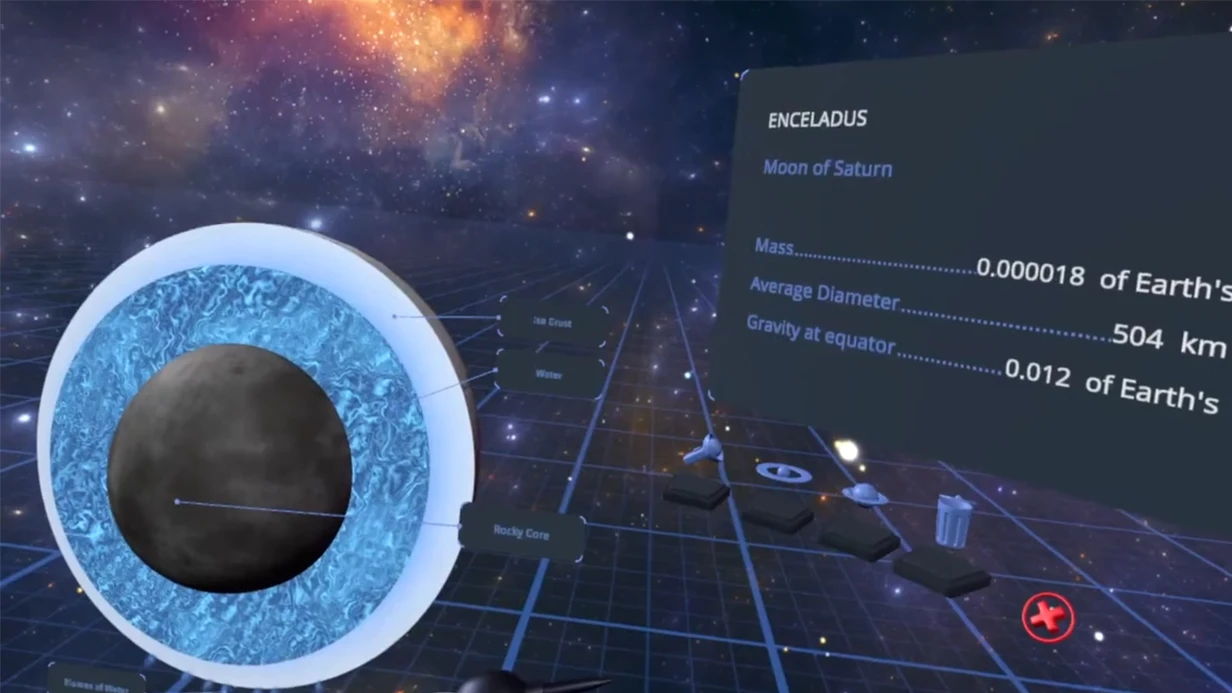
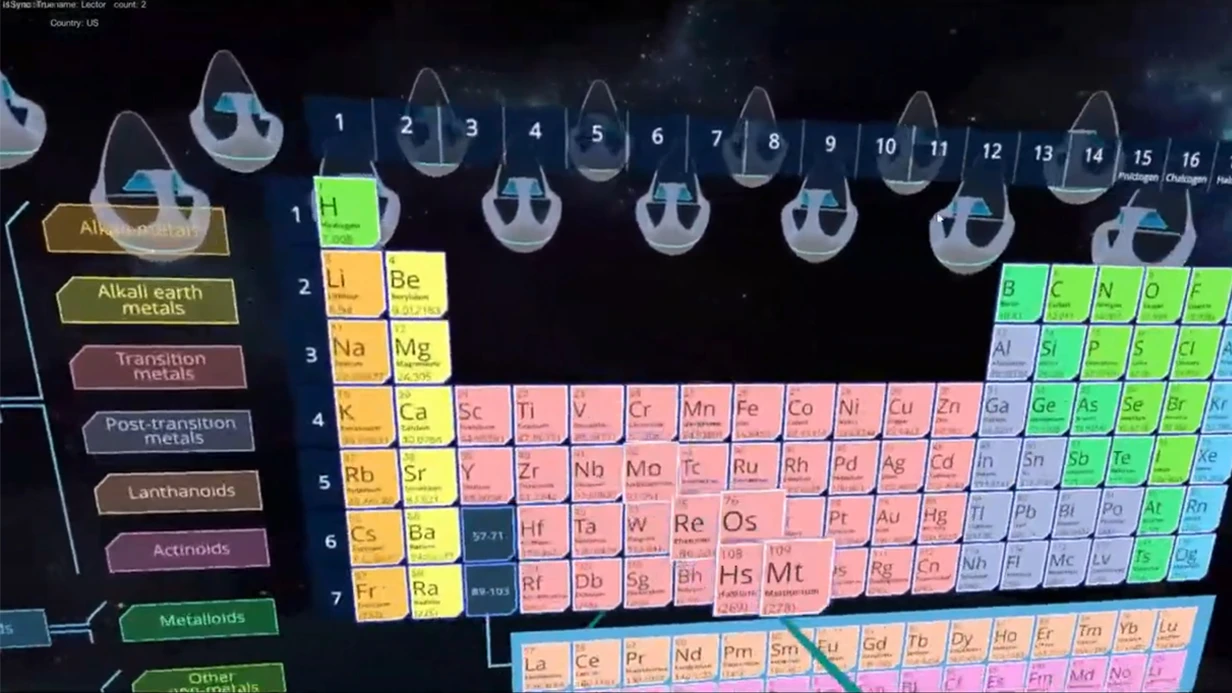
Instead of reading about how an engine works, they take it apart in 3D; instead of slides about historic battles, they find themselves on the battlefield; instead of chemical reaction formulas, they observe reactions as living processes. Interactive lessons turn passive listening into active engagement.
This kind of immersion directly boosts student engagement: the student manages their own attention, makes choices, and gets immediate feedback on their actions. Material is remembered not as abstract text but as personal experience.
Complex topics become visual, and skill practice becomes safe: a future doctor trains on a virtual patient, an engineer works on expensive equipment with no risk of breakage.
For an educational institution, this is also a statement of a modern approach: a program with VR lessons stands out from competitors, attracts applicants, and increases partner trust.
We help integrate virtual reality into learning for the specific goals of a course — from idea to a ready-made lesson scenario and its launch in the classroom.
What VR/AR integration into the educational process brings
Integrating VR/AR into the educational process is not just replacing textbooks with “new technologies.” It is a systemic improvement in learning effectiveness: material stops being abstract and becomes an experience students gain with their own hands.
The result is measurable business metrics — from higher average scores to more applicants choosing your institution.
The first and quickest result is a sharp rise in interest in the subject. A VR lesson holds attention completely: instead of “sitting through a lecture,” the student is inside the process being studied — whether it is a chemical reaction or a historical event.
Such engagement reduces absences and increases in-class activity, and instructors note that students start asking questions and looking for additional material on their own.
The second result is memorability. Information experienced in three-dimensional space is absorbed 70–80% better than when reading text or watching video.
This directly affects exam results and practical assignments: students do not memorize formulas, they understand the logic behind them. For the institution, this means higher academic performance and stronger positions in rankings.
The third, no less important result is brand recognition for the educational institution. VR/AR adoption creates the image of a modern platform that prepares tomorrow's specialists.
It attracts applicants, strengthens partnerships with companies, and allows participation in prestigious competitions. Experience shows that even a single visible VR-format project generates dozens of publications in local media and thousands of social media mentions.
In the end, VR/AR adoption pays off not only through academic achievements but also through the institution's overall competitiveness.
We help design VR scenarios that match your program and deliver measurable results in the first semester — from increased attendance to record results on state exams.
VR development formats: choose the one for your task
In education, virtual reality solves various problems: sometimes you need to show processes that cannot be seen in reality, sometimes you need to safely practice a skill before touching real equipment, and sometimes you need to give a group of students a shared experience without travel and expensive materials.
The format defines the lesson scenario, equipment, and outcome, so it must be chosen to match the curriculum.
We design VR applications around the client's task: from a short 3D tour to a multi-level laboratory. The solutions run on Pico headsets and other devices, require no preparation from students, and fit into the schedule.
Main formats for educational tasks
| Format | For whom | What it gives the client |
|---|---|---|
| Virtual 3D tour | Colleges, universities, online schools | Getting familiar with objects without travel or logistics costs: students examine workshops, campuses, and historic buildings at a convenient time. |
| VR simulator | Training centers, continuing education programs, corporate departments | Practicing practical skills before real practice: safe, repeatable, no material consumption, and with error tracking. |
| Virtual laboratory | Schools, natural science faculties | Conducting experiments that require expensive reagents or complex equipment; each student’s results are visible automatically. |
Formats can be combined: start with a tour, then practice actions in a simulator, then move on to free experimentation. This provides a full cycle — from introduction to independent work.
Stages of VR application development for education
We follow a transparent process where each stage has a clear outcome for your educational program. You always know what is happening, what decisions are being made, and when the project will be ready to launch.
- Brief and goal setting. We analyze what educational goals the VR application must address: skill practice, visual demonstration, knowledge testing. We define the audience, lesson scenarios, and success criteria.
- Aligning the concept and methodology. We propose a lesson scenario in the virtual environment and discuss it with teachers and methodologists. We approve the structure: session duration, number of exercises, and options for tracking results.
- Designing the interface and logic. We plan how the student interacts with objects, how they receive hints, and where errors are recorded. Here we also define what data the teacher sees — this becomes the basis for performance analytics.
- Prototype development. We build a working draft on professional equipment so you can evaluate the core mechanics. We show it early and make adjustments before full-scale work begins — this saves budget and time.
- Full version creation. We fill the application with educational content: 3D models, process simulations, voice instructions, and an action assessment system. We hold interim demonstrations so you can monitor alignment with the methodology.
- Testing with real students. We run pilot lessons at your site. We collect feedback from students and teachers and check stable performance across different devices and classrooms.
- Launch and support. We install the application on your headsets and train teachers to work with the system. After launch, we stay in touch: we update content, fix issues, and add new modules as the program develops.
The entire process includes regular approval checkpoints — you get no “surprises” at the final stage.
By the time of launch, you have not just an application but a complete methodological package: instructions, lesson scenarios, and a roadmap for further development of the VR direction.
What is included in the VR solution delivery package
The client receives not just a working VR application, but a complete package for independent use and further development of the project.
The set includes documents, source materials, and staff training — from day one, the school or university knows how to launch, maintain, and expand the solution without constant help from developers.
The delivery package includes:
- Project source files and usage rights — you become the full owner of the solution, not a tenant
- Administrative documentation: launch schemes, settings, and access control rules for staff
- Instructions for teachers — how to quickly distribute headsets, start a lesson, and run a VR lesson for a group
- Staff training: a practical session with your team, where administrators work through typical situations and teachers practice leading a lesson
- Methodological recommendations for integrating VR lessons into the curriculum and evaluating results
- Video materials and quick reference guides that remain with the staff after training
- A testing report with final settings and warranty support after launch
Such a package removes the main risk: employees do not have to guess “how it works” — they start teaching right away. You get transparent documents for internal control, a trained team, and the ability to update and expand VR materials with your own specialists.
Case study: how a university doubled interest in classes with VR
The university faced a typical problem: theoretical lectures on complex engineering disciplines were hard for students, and attendance at practical classes dropped every week.
Teachers spent time explaining the same diagrams, but student interest kept falling — ordinary presentations and lab benches could not hold attention.
We proposed integrating VR directly into the learning process, not as a one-off demonstration.
Using Pico headsets, we deployed interactive simulations for three challenging courses: students could “assemble” mechanisms, see internal processes, and practice correcting mistakes in a safe virtual environment.
Teachers got a simple lesson-launch scenario — no complex equipment setup or technical staff required.
The result was visible within a month. Practical class attendance grew by 61% over 4 months, and student surveys showed interest in the subject had doubled.
Most importantly, 8 out of 10 students voluntarily returned to the VR simulators outside class time to work on difficult topics.
The university continued using the solution the following year and expanded it to other faculties — this confirmed to us that the VR format genuinely increases engagement in learning.
This VR case study shows educational institutions: students do not need “boring glasses,” they need scenarios that turn abstract concepts into practical experience.
And when a university has a clear solution with measurable results, the question “why do we need VR” disappears on its own.
Which VR/AR format suits your tasks?
There is no single answer: the format is chosen for a specific learning task, not for trends.
If a student needs to practice a skill that is dangerous or expensive in real conditions — for example, working with equipment or responding to an emergency — full immersion in a virtual environment is the best choice. Such scenarios create a sense of presence and allow training without risk or extra costs.
When the task is to enrich a real process with hints, diagrams, or 3D models, augmented reality works better. The student sees a real object with instructions, animation, and data overlaid on it.
This is convenient for lab work, field trips, studying anatomy, or understanding how mechanisms work: no need to look away at a monitor or paper guide.
Mixed reality combines both approaches: real objects and virtual elements interact with each other. It suits complex scenarios where teamwork or interaction with the physical environment matters. But these projects require more careful design and a higher budget.
Whichever format you choose, the key question is which educational problem you are solving. At a consultation, we review your program, audience, and goals, then propose an option that delivers measurable results: higher engagement, faster skill acquisition, lower material costs.
We also help you choose devices — so the equipment matches your tasks and budget rather than being a “just in case” purchase.
In the end, you get not just technology but a tool integrated into your learning process. Contact us — together we will choose the format that works for you.
Frequently asked questions about implementing VR/AR
Before implementing VR/AR, most clients ask the same questions: how long will it take, how hard will it be for staff and visitors to get used to the new format, and who will maintain the equipment. This is normal — new technologies always raise doubts, especially when it comes to work processes.
We have been working with VR/AR for many years and have implemented dozens of projects in education, retail, and corporate training. So we answer common questions honestly and briefly — no technical details, only what matters for your business.
How long does a VR solution implementation take?
On average, two to four weeks — from brief to launch. The timeline depends on the scenario's complexity: a simple showcase or training simulator launches faster than a multi-stage program with several roles.
We give you an accurate plan right after the first call, so you know the timeline before signing the contract.
Will it be difficult for staff and visitors to use VR?
No. We design the interface so an untrained person can start within 30 seconds. There is always a short on-screen hint at the start, and the controls are based on natural movements — look, take, press.
Experience shows that even older people manage successfully from the first minutes, and younger people see VR as entertainment.
Who will maintain the equipment after launch?
We will. Setup, content updates, component replacement — our team handles all of it. You get a dedicated manager who monitors the system's condition and resolves issues quickly. You do not need to hire an in-house technical specialist — we cover this stage completely.
What if the content becomes outdated or changes are needed?
We develop VR projects with future changes in mind: the content structure is modular, so replacing or adding new scenarios can be done without reworking the entire system.
Just send a request — and we will update the program to meet new needs, whether it is a change in the curriculum or a new product for the showroom.
If you still have doubts, ask your question directly. We do not “sell” technology; we find a solution for your specific task, and we are always honest about where VR/AR will deliver results and where another format is better.Order VR application development for your educational institution
Ordering VR application development for an educational institution means getting not a “toy” but a tool that integrates into the learning program. We start with a consultation: we review your tasks, student numbers, technical base, and course goals.
No abstract presentations — only specifics for your subject. This saves teachers’ time and increases student engagement, so the implementation pays off quickly.
After you contact us, you receive:
- a personal manager who oversees the project from brief to implementation;
- a timeline and cost estimate for your task with no hidden conditions;
- a clear cost estimate and a roadmap with checkpoints;
- a trial version of the first scenes on your equipment (for example, on Pico) right at the start;
- instructions for teachers and technical support after launch.
From there, we work on a transparent schedule: brief — concept — interface — prototype — build for the selected headsets — test lesson with students — adjustments — final launch.
At every stage you see the results and make changes, so you get exactly what your educational institution needs.
You can submit a request in just a couple of clicks. Write to us — we usually reply within one business day and prepare a proposal tailored to your educational program.
The consultation is completely non-binding: you will learn how virtual reality can strengthen learning and decide whether this format suits you.