

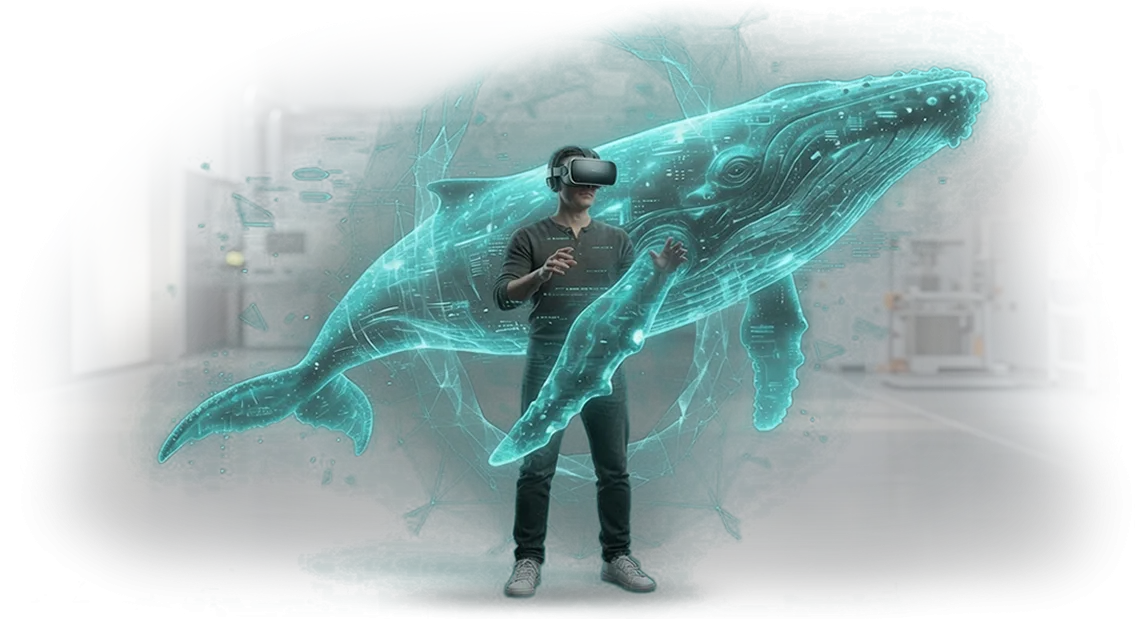


Why You're Losing Customers Without Extended Reality Today
Buyers make decisions in seconds. If they can't "touch" the product, try it on, or see it in action — they go to someone who offers that experience. Classic photos and videos no longer hold attention: people want interactivity, participation, emotion.
Extended Reality for business turns an ordinary product introduction into a memorable event that brings customers back on their own.
While you're thinking it over, competitors are already implementing XR solutions: virtual showrooms, 3D configurators, training simulators. Each such project takes a share of your audience. The result — reach and revenue go where customers find it more interesting.
This isn't a matter of technological fashion, but a matter of market share: companies that deliver visual experience win the battle for attention even before the first contact with a manager.
XR implementation pays off through three things. First — higher conversion: when a customer sees the product in real scale or in their own interior, there are fewer objections. Second — faster decision-making: no need to drive to a showroom or wait for a sample.
Third — repeat visits: an interactive experience creates a wow-effect that people tell their friends about, which means you get free marketing.
We have been helping businesses implement turnkey XR solutions for over 10 years: from idea and UX/UI design to launch. We make Extended Reality deliver measurable results — more leads, shorter sales cycles, higher loyalty.
While competitors are learning new formats, you have the opportunity to be first in your niche. Don't hand your customers to those who have already made this move.
What Benefits XR Application Development Will Bring
Growing Audience Engagement
XR applications turn a passive viewer into an active participant: a person isn't watching an ad, but interacting with the product, trying it on, exploring details. Such immersion holds attention far longer than a regular video or banner.
The user controls the scenario themselves, so the emotional connection with the brand becomes deeper and the impression lasts long.
Brand Recognition
An unconventional format itself becomes a reason for discussion. People share impressions on social media, show it to friends, and return to the app again. This way, the brand gains organic reach without extra ad spending.
Every XR project launch strengthens the company's positioning as modern and tech-savvy, setting it apart from competitors.
New Customer Touchpoints
XR opens channels that classic digital formats can't provide: virtual showrooms, interactive instructions, employee training, product presentations.
This reduces spending on offline demonstrations while increasing conversion — the customer can "touch" the product before buying, so they decide faster and more confidently.
The payback of such projects comes from lower event organization costs, higher average check, and more repeat inquiries. We help build an XR solution that brings measurable business results, not just a flashy experiment.
Extended Reality Formats for Your Task
Extended Reality is not one format but a whole spectrum of solutions: from light AR masks to fully immersive VR spaces.
Clients often get confused about which type of XR fits their task and choose "the most fashionable" instead of "the most effective." That's why we start with the business goal: reach, sales, training, or event impact.
We have dozens of XR projects behind us in different fields: from retail to industry. We've put the main VR and AR formats, their applications, and the benefits for the client into a table.
XR Formats — From Simple to Complex
| Format | For Whom | What It Gives the Client |
|---|---|---|
| AR mask / filter | Brands that need viral reach | Every user creates content with your brand — recognition grows without an ad budget |
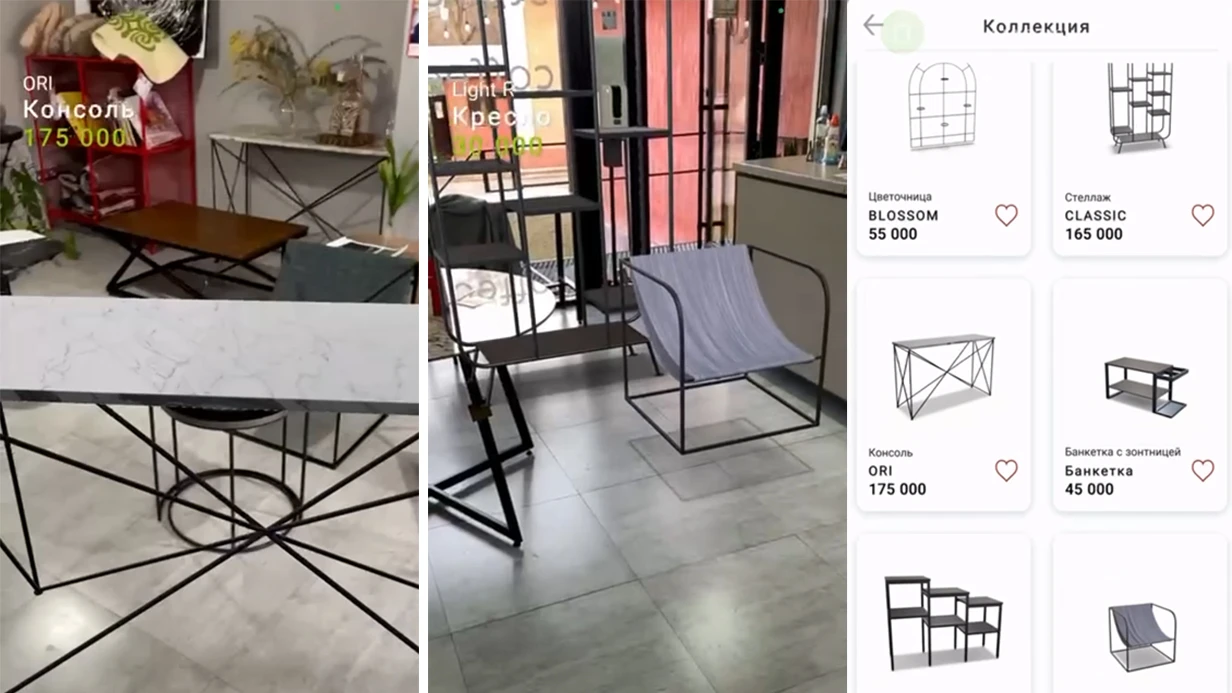
| AR catalog / showcase | Retail, online stores | Try before you buy: higher conversion, fewer returns |
| VR presentation / showroom | Manufacturers, real estate | Show a product or property without samples or travel — savings on logistics |
| VR training / simulator | Manufacturing, healthcare, energy | Skill practice without risks or costs for consumables |
| MR instruction | Service, complex equipment | Step-by-step hints right on the object — fewer errors, faster shift onboarding |
| Full VR space | Events, exhibitions, showrooms | A sense of presence that keeps guests engaged and creates a strong news hook |
Any of these formats works toward a result: reach, sales, training speed, or event memorability. If you're unsure which XR type to choose, we'll help you decide, quickly put together a prototype, and test it with your audience before the full launch.
How an XR Development Project Works
We've structured the process so that you always see the outcome of each stage. At each XR development stage, you get a clear result: a document, a prototype, or a working version.
You won't have to wait until the end to evaluate whether the project is moving in the right direction.
XR Development Stages
- Brief and immersion — you describe the goal, audience, and scenario. We suggest the format: VR for immersion, AR for hints, or mixed reality.
- Concept and scenario — we show how the user interacts with the application. We approve the scenario before development starts — this makes project approval fast.
- Project and budget approval — we set deadlines, scope of work, and acceptance criteria. You understand what's included in the cost and what is clarified separately.
- UX/UI design — we design screens, hints, and control logic. The application will be understandable even for those putting on a headset for the first time.
- Development and assembly — we build the application on professional equipment and show intermediate results on real devices.
- Testing and refinement — we launch a pilot version with your scenarios and audience. We make adjustments and approve the final version.
- Launch and support — we install the application, train your team, and stay in touch. We update content and features as needed.
This process of creating VR and XR applications makes the project manageable and predictable. You see progress at every step, can adjust the scenario, and don't worry about the result — we're responsible for launch and support.
What's Included in an XR Solution Delivery Package
When you order an XR solution, it's important to receive not just an application but a working package your team can use independently. We put together the delivery so that you have all the materials, instructions, and skills to launch and develop the project long after handover.
- Ready application for your platforms — a version for VR headsets or mobile devices, tailored to a specific task. You get a working product, not a prototype.
- Source materials and project files — all 3D models, scenes, designs, and settings remain yours. This lets you make changes and refine the solution without being strictly dependent on the contractor.
- XR operational documentation — a clear guide: how to turn on, launch, update content, and handle typical situations. Your staff can get the hang of it within an hour.
- Staff training — hands-on sessions with your team: from basic control to system administration. You get specialists who confidently work with the solution.
- Support and update schedule — we set up a maintenance plan for the first months of operation so you're never left alone with the technology.
- Additional launch materials — short videos and instructions for users that help quickly engage the audience and reduce the number of questions from participants.
If needed, we'll prepare a presentation for management and partners, as well as press release materials. All documentation and the interface are adapted to your project.
A VR delivery package is not a "black box" but a transparent system. You know what's inside, can control it, and scale it for new tasks. All that's left is to launch the project and get results.
Case Study: How We Increased Event Conversion with XR
The client needed to bring as many targeted guests as possible to an event and turn them into leads. But often the invested budget only goes toward reach: the booth grabs attention, and then the visitor scrolls their phone and walks past. There's only one way out — give guests a live experience that engages on its own.
We developed an XR try-on for a new crossover for a federal car dealership network.
A guest put on a headset, found themselves in a showroom, chose the color and trim, opened doors, and explored the interior "behind the wheel." No instructions or buttons — the scenario guides a person from the first touch to the final screen with a test-drive offer.
The results exceeded expectations. In 4 hours of the exhibition, the zone was visited by more than 300 guests, 210 of whom completed the full session — that's 70% of everyone who approached. Average interaction time exceeded 5 minutes.
Most importantly: conversion of visitors into test-drive requests grew 2.3 times compared to a similar booth at the previous event.
The same project gave the client useful analytics: which trim levels were chosen most often, which step guests lingered on longer, what sparked genuine interest. This data helped adjust the product presentation at the following dealer days. A month later, the brand returned with a repeat order for an expanded version for three cities.
Why it worked: Extended Reality replaces passive observation with active participation. A person remembers not an advertising image but their own experience — and is more willing to move to real action.
We design the XR scenario around your business goal, whether it's lead generation, a product premiere, or brand awareness growth. Event conversion then becomes a matter of the right mechanics, not luck.
How to Choose an XR Format for Your Task?
The main criterion is not how "trendy" the technology is but the business task. Before choosing between VR, AR, and MR, answer the question: what should the person do — see, understand, try, or learn? The format, budget, and performance metrics all depend on that.
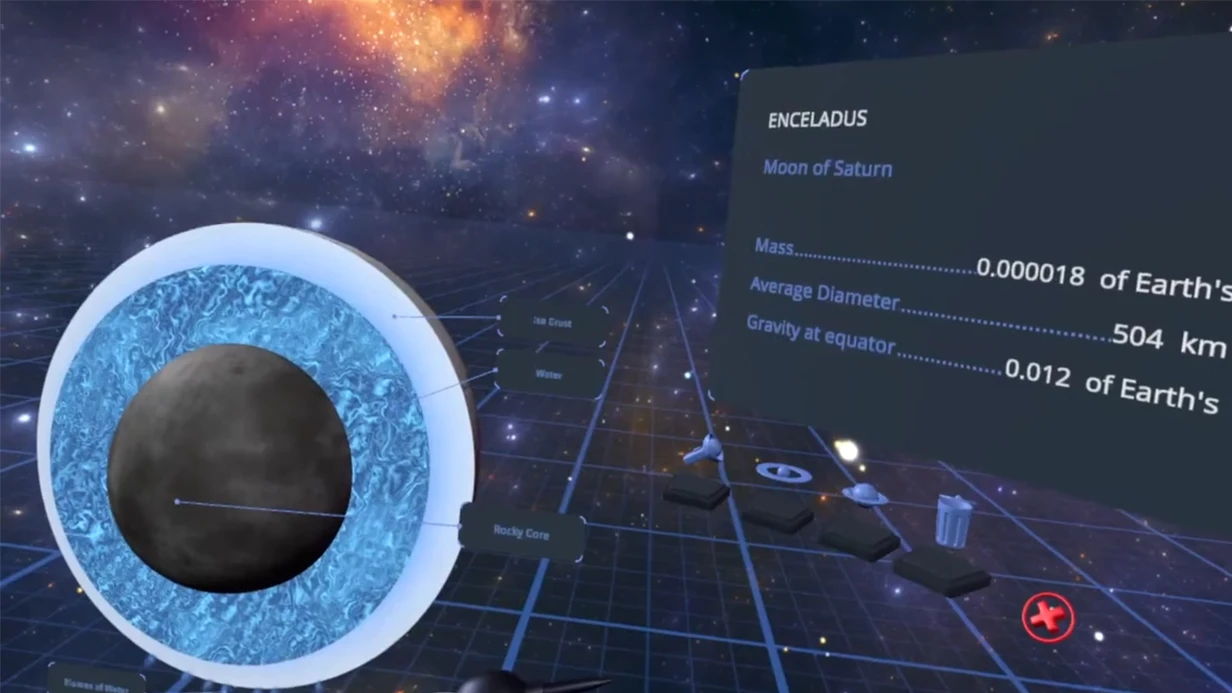
VR is needed when you want to completely isolate the user from reality: employee training, a virtual tour of a facility, a presentation of a product that hasn't been released yet.
Full immersion delivers maximum engagement and memorability but requires a headset and a prepared space.
AR is chosen when a person needs to stay in the real world and receive useful information layered over it: overlay a diagram onto equipment, show a product in the client's interior, guide them through an exhibition with hints.
This format works from a smartphone or tablet — no need to buy headsets, and audience reach is wider.
MR is an intermediate option for scenarios where real and digital objects interact. For example, a remote expert sees the employee's hands and guides them on where to press, or virtual instructions appear on a real machine. This is more expensive to develop but delivers an effect that can't be achieved by other means.
In short: comparing VR and AR comes down to two questions — "where is the user" and "what should they do." Want to focus attention — choose VR. Need context-based guidance — AR. Need collaboration with real equipment — MR.
And to understand which XR format to choose for your task, start with a pilot project: we'll help identify the right scenario, run a test, and show what results it brings your business.
Answering Common Questions About XR Development
Most clients approach Extended Reality with caution: the technology seems complex, timelines are intimidating, and safety raises questions. We address the main concerns honestly — without technical details or scare tactics.
Below are three questions most often asked before ordering a VR/AR solution.
How long does an XR project take?
A standard project — from an AR zone to a VR simulator — takes three to eight weeks. The timeline depends on the amount of content: scenarios, integrations, number of locations.
At the start, we set a plan with stages and delivery dates — first results are visible within two to three weeks. Stages are approved quickly, without long pauses.
Is VR and AR difficult to maintain?
Difficulty is the main myth. A user figures it out in a couple of minutes without instructions, and the organizer only needs to turn on the equipment and launch the scenario.
Staff only need a short training call. After launch, we stay in touch, and the refined tools ensure stable operation during event days.
Is XR safe for visitors and data?
Safety consists of two parts. The first is physical comfort: we account for space boundaries and session lengths to avoid fatigue.
The second is data: transmission is protected, access is role-based. Before launch, we run tests in real conditions — you won't have to fix anything on the fly during an event.
Ready to Discuss an XR Solution for Your Business?
Tell us about the task — and we'll advise which XR format will actually benefit your business. With 10+ years of experience, we've helped event agencies, manufacturing companies, and retailers implement Extended Reality: from employee training to interactive customer zones.
So after a short consultation, you'll get not an abstract "VR application" but a solution tailored to a specific business goal.
Leave a request — and we'll get back to you within one business day with a selection of suitable formats, a preliminary implementation plan, and a cost estimate for VR project development. No obligations: first you see the options, then you decide.
What you get after contacting us:
- Format selection for your task: training, presentation, showcase, team building, or demo zone.
- A preliminary stage plan and realistic launch timelines.
- A VR/AR/MR development cost estimate for your budget — without hidden surcharges.
- Recommendations on how to integrate XR into your current process or event.
- A clear answer: whether you need a full-fledged application or a lighter, faster solution is enough.
- Examples of similar projects and the metrics they delivered for clients.
To order an XR solution, write to us via messenger or through the form on the website. Briefly describe your task — we'll handle the rest. The XR consultation doesn't obligate you to anything: you simply learn what's possible and what it costs.