

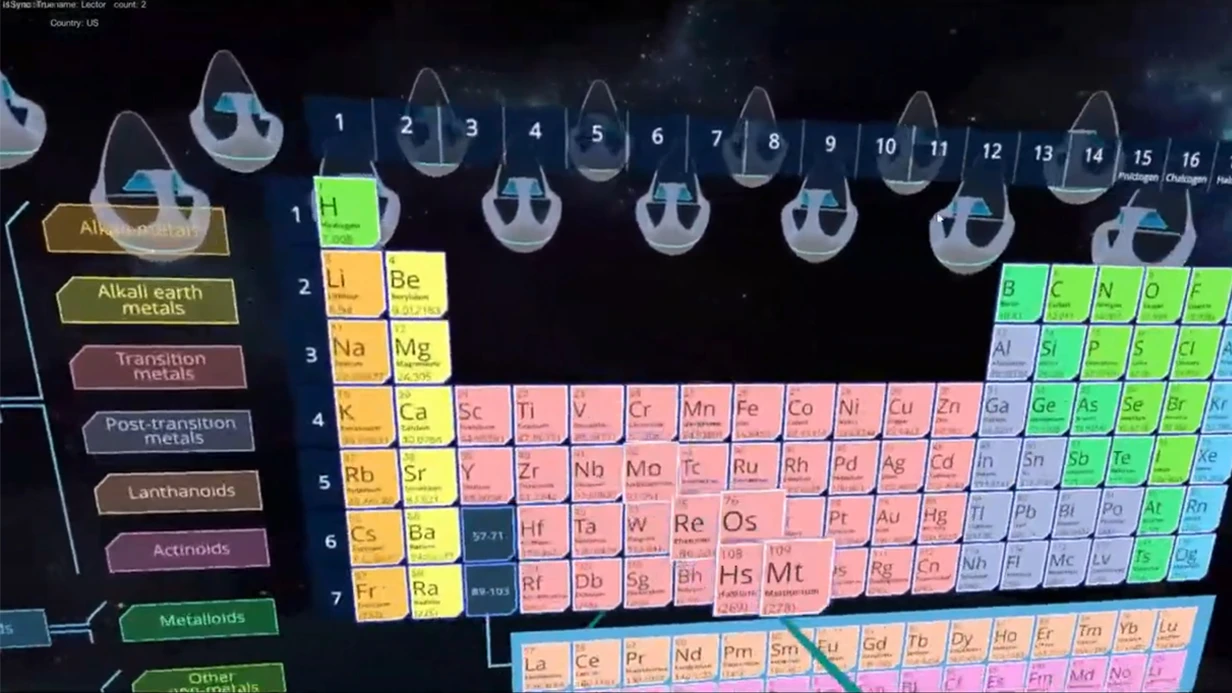


Smart Glasses — Why Your Business Needs Them Today
Customers today expect instant response, a personal approach, and service that anticipates their desires. Conventional tools — smartphones, tablets, paper instructions — slow employees down and create communication barriers.
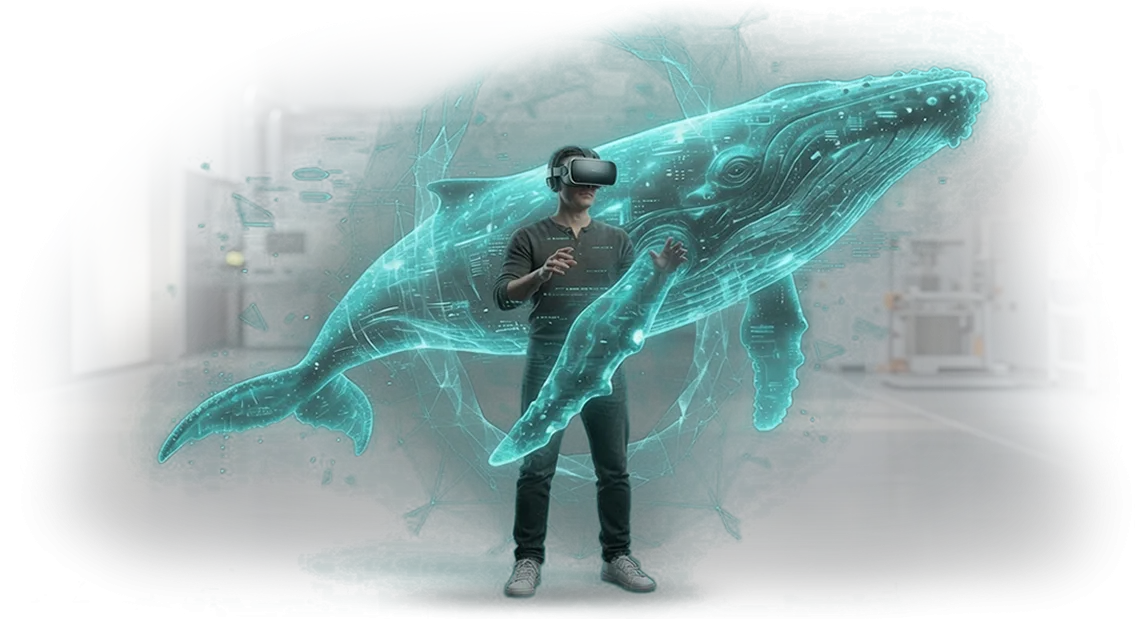
Smart Glasses change this: the right information appears right before the eyes, and hands remain free. This is not an experiment but a working tool that already brings value in retail, logistics, healthcare, and manufacturing.
Imagine: a store consultant sees a customer’s purchase history and immediately offers what they really need. A courier checks the address and parcel weight without being distracted from the road. An engineer receives blueprints and instructions without paper documents.
Each such scenario shortens operation time, reduces the number of errors, and turns an ordinary interaction into a memorable experience that boosts loyalty.
For business, this means measurable results: faster service, higher conversion, lower training and control costs. It also builds the image of an innovative company that customers choose and talk about on social media.
Smart Glasses become a point of differentiation: while competitors use familiar technologies, you show that you are looking ahead.
The time for asking whether such devices will catch on is already past. What matters more is understanding which scenario fits your business and how to start delivering value right now.
The sooner you design your user scenario for Smart Glasses, the sooner you will see returns and strengthen your market position before others do. We help turn this opportunity into a working solution.
What You Get from Smart Glasses Applications
Smart glasses are no longer an experiment — today they are a working tool that sets your brand apart from competitors. Guests and customers remember not slides and speeches but the personal experience of interacting with a product.
A smart glasses application delivers exactly this experience: it surprises, engages, and makes people talk about you.
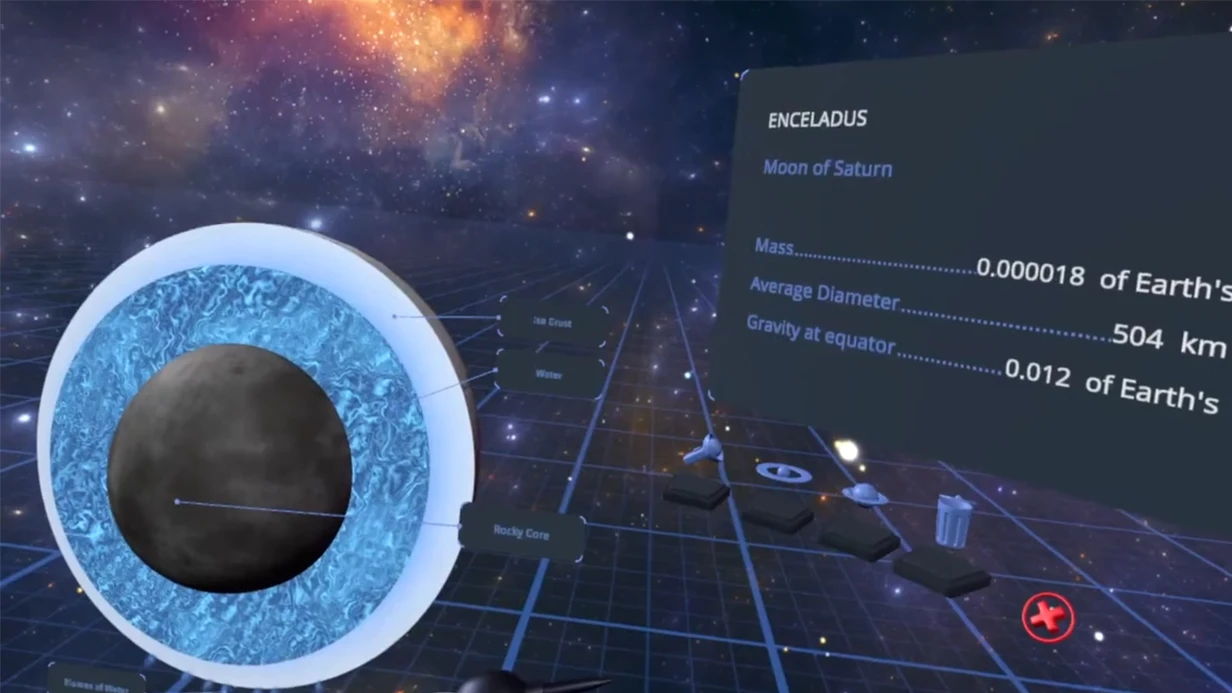
The main benefit is an effect that is hard to achieve with ordinary screens. A person puts on the glasses and finds themselves inside your story: they see a three-dimensional product, explore it with details, take part in the scenario rather than just watch.
This works at exhibitions, showrooms, presentations, and events — at any point of contact with the audience.
The second result is reach. When a guest gets vivid impressions, they share them on social media themselves. Each such post is a free recommendation for your potential customers.
The application turns a one-time event into a long wave of mentions that keeps working for weeks after the event ends.
The third is recognition. Using smart glasses positions the company as modern and tech-savvy. This supports the image: partners and clients remember a brand that offers unconventional solutions. It looks more premium and reliable than a standard presentation.
The fourth benefit is leads. An interactive scenario allows you to collect contacts right during the interaction: a guest leaves their details to receive materials or continue the acquaintance. You get a database of interested people without extra effort and without cold calls.
Together this delivers a measurable result: a vivid impression on guests, greater reach, a stronger brand position, and a stream of warm leads.
We support the project from idea to launch and help embed the application into your marketing strategy so every element serves your business goals.
Smart Glasses Application Formats for Your Task
Smart Glasses solve various business tasks: attracting attention at an exhibition, quickly training newcomers, guiding a guest through a facility, or helping a service engineer in the field.
The same product cannot be used equally effectively everywhere — which is why we develop applications for the specific scenario in which you operate.
The format determines how the user interacts with the interface and what result your business gets. At an exhibition, a vivid demonstration and visitor engagement are important; in training, step-by-step prompts and action control; in a tour, smooth content delivery.
We select the format for your audience and goals so the application solves the task rather than being technology for technology’s sake.
Typical Smart Glasses Scenarios
| Format | For whom | What it gives the client |
|---|---|---|
| Interactive demonstration | Exhibitions, showrooms | Visitors interact with the product themselves, share photos and videos — higher recognition |
| Training with prompts | Manufacturing, retail, logistics | Faster onboarding, fewer errors, no mentor needed at every step |
| Augmented reality tour | Museums, promo tours | The guest receives content along the way — higher engagement and repeat visits |
| Remote support | Service, installation, healthcare | The expert sees the specialist’s view and gives guidance — complex cases are resolved faster |
We do not just write an application; we develop the scenario for your event or process format: we determine session length, information volume, control methods, and user actions. At the prototyping stage, we show what the interaction will look like and adjust it before launch.
As a result, you get a solution that measurably affects target indicators: more contacts at the exhibition, faster transition of a newcomer to independent work, fewer errors in processes. Tell us about your task — we will suggest a suitable format and show examples for your industry.
How a Project with Our Studio Works
A clear process with no technical detail. We walk the path from the first brief to a working application together with you, and at every stage you see the result and influence it.
- Brief and immersion — we discuss your task, audience, and smart glasses usage scenario. You talk about your goal, we propose a solution.
- Interaction scenario — we show how the user will act in smart glasses: steps, screens, and logic. This is a flexible foundation that is easy to adjust.
- Interface design — we draw the visual style for your brand and refine screens and elements. You receive clear mockups and make edits before development starts.
- Development — our specialists build the application based on approved mockups. You regularly see intermediate versions.
- Testing on real devices — we check how the application works in your actual scenarios: at an event, in an exhibition, or in daily use.
- Launch — we publish the application, help with configuration, and prepare instructions for your team.
- Support and growth — after launch we stay in touch, promptly fix issues, and help with updates.
Each stage ends with a concrete result: from prototype to working application. You understand where the project stands and what comes next.
What Is Included in the Delivery and What Results You Get
You receive not just a set of screens but a UX/UI kit for smart glasses ready for development — taking into account all the limitations and capabilities of the format.
This allows the development team to start implementation immediately, without wasting time on guesswork and iterations.
The delivery package includes:
- Interactive prototypes — working interface scenarios: navigation, notifications, augmented reality interaction. You see the product’s behavior before development starts.
- Design system for glasses — a unified set of elements: fonts, icons, colors, components. It ensures interface consistency and accelerates changes.
- Interaction scenarios — well-thought-out paths for eye, gesture, and voice control. The user understands the product intuitively, without training.
- Testing results — interface validation with the target audience, identified issues, and recommendations for resolving them. You receive a product that has already been verified by real users.
- Performance metrics — indicators for evaluating interface success: speed of task completion, error rate, user satisfaction.
- Developer instructions — a detailed description of the UX logic, technical requirements, and implementation recommendations. Removes questions during the coding stage.
Such a package is your insurance against rework: UX errors are found and fixed before code is written, the interface is ready for implementation, and the development team has all the necessary materials.
In the end, you get not just design but a working product with clear rules for support and development.
Case: How We Helped a Client Double Sales with Smart Glasses
The “UyutDom” furniture salon chain came to us with a clear pain point: showroom sales were falling, and customers could not imagine how a sofa or furniture suite would fit into their interior. A buyer would leave to “think it over” — and only one in five returned. They needed a tool that would translate “imagine it” into “here is how it will look at your place.”
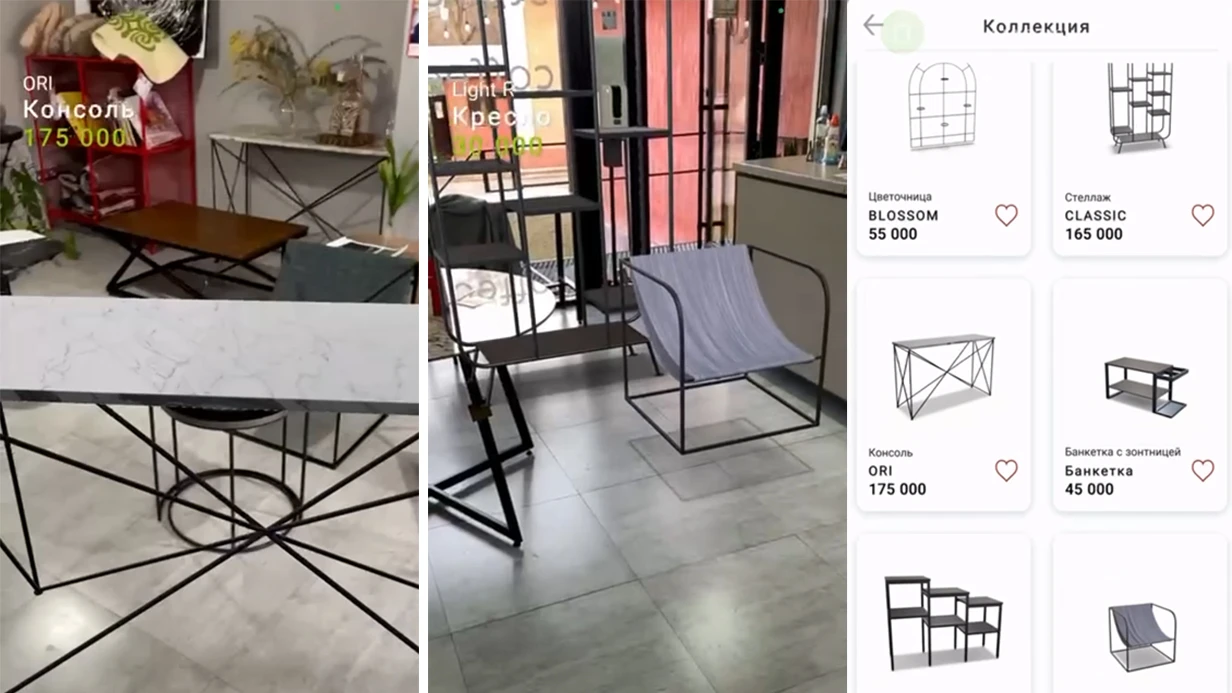
We designed a smart glasses interface for the showroom: the customer puts on the glasses, selects a model from the catalog, and the furniture appears right in the hall in front of them.
They can change the color, size, and rotate the furniture — all in real time, without the consultant’s involvement. It took several interface testing iterations to make the controls feel natural and intuitive for someone picking up such glasses for the first time.
Results appeared within the first month of the hall’s operation. Furniture sales doubled, and conversion from viewing to purchase increased twofold. The average time at the display rose from three to twelve minutes, and almost 80% of visitors used the glasses.
The glasses themselves became a center of attraction: people brought their families, filmed the process, and actively shared their impressions — giving the chain free social media reach.
The chain’s manager comments: “We expected a technical novelty, but we got a sales tool. Customers stopped hesitating and started buying more.” After a successful launch in one hall, the company scaled the solution to three more salons.
This confirms: a well-designed smart glasses interface is not entertainment but a working sales channel that pays for itself through higher average check and faster deal closure.
Frequently Asked Questions and Concerns Before Ordering
Before ordering an interface for smart glasses, doubts are common. A new format always raises questions: will the image be sharp while moving, will the system freeze, what to do if a failure occurs. A good contractor answers these before the start, not after.
We have been designing for smart glasses for years and know the weak points. That is why we build in proven technologies and fallback scenarios — you get not a mockup but a working tool. Below are answers to the questions we hear most often.
How do you guarantee stable performance?
We design the interface for a specific glasses model and test it in real conditions: different lighting, movement, several users simultaneously. Before launch we run control checks and provide a checklist for quick verification at the venue.
What happens if something breaks?
For events we provide a backup kit and a fallback scenario. If the primary equipment fails, the backup takes over within minutes, and guests do not notice a pause.
Will guests be able to figure it out without preparation?
Yes. The interface follows the logic of familiar applications: minimum actions, large prompts, clear labels. Users do not need instructions — everything is intuitive.
Do you provide help after launch?
Yes. We stay in touch after delivery: we configure equipment, answer your team’s questions, and make edits if tasks or the event format change.
Ultimately you get not a mockup but a well-structured system with a clear interface and support at every stage. We handle the technical side; you manage the process and the result.Ready to Start? Submit a Development Request
Submit a request, and within one business day you will receive a clear action plan. We will break down your task, propose a smart glasses solution, and show how it fits into your current ecosystem. After that — only concrete steps and a predictable result.
Immediately after your inquiry, we take the project into work and follow a transparent route:
- We have a call and clarify goals: use scenario, target audience, expected business impact.
- We analyze the idea and prepare a proposal with a timeline and cost estimate.
- We show examples of similar projects and prototypes so you can see the direction before development starts.
- We assign a team: a personal manager, a designer, engineers.
- We launch the first stage — you get an interim result within the first week.
Here is what you get immediately after your inquiry:
- a personal manager who leads the project from the first call to launch;
- a consultation on the capabilities of VR/AR/MR and smart glasses applications in your business;
- a preliminary cost estimate and timelines before work begins;
- access to intermediate versions of the application and the ability to make edits quickly;
- a fixed cost for the agreed scope — no hidden surcharges;
- technical support after release and training for your team.
The sooner you start, the faster your users get a convenient interface and you get a measurable result. Submit a request now, and we will advise the next steps for your specific task.
How to Choose the Right Format for Your Task?
A format is not a technical parameter but a way to solve a specific business task. That is why the choice starts not with equipment or “trendiness” but with the question: what should your customer or employee do after the interaction?
Remember the brand, learn an algorithm, see the product in action, or make a purchase decision — each scenario calls for its own form.
If your goal is to surprise guests and create a vivid impression, choose short interactive scenarios for events and exhibitions. Such formats are easy to fit into a program, do not require lengthy training, and give guests an instant emotion they want to share.
When it comes to employees — for example, training staff to work with new equipment or service standards — step-by-step scenarios with action practice and result verification are more effective.
For retail and product presentations, displays with digital data overlaid on real objects work well — the buyer sees the product in context and understands its value faster.
Another marker is the speed of the expected effect.
If you need to attract attention to a booth within two or three seconds, the format should be as simple as possible: “put on — saw — reacted.” If the task is deeper, such as practicing a complex sales scenario, multi-step dialogs with prompts and feedback are more appropriate.
The main advice: do not chase the most complex solution; choose a format that fits your task and audience. We always start with a short pilot — we build a scenario, test it on a small group of users, and measure reaction and engagement.
This way you get exactly the format that works toward your goal without unnecessary investment. And if the task changes, the same base scenario is easily adapted to another format.