



Clients Are Leaving for Competitors — Why Training Simulators Solve the Problem?
Remember when a new employee starts their shift and makes their first mistake? The cost of that mistake is a dissatisfied client who silently walks away to a competitor.
In service companies, banks, retail, and manufacturing, the quality of work directly depends on how quickly staff master standards and handle non-routine situations.
But classic lectures and briefings don't provide the necessary depth: an employee retains 10% of what they hear and 30% of what they see, but what they've done with their own hands is absorbed almost completely.
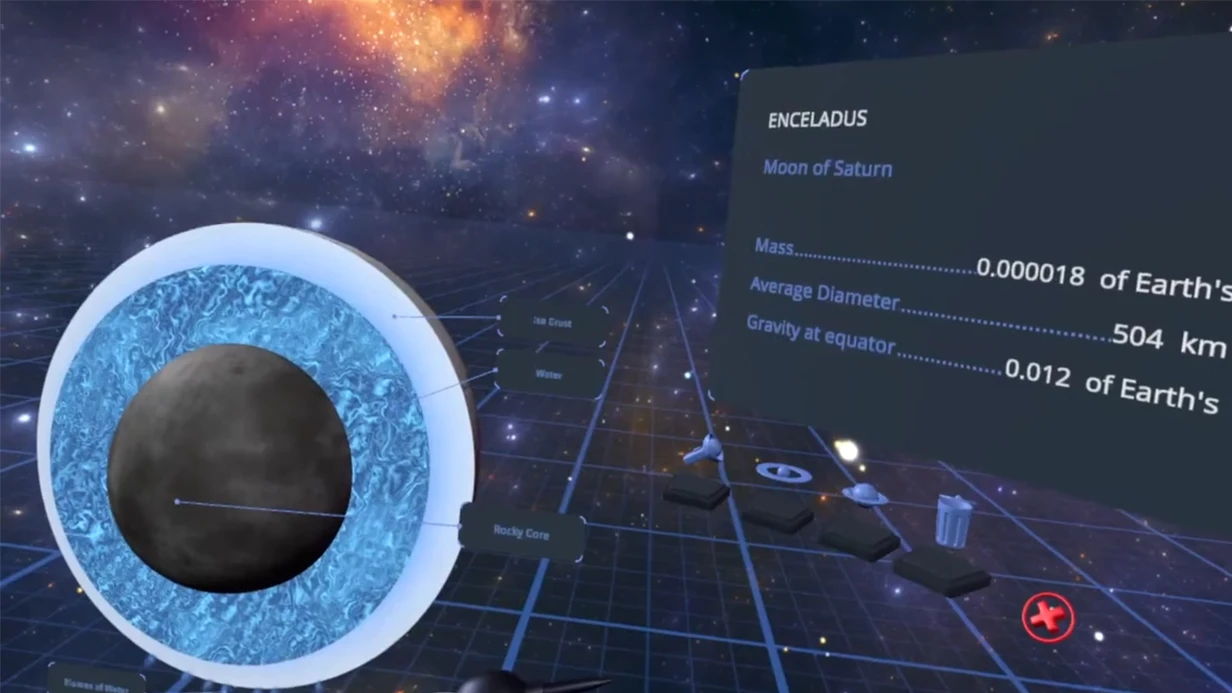
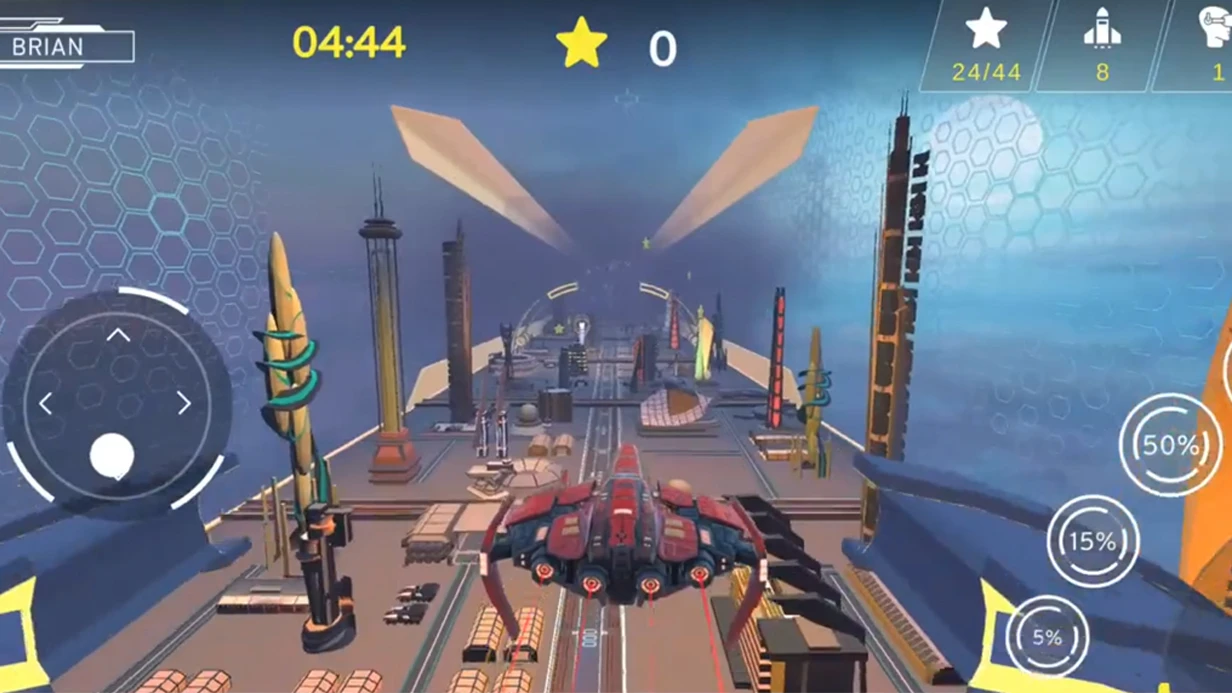
Training simulators are virtual learning experiences that place the employee in a realistic environment: negotiations with a difficult client, working on dangerous equipment, actions during an emergency.
Interactive simulators allow skills to be honed repeatedly without risk to the business and its reputation.
A newcomer receives feedback immediately after each step, and an experienced employee gets the opportunity to practice rare scenarios that are impossible to reproduce in everyday life.
For a business owner, this means three things. First, increased client retention thanks to consistent service quality. Second, reduced time for an employee to reach full productivity: instead of weeks — just a few days.
Third, lower costs for expensive equipment and materials used for training purposes. This is why companies that implement staff training on virtual simulators noticeably outpace their competitors — their employees are ready for reality, not just theory.
We develop training simulators tailored to your business objectives: from scenario design to interface usability. What matters is not just a well-made 3D environment, but the learning logic that is clear to the employee and guides them toward the right result. With us, you get a tool that quickly pays for itself through improved quality and client retention.
What You Get with VR/AR Applications for Training
Classic lectures fail to hold the attention of even experienced employees: material is forgotten, skills are not practiced.
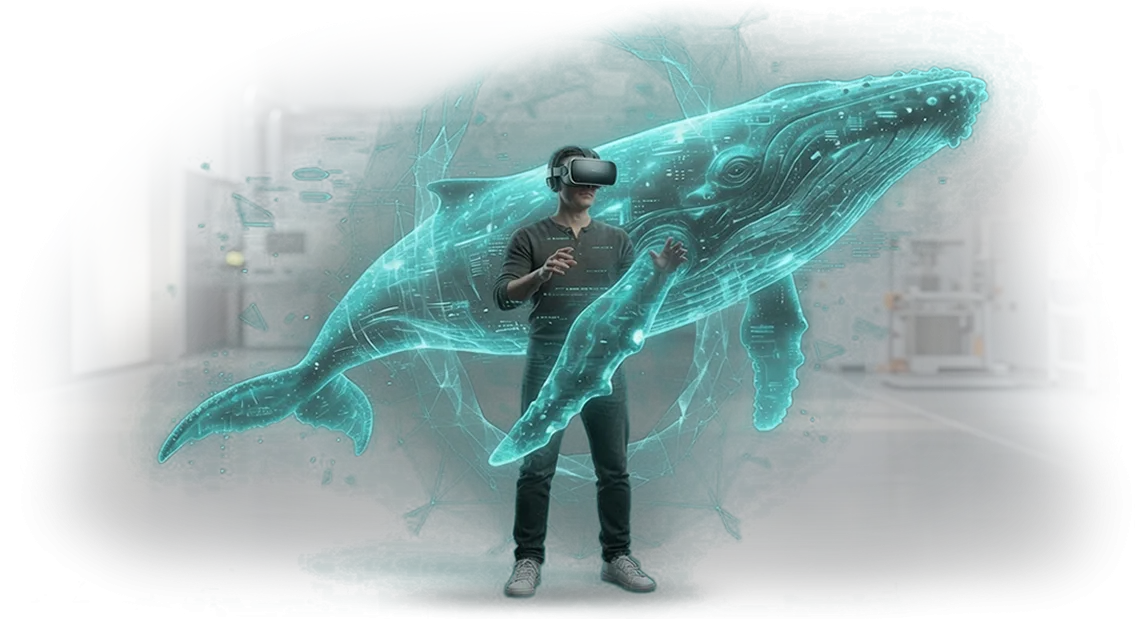
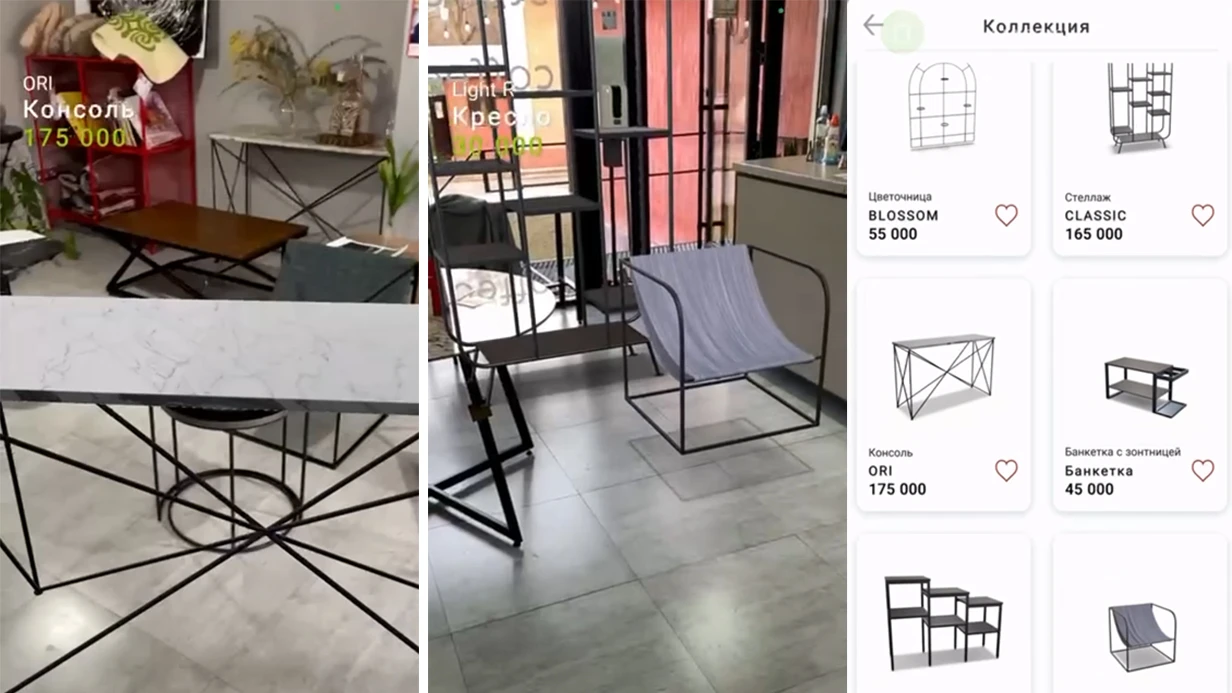
Virtual reality (VR) shifts learning from the "listening" format to the "doing" format — a person enters a realistic situation and makes decisions. Augmented and mixed reality expand the training space, allowing skills to be practiced right at the workplace.
We design UX/UI for training simulators so that the interface doesn't interfere but instead enhances learning. Upon project completion, you receive a clear checklist of results:
- Higher engagement. Interactive scenarios hold attention until the end of the session and motivate users to return to the simulator.
- Retention. Mistakes are experienced in a 3D environment and transfer into real work faster than through slides and presentations.
- Reach. One scenario is available to teams in different cities — no need to gather everyone in a single classroom.
- Brand appeal. A modern training format increases the company's attractiveness and builds an image of a tech-savvy employer.
- Safety. Emergency situations are practiced without risk to people or equipment — you don't lose money on mistakes.
Each item is not just a "feature" but a measurable benefit: higher engagement, lower costs for retraining, faster time-to-competence for new hires.
If you want to raise the quality of training in your company, start with a short consultation — we'll select a scenario for your task and show how the application will fit into your existing process.
Training Simulator Development Formats for Your Task
Every company faces the challenge of employee training, but there is no one-size-fits-all solution. Some need to quickly introduce a newcomer to equipment, others need to practice actions in rare emergency situations, and some want to impress visitors at an exhibition.
That's why we develop training simulators in various formats — from lightweight AR prompts to full immersion in virtual reality.
The choice of format depends on your goals, the number of trainees, and the degree of realism required by the task. Below are the main options we implement, with a clear description of the business value.
Main Simulator Formats
| Format | For Whom | What It Delivers to the Client |
|---|---|---|
| Fully immersive VR simulator | For operators of complex equipment, doctors, rescuers | Allows safe practice of rare and dangerous scenarios, bringing actions to muscle memory |
| AR trainer with overlaid instructions | For new employees working with real objects | Reduces onboarding time: prompts appear right in the field of view |
| Interactive 3D trainer | For mass training when VR headsets are impractical | Accessible from any device, convenient for remote training of large groups |
| Simulator for exhibitions and events | For marketing and brand promotion | Engages visitors, creates an emotional connection with the brand, and provides content for social media |
We will help you choose the format that best fits your task, budget, and audience. During the consultation, we'll analyze which option will deliver maximum results in your situation.
How a Development Project Works: 7 Stages
We structured the development process so you always know what stage the project is at and what happens next. Each step ends with an approval — you see the result before major resources are spent. Below is a 7-stage plan: from brief to support of the finished simulator.
-
Brief and task immersion. We gather requirements, study your audience, workflows, and learning objectives. The outcome is a clear description of what the simulator must do and what results you will get.
-
Concept and scenario. We propose the exercise logic, session structure, and instructor roles. You approve the approach before development begins — this saves time and budget.
-
Interface design mockup. We create a user-friendly environment: clear prompts, controls, visual instructions. The look and interaction logic are locked down before programming starts.
-
Simulator development. We program the functionality on professional equipment, refining realism and action response. You receive working prototypes at this stage.
-
Testing and debugging. We conduct internal checks and involve your specialists in test runs. We fix errors and bring the solution to stable operation under real-world conditions.
-
Project launch. We deploy the simulator in your infrastructure, configure the hardware, hand over documentation, and train your team. After this, the solution is fully ready for use.
-
Support and evolution. We support the project after launch: provide consultations, update it to reflect changes in training programs, and add new scenarios. We guarantee the simulator stays relevant and delivers results.
What's Included in Delivery: A Complete Launch Package
The client receives not just an application, but a ready-to-use training tool. We hand over a complete package so you can launch the simulator in the first days after delivery — without a separate procurement round for adjustments and lengthy documentation disputes.
The delivery package includes:
- Ready-made VR/AR application — tailored to your tasks and devices, tested on real training scenarios, and ready for daily use.
- Source materials and project files — remain yours. You're not tied to us: you can develop the simulator with any team or with our support.
- Clear documentation — instructions for installation, setup, updates, and common issues. No "ask the developer" situations: your technical specialist can figure it out on their own.
- Training for your team — we conduct sessions for administrators, trainers, and support staff. Everyone knows their role: how to launch a session, track progress, generate a report, and resolve an issue.
- Methodological materials for trainers — lesson scenarios, skills assessment checklists, and recommendations for working with groups. The trainer doesn't need to invent a format — they take the ready-made program and run the session.
- User guides — short instructions for employees: how to put on the headset, how the exercise works, where to turn for help. Adaptation time is minimal.
- Launch assistance with the first groups — we run pilot operations together, adjust processes, and support the first real sessions.
- Support during the first weeks — you're not left on your own. We answer questions, help with setup, and quickly resolve any issues.
This approach has been proven across dozens of projects: the client gets not a "raw product," but a working solution with a trained team and clear instructions. You launch the simulator on time, without missing training deadlines or overburdening your staff.
Case Study: How We Increased Training Efficiency by 40%
The client — a network company "TechnoIndustry" with branches in five cities — faced a typical problem: training new employees on complex equipment took up to two weeks, and mistakes still occurred during the first independent shift.
This slowed down the launch of new facilities and increased the load on mentors, who were distracted from their core duties.
We proposed replacing part of the theory and practice with a VR simulator. Instead of abstract mockups, we built an interactive environment that replicates the real workshop: the same instruments, the same sequence of operations, and the same emergency situations.
The focus was on a well-thought-out interface — it guides at every step rather than distracts, so newcomers immediately learn correct actions instead of memorizing button placement.
Results in Numbers
Employee preparation time dropped by 40% — from two weeks to six working days. The error rate during the first independent shift fell nearly threefold, and mentors could focus only on complex cases.
According to the client's assessment, the simulator paid for itself within three months through reduced material consumption and faster launch of new production lines.
Client Testimonial
The head of training noted: "Previously, we explained the process in a classroom, but the employee still acted hesitantly. Now they arrive at the real facility having already 'touched' the equipment and know how to respond to failures.
We cut the introductory course time almost in half" — and this is not a one-off story: several branches are already using the same scenario.
For us, this case confirms that a properly designed simulator interface directly affects the economics of training. Faster adaptation, fewer mistakes, and investment return within a quarter — these are the metrics that motivate businesses to invest in VR.
If you want a similar result, let's start with a small pilot module and measure the effect on your data.
Frequently Asked Questions and Concerns Before Ordering
Before ordering a virtual reality trainer, many clients have the same concerns: how much does it cost, is it too difficult for employees, how will we meet deadlines. This is normal — any new format requires clarity.
We've collected answers to the questions we hear most often from clients during the project discussion phase.
How much does VR simulator development cost?
Cost depends on the volume of scenarios, the number of interactive elements, and the schedule. At the start, we prepare a detailed estimate broken down by stages — you understand what you're paying for. If the budget is limited, we can begin with a prototype to see the results and scale up afterward.
How difficult is it for employees to master the simulator?
Simulators are designed around the tasks of specific specialists: the interface is clear without lengthy training, and instructions and launch support help the team adapt quickly. Most employees master the system in one day, not in weeks.
How do you guarantee deadlines?
Timelines depend on the project's complexity, but we always establish a roadmap with stages and milestones. You see progress every week and can influence priorities. We warn about any risks in advance, not on the last day.
What's included in the warranty and technical support?
Warranty and support are part of the contract. After launch, we stay in touch: we update the system, fix bugs, and help add new scenarios. This is not a one-off project but long-term cooperation — you always know who to contact.
If you have your own question — just ask: we'll answer honestly and show examples from similar projects. The key thing is that you get a simulator that solves your business problem, not just a flashy technology.Ready to Discuss Your Project? Request a Consultation
Ready to discuss your project? We invite you to a consultation: we'll explain how training simulators solve your business challenges and prepare a cost calculated after audit for your scenario.
A single conversation with our expert will save you weeks of searching for a contractor and help you avoid common mistakes at the start.
We've been creating VR/AR applications for training for 10+ years and know what makes a simulator genuinely useful: a short path from theory to practice, realistic scenarios, and a clear interface without unnecessary complexity.
That's why before starting work, we always discuss goals and objectives rather than just offering to "draw a pretty picture."
What you get by ordering development from us:
- A consultation: we'll break down your task and suggest 2–3 solution options with cost and timeline estimates.
- Transparent pricing: the estimate is fixed before the contract is signed, with no hidden surcharges.
- Experience in training simulators: dozens of completed projects for industry, medicine, and the service sector — we know how to teach effectively.
- A personal manager: one point of contact at all stages, from brief to launch.
- A ready-to-use simulator: tested on your scenarios, with instructions and staff training.
- Post-launch support: we quickly implement changes and help grow the product.
Leave a request on the website or call us — we'll get back to you within one business day. We'll explain how to apply VR/AR to your training and offer a step-by-step action plan. The consultation is completely non-binding, but you'll gain clarity and confidence in your next step. You can reach us through the form or by phone — let's discuss your project and calculate the cost.
How to Choose the Right Training Simulator Format?
Choosing a training simulator format doesn't start with technology, but with an answer to the question: what problem are you solving and who is the training for?
If you need to practice actions in a hazardous environment, capture the attention of new employees, or verify skills without risking production — different scenarios will apply. It's the goal that determines which simulator will be effective and pay off faster.
Clients often have specific requirements: industry regulations, equipment features, multiple locations, or working with a large number of staff. A ready-made system doesn't always cover such tasks.
In these cases, we select a format individually — it could be a short VR session on a smartphone with a cardboard headset, a full-fledged simulator with professional equipment, or a mixed scenario where the employee interacts with both a real object and augmented reality.
Budget and hardware also influence the choice but don't strictly determine it. A task can be solved with minimal investment if approached correctly: part of the training is done on regular computers, part in virtual reality.
At the same time, we help balance cost, reach, and training speed so the results are visible after the very first launch.
That's why selecting a solution is a collaborative process. We conduct a short audit, study your specifics, propose 2-3 formats with a description of their impact and cost, and then pilot the chosen option with a small group. You see how it works in practice and only then scale it to the entire staff.
In the end, you get not an abstract "technology," but a training tool that solves a specific problem: employees integrate faster, act with more confidence, and make fewer mistakes in real conditions.