



The automotive industry is losing orders because of poor presentations
In the automotive industry, the purchase decision is made on emotion.
A static catalog or a photo does not give the buyer the main thing — the feeling that “this is my car.” They look at competitors where they can examine a vehicle from every angle, step inside the cabin, and imagine themselves behind the wheel.
As a result, complex technical specifications do not work, and the customer goes to whoever knows how to show the product in action.
Losing an order at this stage is a familiar story for dealers: time is spent, but the customer hesitates and postpones the decision.
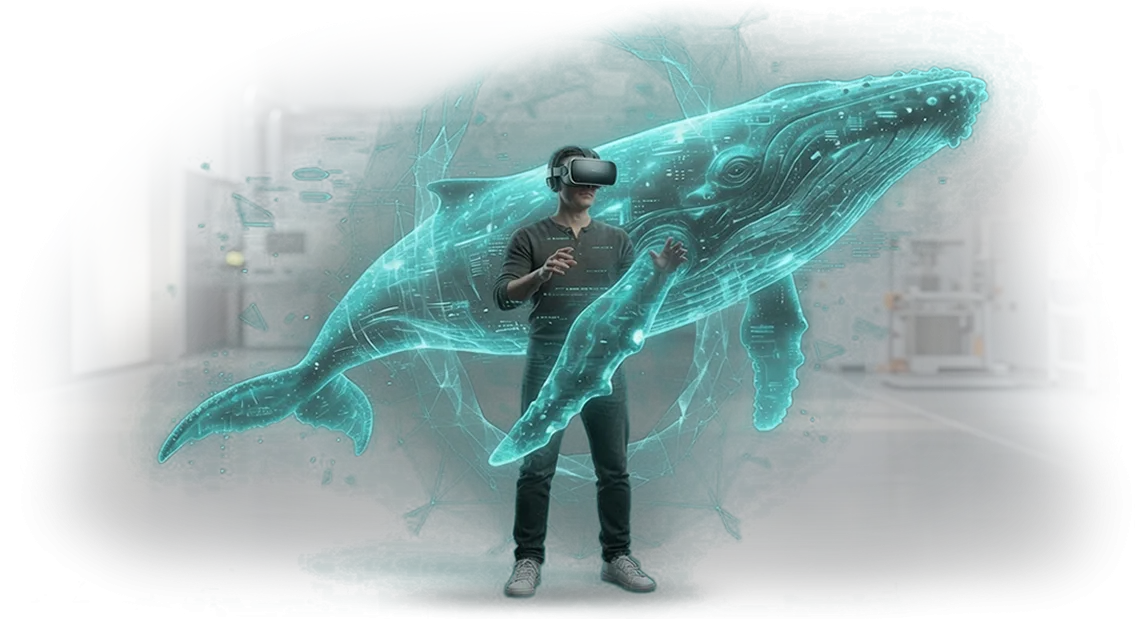
A slide-based presentation does not answer the buyer’s main question: “how will this car fit into my life?” That is why automakers are moving to VR presentations and AR for dealers.
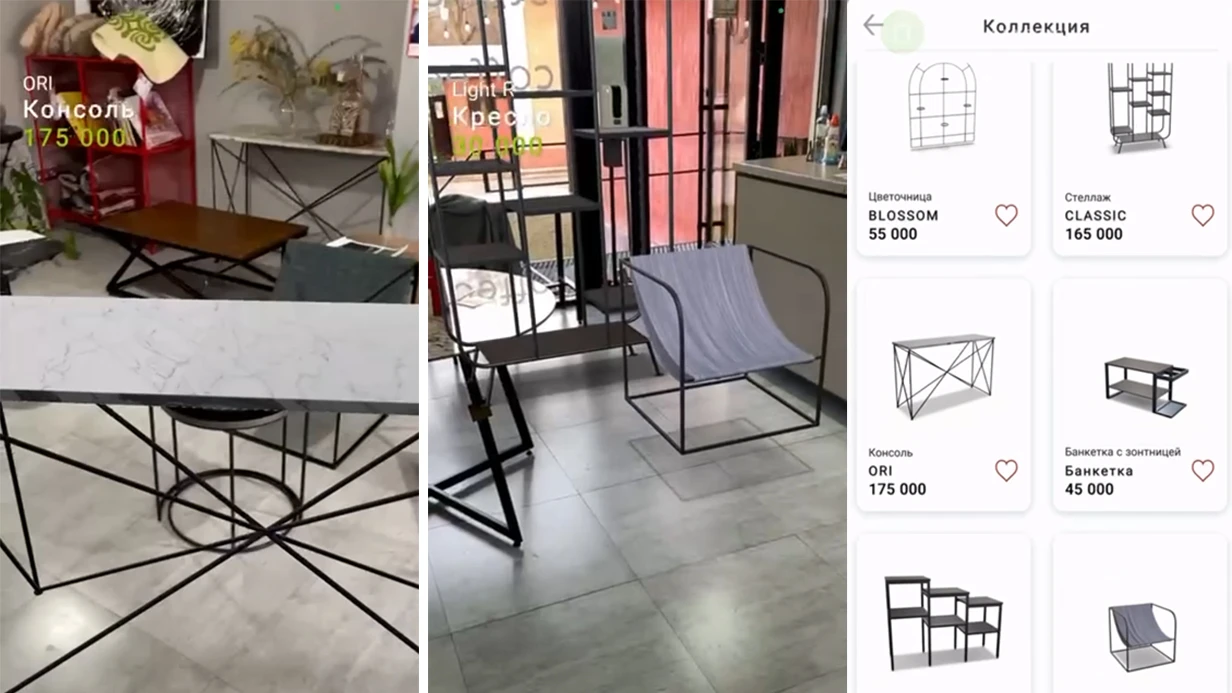
Interactive car visualization shows the model in real size, lets you change the color, wheels, and interior trim — in minutes, right in the meeting room, showroom, or at an exhibition.
This kind of presentation removes objections and shortens the path to the deal: the customer already “owns” the car, so they make decisions faster and are more willing to book a test drive.
For business, this is measurable value — more qualified leads, higher conversion to order, less time spent explaining features in words. Customers spend several times longer in a virtual demo than reading a catalog, and they return to such materials more often.
We, our team, close this gap for automakers and dealer networks. We create VR presentations for negotiations and exhibitions, AR applications for showrooms, and mobile configurators that work on any device.
Turnkey car visualization — from scenario to launch: you get a tool that sells without a manager’s involvement, and we handle all the technical work and support.
What an automaker gains from VR/AR technologies
Today’s car buyer goes through a long journey: first they study the model on the website, then they go to the dealership to see it in person, and only then do they decide.
At each stage there is a risk that the customer will change their mind or go to a competitor — too much time and doubt lies between initial interest and purchase.
VR and AR shorten these links: a car can be shown in a realistic format right at the moment of first contact — on the website, in an app, or at an exhibition. This increases conversion to inquiries and allows you to collect contacts before the person even steps into the showroom.
The earlier a potential buyer “sits” into a virtual car, the more likely they are to leave their data.
Virtual try-on of trims and options saves time for both the salesperson and the buyer. The customer immediately sees how the body color matches the interior, how multimedia and driver assistance systems work, and moves faster to discussing price and deal terms.
This shortens the sales cycle by several days: fewer approvals, fewer trips to the showroom, fewer doubts. The result is faster sales with the same manager team.
The emotional component has its own value. Guests remember a VR/AR experience and talk about it on social media, which means the brand gets free reach and recognition.
Presenting a new model in augmented reality at an event or in a showroom creates a “wow” effect and sets the manufacturer apart from competitors who limit themselves to standard catalogs.
For an automaker, VR/AR is not an entertainment feature but a working sales tool. Each of these effects — more leads, a shorter funnel, stronger brand — can be measured and scaled.
That is why the technology investment pays off from the first campaigns and then becomes part of a competitive advantage.
VR/AR solution formats for the automotive industry
Each VR/AR format must solve a specific business task — from presenting a new model to training service engineers. Below are three proven scenarios already working in the automotive sector.
| Format | Who it suits | What it gives the client |
|---|---|---|
| VR showroom | Sales departments, dealers, marketing | A full showcase of models and trims without the cost of exhibition space. The buyer explores the car at realistic scale, and the manager immediately gets a warm contact. |
| VR test drive | Hesitant buyers, trade-in programs | The ability to “drive” any model in any conditions. This removes the main objection, “I’m not ready to buy a pig in a poke,” and increases conversion to a real test drive. |
| AR instruction | Service centers, training departments, customers | Step-by-step hints overlaid on the real car: from oil changes to electronics diagnostics. Staff errors decrease, and new employees reach proficiency faster. |
The formats are easy to combine: a VR showroom launches sales in dealerships, while an AR instruction reinforces the quality of after-sales service. This creates a full customer care cycle — from first contact to service.
We work on professional equipment and the Unity stack, which guarantees smooth graphics even on mainstream headset models. We select the format according to your budget and task, and after launch we help integrate it into your business processes. Leave a request — we will tell you which scenario will pay off fastest in your case.
How a VR/AR project for the automotive business is developed
When you order a VR/AR project for the automotive business, the main thing is to understand what happens at every step. We have built a transparent process: you always know where the project stands, what is already done, and what comes next. No magic — only clear agreements and a result you check personally.
- Brief and task analysis. We define the business goal: show a new model to a client, train service staff, or reduce spending on physical booths. We identify the audience and success criteria — for example, the number of test drives or the share of repeat visits.
- Scenario and mockups. We design the user journey: how a person will interact with the car, which options to view. We prepare interactive mockups and align every detail with your team — before serious resources are invested.
- Prototype. We build a working prototype that can be tested with real guests or employees. You see how everything looks and works and can make changes without unnecessary cost.
- Development and integration. We move the approved scenario into the final application. We connect your data, 3D car models, and internal systems so that everything works on your equipment.
- Testing and debugging. We run the scenarios on different devices, fix errors, and make sure the application works stably even under high load — for example, during an exhibition or presentation.
- Launch and support. We deploy the project, train your team, and launch a pilot or a full-scale campaign. We stay in touch: we help with updates and add new models and features as your tasks grow.
What is included in the delivery of a VR/AR solution
We deliver more than just a “program” — we deliver a working tool that can be used and developed immediately. The delivery package is structured so that your business does not depend on one specific contractor, whether at launch or a year later.
Here is what is included in the complete project scope:
- Developed VR/AR application — a finished product that runs on your equipment (headsets, tablets, smartphones) and solves a specific task: employee training, presenting a car to a customer, or assembly control.
- Source code — all code is transferred to your ownership. You can hand it to another development team, make changes with your own specialists, or simply keep it as an asset that does not lose value over time.
- Technical documentation — a clear description of the architecture, deployment instructions, and configuration guidance. This is not “documentation for engineers” but a practical manual that saves weeks during any update.
- Employee training — we conduct on-site or online sessions for your team: administrators who will run the system and end users. Your staff works confidently with the solution from the first days, without constantly consulting us.
- Content adaptation — we load your 3D models, drawings, and materials into the application and configure scenarios to your specific needs — from a particular car model to standard assembly line operations.
- Warranty support — after launch we stay in touch: we fix errors, help with updates, and answer questions. You get stable system performance during the critical adoption period.
This approach is standard for our projects in the automotive industry. You get a fully turnkey solution that you own completely, and we make sure it works.
Case study: a VR presentation shortened the deal cycle by 30%
For automakers, the main pain is the customer’s long journey from interest to purchase. The buyer cannot imagine the car from a catalog, the manager spends hours in negotiations, and competitors offer more options.
We encountered this in a project for a major automaker: dealers were losing up to 40% of potential deals at the trim selection stage.
We developed a VR presentation of a new crossover: a customer in the showroom puts on a headset, “sits” inside the cabin, changes the body color, opens the trunk, and compares trims in full size. The manager only needs to answer questions instead of reciting specifications. The pilot was launched in 15 dealerships and at two exhibitions.
Implementation results
The deal cycle shortened by 30%, conversion to test drive grew by a quarter, and the average ticket increased due to additional options. In the first two months, more than 500 visitors used the VR presentation, and the automaker ordered an expansion to the entire model lineup.
The main takeaway: an immersive format does not entertain — it sells. The client sees the product “live” before physical contact; trust grows and objections decrease. This case confirms that VR investments pay off through faster deals and higher revenue, not just through image.
How to choose the right VR/AR format for your dealership?
There is no universal VR solution for every dealership task, so choosing a format starts not with equipment but with a question: what exactly do you want to achieve?
If the goal is to let a customer “sit” in a car that is not yet in the showroom within 10 minutes, a stationary VR zone with one headset is enough.
If the task is to show all trims and options on a large screen to a group of visitors, you will need an interactive 3D presentation with a screen and tablets for managers.
A VR budget at a dealership usually depends on how often and for what purpose the system will be used. For a single showroom where the VR zone operates daily, a turnkey package of professional equipment and a program adapted to your model lineup is optimal.
For a dealer network, it is smarter to replicate the solution with centralized content and updates — this reduces the cost of each additional showroom and simplifies support.
Another important criterion is the type of interaction. If the customer simply needs to view the car outside and inside, a virtual showroom with photorealistic graphics will work.
If the goal is a test drive or customizing the car (color, wheels, interior trim), you need a more “live” system with real-time parameter changes.
For non-standard tasks — such as training service staff or showing hidden vehicle components — augmented reality is better, where virtual objects are overlaid on the real car or space.
The rule is simple: the more complex the task and the more people involved, the “deeper” the format needs to be.
You can start with one scenario — for example, a VR presentation of a new car at an event — and then, after evaluating customer response, scale the solution to the showroom’s daily work.
We help you choose a format based on your task and budget rather than pushing an expensive headset regardless of fit, so at the start we define the goal, the number of visitors per day, and the usage scenarios — and only then propose the optimal solution.
If you are not sure which format suits your dealership, start with a short brief: tell us how many customers you want to serve with VR/AR, which models to show, and what result you would consider a success.
Then we will offer 2-3 options with different budgets and implementation timelines — from renting a VR zone for an event to a full showroom installation with manager training.
Frequently asked questions about implementing VR/AR at automakers
Automakers are used to high reliability standards — and rightly so.
That is why, when encountering VR/AR, natural questions arise: will the equipment break down on the workshop floor, how will the solutions fit into current processes, how long will the pilot take, and who is responsible for support after implementation.
We have worked with the automotive industry for more than ten years and hear these questions from every client. Here are answers to the main ones — so you understand that these technologies do not create risks; they remove them.
What if equipment fails in the middle of a working day?
We use professional equipment designed for intensive use. Before launch, we run stress tests in your environment, and during implementation we configure fallback scenarios: if one device fails, an employee continues on another without losing time.
We also stay available during working hours — average response time for critical requests is no more than a couple of hours. For most clients, this means VR/AR-related production downtime is practically eliminated.
How difficult is it to integrate VR/AR with our existing systems?
We conduct an audit of your infrastructure at the brief stage.
Integration usually goes through standard interfaces already used at the enterprise — this allows us to connect virtual scenarios to your databases, design tools, or training portals without rewriting current processes.
If a system does not have a ready-made connector, we develop an intermediate module. The result is a unified workspace where VR/AR is not an “external tool” but a natural part of production.
What are the implementation timelines and when will the first result appear?
We show the first prototype for your task within 2-3 weeks after the brief. It works as a value demonstration: you immediately see how the technology solves a specific task — staff training, assembly control, or product demonstration.
Full implementation with employee training and configuration of all integrations usually takes 1-2 months. But even at this stage, you can run pilots in individual workshops or departments in parallel — this reduces the load on core processes.
Who is responsible for support after launch?
We do not abandon the project after delivery. The standard contract includes a warranty period and technical support: content updates, equipment maintenance, and employee consultations. If your processes change or new tasks appear, we adapt the solution accordingly.
For large plants, we can arrange a dedicated manager and a field visit schedule. This means VR/AR remains a working tool throughout the entire lifecycle — not a one-time demonstration.
The main principle of our projects is to remove the load from your team. We take on the risks related to technology so that you can focus on production results: training speed, fewer defects, and employee safety. We are ready to start with a small pilot — so you can evaluate the effect without major investments in infrastructure.Shall we discuss your project? Leave a request
VR and AR already solve tasks that used to seem like science fiction: employees master complex operations from scratch on virtual models, designers show auto holdings models that do not yet exist, and engineers find errors before series production.
But to get this result, you need a reliable contractor who speaks the language of business, not technical jargon.
We have been implementing these solutions for 10 years and love to start with a short conversation — it costs nothing but saves months of mistakes and unnecessary experiments.
You leave a request for a VR solution, and within two working days we will:
- provide a consultation on applying VR/AR in the automotive industry: staff training, car demonstrations, assembly control, virtual prototypes;
- analyze your task and offer 2-3 suitable implementation scenarios — with a realistic assessment of timelines and budget;
- make a preliminary project estimate without hidden surcharges or fine print;
- prepare payback recommendations: where VR/AR will deliver fast results and where a pilot period will be needed;
- show a demo prototype or test scenario on your data — you see how the future solution will work;
- record all agreements in a commercial proposal and suggest a pilot implementation plan.
Leave a request right now — and we will get back to you with a calculation and work plan, even if the budget is not yet approved. First you get clarity, then a solution that pays off. We will call back at a convenient time, answer your questions, and advise where to start. This is non-binding. Take the first step — we will handle the rest.