



Clients don't understand interior designs from blueprints?
Blueprints, elevations, and static 3D images are clear to a professional, but not to the client. The client sees a flat drawing and can't grasp the scale of the room, ceiling heights, light, or material textures.
As a result, the project "stalls": questions come up, requests to redo a perspective, doubts about dimensions.
Each such iteration is lost days and nerves. The client doesn't understand the value of your work because they can't see the final result. They make decisions slowly, and sometimes put them off completely, going back to competitors who managed to present the project visually.
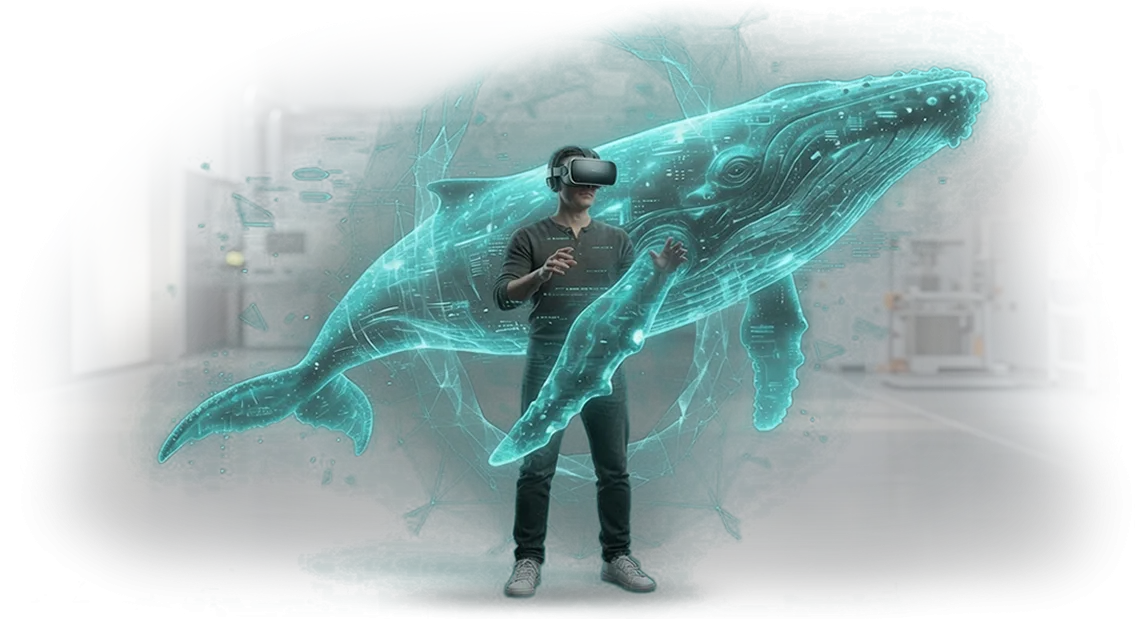
This is solved by virtual and augmented reality technology, which we use to present interiors.
Putting on a VR headset or opening an app on a tablet, the client "steps into" the future space: walks through rooms, evaluates distances, moves furniture, changes wall colors and lighting in real time.
In this format, the project becomes tangible—and questions like "what will it look like" simply no longer remain.
For the designer and studio, this is a ready-made project sales tool. Instead of an album of blueprints, you show the client a finished atmosphere they fall in love with at the very first meeting.
Approvals take mere days, revisions are made before work begins, not after, and each approved version brings you closer to signing the contract.
We have already helped dozens of studios and architectural bureaus shorten the interior sales cycle. Show the client their future home—and they'll say "yes" sooner than they'd review all the blueprints.
What VR project presentations give businesses and clients
Clients can't picture the future interior from blueprints and static renders. Scale, material combinations, and lighting remain abstractions—doubts arise, new questions appear, and approval drags on. Each iteration delays the project launch and increases the budget.
Immersive presentation solves this. The sense of presence lets the client step inside the future space: walk through rooms, evaluate the layout, see light and textures.
On professional equipment, such as Apple Vision Pro, the image looks so natural that the client stops guessing and makes decisions faster.
This speeds up the deal and reduces the number of revisions. The project is approved in a couple of meetings, not a month of back-and-forth correspondence.
A studio that presents projects in VR is perceived as a technology-driven leader—trust in the studio grows, clients are more willing to pay for premium service and recommend you to their network.
We help implement VR presentations as a standard of work: from scene preparation to demonstration on the device. Come to a demo—you'll see the effect of presence on a real project from your studio.
VR/AR formats for interior design for any task
An interior project is hard to sell from pictures—the client doesn't grasp the scale, light, and ergonomics. This leads to revisions after renovation has already started, and a furniture showroom loses the client at the "see it in person" stage.
We close that gap with augmented and virtual reality formats: you choose the scenario that works specifically for your task.
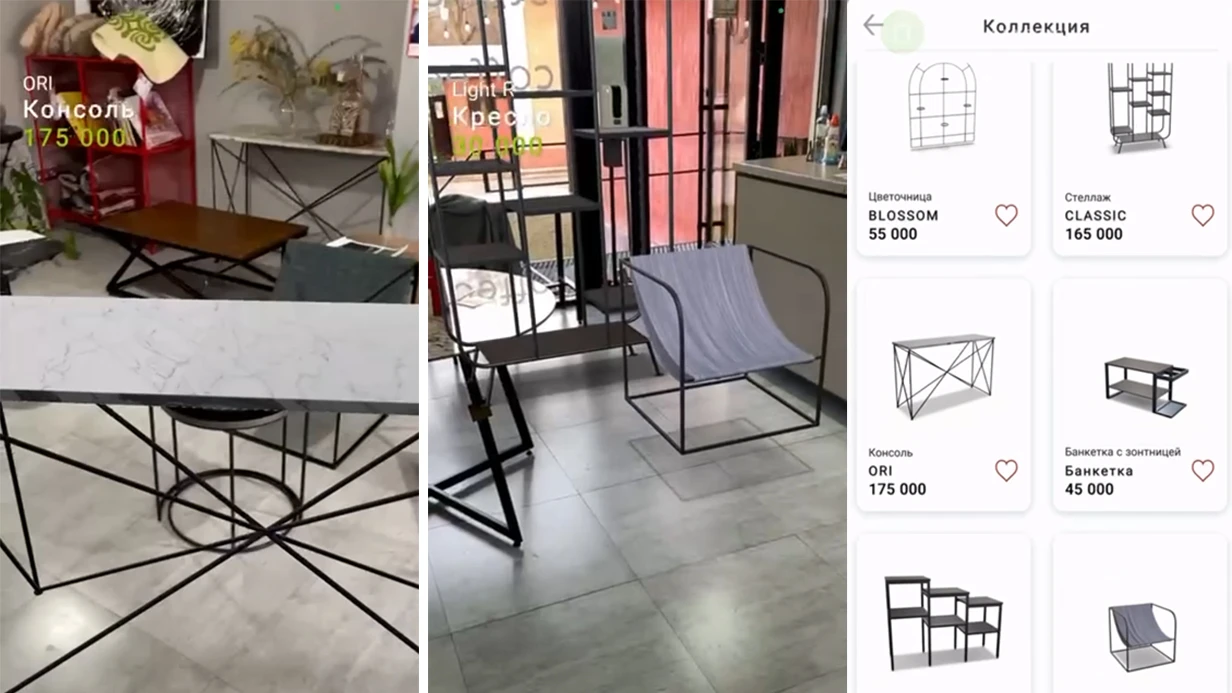
Importantly, the formats don't compete with each other—they complement each other. A virtual tour shows the entire concept, an interactive floor plan verifies the logic of the spaces, and AR furniture placement fits items into the client's real interior. Below is a quick cheat sheet to help you navigate.
| Format | For whom | What it gives the client |
|---|---|---|
| Virtual tour | Designers, architects, developers | Full immersion in the interior before renovation: fewer revisions, faster approvals |
| Interactive floor plan | Design bureaus, construction companies | Real-time verification of ergonomics and lighting scenarios, clear revisions |
| AR furniture placement | Furniture salons, showrooms | The client sees items in their own apartment — higher conversion and fewer returns |
| VR project formats | Marketing, exhibitions, presentations | A striking showcase that is memorable and gains social media reach |
We develop for Apple Vision Pro and other current platforms, so the format is not limited technically. Come with your task—within a week we'll show a demo on your project so you can feel the difference before purchasing.
How the work proceeds: from brief to launching a VR solution
We've structured the process so you always know what stage the project is at and what comes next. No unexpected delays—only agreed-upon steps, clear timelines, and a result we're accountable for.
Stages of work
-
Brief and goals. You tell us why you need a VR solution and what task it solves: present an interior to a client, conduct a virtual tour, train employees. We ask clarifying questions and record all requirements.
-
Plan and cost estimate. We prepare the concept, choose the format—for example, an application for Apple Vision Pro—and set deadlines. You get a clear plan and understand what you're paying for.
-
Design. We create the scenario, visual solutions, and interaction logic. You see mockups and can make changes before development begins.
-
Development. We build the application on professional equipment, test it, and bring it to a stable state. For you, this means end users get a reliable tool.
-
Launch and test. We hand over the finished solution, conduct a brief training, and check everything together in real conditions. You gain confidence that the product works.
-
Support. We stay in touch after launch: update content, respond quickly to feedback, and help develop the solution further.
This sequence eliminates chaos and unnecessary questions. You always know who is responsible for what and can control every stage—from brief to launch and further use.
What's included in a VR project delivery: a turnkey package
When you order a VR solution, you get not a "raw project" but a ready-made tool that starts working the day it's handed over.
The delivery package includes everything needed for launch, daily use, and growth: from a configured application to clear instructions for staff.
- Ready VR application — fully configured for your tasks and spaces, with a Russian-language interface.
- Catalog with your materials — we load your floor plans, furniture, finishes, and color solutions so the client sees exactly your assortment.
- Staff training — we train your managers and designers: how to start a session, manage the scenario, and help the client "experience" the space.
- Instructions and regulations — short memos on setup, launch, and daily equipment care.
- Personal dashboard for management — upload new items and change scenarios on your own without contacting developers.
- VR support for the entire usage period — we answer staff questions, help resolve failures, and update system software.
- Content updates — on request, we add new materials, floor plans, and scenarios so the catalog always matches the current assortment.
Staff training is designed so your employees work confidently after the very first client meeting.
We don't just show buttons—we explain the presentation logic: how to guide a client toward a finish choice, how to demonstrate the advantages of a layout, and how to answer "can I see it in a different color."
VR support and scheduled updates follow a clear procedure—no long waits and no technical "scary stories." If a manager struggles with something or the showroom changes, you reach out through your usual channel and get a solution within the agreed timeframe. This keeps sales moving and maintains the level of service your clients expect.
The final package covers the full cycle: you get the technology, trained people, and processes that keep it running. All that's left for you is to invite clients and show them what their future interior could look like.
Case study: how a studio boosted sales with VR
When the interior studio «Prostranstvo» came to us, it was losing up to a third of its clients at the 3D visualization stage.
It's hard for a client to imagine what an apartment will look like from flat images, so revisions dragged on for weeks, and some projects never reached contract signing.
We proposed moving the project into virtual reality: the client "walks" through the future apartment before renovation, sees materials, light, and layout at 1-to-1 scale.
The very first showing changed the picture: instead of abstract "like/don't like," concrete decisions emerged, and approval took two days instead of two weeks.
The client stopped arguing about details—they see for themselves where the passage is narrow, how light falls, and how colors combine—which means fewer revisions for the studio and faster contract signing.
What changed for the studio
Approval conversion rose from 40% to 85%, and the average order value increased by a third—clients are more willing to order additional options when they see the result at full scale.
The investment in the application paid off after the very first project, and two months later the studio ordered VR presentations from us for three more properties.
This case is a clear example of return on investment in virtual reality: one impressive showing covers the costs, and then the technology works toward sales growth and the studio's reputation. Want the same results? We'll show you how to build a VR presentation for your projects.
How to choose the VR presentation format for your budget?
Choosing a VR presentation format doesn't depend on the size of your budget but on the task you're solving in front of the client. Sometimes a finished picture in a minute is enough, and sometimes you need to let a person "live" in the interior so they stop doubting.
That's why we advise starting with the goals of the presentation, and the budget is then matched to the required level of immersion.
A simple tour is a 3D walkthrough of the space with fixed finishes and furniture arrangement. It's ideal when you want to quickly present a concept or layout at a meeting without diving into details.
This format is moderately priced, prepared in a few days, and covers the key need—visually introducing the client to the future space.
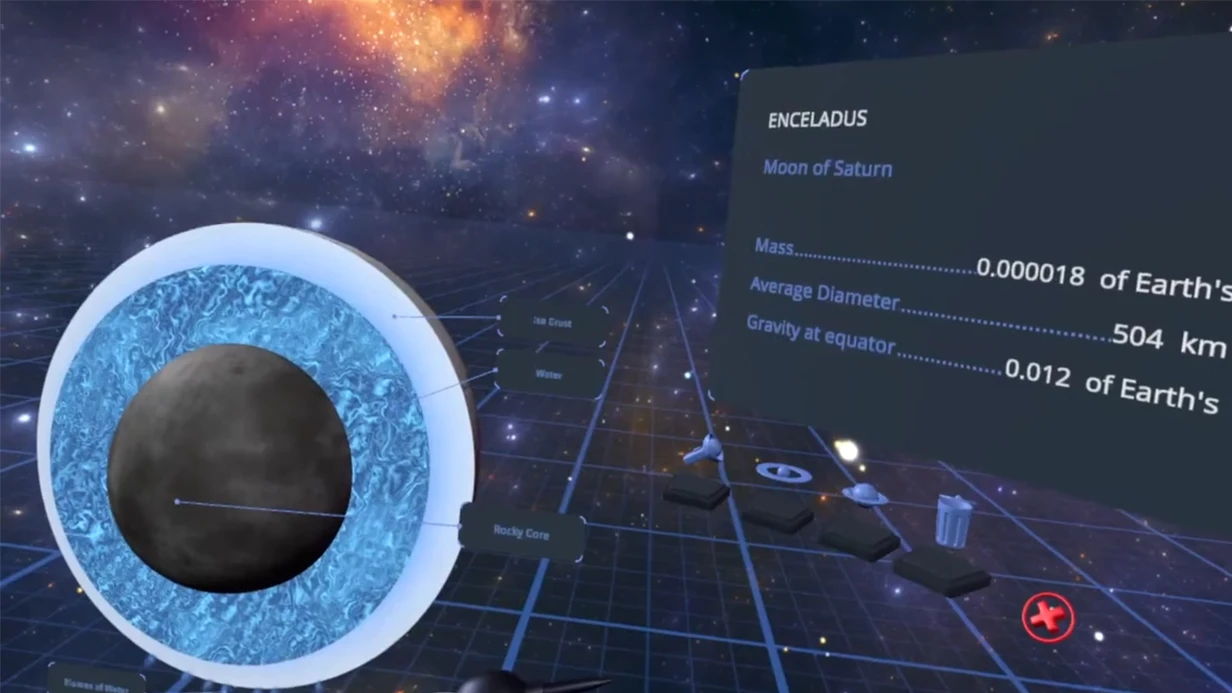
The mid-range format adds interactivity: the client switches between finish options, flooring, wall colors, and furniture by themselves. This is convenient at the approval stage when there are several alternatives and you need to understand preferences without long negotiations.
Seeing the options at real scale, the client makes decisions faster, and you reduce the number of revisions in the project.
A full interactive environment delivers maximum engagement: a person moves freely, opens doors, changes lighting and materials in real time. This format is justified for large and expensive projects, private houses, and premium apartments where the cost of a mistake is high.
That's where a VR presentation becomes the main sales tool: the client doesn't imagine but experiences the future interior, and doubting the price becomes harder.
Wehelp you navigate between these levels and honestly tell you when a simple tour is enough. For us, it matters that you pay only for the complexity that actually affects the outcome of your negotiations and deal closures. Come with your task—we'll match the format to your budget and show examples of similar projects.
Answering common questions about VR presentations
Clients who are considering a VR presentation for interior design for the first time ask similar questions: whether the equipment will break, how long it takes, what devices it works with, and whether changes can be made. We answer the main concerns—so you understand how we ensure a smooth and predictable result.
What if the equipment breaks during a showing?
We bring a backup set and prepare everything in advance. Our specialist is present at the presentation and can quickly resolve any issue—for you, this means the client meeting won't fall through, and the project will be presented in the best light.
How long does VR presentation development take?
The timeline depends on the complexity of the project, but on average the basic version is ready in 2–3 weeks. We agree on a clear plan and show intermediate results at each stage so you can see progress and meet the target date.
What devices is the presentation compatible with?
VR presentations work on popular headset models as well as computers and tablets—this lets you show the project even without expensive equipment. We clarify your scenario and select the optimal option for your task and budget.
Can I make revisions after completion?
Yes, we include several revision rounds in the cost. After the viewing, you send comments, and we adjust the materials until both you and your client are satisfied with the result.
This approach removes the key risks from the start: you get a reliable presentation tool, not a source of extra worries. If you still have questions—ask us directly, and we'll suggest a solution for your situation.Order a VR presentation of your space right now
Leave a request for a VR presentation—and within a few days we'll show how your interiors come to life on screen or in a headset. No need to understand the technology: we handle preparation, equipment setup, and support during the presentation itself.
Our team has worked with interior designers and studios for over 10 years—from individual apartments to residential complexes.
For each project, we select a format that solves a specific task: approve a layout faster, impress the client, or speed up the prepayment decision.
Right after reaching out, you receive:
- Personal consultation — we'll examine how a VR presentation fits into your sales, approval, or handover process.
- Cost calculated for your project — accounting for scope, timeline, and format, without hidden fees or "surprises" in the estimate.
- Trial showing on your planning solutions — you and your clients will see the effect before deciding to cooperate.
- Format and equipment selection — an interactive space tour, VR headset, or Apple Vision Pro for your task, not just "whatever's in stock."
- Examples of work in similar interiors — we'll show cases where VR helped sell or approve a space faster than conventional visualizations.
- Launch plan with stages and timelines — you know when you'll get the first showing and who's responsible for what.
Submitting a VR request takes a minute; from there we guide you from consultation to the finished presentation. Leave your contacts—and we'll tell you how to start this very month.