

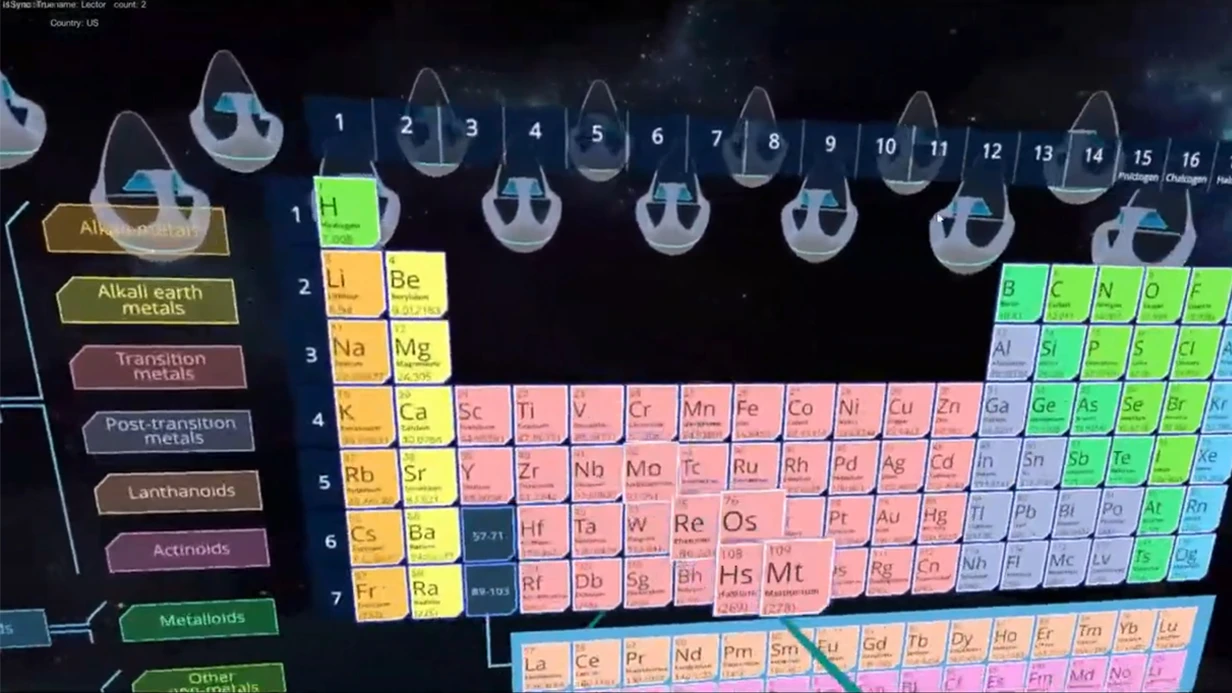


Electronics and Semiconductors: Why Don't Clients See the Value?
Electronics and semiconductors are products you cannot see with your eyes. Buyers don't hold a finished chip in their hands, don't know how it works, and don't understand why one microcontroller is better than another.
As a result, the presentation turns into reading technical specifications—and this doesn't help the sale: price, timelines, supply—all the same until the client sees the difference with their own eyes.
This is where most deals break down: sales prepares slides, engineers explain architecture, the client nods and leaves. They couldn't "touch" the product, didn't remember its advantages, and didn't believe that your solution really saves months of development.
Selling complex products requires visualization, which static catalogs and spreadsheets simply lack.
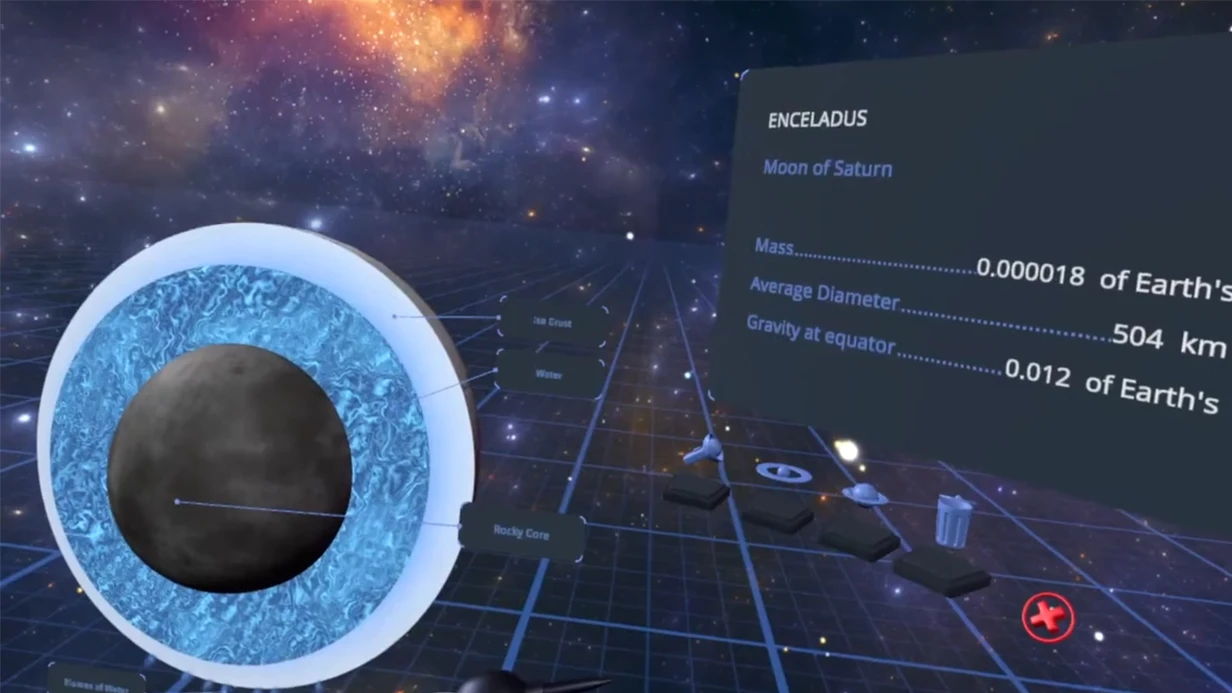
Three-dimensional equipment visualization solves this. You show the chip in cross-section, run a signal-flow animation, let the client disassemble and reassemble the device on screen.
An electronics demo turns from a boring presentation into an interactive experience that stays in the memory—and on the phone—of a potential partner.
At our team we have been creating such semiconductor presentations for over ten years. Not just "pretty pictures," but tools that shorten the approval cycle, help you outmaneuver competitors, and lead to contracts.
The client sees product value not through words, but through an app or web demonstration they can take with them and show to the entire procurement team.
Three Key Benefits of VR/AR for Your Business
Your engineers and managers spend months trying to show a product to a client: samples, booths, demos. Trade shows are full of competitors, making it hard to hold attention.
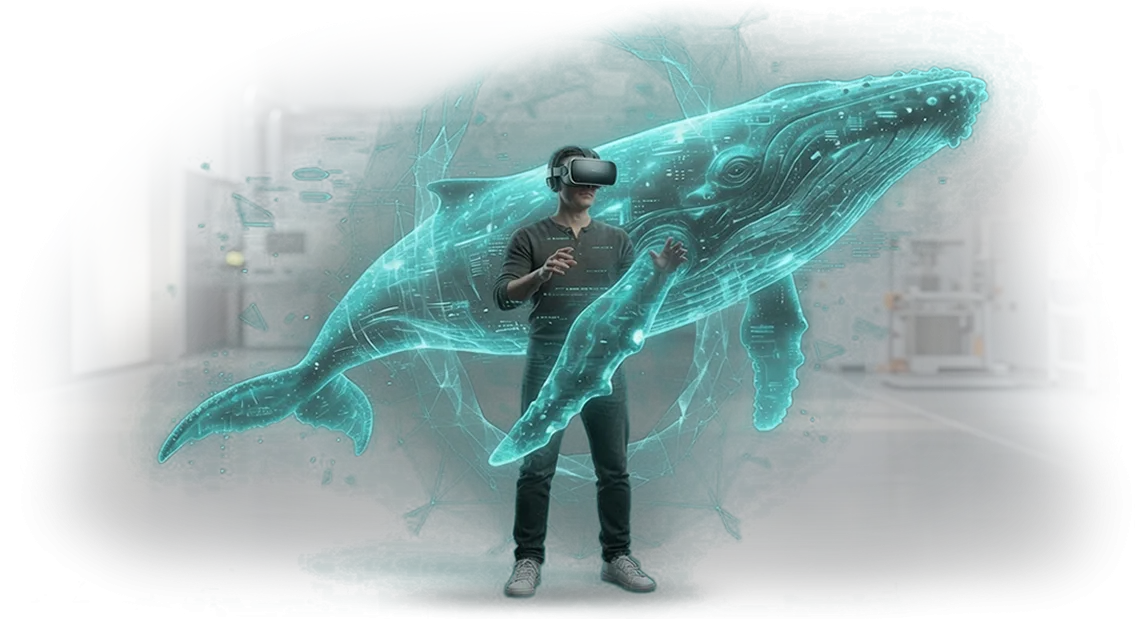
A VR/AR application changes the game—it shows the product in action without a physical sample and makes the presentation unforgettable.
First benefit—higher conversion at trade shows and meetings. Instead of a static catalog, clients get an interactive demonstration: they can "disassemble" a device, see internal components, and run an operation scenario.
Visitors control the process themselves, so they stay at the booth longer and remember your brand better.
Second benefit—faster training for employees and dealers. With a VR simulator, a new specialist masters the product line in days, not weeks. Training happens in a safe environment with simulated real-world situations: from device assembly to client interactions. This shortens the time to productivity for new hires.
Third benefit—lower spending on samples and logistics. Every physical sample costs money, and sending it to a trade show or client costs time as well.
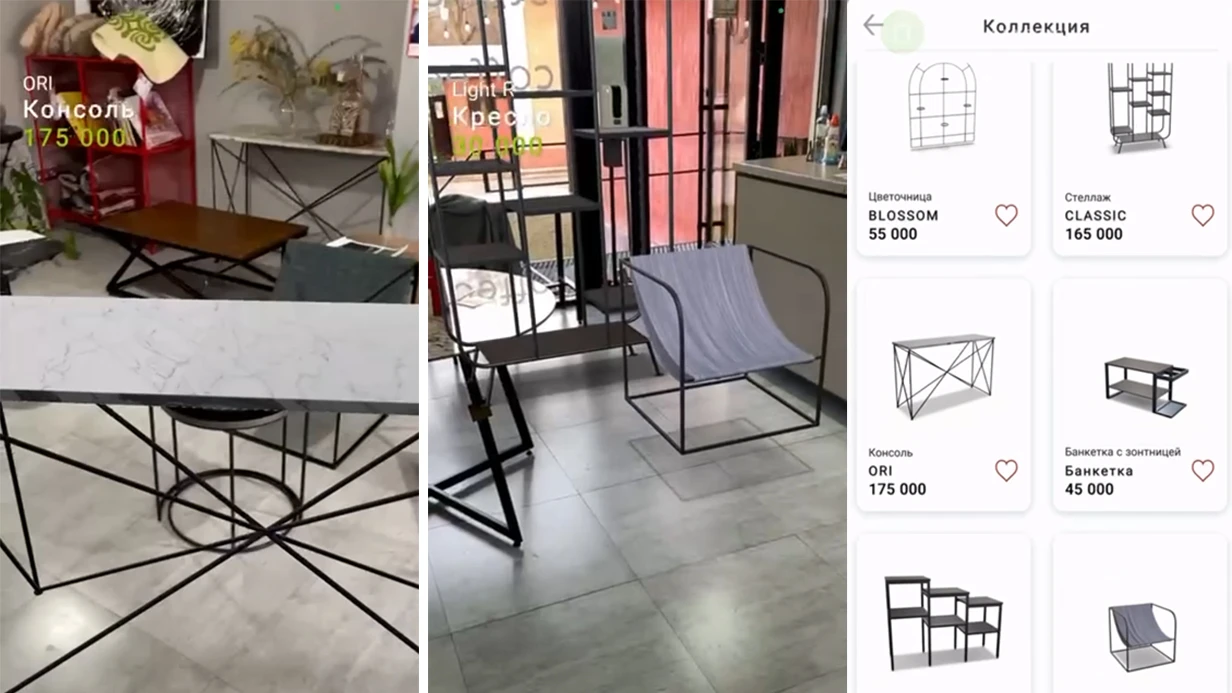
An AR application replaces a physical prototype: you show the product at true scale right in the client's office or on the trade show floor. The savings become a permanent part of your profit.
Our electronics and semiconductor solutions already help companies accelerate time-to-market and cut demonstration costs. Contact us—we'll show you how these benefits work in your case.
VR/AR Project Formats for Your Task
An ordinary presentation or PDF poorly conveys the volume, mechanics, and details of complex equipment. When it comes to electronics and semiconductors, you need to show the product in action—so a client or partner understands its value without a physical sample.
We develop VR/AR project formats for a specific business task: from an eye-catching trade-show demo to a working instruction for service engineers. Below is a comparison of the main formats to help you choose the right one.
| Format | Intended for | What it gives clients |
|---|---|---|
| Interactive presentation | Marketing, sales | Live 3D product showcase: cross-sections, component operation, application scenarios. More qualified leads at the booth and in negotiations |
| Virtual simulator | Training center, technical support | Employee training without risk or cost of real equipment. Practice procedures until automatic, quick onboarding |
| AR instruction | Service engineers, installers | Step-by-step prompts right on the equipment via a tablet camera. Fewer errors and downtimes, faster repairs |
| Virtual tour | Directors, investors, partners | "Inside" view of cleanrooms and production without access passes or protective gear. Trust and transparency for negotiations |
For each task we select the optimal format and combine them into a single project when necessary. For example, a training simulator plus an AR instruction for work at a real site—one ecosystem that covers both training and operation.
Contact us—we'll analyze your task and recommend a format that delivers measurable results: increased sales, shorter training time, or fewer installation errors.
How We Launch a VR/AR Project: Step-by-Step Process
We have built a transparent workflow so you know exactly what happens at each step and what results you'll get. All stages are documented, and you only make decisions at key milestones—this prevents surprises in timelines and budget. We handle the technical side while you stay focused on the business goals.
- Design brief — we discuss where and how the application will be used: presentation of a new chip, engineer training, virtual booth for distributors. We lock in goals, target audience, and scenarios that need to be implemented.
- Scenario design — we develop the interaction logic: what the user sees, how they move, what actions they perform with the object. You receive a document describing user scenarios—it becomes the basis for the prototype.
- Prototype approval — we build an interactive prototype and let you test it via augmented reality glasses. You make changes before full development begins—this is many times cheaper than reworking a finished product.
- Application development — we create a full solution on a professional engine. We use proven tools and our own reusable components to ensure stable, crash-free performance.
- Testing and refinement — we test the application on real devices in various conditions: low lighting, partial object overlap, long sessions. You receive a release-ready version.
- Launch and post-sale support — we publish the application in the Apple App Store and set up usage analytics. After release, we stay in touch: quickly fixing bugs, adding new scenarios, and updating content as needed.
This workflow allows you to launch a project in a short time without sacrificing quality. You see intermediate results at each stage and make informed decisions instead of relying on a "black box."
What's Included in the Delivery: Complete Starter Kit
The delivery package is designed so you can start using the solution right away after handover: for product demos, employee training, and customer technical support.
Below is the full scope of work, covering all stages of creating a VR/AR application for the electronics and semiconductor industry.
- Ready-to-use application for Apple Vision Pro: interactive 3D product models, assembly diagrams, virtual presentations, and visual instructions for employees and clients.
- Source code with rights to use and modify: you are not locked into a vendor and can evolve the product with your own team or any other specialists you choose.
- Admin panel for independent content updates: upload new models, instructions, and scenarios without a programmer—changes can be made in minutes.
- Complete operational documentation: instructions for installation, configuration, updates, and system administration. Everything is written in plain language any employee can understand.
- Staff training: hands-on sessions for your employees so they confidently use the application and can pass on knowledge within the company.
- Technical support during launch and warranty maintenance: we stay available after project handover, help with implementation, and resolve emerging issues quickly.
This package covers the full cycle—from idea to daily use. You get not just an application but a working tool that delivers value from day one: accelerates sales of complex products, simplifies onboarding for new employees, and makes technical support clear and fast.
Case Study: AR Instruction for Complex Equipment
Training an operator to run a complex line can take weeks, and every setup error leads to defective output. That's exactly the challenge a client brought us—a power electronics manufacturer. The goal was to reduce operator training time and lower the number of technical support requests.
How We Implemented the AR Instruction
Before the project, new employees went through two days of theory and a week of practice with a mentor, but rare scenarios still raised questions.
We developed an AR instruction for Apple Vision Pro: the operator sees the step-by-step sequence right in their field of view, while the relevant equipment components are highlighted in real time. No paper manuals and no long searches through systems.
The rollout was phased—first we tested the instruction on one line, then replicated it across all sections. Experienced employees could add their own recommendations to the scenarios, which accelerated onboarding for newcomers.
Result Metrics
The effect appeared in the first month: operator training time was cut by three times, and technical support requests decreased by 40%. Setup errors on the equipment almost disappeared, reducing defects and line downtime.
For the client, the main benefit was predictability: any shift performs operations correctly, even if an employee has just joined.
This made it possible to scale production faster without sacrificing quality, and the case became the foundation for a new project—we are now expanding the AR instruction to equipment repair and maintenance.
Frequently Asked Questions About VR/AR Implementation and Risks
Before implementing VR/AR, clients in electronics and semiconductors ask the same questions: timelines, data security, employee adoption, and ongoing support. We answer briefly and to the point—so you understand how we work and what guarantees you get.
How long does application development take?
Timelines depend on scenario complexity and the number of integrations. For a typical training program or virtual product presentation, 3–6 weeks is enough. If you need to integrate 3D models of complex equipment or corporate databases, the timeline grows to 2–3 months.
At the briefing stage, we set a realistic schedule and stick to it: delays are extremely rare, and we discuss all risks in advance.
What guarantees do you provide on the result?
We guarantee that the application will work on target devices, including Apple Vision Pro, and will solve the stated business tasks. The contract specifies acceptance stages: you see intermediate versions, submit edits, and only accept the work after approval. If issues are found during testing, we fix them at our expense.
How safe is it to use VR/AR with company data?
For industrial clients, security is a priority. We work in a closed environment: the application can stay offline, and data remains on your servers. Only a limited set of specialists has access to the project; source code and documentation handover are arranged separately. We sign an NDA upon request and are ready to undergo a security audit.
What about support after launch?
After project handover, we don't disappear. Basic support includes maintenance for 3 months: answering user questions, fixing bugs, and updating compatibility with new device versions.
After that, you can choose an extension package—from one-off improvements to full system administration.
Is it difficult to train employees to use VR/AR?
Modern interfaces are designed for a minimal learning curve. We develop scenarios with clear prompts and gesture controls, so basic training takes no more than one day. For larger teams, we prepare instructions and short video lessons, and offer in-person training if needed.
If you still have doubts—ask us directly. We'll provide a consultation on your scenario and recommend a solution that fits your production or sales department.Submit a Request: Get an Assessment and a Commercial Proposal
Developing applications for Apple Vision Pro opens new product presentation formats—from interactive 3D models to staff training. But to move from idea to project, you need to understand timelines, budget, and technical risks.
Submit a request—and we'll hold a consultation, assess your task, and prepare a commercial proposal.
We work with electronics and semiconductors, so we know the industry's specifics: complex components, multi-level circuits, precision requirements. Our engineers use professional equipment and server capacity to quickly build prototypes and validate hypotheses. As a result, you get a realistic estimate—without unexpected overruns.
What you get after reaching out:
- Analysis of your task and a turnkey implementation plan.
- Transparent estimate: cost of stages, timelines, role distribution.
- Platform recommendations: when AR on a smartphone is enough, and when a full VR solution is needed.
- Risk assessment and mitigation strategies at the start.
- Examples of our work on similar projects and client testimonials.
- A specific commercial proposal with predefined outcomes.
We respond within one business day, and the final document is ready 3–5 days after the brief. You pay nothing for the consultation—you simply decide whether to move forward.
Fill out the form or write to us—and within a day, you'll know what your Vision Pro application would cost.
How to Choose a VR/AR Solution for Electronics and Semiconductors?
For businesses in electronics and semiconductors, choosing a VR/AR solution is about solving a specific problem, not following a trend. Do you need to show a product before production starts, train employees to work with complex equipment, or reduce assembly errors? The format depends on that.
Virtual reality immerses the user in a simulator or a shop-floor mockup without stopping production. Augmented reality overlays prompts onto real objects—the employee sees the required step right in their field of view.
Mixed reality combines both approaches: virtual parts are placed in physical space, which is convenient for presenting complex products.
For electronics and semiconductors, accuracy and safety are critical. VR solutions help test processes before a line goes live, AR instructions reduce defects, and volumetric models let you see a future product before a single sample is manufactured.
The selection criteria are business-driven: learning speed, lower error costs, clarity for the client, and the ability to work remotely with large models.
That's why we start not with technology, but with an analysis of your process: we find where time and money are lost, then select a format that delivers measurable results. Unsure which option fits your production?
Tell us about your task—we'll show examples from your industry and tell you which format will pay off for you. The consultation is non-binding.