



Education without immersion: why students choose other courses
Students receive dozens of notifications and bright videos every day — against this backdrop, lectures and text-based presentations lose. Interest fades within the first few minutes, and knowledge doesn't stick. That's why many choose other courses — the ones where the learning process evokes emotion.
For an educational project, this means losing listeners, low completion rates, and a weak reputation. The effort invested in the program doesn't pay off — instead of revenue growth and reach, you get churn. Leaders see this, but don't always realize the issue isn't the content, but the delivery format.
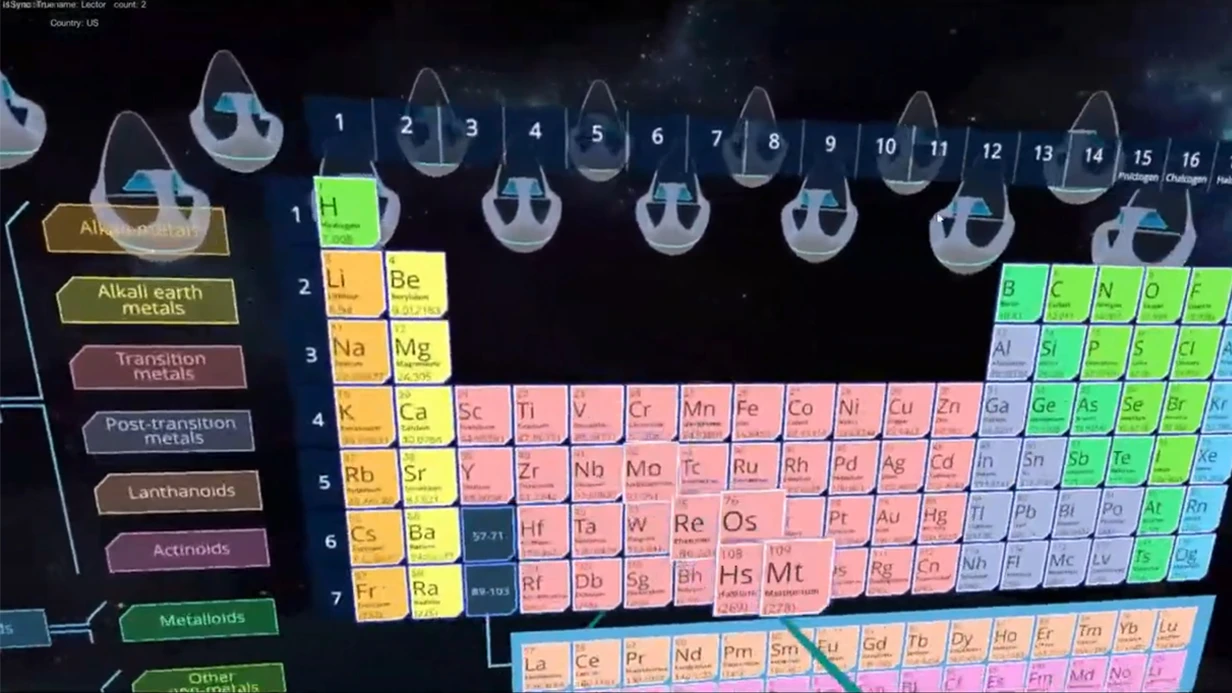
Immersive learning moves the material into an environment where the student doesn't just read, but acts. Virtual reality in education makes it possible to simulate processes, run experiments, and enter situations that cannot be organized in a classroom.
As a result, students' interest is maintained throughout the entire lesson, and complex topics become understandable and memorable for a long time.
Moving to immersive formats is not replacing the teacher, but amplifying their work. The course becomes a product that stands out in the market: people talk about it, return to it, and recommend it. For business, this means more enrollments, repeat purchases, and a steady flow of students.
We help educational projects implement VR/AR solutions tailored to their tasks — from first prototypes to launch.
If you want to win back audience interest and stop losing to more modern courses, start with a discussion — we'll explain how immersion fits into your program and what results it delivers.
5 key benefits of simulators and trainers for your brand
Students live in a visual environment where text gives way to experience. Ordinary lectures lose attention, while simulators turn learning into action. For your educational institution, this is a way to stand out and give students a result they'll remember.
The first benefit is engagement. A student puts on a headset and becomes a participant in the process, not an observer. Learning turns into a game, interest holds until the end of the lesson, and the audience gets great photos and videos for social media.
The second is material retention. Practical experience in a virtual environment reinforces knowledge better than notes. Students master complex topics faster and retain skills longer, which directly affects academic performance.
The third is the institution's reputation. Innovative formats show that you're keeping up with the times. This attracts applicants, boosts your image, and gives the media and conferences a reason to talk about you.
The fourth is leads and reach. Every trainer launch is an event for social media and exhibitions. Parents and future students reach out to you on their own, and your "first-mover" status makes the brand a leader.
The fifth is versatility. The same simulators work for different programs: from medicine to engineering. The tool easily adapts to new tasks and keeps delivering value.
Implementing simulators on Apple Vision Pro helps you speak to the new generation in its own language. Students get experiences, the university gets reputation and a stream of applications. This is an investment that works in several directions at once.
Which development formats suit your task
The "one app for all tasks" approach doesn't work in virtual learning. Schoolchildren and students need to be interested in the subject, enterprise employees need to be quickly brought up to speed, and specialists need to refine complex actions.
Each of these goals requires its own VR learning format — otherwise, the project won't deliver results, neither in reach nor in material comprehension.
We start development with the question: what should happen after the lesson? The answer determines the format — a demo lesson, an interactive course, or a simulator. Below is a comparison of these options so you can immediately understand which one fits your task.
Demo lesson, interactive course, or simulator
| Format | For whom | What it gives the client |
|---|---|---|
| Demo lesson | For getting acquainted with VR and the topic: schoolchildren, students, new employees | Quick reach and emotional engagement, building interest in the subject or brand |
| Interactive course | For systematic study of theory and practice | A unified learning standard, convenient material comprehension, progress tracking for each participant |
| Simulator | For practicing skills to automaticity | Fewer errors in real work, safe practice without risks or resource consumption |
Formats are often combined: a short demo lesson sparks interest, a course provides the foundation, and a simulator reinforces the skill. We help you choose the best option or combine them into a single program — tailored to your audience and budget.
You get not just an app, but a ready-made solution for a specific educational program. We support the launch, train teachers, and quickly make edits when needed. Ultimately, the format works toward a result that is clear and measurable.
Project stages: from brief to app launch
Developing an educational VR/AR application only seems daunting when the process is opaque. We structure the work so you can see the result at every step and influence it without losing time or budget.
Below is a typical path from idea to launch, which dozens of projects for schools, universities, and corporate training have already gone through.
- Brief and task immersion. We analyze your audience, learning goals, and usage scenarios. The output is a document with clear goals and success criteria. You understand what you'll get and how to measure effectiveness.
- Concept and scenario. We propose 2–3 format options: from a simple 3D simulator to a full-fledged educational space. You choose, and we lock in the timeline and cost.
- Design prototype. We show how the application looks and feels: interface, interaction logic, and key screens. You see the product before any code is written and can make changes cheaply.
- Development and build. We create the application on a professional engine and optimize it for target devices — including Apple Vision Pro. At this stage, you receive intermediate builds and can test usability yourself.
- Testing and refinement. We test scenarios with real users from your audience: students, employees, learners. We smooth out rough edges so you get a stable version without launch-day "surprises."
- Launch and handover. We publish the application in the required format — standalone, for Vision Pro, or iOS devices. We hand over source code, documentation, and instructions for your team.
- Support and growth. We stay in touch: we help with updates and add new lessons or modules as your program expands. You're never left alone with the product.
This sequence lets you control the budget at every stage instead of paying for a "pig in a poke." You always know exactly what will be ready in 2–3 weeks and how it brings you closer to your educational goal. We launch most projects in 6–10 weeks from the brief, depending on scenario complexity.
If you already have a brief, we'll start with an analysis. If not, we'll help you formulate the task: on the very first call, we'll show how an idea turns into stages and a cost estimate.
What's included in the delivery: a complete launch kit
We deliver not "just an application," but a working package for launching learning on Apple Vision Pro. The delivery includes everything needed to start classes within days: ready-made scenarios, teacher instructions, and documents for the educational institution.
- Educational scenarios tailored to your course. We adapt lessons to the subject, student level, and program goals — the teacher gets a clear lesson plan, not an empty interface.
- An application with learning modules. Virtual laboratories, 3D models, simulators, and tests that help explain complex topics visually and engage the group.
- Teacher dashboard. Clear statistics: who completed the module, where difficulties arose, and which topics are worth reviewing. You don't need to be a technical specialist to see group progress.
- Teacher instructions. Short cheat sheets and video tutorials: how to run the first lesson, engage students, and quickly resolve common issues.
- Full documentation. User guides, feature descriptions, safety regulations for using the headset, and recommendations for the institution's administration.
- Launch support. We help install the application, check the equipment, and conduct the first lesson together with you, so everything runs smoothly.
This kit answers the question "what's included in development": you get not code, but a ready-made tool for classes. Documentation and instructions take the load off teachers, while the dashboard gives management clear performance metrics.
As a result, the investment in new technology starts working for the educational process from the very first lesson.
Case study: how a university boosted student performance with VR
We help universities and training centers implement VR simulators with measurable results. Here's a real case: for one university, we developed virtual physics labs — students practiced complex experiments without expensive equipment.
The project and its goal
The university had a problem: there weren't enough classrooms and instruments for in-person labs, and missed classes led to lower academic performance. Weproposed a VR solution — a lab simulator accessible from any device in the computer lab and at home.
Students performed the same experiments, but in a safe virtual environment, with hints and automatic result checking.
Results and impact
Here are the numbers the university saw after two semesters: the share of completed labs rose from 68% to 91%, and the average exam score increased by 14%.
Engagement was measured separately — attendance in VR classes grew by a quarter, and students themselves re-did difficult topics 2–3 times.
The university leadership expected VR to be entertainment, but got a working tool: teachers began saving time on grading, and students began understanding the material more deeply.
Within a year, the university ordered two more modules — in chemistry and biology — and colleagues from other universities asked for access to the platform.
We can apply the same approach to your educational program — from a single course to an entire faculty, with clear metrics and a results report.
Addressing the main doubts before you start
Before ordering VR/AR development for education, many questions arise — and that's normal. We've gathered answers to the most common ones so you can understand in advance how the work is structured and what results you'll get.
How long will development take?
It depends on the scope of the task. A simple educational scenario takes 3–4 weeks; a full course with multiple modules takes 2–3 months. We lock in the timeline at the start, break the work into stages, and show progress every week — you always know where the project stands.
Is it difficult to integrate VR into the learning process?
There's no need to rebuild the program around the technology. We design the application around your learning goals: it can be part of a lesson, a standalone simulator, or a virtual laboratory.
By launch, you receive instructions and brief training for teachers — your team will get up to speed quickly.
What devices will the application run on?
We select options based on your budget and technical infrastructure: from mobile headsets to stationary systems, including Apple Vision Pro. At the brief stage, we review the device fleet you already have and propose a solution that won't require unnecessary purchases. If needed, we'll help you choose new equipment.
How much does it cost?
The cost depends on scope and complexity: you can start with a short demo mode for one course, or order a comprehensive solution for several programs. We provide a transparent cost estimate before we start — you see the list of work items and understand what you're paying for.
And most importantly, you evaluate the effect in advance: greater student engagement and a new format that sets your institution apart.
What's required from your team?
A minimum: participation in the brief, access to methodologists or teachers to clarify details, and feedback on the test version. We handle the entire technical process — design, development, testing, and launch — ourselves. You simply oversee the result.
Leave a request — get a commercial proposal
Schedule a consultation — we'll discuss your task and prepare a development cost estimate. You'll receive a commercial proposal tailored to your organization's educational goals and budget.
During the conversation, we'll clarify which audience the application is for, what results you expect, and how effectiveness will be measured. This allows us to propose the optimal solution from the very start — without unnecessary features or overspending.
What's included in the commercial proposal:
- Project cost estimate based on your tasks and scale
- Recommended format: VR, AR, or MR — for your audience and goals
- Approximate work schedule with key milestones
- Team composition and areas of responsibility
- Integration options for the application into your existing curriculum
- Support and development terms after launch
No hidden conditions: we explain every item at the meeting. After receiving the proposal, you'll be able to compare options and make an informed decision.
Leave a request — we'll get back to you within one business day, agree on a convenient time for the consultation, and answer any project questions. You have nothing to lose, and you'll gain a clear action plan and a transparent cost calculation.
How to choose a format for your educational goals?
Choosing a format starts not with "which gadget to buy," but with your learning goals and usage scenario. For one case, simple augmented reality on a phone is enough; for another, a full-fledged simulator on Apple Vision Pro is required.
The key is to understand what result you want: to absorb theory, practice a hands-on skill, develop team collaboration, or increase engagement.
If your goal is to show complex processes that can't be seen in reality (molecules, historical events, how mechanisms work), AR and MR are effective: the student sees the object right in the classroom and interacts with it.
If you need to practice actions in conditions that are dangerous or expensive to reproduce (medicine, emergency situations, manufacturing), VR immersion is more reliable.
And for group sessions with discussion and collaborative work, mixed scenarios work best, where each participant sees a shared model but stays in contact with the instructor.
The usage scenario also dictates constraints. Lessons in a regular classroom may require mobility and quick switching between the real and virtual worlds — augmented reality is convenient here.
Distance learning, on the other hand, benefits from full immersion, where the student is isolated from distractions. Equally important are the time a learner is willing to spend in the headset, eye comfort, and ease of control.
We select a format that integrates into your existing workflow rather than forcing you to rework it.
That's why at the start we conduct a short review of your educational tasks: audience, material, desired outcome, and technical capabilities. Based on this, we propose a scenario that actually solves the learning problem — not just one that looks good.
In the end, you get not "technology for technology's sake," but a tool teachers use easily, and students understand faster and remember longer. This is how format selection stops being a headache and becomes your competitive advantage.