

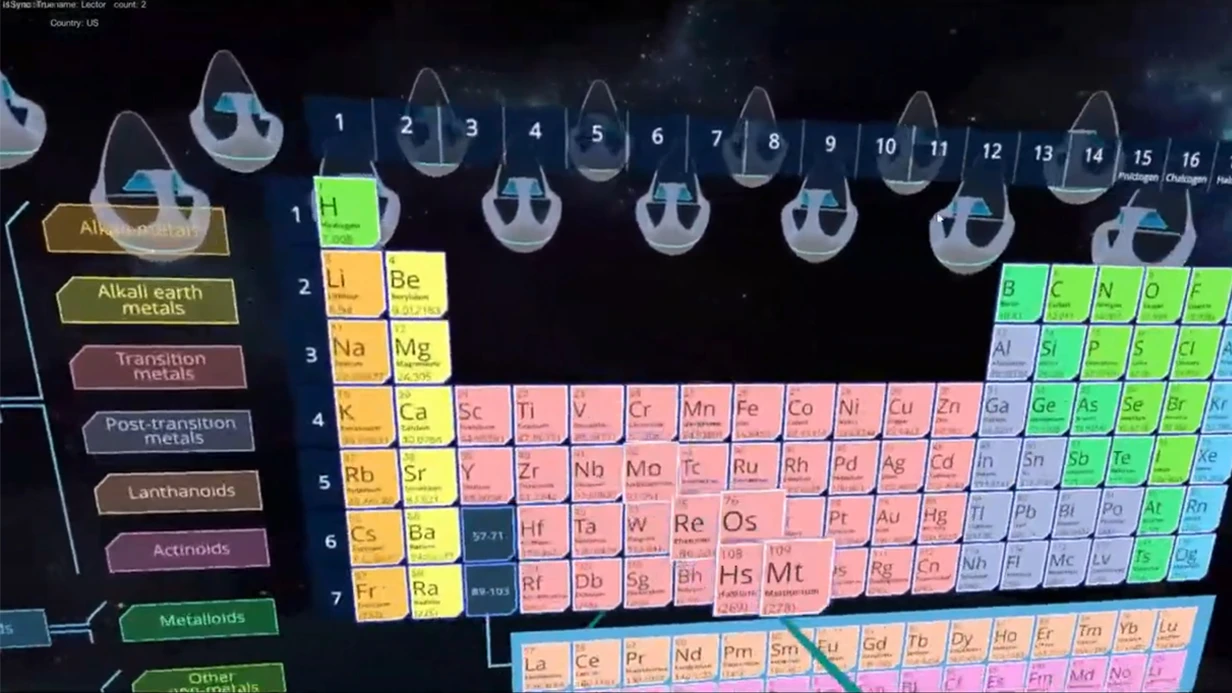


Visitors bored at your booth? Turn the exhibit demo into an event
Exhibition visitors are tired of one-size-fits-all booths: booklets, posters and video loops on screens grab attention for a couple of seconds. Guests walk past, don't remember the brand and take away nothing but fatigue. For the company, this means lost leads and a budget that doesn't pay off.
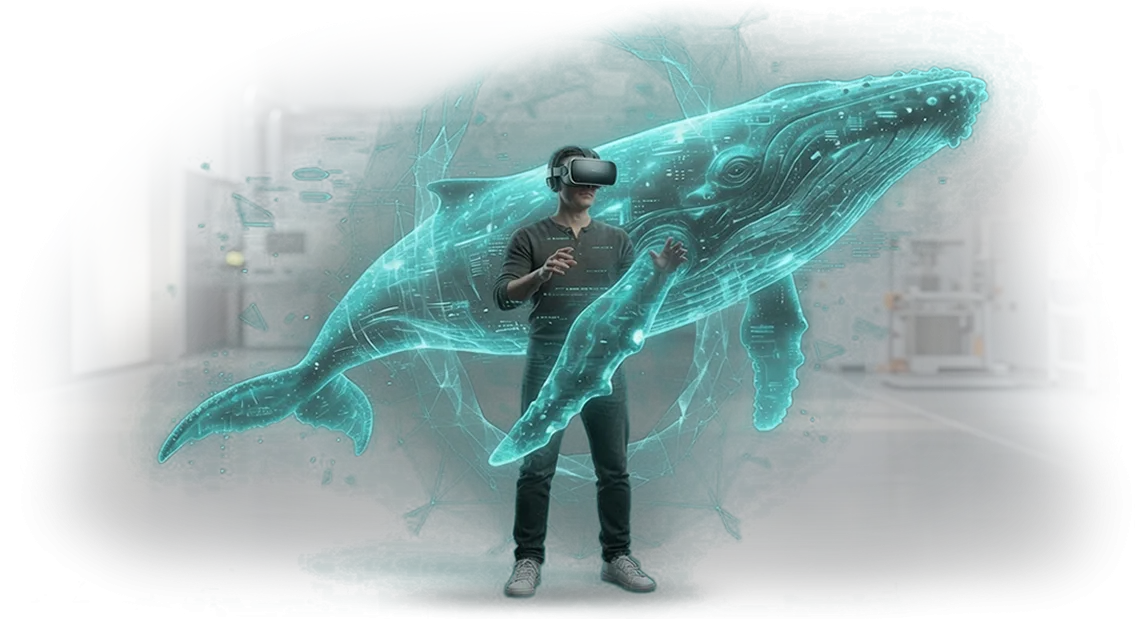
An interactive booth with augmented reality solves this problem. Instead of passive viewing, people get hands-on participation: they see your product in action, interact with it and get drawn into the process. These are the moments guests photograph, discuss and remember.
The result for the business is not just attention but measurable value: more time spent at the booth, more contacts, hot leads from the show and brand recognition that lasts after the event closes. That's what turns participation costs into a working sales tool.
What you get from implementing AR/VR at an exhibition
An exhibition is a battle for visitor attention: in a few hours, hundreds of people walk past your booth, and you have only seconds to stop them. Ordinary booklets and videos no longer work — eyes glaze over, information isn't remembered.
Augmented and virtual reality technologies turn your booth into a place people return to, linger at and tell colleagues about.
The main benefit is strong emotion. When a visitor controls a 3D model of the product themselves, assembles a mechanism or "walks through" a future facility, it sparks genuine interest and surprise.
Such impressions build brand recall: a week after the show, people will remember your booth — not the dozens of similar ones.
Interactivity also solves the contact-collection problem. To launch the demo, the visitor leaves their details — it happens naturally, without pushy forms.
You get a database of interested people, not just business cards "just in case." The sales team then works this base, and the conversion to follow-up meetings is noticeably higher than after ordinary handouts.
Another plus is recognition. The unusual format attracts the attention of other exhibitors and the media; visitors share photos and videos on social networks. The booth becomes a news hook — people talk about you before the exhibition ends and remember you afterward. This is how AR/VR pays off not only in the moment but also creates a long tail for the brand.
In the end, you get not just a "nice gimmick" but a working tool: emotions boost loyalty, memorability sets you apart from competitors, contact collection fills the funnel and recognition amplifies the marketing effect.
The technology is just a means to achieve these business results — and that's what we focus on in every project.
Exhibition demo formats: which one to choose for your goal
Think about how visitors usually walk past a classic booth: they look away, grab a flyer — and move on. The interactive format determines whether the guest will stop and what they take away about the product.
Some formats work best for reach and attention; others for immersion and understanding a complex product.
Every business goal has an optimal format. Below is a comparison of typical options so you can choose based on your exhibition goals — not just "something interactive."
| Interactive format | Best for | What it gives the client |
|---|---|---|
| Web-based augmented reality (WebAR) | Broad audiences, mass events | Instant engagement without installing apps: the guest opens a link via their smartphone camera. Each participant is interacting with the product within seconds and walks away with a positive impression. |
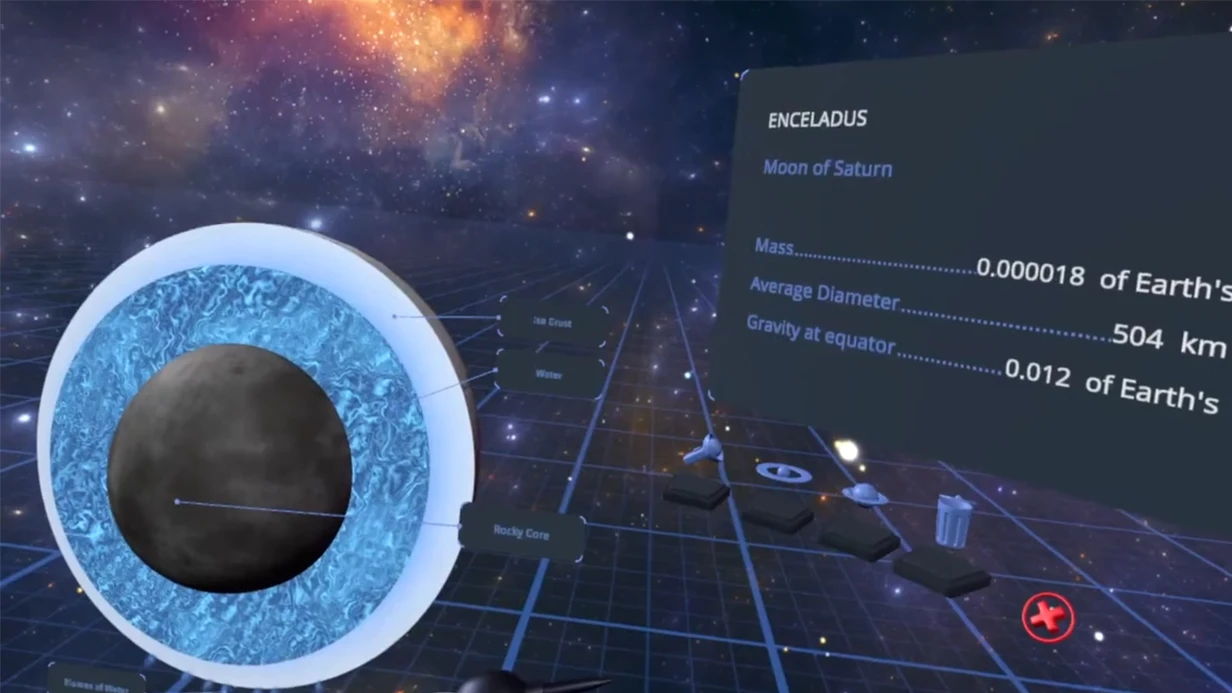
| Virtual attraction | Events that need to amaze and create buzz | Emotional wow effect, lines and lively discussion. Guests ask "what was that?" — that's how word of mouth and brand recall are built. |
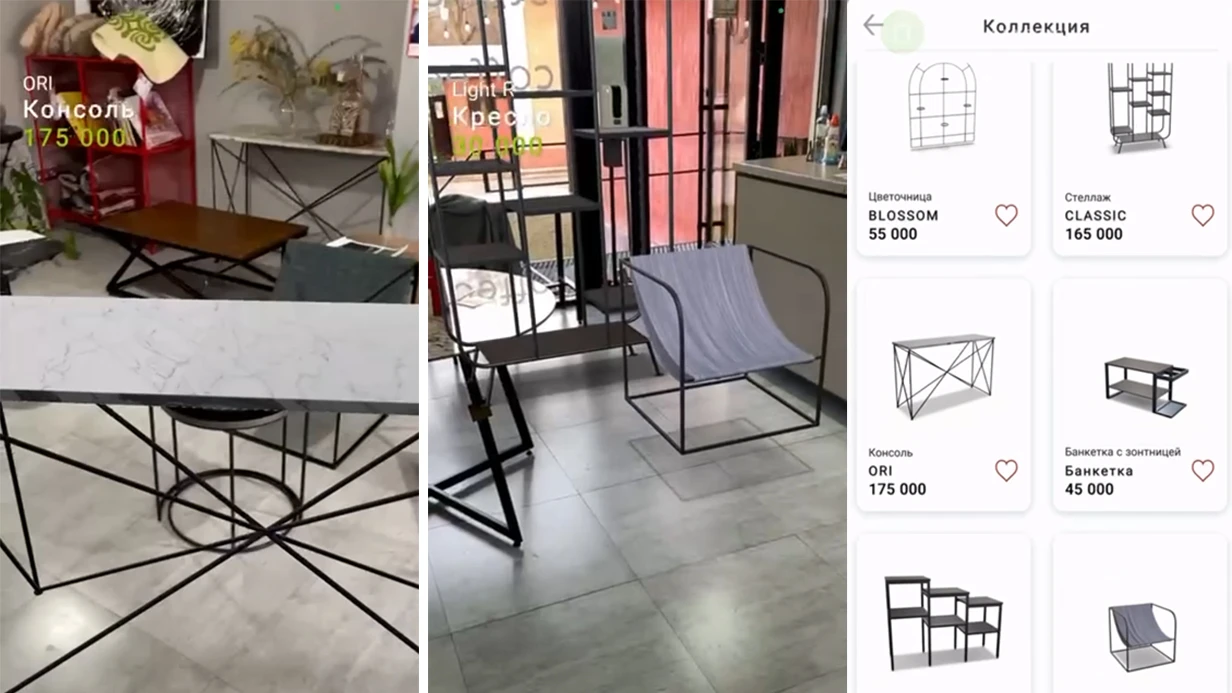
| Augmented reality at the booth | Demonstrating complex products: machinery, equipment, apparel | Bring physical samples to life right on a tablet: show internal mechanisms, color options and configurations without shipping every sample. Saves on logistics and gives hands-on product experience. |
| Combined format (AR + physical objects) | Exclusive exhibits, showrooms | Combines the real product with virtual use-case scenarios. The guest sees how the item fits into their life — not just an abstract "feature." |
Start the format choice with the main goal: if you need more audience contact, go with WebAR — it gives maximum reach at the lowest entry threshold. If you need an emotional wave and viral effect, build a virtual attraction.
If you need to present the product in the best light, augmented reality at the booth beats any catalog.
Good news: a professional team can easily combine these formats for a specific venue. We use proven augmented and virtual reality tools — so we guarantee stable operation of the interactives for the entire show.
As early as the briefing stage, you get a recommendation on which format will deliver the greatest ROI for your booth.
How the exhibit revival project works
The exhibit revival project is structured so you don't get distracted by technical details and can control the result at each step. We handle the entire process — from a short brief to booth launch — while you get clear timelines and transparent stages.
- Interactive brief. We discuss the booth's goals: what visitors should see, what reaction you want, how many people will pass by per day. The output is a short technical specification written in plain language.
- Concept approval. We propose 2–3 interaction scenarios for the exhibits, from a simple "point and learn" to full immersion. You pick the option that fits the show format and budget.
- Prototype preparation. We show what the interactive will look like on your equipment or ours — with real exhibit materials, no placeholder images.
- Edits and sign-off. We make adjustments to the text, visuals and scenario. You approve the final version — and only then do we move to final development.
- Booth assembly and setup. We bring the finished solution to the venue and calibrate it for the lighting and exhibit layout. We make sure everything works from the very first touch.
- Booth launch and training. On opening day, our specialists are on site: they help visitors, monitor stability and resolve any issues promptly.
- Support throughout the exhibition. We stay in touch for the entire run — from the first day to the last. If needed, we update content or change the scenario mid-event.
In the end, you get not a "raw build" but a finished tool that increases interest in your exhibit and collects visitor contacts. We take responsibility for the result, which is why the process is designed so every stage is simple and predictable for you.
What's included in the ready-to-use demo package
The ready-to-use demo package includes everything needed to launch a WebAR interactive at an exhibition and get measurable results. We deliver not a "raw project" but a working solution: from a well-thought-out scenario to a final metrics report.
You don't need to hunt for contractors for follow-up work — the entire path is already covered, and you get a turnkey package.
- Scenario and prototype — a well-designed interaction flow: how the visitor points the camera, what they see, where they tap. The scenario is built around your booth's goals — attract, engage, capture contacts.
- Interactive delivery — the final build that runs on your equipment and on visitors' devices. We set up launch from a poster, brochure or branded stand — no app installation required.
- Project documentation — a clear guide to launch, setup and staff actions. Includes a pre-show checklist and answers to common visitor questions.
- Staff training — a short session for your team: how to greet guests, what to say, how to help with camera aiming and where to turn if something goes wrong.
- Metrics and report — after the event, you receive the numbers: how many people launched the interactive, average session length, repeat launches, visitor geography. This is the basis for evaluating the effectiveness of your participation.
- Brand adaptation — we use your colors, logo and key messages so the interactive looks like part of the booth, not a third-party app.
- Exhibition support — we're available via chat; if needed, we can quickly connect for setup or fix details within the business day.
This set covers every stage — from booth preparation to effectiveness assessment. You accept the work before the event and focus on your other exhibition tasks with peace of mind.
Case study: how an exhibition turned into a line of 300 visitors
At industry exhibitions, visitor attention is scattered: dozens of booths, identical banners, packed meeting rooms. Most guests walk past in 10–15 seconds without even stopping.
For a company — an industrial equipment manufacturer — this meant lost contacts and a wasted participation budget.
For the client — TechnoLine — we proposed a VR booth with an immersive product demo. The guest puts on a headset and "walks around" the work site in a couple of minutes, sees key equipment modules and tries operating the process.
This isn't a game; it's a sales tool: after the session, the guest knows what to ask about and willingly leaves their contact details.
The exhibition results speak for themselves. Over two days, the VR booth attracted more than 300 visitors, and the average time at the booth grew from 30 seconds to 5–7 minutes.
A real line constantly formed around the demo — it drew the attention of passers-by and acted as a free magnet for other guests.
At the same time, the interactive solved the sales team's main problem: instead of the bustle at the counter and handing out flyers — structured conversations with people already interested in the product.
The company's staff had time for quality conversations rather than just handing out promo materials.
For the business, what matters is that the investment in the VR booth pays off. The client received more than 120 qualified contacts and, without hesitation, ordered a similar demo for the next exhibition — already for a new product. That's the best proof of an interactive's ROI: a repeat order after the first results.
Answers to common questions about exhibition interactives
Having doubts before a show is normal. Equipment can fail, guests walk past, budgets don't pay off. Below, we address typical client questions — so you understand what we take on and what remains your responsibility.
What if the equipment breaks in the middle of the exhibition?
The fear of breakdown is the first thing clients mention. That's why the price includes technical preparation and on-site support: we check every kit in advance, bring backup devices and keep an engineer on call for the entire time the booth is running. If a failure happens, we replace the hardware in 15–20 minutes — guests never notice the pause.
How will guests know what to do?
The interactive is designed on the "walk up — put on — see the result" principle. The scenario needs no instructions, and a promoter is nearby if needed. The visitor's path from the first step to the impression takes less than a minute.
How much space is needed for a VR/AR zone and how is the equipment set up?
Most scenarios only need a small open area — three by three meters or even less in a seated format. We handle the setup: we arrive early, assemble the zone, check connectivity and adapt the demo to the space. On event day, you simply open the booth — the tech is already working.
How quickly will such a solution pay off?
The interactive pays off not through "here and now" sales but through the number of contacts and memorability. A guest spends many times longer at the booth, and photos and videos from the zone keep working for you for weeks after the event.
If your goal is to collect contacts, book meetings or increase brand recognition, the effect is measurable immediately.
If you still have doubts — send us a description of your task. We'll recommend the format that fits your space, budget and goals, and handle the preparation: from idea to installation and on-the-day support.How to choose the right format for your task?
The right format for an exhibition demo is chosen not by trends but by three parameters: goal, visitor flow and how you'll measure results. The same show can be aimed at collecting contacts, at brand recall or at a vivid product presentation. That determines which interactive will be effective.
If maximum reach and virality are the priority, choose types of exhibition interactives that launch right from a phone without installing apps: web masks, augmented reality at the booth, promo mechanics with codes.
Their advantage is that the guest takes the experience with them and shares it with colleagues. When you need to immerse visitors deeply in the product and show how it works or how it's used, stationary VR zones and AR booths with a large screen work better. They hold guests longer and give your salespeople time for a real conversation.
Consider the logistics and density of foot traffic. In high-traffic locations with lots of people, speed matters: one simple camera gesture, a short animation, an instant result.
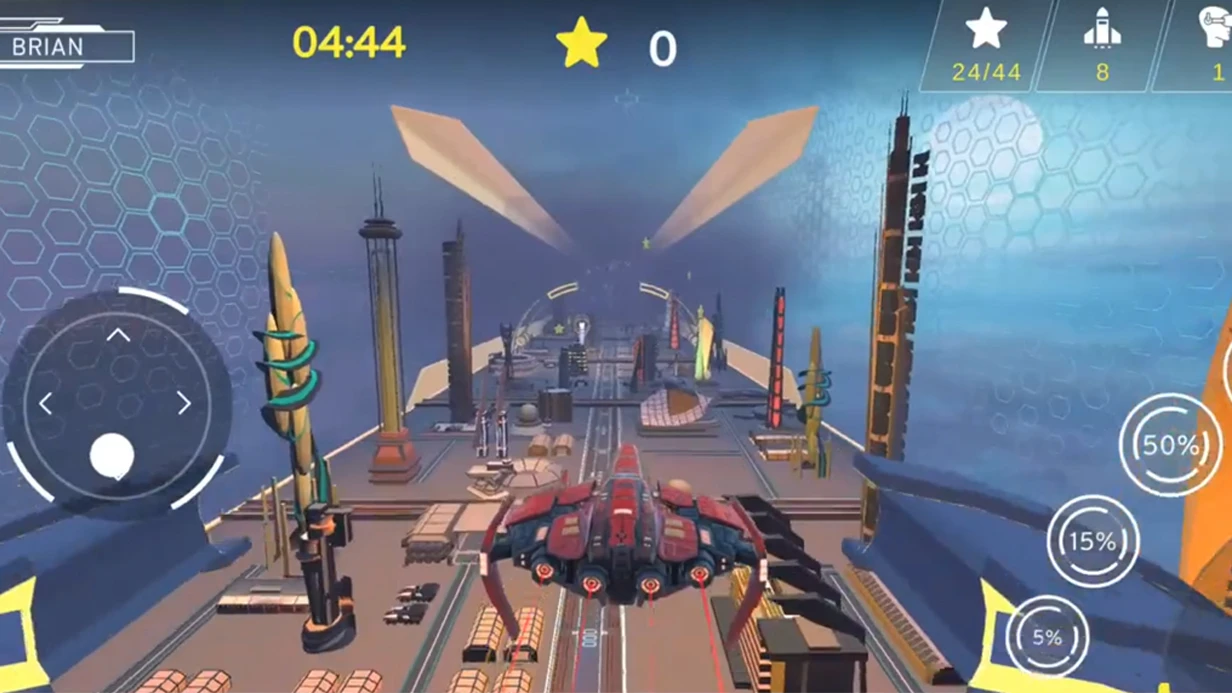
At themed booths that people visit intentionally, you can build multi-step scenarios — virtual tours, configurators, games. The key is that the interaction shouldn't create a line or wear out visitors' patience.
Plan in advance how you'll know the format worked. Ask the developer for counters of launches, interaction time and collected contacts. This lets you evaluate the booth's return and decide whether to scale the idea to future shows.
If choosing is hard — our experts can help you pick a format based on your specific goals and constraints, drawing on experience from dozens of projects.
Next steps: from request to booth launch
To make your augmented reality exhibition demo a success, it's important to start early: every stage takes time for approval, production and testing. Here's what you need to do now so your booth runs flawlessly on event day.
- Step 1. Submit a request on the website — we'll contact you within one business day and clarify your exhibition goals.
- Step 2. Get a VR/AR consultation — together we'll choose the format for engaging visitors: grabbing attention, product presentation or training.
- Step 3. We collect requirements and prepare a concept — you'll see realistic timelines, understand which stages take longer and be able to adjust the plan.
- Step 4. We approve the scenario and start production — building the models, interface and test version proceeds under your regular oversight.
- Step 5. We test the solution 2–3 weeks before the event — we check stability, response speed and visitor-friendliness right at your booth.
- Step 6. We launch the project and stay in touch during the show days — we train the staff and quickly fix any issues so the demo runs without pauses.
Average preparation cycle: 4 to 8 weeks depending on scenario complexity. To make it in time for your next show, submit a request right now: it's non-binding.
After the consultation, you'll have a clear understanding of the timeline and scope of work, and we'll be able to plan everything without rush or surprises.