

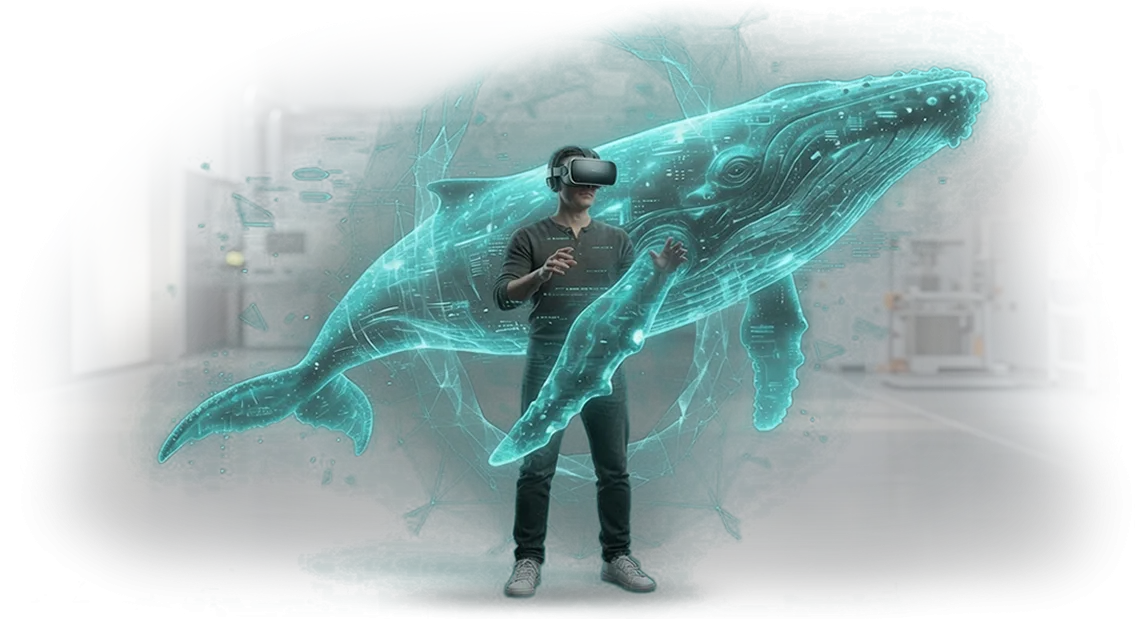


You're losing customers because you don't have an interactive catalog
A buyer makes a decision in minutes. If it's hard to view a product, judge its size, or picture it in an interior or work environment, they simply walk away to a competitor.
A static catalog and photos from three angles worked yesterday, but today they read as a barrier to purchase. Every lost customer is not just a missed sale — it's a dent in your reputation and referrals.
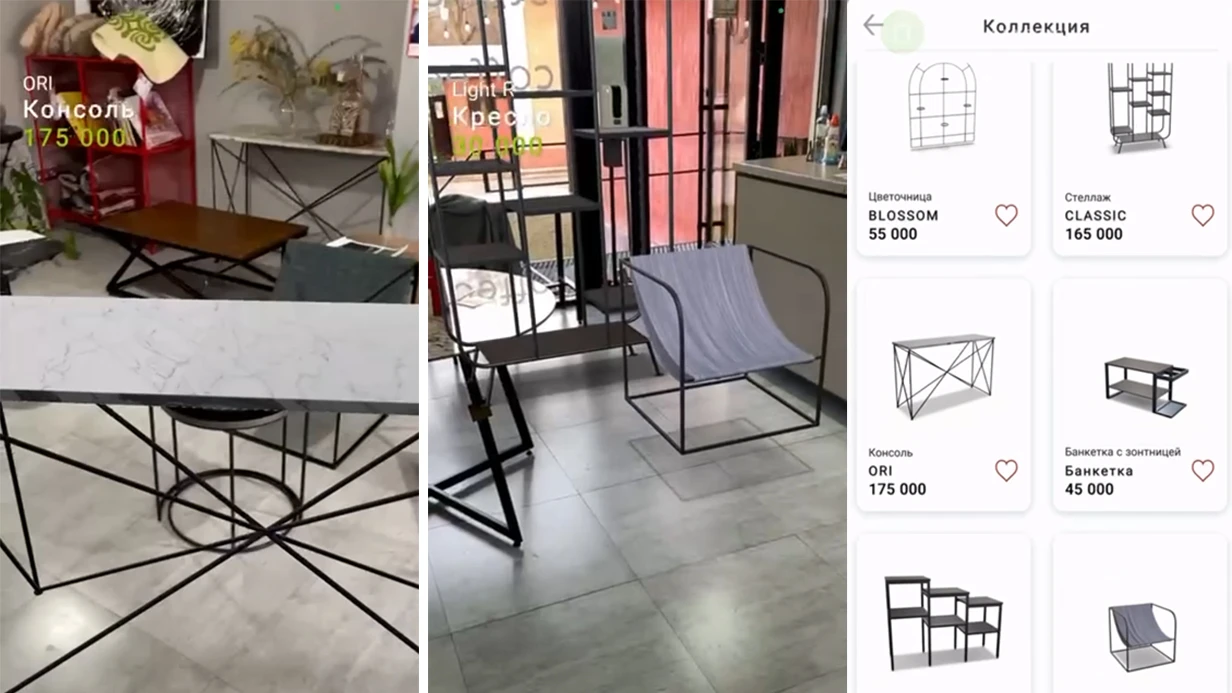
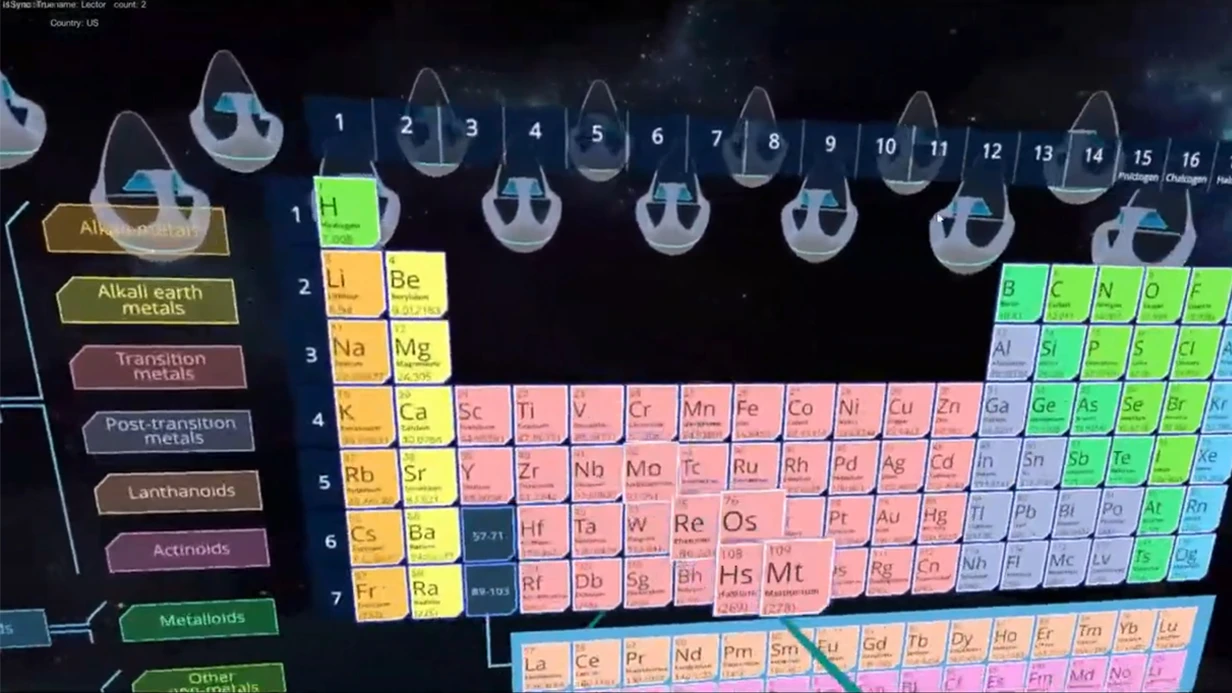
An interactive catalog changes the game. Instead of static product cards, customers get a virtual showroom where they explore the product themselves: rotate it, zoom in, and place it in their own environment with augmented reality.
This isn't a "nice extra for your website" — it's a new level of trust. Customers see the product "in person" before buying, pay with more confidence, and return items far less often due to mismatched expectations.
Competitors already offer this experience. While you're explaining product features over the phone, another seller shows the model in augmented reality right in the chat or at their showroom. Losing on visual clarity quickly becomes losing on revenue.
We solve that. We build interactive catalogs tailored to your business — from a virtual showroom for an online store to a try-on experience for a retail chain. Your customers get a tool that sells before they ever talk to a manager.
Why shoppers choose products in augmented reality
An online shopper can't touch a product, judge its scale, or see how it fits into a real setting. So they hesitate, postpone the purchase, or go to a competitor whose offer is easier to understand.
An interactive catalog with augmented reality removes the biggest barrier — instead of a picture, it presents the product as a dimensional object that customers can "place" into their living room, office, or storefront. In a few seconds they understand whether it works for them and make a confident decision.
This directly affects your business metrics. When a person interacts with a product in augmented reality, the time spent exploring it multiplies: they change colors, adjust sizes, inspect details from every angle.
The longer the engagement, the more likely they are to add the item to the cart and complete the order. Conversion from view to purchase goes up, and returns go down — because the customer has already seen the product in realistic conditions and knows exactly what they'll get.
Augmented reality creates an emotional connection with your brand. It's an unusual format that people remember, share on social media, and keep returning to. That drives customer retention: they get used to choosing you.
Repeat customers are more willing to try new products and trust the catalog's recommendations. For your business, that means a steady flow of orders without constantly increasing your ad budget.
Each interactive element works for you around the clock: it replaces a sales consultant, answers typical objections, and guides the customer to the right decision.
You don't just get a storefront — you get a sales tool that pays for itself through a higher average order value and stronger customer loyalty. Customers notice the difference — they choose the business that offers a clearer, more convenient way to explore the product.
Interactive catalog formats
A catalog can be presented as a web page, an AR overlay, or a full VR showroom. The choice depends on where your customers are and how deeply they want to explore the product.
The right format directly drives conversion: if customers find the catalog awkward to use, they go to competitors. We select a format for your task and combine several formats into one solution if needed.
Formats for your task
Web catalog runs in the browser and opens from any device by link — convenient for mass campaigns and quick browsing. AR catalog overlays a product model on a smartphone camera feed — customers see how the item will fit into their space and decide more confidently.
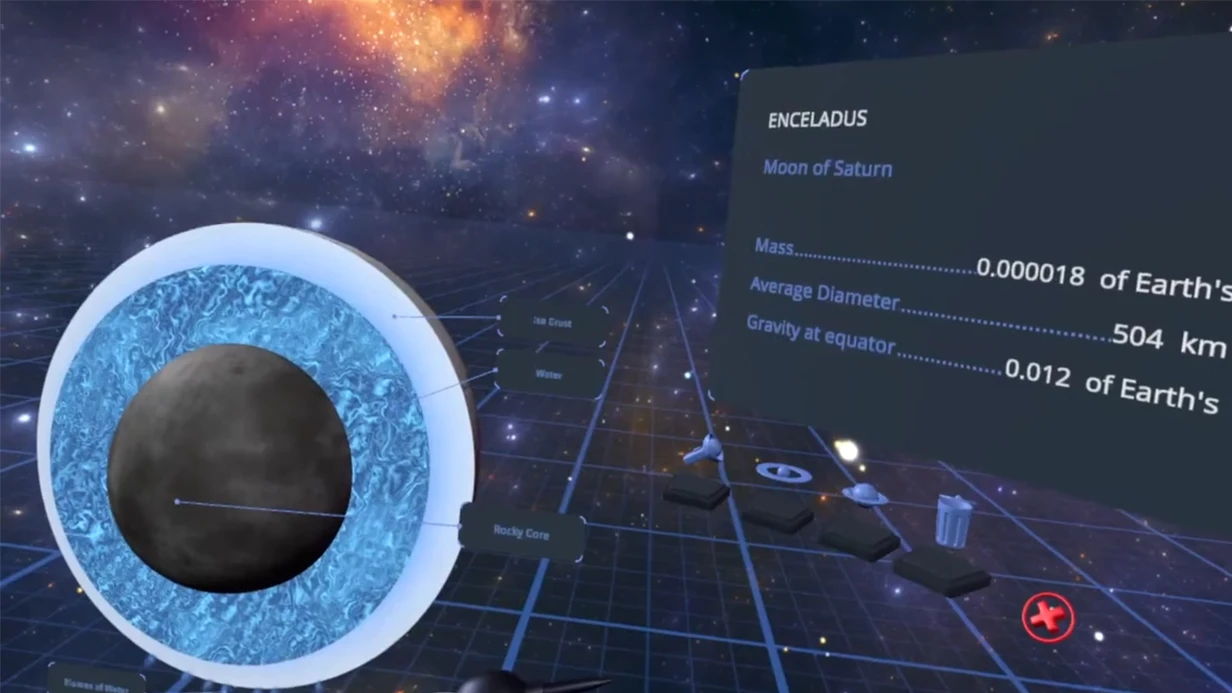
VR catalog immerses the visitor in the brand's virtual environment — ideal for large objects and premium presentations.
Below is a comparison of formats by client task. Focus on the use case, and we'll help adapt the solution.
| Format | Who it's for | What it gives the client |
|---|---|---|
| Web catalog | Broad audience | Fast reach without installation |
| AR catalog | Hesitant shoppers | Product try-on, higher conversion |
| VR catalog | B2B, exhibitions | Sense of presence and scale |
We'll help you pick the right format or combine them into one solution. That shortens the customer's path from "just looked" to "ready to buy."
How we work: from brief to launch
We've built a transparent process so launching an interactive catalog doesn't turn into endless approvals. You always know what stage the project is at, what the timeline is, and what you'll get at the end. Here is the path from the first brief to a working VR solution.
-
Brief and task discovery. We start by talking about your business: what the catalog will do, who your customers are, and in what situations they'll use it. We capture the goals and success criteria — that's the foundation of the whole project.
-
Concept and demo version. We show how the catalog will be structured: layout, navigation, and visual style. We approve the design before full development begins to avoid rework at later stages.
-
Plan and timeline. We put together a work schedule with clear milestones and dates. You see who's responsible for what and can track progress without extra meetings or long reports.
-
Catalog development. We build the virtual space, upload your products or objects, and set up viewing and interaction scenarios. Your input on materials and content is key at this stage.
-
Testing and revisions. We test the catalog on different devices so visitors get a stable image and fast response. We make adjustments based on your feedback before launch.
-
Launch and training. We deploy the catalog on your website or app and train your team — marketing and sales can use it right away and update content as needed.
-
Post-launch support. We don't disappear after handover: we monitor performance, help with updates, and expand functionality as your needs grow.
This process has been proven across dozens of projects: it keeps us on schedule and delivers a catalog that genuinely attracts customers. We start with a brief — we'll handle the rest.
What's included in the final solution
The final solution is not an app link but a working tool you receive in full: a user-facing interface, an admin system, and all necessary documentation. We hand over the project so you can use it immediately and develop it without relying on our constant support.
The final delivery includes:
- An interactive catalog with 3D models of your products or objects — customers view them from any angle, zoom in on details, and submit requests right away. This format boosts engagement and reduces the number of questions to your managers.
- Admin panel — you add products, update prices, promotions, and descriptions yourself. No need to wait for a developer for every update.
- User behavior analytics — you see which items get viewed most, where customers pause, and what they skip. That's a solid basis for assortment and advertising decisions.
- Integration with your website and CRM — requests, contacts, and order data automatically flow into your existing systems. Sales works without manual data entry.
- Training and documentation — clear instructions in Russian, short videos, and guidelines for your team. A new employee gets up to speed in a day, and you're not dependent on a single vendor.
- Source code and project rights — you fully own the product and can bring any other team in for future development.
- Post-launch warranty support — we stay available for the first months, help with updates, and answer your questions.
All documentation — from architecture to user instructions — is included in the delivery and stays with you. You get a transparent project that's easy to develop, not a "black box" with unclear settings.
Real case: 40% showroom growth
When the furniture company «Komfort» came to us to revive sales, the key growth point was clear: the showroom. The physical showroom could only fit a little more than half of the collection; the rest sat in a plain PDF catalog that customers almost never opened.
People came in, saw a limited selection, couldn't find the model they wanted — and left to competitors without buying.
The solution
We proposed replacing the static catalog with an interactive one built on WebVR technology. Customers open it from any device — computer or smartphone — and see the entire assortment in 3D.
Any item can be "placed" into their room through the phone camera: check size, color, and how it works with other furniture. No apps needed — everything runs right in the browser, from first touch to try-on in under a minute.
The result
The showroom grew by 40% — now customers see every product in the collection, even if it's not in store. Average time in the catalog tripled: people don't scroll past, they study and compare.
Conversion from view to request rose by 30%, and the average order value went up 18% — additional sales came from products that were previously invisible.
Six months later, the company ordered a second phase: the interactive catalog became the main showroom for the new season. Managers receive requests with a complete item-number grid, calls are shorter, and sales are more predictable. For us, this is confirmation: the right showroom format pays for itself within the first season.
How to choose an augmented reality format for your showroom
Choosing an AR format for a showroom starts not with technology but with what a person should do at the showroom. If the goal is to stop a passerby and hold their attention, short AR scenarios work: point the camera — see a live product or motion.
If the goal is to introduce the assortment and show colors, sizes, and configurations, you need an interactive catalog where the customer browses items and views them from every angle.
For these tasks, we most often recommend a WebVR catalog: it opens in the browser, requires no app installation, and suits any showroom format.
The second criterion is guest convenience. Visitors shouldn't have to figure out the interface or spend time preparing their phone. A good format is one where no more than a couple of minutes pass from pointing the camera to getting value.
That's why the scenario should launch in one step from any modern smartphone. This lowers the barrier to entry, and even people who usually walk past will try the display.
The third step is tying the format to your brand goal. If you need to impress and get photos for social media, choose an AR mask or effect people want to share. If you need to increase purchase conversion, add pricing, descriptions, and an order button to the catalog.
If the showroom has multiple roles, we build a combined solution: one scenario draws attention, another leads to a purchase decision.
One more practical tip: don't chase maximum technological complexity. A lavish effect that lags on visitors' phones will deliver less value than a simple, fast scenario. The result just needs to look premium and run reliably. Before launch we test the format on different devices to avoid surprises on opening day.
In practice, the right format becomes clear after a short task analysis. Send us a photo of your showroom and tell us who your customers are — we'll suggest two or three suitable options with an effect forecast and scope of work.
That way you get a solution for your situation, not an abstract set of features. We help you choose a scenario that matches your budget, timeline, and audience expectations.
Frequently asked questions about timelines and guarantees
Timelines, guarantees, and ongoing support are the key questions every client asks before the project starts. Straight answers, no fine print: you'll know in advance when the catalog goes live, what happens if something goes wrong, and what support you can count on after launch.
How long does it take to create an interactive catalog?
A standard project takes two to four weeks. It depends on the number of items, the scenarios you need, and the format you choose: VR catalog, web version, or app.
After a short brief, we lock the timeline into the contract and give you the exact delivery date. If you need to meet a strict deadline, we'll discuss a compromise based on proven template solutions.
What do you do if we're not satisfied with the result?
The guarantee is written into the contract. If something doesn't work as expected or doesn't match the agreed scenario, we fix the issues free of charge during the warranty period.
Importantly, you see interim versions of the catalog before launch. That lets us make revisions at early stages and deliver exactly the result your business needs.
What about maintenance after launch?
A catalog is a living tool: prices change, new items appear, seasonal promotions run. So after launch we stay in touch and offer support options — from one-off updates to ongoing maintenance.
You can always reach out with a task: add products, change a scenario, launch a new promo section. It's fast and doesn't require rebuilding the project.
What do we need to provide from our side?
Just a product or service catalog: photos, names, descriptions, and a few preferences on the scenario. Everything else — interface design, logic, and packaging for VR or web — we handle ourselves.
At the start, you receive a short questionnaire and a structure mockup so we can approve the catalog contents before development begins. That eliminates extra iterations and surprise revisions.
Submit a request for development
Submit a request — and we'll prepare a clear action plan for your task. We start with a consultation: we'll review how an interactive catalog can help you show products to customers, hold their attention, and increase conversion. No obligations — only real value and specifics.
What you get right after submitting:
- A consultation — we'll clarify your main goal and propose a solution that fits your budget.
- Free cost estimate — you'll know the project cost before we start, with no hidden fees or mid-project surprises.
- Realistic timeline — we'll break the project into stages and give you a schedule that's easy to plan around for production and launch.
- Commercial proposal with scope of work — you'll know exactly what you're paying for and what you'll receive at the end.
- Examples of similar projects — we'll show how an interactive catalog solved business problems in your niche and discuss what applies to your case.
- Summary of agreements — after the discussion, we'll put the key decisions in writing so nothing gets lost.
Submit a request — it takes a couple of minutes. We'll call you back at a convenient time, answer your questions, and do all the calculations so you can make an informed decision. Just send the form — the first step is ours.