



Real Estate Sales: Why Buyers Don't Show Up
Property owners spend weeks preparing a listing, yet buyers never come to see it. Ads with a dozen static photos and a text list of features no longer hold attention — interest is lost within seconds, and the person moves on to the next listing.
It's not about price or location — it's about how you present the property. When a buyer sees lifeless images, they can't picture themselves inside the space: they don't understand the real scale of the rooms, can't evaluate the layout, don't feel the atmosphere of the place. A trust barrier arises — and the request for a viewing never comes.
A virtual tour solves this problem: a person explores the property without leaving home and decides to meet faster. You save time — only truly interested buyers actually come to the site, not random visits out of curiosity.
We turn your property into a format that sells even before the phone rings: layout, lighting, materials — everything looks so that a virtual tour generates far more qualified views than ordinary photos. This is exactly the kind of presentation most listings on the market lack today.
What a Virtual Tour Does for Your Sales Department
Today's property buyers are not willing to spend weekends visiting dozens of properties. They first research everything online, on websites and social media, and arrive at the viewing already ready to make a decision.
If your site has only a couple of photos and a floor plan — you lose half of your interested clients: they go to those who show the property in detail and honestly.
A virtual tour turns your website into a full-fledged sales tool. With it, the sales department gains three key advantages that directly affect conversion and deal speed:
- Unlimited audience reach. Show the property to clients from other cities and countries — they don't need to spend time and money on travel. You go beyond the local market and attract more buyers, including those looking for investment property.
- Faster decision-making. The client sees the layout, finishes, views from the windows, and room placement in advance. They arrive with the expectation "this is mine," not with the question "what are we going to see here?" The time from first contact to closing is noticeably reduced, and managers spend their time only on warm leads.
- Trust in you and the property. An honest virtual tour removes the fear of "a pig in a poke." The buyer sees everything as it is, so disappointments and rejections at the final stage are rarer. You build a reputation as an open company that clients return to and recommend.
When a virtual tour is done right, it becomes the first stage of your sales funnel. Leads become more qualified, the sales department works more efficiently, and you outperform competitors who show only static photos.
We have been creating such tours for developers and real estate agencies for over 10 years. We help package a property so that the client makes a decision before even visiting the site, and you get predictable sales growth.
VR/AR/MR Formats for Property Presentation
Each format is not just a technology, but a tool for solving a specific sales challenge. VR immerses the buyer in a not-yet-built property, AR shows details in real space, MR combines a digital model with live communication. The choice depends on who you work with and where the client is in the funnel.
Format Comparison
| Format | For Whom | What It Gives the Client |
|---|---|---|
| VR | Buyers at an early stage, out-of-town clients | Shows the property in finished form before construction, without travel |
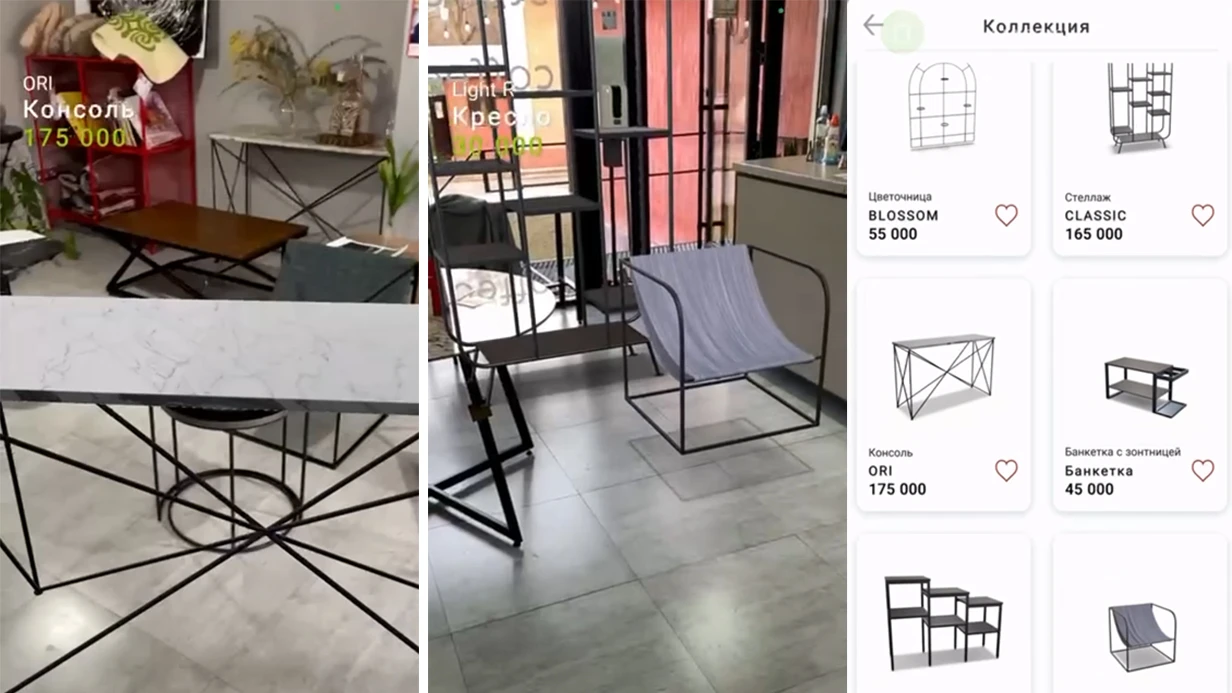
| AR | Buyers on-site, clients with smartphones | Furniture placement and light checking in real space |
| MR | Agents, office presentations, premium deals | Shared viewing of the model in a real environment, faster decisions |
VR, AR, and MR do not compete with each other: each covers its own stage of the deal. VR is needed for the initial presentation, when the client is just studying the offer. AR helps "try on" future interiors at the property.
MR is suitable for negotiations where it's important to show the property in the context of a real office.
In our projects, we combine formats rather than choose just one. This gives you a unified demonstration line: a VR tour attracts buyers, AR refines details, MR closes the deal.
As a result, the client moves faster from viewing to booking, and you reduce time spent on approvals and repeated showings.
Selling Real Estate with WebVR: Launch Stages
A real estate deal is built on trust: the buyer wants to see the property, but often it doesn't exist in reality yet. A WebVR tour shows apartments and offices down to the smallest detail, without making the client travel to the construction site.
To ensure the development brings sales rather than ends up in an archive, we have structured the process into seven stages.
- Brief and goals — we agree on what we are selling (apartments, condo units, commercial spaces), for which audience, within what timeline and scope.
- Analysis and scenario — we study layouts, facades, and the surrounding area. We identify key presentation points and the structure of the future tour.
- Space design — we create the visual concept: lighting, materials, furniture arrangement. You approve the drafts before we start the heavy work.
- Intermediate version — we put together a WebVR tour where you can already walk through floors and switch finish options. We provide a link for checking on any device.
- Review and revisions — you pass on feedback from sales managers, we systematically address it and finalize the version.
- Launch and integration — we place the tour on the website, social media, and QR codes in the sales office. We configure it to open in the browser without any additional apps.
- Support and updates — we monitor viewing statistics, update properties as construction progresses, and make quick changes when needed.
We work with both local developers and network projects — using proven tools and professional equipment. You get not a video, but a sales tool: the tour opens for the client in seconds, and the manager gains a tangible argument in dialogue. The process is transparent — you always know where the work stands and when to expect results.
What's Included in the Virtual Tour Delivery
You receive not just a link, but a complete package for your sales department. Inside — everything a manager needs to show the property to a client within a couple of minutes after first contact, without involving developers or requiring special knowledge.
- A ready virtual copy of the property — a realistic environment with key rooms and interior details. The tour opens in the browser on any device: computer, tablet, or smartphone.
- A direct link to send to the buyer — they don't need to install anything. The client clicks the link and immediately sees the apartment, so initial negotiations are faster and more substantive.
- A version for virtual reality headsets — for office presentations and exhibitions. The buyer "walks through" the rooms and feels the real proportions, which is especially valuable when selling still-under-construction housing.
- A short guide on launching and using the tour — written in plain language, without technical details. A new employee can figure it out in a minute.
- A quick-reference card for managers — how to show the tour, what to focus the client's attention on, and how to answer typical questions. Helps the team turn interest into a closed deal.
- Implementation support — we are available on the first day after launch and help configure the display on your equipment so everything runs smoothly.
In the end, you get a tool that works at every stage of the sale — from the first message to the meeting in the office. The buyer makes decisions faster, and your team spends less time on explanations and repeated showings.
Case Study: How We Accelerated Property Sales in Two Weeks
The client — a Moscow developer — had lost sales momentum at a new residential complex: advertising brought traffic but no leads.
We proposed not another banner, but turning the property into a virtual showroom: the buyer visits the website and walks through the apartment on their own — evaluating the layout, dimensions, view from the window, even the light at different times of day.
Development took two weeks: brief, capture, tour assembly, and publication. After that — just results. In the first month, property page views grew by 80%, and the number of viewing requests increased by 1.5 times. Most importantly: two apartments were sold to buyers who came through the VR tour.
Why This Solution Worked
Photos and floor plans force the buyer to build the apartment in their head, and that's a barrier. A VR tour removes it: the person is already inside, sees distances and light, feels the space.
Decisions are made faster, and leads come in "warm" — the client is ready to schedule a meeting immediately after the virtual viewing.
For the developer, it's also a saving: no need to open a showroom or spend managers' time on every hesitant visitor. Everyone who came after the tour had already made a preliminary decision and arrives at the property with a clear intention.
The developer appreciated the result and a month later ordered a second tour — for a new residential complex. Now the VR tour has become their standard sales launch tool, and the number of inquiries no longer depends on the season or the weather.
Addressing Your Concerns: Complexity, Timeline, and Cost
We know: the virtual tour format for real estate seems complicated and expensive. Hence the doubts about timelines, budget, and guarantees. We'll answer right away: no hidden conditions and no technical difficulties for your team.
Timeline — from two weeks for a standard project, if the floor plans and photos are ready. We handle all the routine: uploading materials, adapting for phones and computers, configuring access. Your sales department keeps working without disruption. We give the exact date after a short brief and always include it in the contract.
Cost — a clear estimate by stages, with no surprises. You pay only for the result: a ready tour that can be used immediately in listings and email campaigns. Before launch, we show a test version — if something is wrong, we make revisions before the final stage is paid.
Guarantees — set out in the contract: timeline, tour structure, list of revisions. After delivery, we stay in touch and help with updating floor plans and adding new properties. If materials cause delays, we advise on how to speed up the process.
What if the launch is needed urgently, by a specific date?
We take on such tasks. The priority development pipeline allows us to assemble a tour in 7 working days. One condition — materials must be provided within two days after the start. You'll receive the result at the agreed time, and we take on all risks. Let us know about the urgency in your request — we'll give you the nearest available slot.
How to Choose a Virtual Presentation Format for Your Property?
There is no universal virtual presentation: what sells an apartment in a new building won't convince a buyer of a country house or a commercial space. The format is chosen by three parameters — property type, buyer profile, and budget.
They indicate how deep the immersion should be and where the person will get acquainted with the property.
For typical apartments, a panoramic tour via link is enough — the buyer opens it on a smartphone, walks through the rooms on their own, and compares options without booking a viewing.
An expensive listing or a rental space needs a more compelling scenario: a full 3D model that allows movement, evaluation of layout, light, and finishes. The decision is born not from photos, but from the feeling of the space.
Budget sets the priorities. A panoramic tour solves the task of mass sales when there are many properties and they need to be shown quickly. An interactive model is justified for a single high-value listing: content costs are recovered through a faster deal.
The main question is: what should the buyer do after the presentation? If the goal is to invite them to a physical viewing, a light preliminary preview is enough.
If the decision must mature without a visit to the property, the quality of the presentation and its credibility become decisive — that's the trust factor.
We select a format for a specific task: we analyze the property, audience, and budget, show examples of similar projects, and state timelines and results before the start.
You get not "technology for technology's sake," but a working sales tool for your specific property.
Request a Consultation
One virtual presentation can replace several physical viewings: the buyer examines the layout, understands the scale of the rooms, and makes a decision faster.
But to ensure the technology generates sales rather than just impresses, it's important to choose the right format for your property. We'll guide you on where to start.
Leave a request for a consultation — and we'll review your situation: what you're selling, who your audience is, and which objections a virtual tour resolves. No technical complexity: you get concrete recommendations and an action plan.
What you'll receive after reaching out:
- A property assessment: whether a virtual presentation suits your residential complex or commercial space.
- Format selection: from a simple 3D tour to a full VR showroom with your brand.
- Reach estimate: how many views a virtual tour will bring and how it will shorten sales cycles.
- Results examples: similar projects in your niche where a virtual presentation accelerated sales.
- A clear launch plan: stages, timelines, and responsible parties — without diving into implementation details.
- A transparent budget: understanding the cost before work begins, with no hidden fees.
This comes with no obligation. You get only value: an understanding of how to increase conversion from viewing to closed deal, and confidence that the next step will lead to sales.
Leave a request — we'll call you back within a day and arrange a time for the consultation.