




Why a Veterinary Clinic Loses Clients
Pet owners are used to the digital world: they book appointments online, watch video reviews, and choose based on testimonials. When a person walks into a clinic and sees an ordinary corridor with posters and outdated equipment, trust drops even before the appointment.
Expectations have risen — now clients compare not only prices but also the impression of every touchpoint with the brand.
This is exactly where the clinic loses clients. A pet owner may not understand medicine, but they quickly notice that at the nearby clinic there are interactive screens, virtual tours of departments, and clear treatment visualization.
Their pet is a family member, and the owner wants to see that it will be cared for at a modern level. If your clinic looks the same as ten years ago, the decision to go to a competitor is made faster than you think.
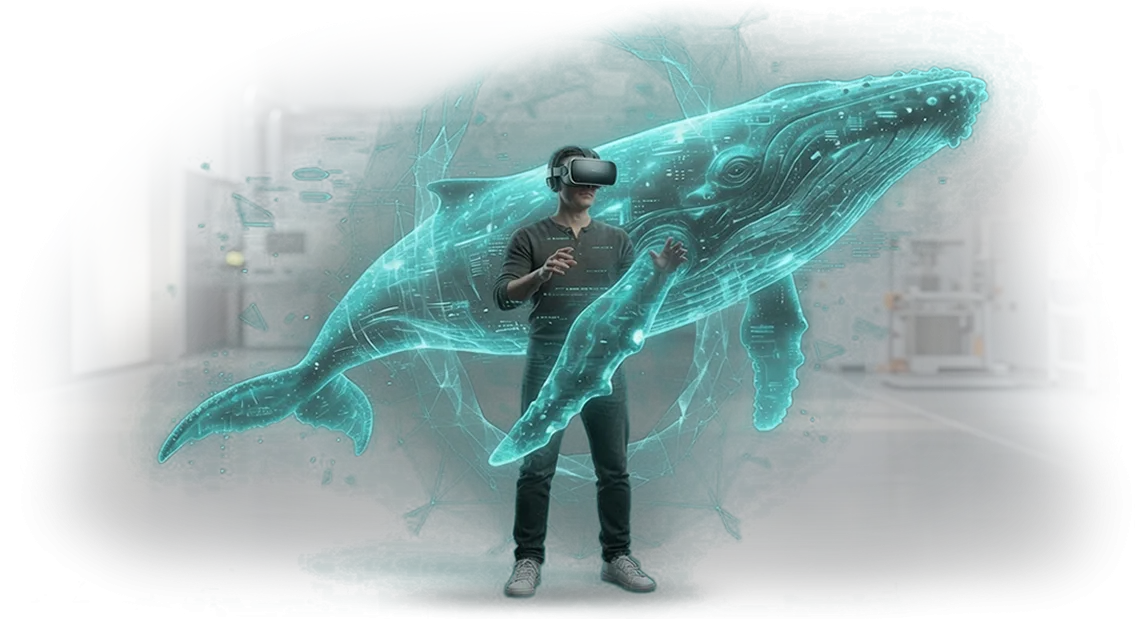
Interactive technologies solve this problem — they hold attention, increase trust, and create a feeling of care before the doctor has said a single word. A VR tour of the clinic or a 3D model of an upcoming operation helps the owner understand the process and worry less.
This format is not just a “wow effect”: it relieves fear, reduces the number of questions at the appointment, and builds loyalty that doesn’t require paid advertising.
Wehave been solving exactly this problem for more than ten years. We help clinics stop losing to competitors — we create interactive experiences that turn a one-time visit into long-term relationships.
With every new touchpoint, the pet owner feels they were chosen not by chance, but because here they genuinely care — and that’s the main reason clients stay.
What Interactive Content Gives to Veterinary Medicine: Benefits for the Clinic
Clients come to a veterinary clinic with anxiety: the pet is unwell, and what happens next is unclear. Interactive 3D models, treatment plans, and virtual tours relieve this anxiety. The owner sees how the clinic works, what procedures await the pet, and feels more confident. This directly affects the choice of clinic and the desire to return.
Increased Loyalty
When the owner understands the treatment process, they trust the doctor. Interactive anatomy or a virtual tour of the clinic shows care even before the appointment.
The client remembers the attentive attitude and brings friends — simply because they were heard and everything was explained clearly.
Higher Average Bill
Additional services — ultrasound, laboratory tests, preventive care — often remain in the background because the client simply doesn’t know about them. With interactive materials, you can clearly show why a particular procedure is needed and how it helps the pet.
When the benefit is obvious, the decision to add a service is made more easily — the average bill grows without pressure.
Attracting New Clients
People look for recommendations online and remember those who surprise them. Interactive content looks modern and unusual — people talk about the clinic and share it on social media. Such content stands out among standard websites and attracts owners who value technology and care.
Competitive Advantage
Most veterinary clinics work the old-fashioned way: a website, a phone, and standard consultations. Interactive content immediately sets you apart — it creates the image of a progressive clinic that keeps up with the times.
This matters when choosing: a client is willing to pay more for an experience that is clear and comfortable.
We develop such interactive formats to match the specific needs of a clinic. Our solutions work in a browser or on a tablet — without complex installations, and the result is immediately visible: patients who return and clients who bring friends.
VR/AR Solution Formats for a Veterinary Clinic
A veterinary clinic solves several tasks at once: explaining a diagnosis to the owner, training new staff, and refining complex surgery. There is no universal VR/AR solution — each task needs a format that delivers measurable results. Below is a table of the main formats to help you choose the right one.
| Format | For whom | What it gives the clinic |
|---|---|---|
| Virtual examination | Pet owners, therapists | A clear picture of the pet’s condition without unnecessary explanations. Reduces appointment time and increases trust in the diagnosis. |
| Staff training | Veterinary doctors and assistants | Safe skill practice on virtual patients. New staff get up to speed faster, experienced staff refresh their protocols. |
| Surgery simulation | Surgical team | Training for rare and complex procedures without risk to animals. Fewer mistakes in real practice, lower stress within the team. |
| Interactive demonstration | Clinic clients | Clear explanation of procedures, treatment, and aftercare. Owners more readily agree to prescribed procedures, and loyalty grows. |
A combination of formats amplifies the effect — for example, virtual examination plus staff training. We will help you choose the optimal set for your tasks and show the expected results before implementation.
How Development Works: From Brief to Launch
Developing an application for a veterinary clinic is not just creating 3D models and code. To ensure the result solves business tasks — attracting visitors, training staff, or simplifying scheduling — we build a transparent seven-stage process. You participate at key steps, control timelines, and can make changes without unnecessary costs.
- Brief. We record the tasks: why you need WebVR, who the audience is, and what result is required. We discuss your expectations, the clinic’s specifics, and the target audience.
- Plan. We propose a concept, stages, and timelines. You approve the plan and agree on the budget — you know in advance what you will receive and when.
- Approval. We show an interactive prototype: how the user moves, what they see, and what they click. You check the logic and appearance, make edits before the main work — this eliminates unexpected rework.
- Implementation. We create 3D content — models, interiors, scenes — and program the application logic. We use professional equipment and proven tools, so you get a stable result that works correctly on visitors’ devices.
- Testing. We test the application on different browsers and device types so every user gets the same experience. You conduct acceptance testing with us: you try the application, ask questions, and see the result before the official launch.
- Launch. We place the application on your website or connect a QR code so veterinary clinic visitors can use it immediately. We prepare instructions for the staff and help integrate WebVR into everyday work.
- Support. After launch, we stay in touch: we quickly fix errors, update content, and add new features if the clinic’s tasks change.
As a result, you get a working tool that is clear to the staff and attractive to clients. This approach removes typical risks — when the result doesn’t match expectations or deadlines are missed.
What’s Included in the Delivery of a VR/AR Project for a Clinic
When a clinic orders a VR/AR project, it’s important to understand that the delivery is not just the “software”.
We assemble the solution as a ready-to-use working tool: you receive documentation, training, and support, so the staff can start using it from day one instead of figuring it out on their own.
The standard package includes:
- A ready-made application adapted to the clinic’s tasks: virtual patient examination, a training simulator for students, or a clear demonstration of procedures to pet owners.
- Instructions for the staff in Russian: simple step-by-step scenarios, checklists for setup and daily use in typical situations.
- Staff training: a short hands-on session for doctors, administrators, and assistants — covering real cases and answering questions.
- Implementation consulting: we help integrate VR/AR into your processes, connect equipment, and account for the clinic’s specifics.
- Technical support after launch: prompt assistance with failures, updates, and refinements as tasks grow.
This package addresses the client’s main concerns: who will work with the solution, how quickly they will learn it, and what to do if something goes wrong. You get not just technology, but a predictable tool that delivers value from the first days.
Case Study: How a Clinic Increased Bookings by 30% with VR
Ordinary clinics lose up to a third of potential visits because of owners’ fear: it’s unclear what will happen to the pet in the exam room, what procedures await it, and whether they will cause pain.
The owner postpones booking, stalls, and with acute symptoms goes to another clinic or looks for advice online.
One of the capital’s veterinary clinics — VetGuard — decided to break this cycle with VR.
Instead of boring photos of the exam room, we created an interactive VR examination for them: the owner puts on a headset and sees how the appointment goes, how the doctor examines a cat or dog, and what happens during vaccination and blood tests. This scenario can be viewed at home, before arriving at the clinic, at their own pace.
The result was visible already in the first month. Primary appointments grew by 30%, and the number of patients who return through referrals also increased. Owners stopped seeing the visit as an unknown: they already know who will meet them and what will happen. Many came saying, “We watched your VR tour, now we’re not scared.”
Implementation took less than a week — we prepared a scenario, gave it to a test group of clients, and refined the details based on feedback.
Now the clinic’s staff use the VR examination during the first call: they invite the owner to “walk through” the exam room while they choose an appointment time. This removes questions and builds trust even before the visit.
For the veterinary business, VR is not entertainment but a working tool for attracting and retaining clients. It reduces anxiety, explains complex procedures in plain language, and turns an unfamiliar clinic into a place worth returning to.
That’s why we recommend veterinary clinics treat the VR examination as part of the funnel: first the owner “enters” the clinic in virtual space, then arrives at the real one, and afterwards recommends you to friends.
How to Choose the Right VR/AR Format for Your Clinic?
Each clinic solves different tasks: some accelerate staff onboarding, others attract visitors, and others move consultations to a remote format. So the right VR/AR format is not the trendiest one, but the one that addresses the clinic’s specific challenge. Start with the question “what should change in our operations” — and the solution becomes obvious.
If the main goal is staff training, choose virtual simulators: trainees practice examinations and communication with owners in a safe environment. Mistakes don’t harm real patients, and skills are reinforced faster. This reduces the load on experienced doctors and speeds up a newcomer’s path to full appointments.
When you need to attract clients’ attention and increase recognition, augmented reality is more effective. An AR effect in the waiting area shows a patient in 3D, explains pet health in a playful way, and encourages visitors to take photos.
The clinic gets organic social media reach and a reason to come back — without complex technical support.
For virtual consultations, VR/AR takes remote appointments to a new level: the doctor shows a model of the problem area, clearly explains the diagnosis and treatment plan.
The owner doesn’t just hear, but sees the pet’s condition — trust grows, and repeat visits become more frequent. This format suits clinics with mobile practice or remote patients.
There is no universal solution, but the logic is simple: first the clinic’s tasks, then the format. We help you choose an option that fits your budget and audience, and we develop and launch it turnkey.
Tell us about your situation — we’ll propose a scenario that delivers measurable results within the first weeks.
Common Client Concerns — We Answer
Any responsible manager asks the same questions before adopting a new format: is it safe for visitors, how hard is it to change workflows, and when will the payoff come. These fears are justified — but only if you view VR as another expensive experiment. We, however, see it as a working tool that fits into the clinic’s existing processes.
VR safety for you and your clients comes first. The environment is always controlled: sessions are short, scenarios have no sudden movements, and equipment is configured before starting.
A visitor never ends up in an unfamiliar environment without preparation — they first see instructions and stay under staff supervision. Risks are reduced to zero, and the benefit — a clear demonstration of services — is immediately visible.
Implementation doesn’t require restructuring the clinic. You don’t need a separate room, schedule changes, or new hires. The WebVR solution runs in a browser on a tablet or laptop, so the staff can start using it after a short setup. Everything else is on our side: we connect, test, and hand over clear instructions.
Return on investment is a matter of reach. One interactive scenario works both as a sales tool and as a way to retain clients: it increases engagement during the appointment, helps explain treatment, and boosts loyalty. Repeat visits and referrals are the return on investment.
Main concern: won’t this just be a useless toy?
The interactive format looks like entertainment, but it solves practical tasks: it shortens consultation time, helps the pet owner see the treatment process, and make decisions faster.
We work with you at every stage — from scenario to launch, so the result is measurable: more bookings, a higher average bill, and satisfied clients.
Leave a Request — Get a Consultation
A veterinary clinic is not only about treatment, but also about constantly managing owners’ expectations. Virtual reality helps you show clients more: walk them through the hospital, clearly explain a complex surgery, or simulate a treatment outcome.
But for technology to deliver value, you need a thoughtful scenario and careful integration into the clinic’s workflows.
Leave a request for a consultation — we’ll review your situation, calculate the cost, and propose an implementation plan tailored to your center’s tasks. This is non-binding: you get specifics, not vague promises.
What you’ll get after contacting us:
- A consultation with a specialized expert — we’ll discuss your goals, audience, and the right format.
- A project cost estimate — a transparent breakdown showing exactly what you pay for.
- A step-by-step implementation plan: from concept to launch and further support.
- Examples of solutions for veterinary clinics and the results they deliver to clients.
- Recommendations for integration with your website and reception department.
- Clear timelines and a list of materials needed from your side.
- Straight answers to questions: how this will affect staff workload and client experience.
Fill out a short form — we’ll call you back within one business day and answer all your questions. It’s fast and non-binding.