

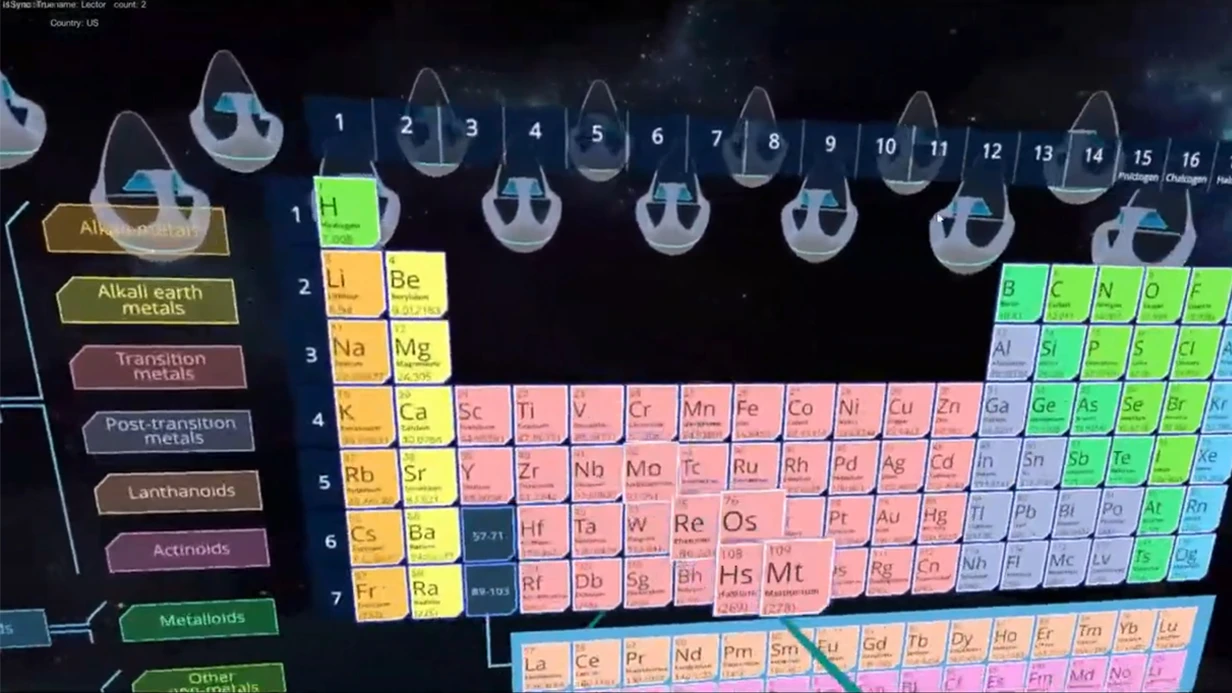


Virtual Showroom: How to Retain Customers
Customers leave when they cannot truly examine a product: photography hides texture, scale, and details, and the description does not give the feeling of “I already see this in my home.” Today, a buyer expects not just images, but the ability to study the product as carefully as in a regular store. If this is missing, they close the tab and go to a competitor.
A virtual showroom solves this problem: instead of static pages, you create an online storefront where the customer controls the viewing experience.
Rotate the product, zoom into the seam, change the color, look inside — all of this turns a boring catalog into an interactive presentation. The buyer feels in control of the process, and therefore stays longer on the site and makes a decision with greater confidence.
For business, this is a direct benefit: the customer does not leave to “think it over” but gets answers right in the moment. The virtual showroom works as a full-fledged 3D catalog, available 24/7 from any device — from a smartphone to an office computer.
You show the entire assortment without renting retail space or spending on sample logistics, and the customer sees the product in more detail than in person — without crowds, queues, or time limits.
Such a presentation increases engagement and loyalty: the buyer remembers the brand that gave them a convenient and honest way to choose.
The virtual showroom is easy to update — a new model or a change in configuration appears online instantly, and customers always see the current offer.
As a result, you not only retain existing customers but also attract new ones — through the convenience that sets you apart from competitors with ordinary photographs.
What Benefits Does a Business Gain from 3D Presentations
Ordinary presentations and static photographs no longer hold buyers' attention: in the first seconds, a person decides whether it is interesting.
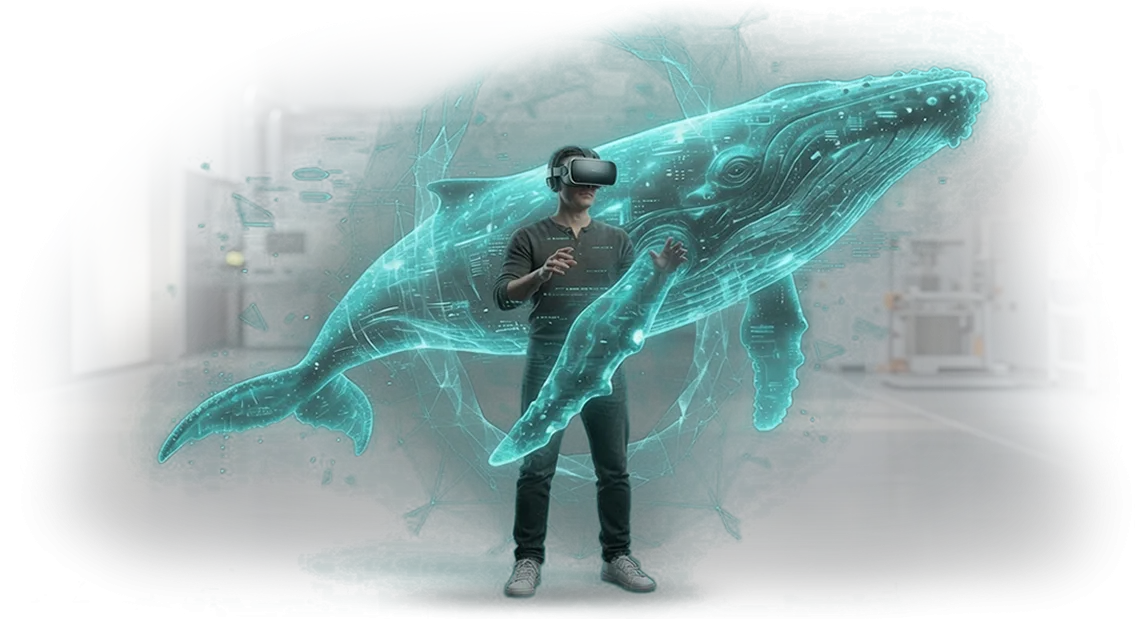
A 3D presentation turns viewing into a live experience — the customer moves through the virtual space themselves, zooms in on details, and examines the product from any angle.
This is especially important for showrooms where the product needs to be shown in action, not just listed with specifications.
Customer engagement grows many times over because a person does not passively flip through slides but interacts with the object. The immersive format engages visual memory and emotions, so information is absorbed more easily and remembered for a long time.
This approach increases brand recognition: people discuss the original digital experience, share it on social media, and the association with innovation becomes attached to the company.
Sales growth is a logical consequence. When a customer can study a product in detail in a virtual showroom, it is easier for them to make a decision, with fewer doubts and clarifying questions. This shortens the sales cycle and increases the number of leads.
According to statistics, interactive formats increase conversion two to three times compared to traditional catalogs, and repeat inquiries become more frequent.
Our 3D presentations are based on WebVR, a technology that runs directly in the browser. The client does not need to install applications or buy expensive equipment: the customer opens a link and immediately enters the showroom from their laptop, tablet, or even smartphone.
This removes the main barrier — difficulty of access. A professionally designed scene, thoughtful lighting, and realistic materials convey the premium nature of the product, which directly affects perception of brand value.
Ultimately, investment in a 3D presentation pays off through increased engagement, recognition, and the number of hot leads. You are not just showing a product — you are creating a reason to share it and remember your brand.
And we handle all the technical side: from developing the virtual space to launch and support, so you get a tool that works for your business every day.
Virtual Showroom Formats for Any Task
A buyer does not always come to the office or an exhibition. Some study the assortment from a laptop, some browse the catalog on their phone, and some stand next to the product and want to “touch” it in action.
To cover all scenarios, the virtual showroom is available in three formats — each guides the customer toward a purchase decision.
| Format | For whom | What it gives the customer |
|---|---|---|
| WebVR showroom | For those who enter from a computer or tablet via a link | Instant access without installing apps, reach any audience, and an up-to-date 3D catalog on the website |
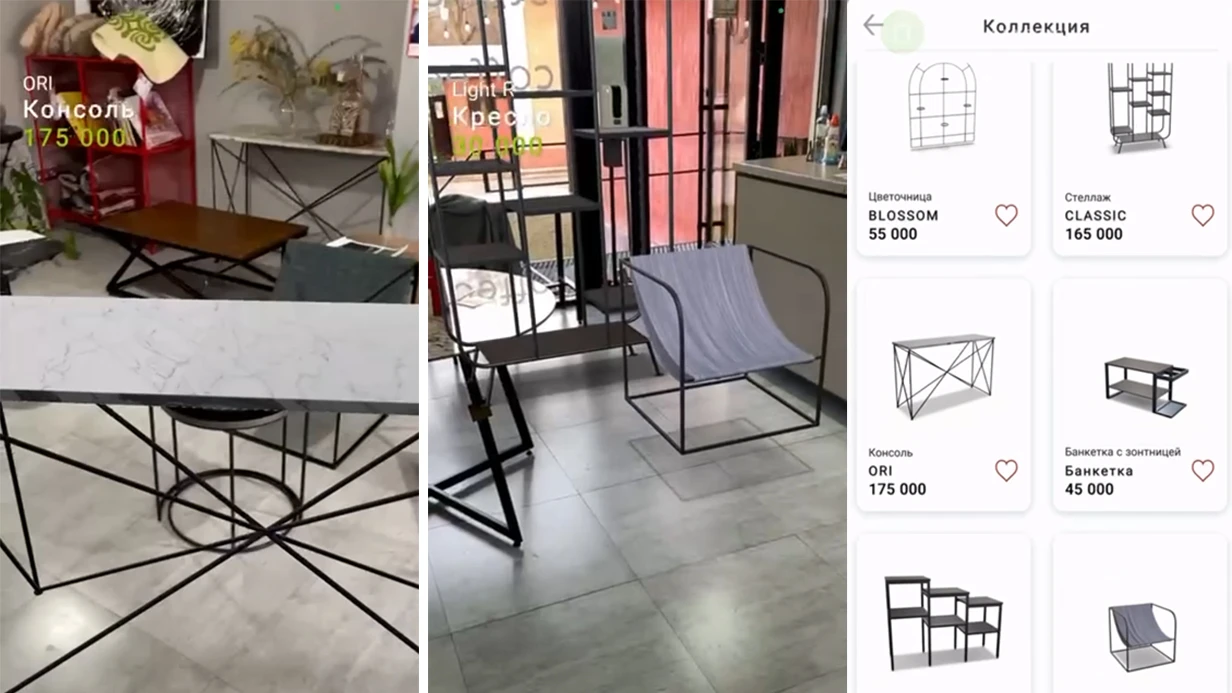
| Mobile showroom | For buyers on the go, at meetings, and in sales floors | Product always at hand: stock status, augmented reality, notifications about new items |
| VR showroom | For offline venues, exhibitions, and dealer centers | Full immersion, visitor flow, strong emotions, and long attention retention |
We connect the formats with each other: the customer starts studying the product on the web, continues in the mobile version, and completes the deal during a VR presentation. This way you get a single sales ecosystem rather than separate “islands” of technology.
Each format adapts easily to your niche — from real estate and cars to furniture and industrial equipment. Choose one or combine all three to guide the customer from first acquaintance to purchase by the shortest route.
How Work on the Project Is Handled
A transparent process is what distinguishes a reliable contractor from chaotic development. You see from the very beginning what stage the project is at, what exactly is happening, and what steps follow.
That is why we have structured the workflow so that you have several points for approval and control.
Stages of Virtual Showroom Development
- Brief and analysis — We discuss the tasks, products, audience, and goals of the showroom. We prepare the first proposal on format and timeline.
- Plan and estimate — We fix the scope, timeline, and cost. You receive a clear estimate with no hidden items.
- Prototype and concept — We design the scenario: how a visitor moves through the space, how they open products, and how they interact with them. We approve the structure and logic before development begins.
- Layout approval — We demonstrate an interactive prototype at an early stage. You make edits before main development — this is faster and cheaper than redoing finished work.
- Development and testing — We assemble the application and test it on different devices and browsers. You get a stable showroom with no “surprises” at launch.
- Launch and support — We publish the project on your domain and help integrate it with your website and social media. After launch, we stay in touch: we support, update, and refine functionality.
At every stage, you understand what is happening and what comes next. This removes risks and unnecessary approvals, and the launch goes according to plan.
What Is Included in Delivery and Support
You receive not just a link to a virtual showroom, but a complete delivery package that you can work with without depending on the developer.
Immediately after project handover, you have everything: source files, clear documentation, a trained team, and support at all stages of operation.
The package includes:
- Source files of the project: models, scenes, scripts, and settings. You become the full owner of the solution and can transfer it to any team.
- Documentation: instructions for deployment on your server, a description of the project structure, and a content update procedure. No unnecessary technical details — only what your specialists need.
- Team training: a practical seminar for employees who will work with the showroom: fill the catalog, change prices, add new products, and analyze visitor behavior.
- Warranty on the solution: a fixed period during which we fix errors and inconsistencies for free. The terms are specified in the contract and do not depend on the contractor's mood.
- Ongoing support: a dedicated engineer available after the release, consultations on any issues, help with refinements and scheduled updates.
- Updates and improvements: you can order new features — for example, CRM integration, additional viewing formats, or catalog expansion. We will prepare a plan and timeline estimate.
As a result, you get not just a ready virtual showroom, but a manageable sales tool. The team is trained, documentation is in hand, support works — nothing needs to be guessed or searched for. You control the process and can develop the project at your own pace.
Case Study: How We Doubled Sales
The owner of a furniture showroom came with a typical pain point: the product is beautiful, the website with a catalog works, but sales are stagnant.
Buyers scrolled through the pages but did not decide to order — they did not understand how a sofa or wardrobe would look in their room, and doubted the sizes and compatibility.
Managers were drowning in questions like “can you show a photo in an interior?” and conversion was falling.
We closed this with a virtual showroom: the buyer enters the website, chooses an apartment layout, and places brand furniture in it — changes colors, moves items, looks from different angles.
Conversion doubled in the first quarter after launch, the average check increased, and returns noticeably decreased. It works without installing applications — everything opens right in the browser.
What Changed for the Business
The case is based on a real project for the Uyutny Dom furniture holding (name changed). We developed a showroom based on WebVR: visitors spend an average of 4 minutes there, and the share of buyers who added a product to the cart after viewing doubled.
Managers stopped answering the same type of questions “how will this look in my place?” — the showroom itself shows the answer.
Results for the business owner:
- doubled conversion without increasing the advertising budget — solely through user experience;
- reduced managers' workload: fewer calls and messages about ordering, more time for ready customers;
- increased average check — buyers choose more expensive sets when they see them in a finished interior;
- fewer returns: a person already knows how the product will fit into their space.
Why This Is Sustainable
The sales growth is not a one-time spike: the showroom continues to bring conversion every month, and for a medium-sized showroom, payback occurs within 2-3 months of operation.
This case is an argument that a virtual showroom solves the task not “for show” but with concrete revenue figures.
How to Choose the Right Format for Your Task?
The choice of a virtual showroom format depends on business goals and audience, not on technology trends.
Before talking about a solution, we together with the client answer three questions: what should the customer see and feel, where will they get acquainted with the product, and what action should they take after viewing.
If your task is to show the product to the maximum number of buyers, the web format is suitable: it opens from any smartphone or laptop without installing applications.
This is the best choice for launching advertising campaigns, posting on social media, and placing on your main website.
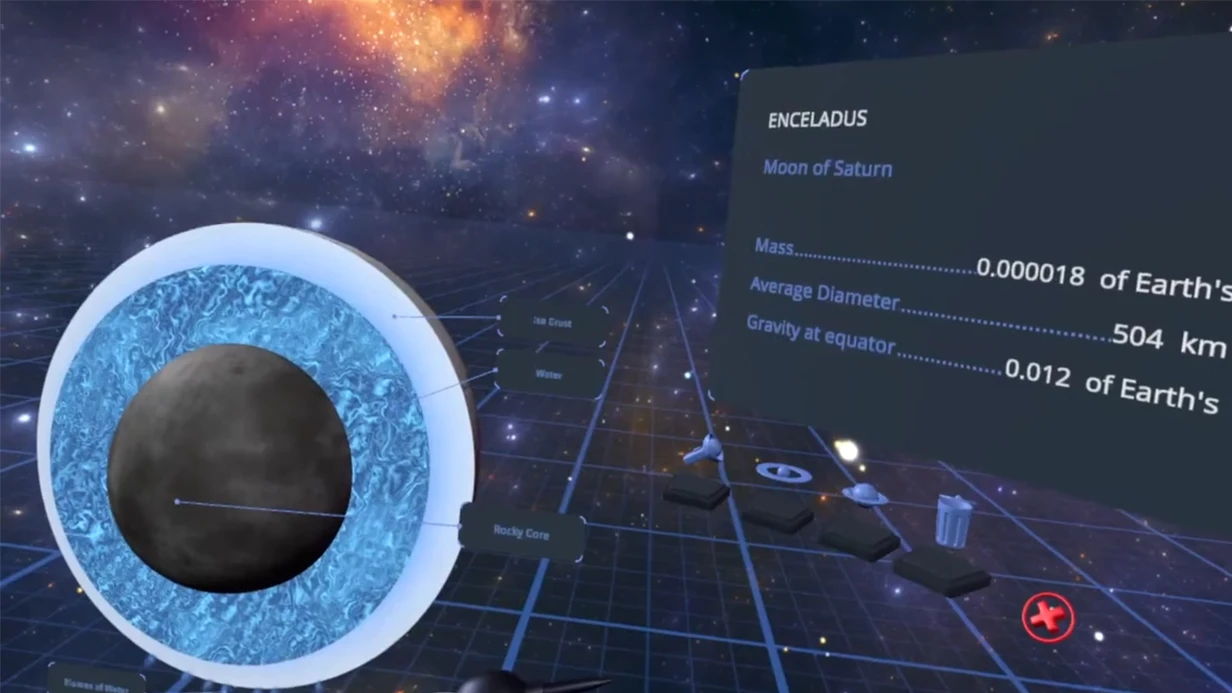
When the product is complex, expensive, or requires detailed study of details, immersion through VR glasses is more effective — the customer is not distracted by the interface and makes a decision faster.
The key criterion for choosing a solution is your customer's scenario. For mass retail, simplicity and loading speed are important; for b2b and the premium segment, depth of presentation and a sense of presence matter.
We analyze who your audience is, what devices they use, and under what conditions they will view the virtual showroom: in the office, at an exhibition, or at home.
After that, we propose a format that fits your budget, timeline, and expected result.
It can be a compact 3D showcase for a catalog or a full-fledged interactive hall with the ability to change product variants, connect augmented reality, and collect information about customer actions.
The result is always the same — you get a tool that solves a specific business problem, not just a “modern toy.”
Answers to Common Client Questions
Before ordering a virtual showroom, most clients have the same questions: realistic timelines, a transparent estimate, what devices everything will work on, and how to update content later. Below are the answers we usually give at the initial consultation.
How long does virtual showroom development take?
A standard project takes 4–6 weeks: from brief to launch. This includes 3D model creation, programming, testing, and publication.
If extended functionality is needed — for example, online booking or product comparison — the timeline increases, but you receive a clear plan with dates at the start.
How is the cost calculated?
The budget is based on the scope of work: the number of rooms, the detail of 3D models, and the presence of interactive scenarios. We prepare a detailed estimate by stage so you can see what you are paying for.
If necessary, we will suggest optimization — for example, simplifying model geometry without losing image quality.
What devices will the showroom work on?
We make a WebVR version, so the showroom opens in any modern browser — on a computer, tablet, and smartphone. A separate mode is provided for VR headsets. Your customer follows a link and enters the virtual space without installing applications.
How does content updating work?
You receive a clear control panel: you independently change prices, descriptions, and product photos, and add promotions. If changes to the 3D models themselves or new functionality are needed, we perform them under a separate request. All changes are published without stopping the showroom.
Didn't find your question — write to us, we will tell you the details for your project and calculate an approximate estimate.Leave a Request and Get an Estimate
A request is not an obligation but a way to get an objective picture: what suits you, how much it costs, and when it will be ready. We respond within one business day and do not impose unnecessary options — only what solves your task.
What you get after submitting a request:
- Consultation on the scenario. We will analyze which showroom scenes are needed specifically for your audience, how customers will move around, and what will hold their attention longer.
- Transparent calculation. An estimate by stages and timelines: development, content, integration with your website or social media. No hidden payments or “fine print.”
- Solution presentation. We will show what the virtual showroom will look like, what products and interaction scenarios it will include.
- Step-by-step work plan. From prototype to launch: checkpoints, your tasks, demonstration dates.
- Payback assessment. We will estimate how many visitors and leads you can get and how quickly the investment will return.
- Single point of contact. One manager communicates with you — no “handoffs” between departments, with clear answers and no delays.
Already after the first consultation, you will receive an estimate and a work plan — this will take no more than one business day. If the project seems impractical, we will honestly say so.
Click the button, leave your contacts — and in a day you will have all the basis for a decision.