

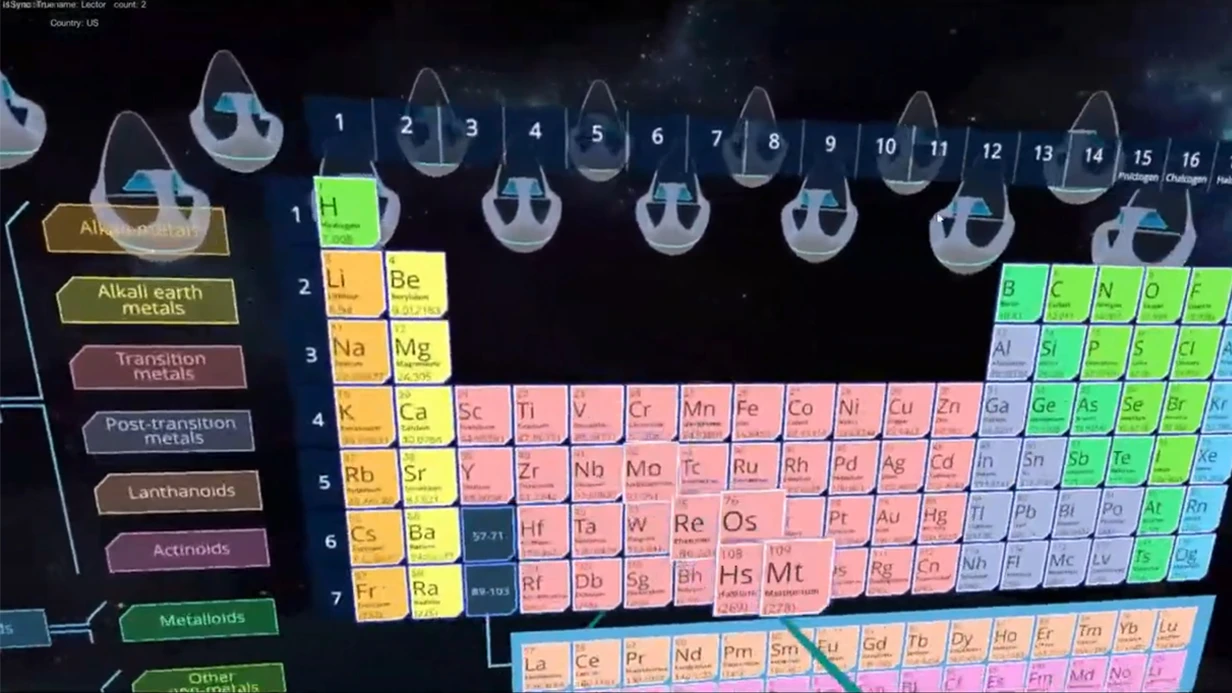


A Virtual Exhibition Solves the Problem of Booth Attendance
An ordinary trade show booth is a lottery: a visitor walks past in three seconds, takes a brochure, and forgets about the company by the next aisle. While the team waits at the table, the target audience gets lost in the crowd, and the participation budget never pays off.
A virtual exhibition changes this dynamic — it turns the booth from a point of passage into a point of attraction.
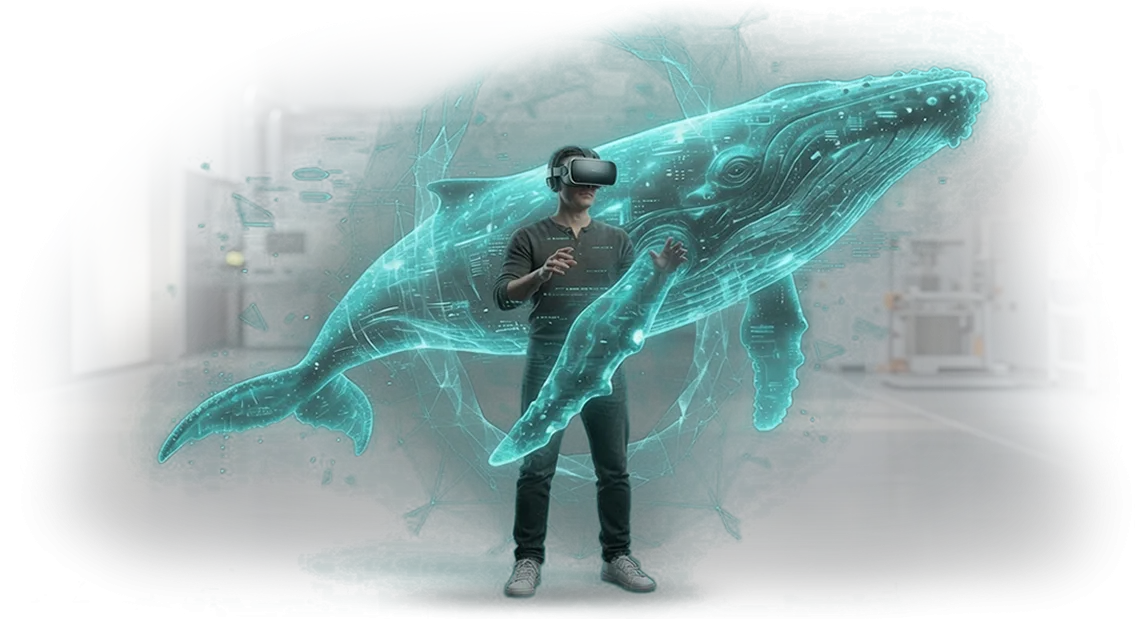
The VR-exposition format works on curiosity: the visitor approaches on their own, puts on the headset, and enters a brand space free of distracting neighbors and noise.
Attention is held not for 3 seconds but for 5–10 minutes — enough to show the product in action and start a conversation. These are the visitors who become leads, not just "browsers."
For the client, a virtual exhibition delivers a predictable result: attracting visitors no longer depends on a favorable booth location. You get not a stream of random passersby but an engaged audience that chose your experience on its own.
Plus, digital traces of every guest: who came in, how much time they spent, which products they viewed, whether they left contacts or not. This data directly increases conversion and lets you follow up on leads after the event.
Here at our teamwe make such virtual booths to match the client’s goals: from a single VR zone at a physical exhibition to a fully digital showroom accessible to guests from anywhere in the world.
We handle the concept, content, and technical implementation — you get a booth that gathers an audience and delivers measurable results.
What You Get from Moving the Event Online
Moving an exhibition online removes the main constraints of an offline venue — geography and capacity. Clients from other cities and countries can participate, and the number of simultaneous visitors stops being limited by the size of the hall.
As a result, reach grows significantly: you attract those who would not have traveled before, without losing those who prefer to attend in person.
A major expense item — pavilion rental, booth logistics, printed materials — disappears. The budget is redirected toward what actually affects the result: quality content and promotion.
What’s more, a virtual exposition lasts longer than a single day: guests can return, and you can extend the event’s life without additional costs.
An online platform collects contacts automatically. Every visitor who enters the booth leaves a digital trace: contact details, categories of interest, time spent talking with your managers.
You get a ready-made database for email campaigns and follow-up touches — without manual business card collection and subsequent CRM entry.
The key benefit is full result transparency. Online statistics show the number of unique visitors, depth of exposition viewing, interest in specific products, and the activity of your booth staff.
The report is generated immediately after the event, so you know exactly which booth paid off and which one needs improvement next time.
This is precisely what we do: we design a space that attracts more guests, saves on rental budget, collects contacts into a single database, and delivers measurable analytics. You get not just a "picture in the browser" but a full-fledged sales and promotion channel.
Virtual Exhibition Formats: Choose Yours
The same virtual exhibition content can be shown in four ways: web version, mobile app, VR tour, or AR enhancement. The difference lies in budget, reach, and the power of the impression. Below is a comparison of formats to help you choose according to your task.
| Format | Best for | What it gives the client |
|---|---|---|
| Web version | Wide audiences | Quick launch, access from any device, easy distribution via link |
| Mobile app | Returning visitors | Notifications, personal account, repeat visits |
| VR tour | Deep immersion | Sense of presence, strong branding, memorable event |
| AR enhancement | Live exhibitions | Brings the exposition to life, engages guests, social media posts |
The web version is the fastest and most budget-friendly option: the visitor does not need to install anything, just open a link in a browser. This format suits time-limited campaigns with wide reach.
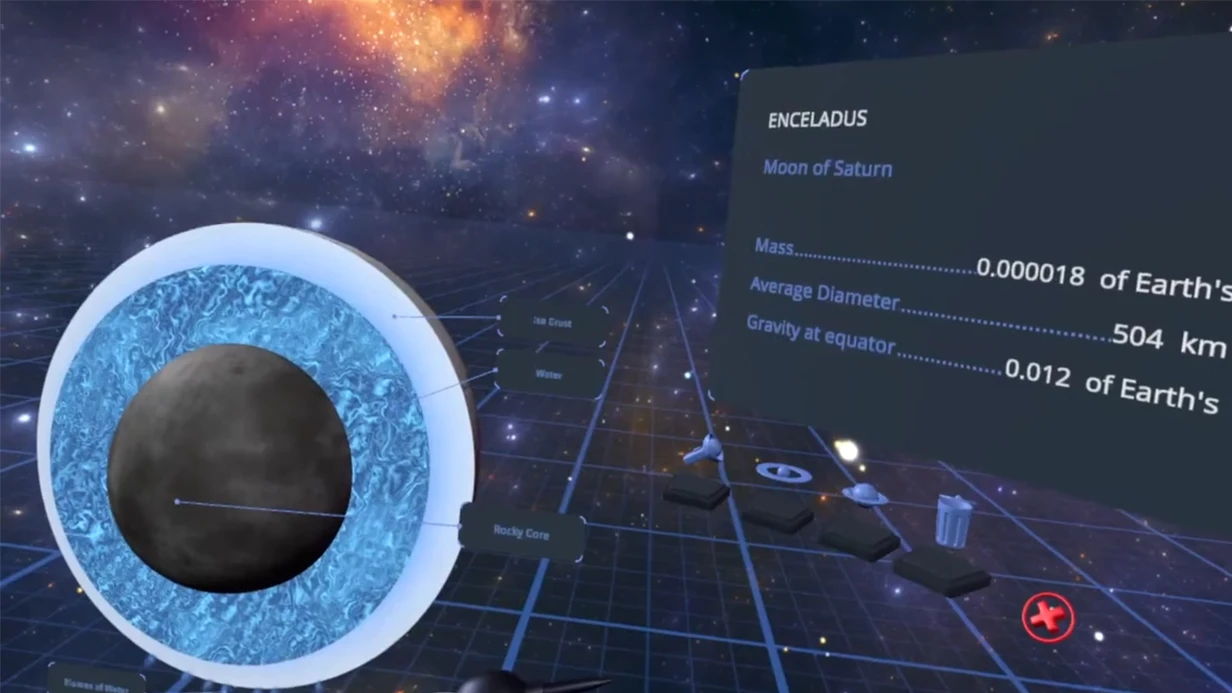
A mobile app makes sense for long-term projects where regular reminders and a participant’s personal account matter. A VR tour provides full immersion but requires headsets — it is the choice for closed presentations and premium events.
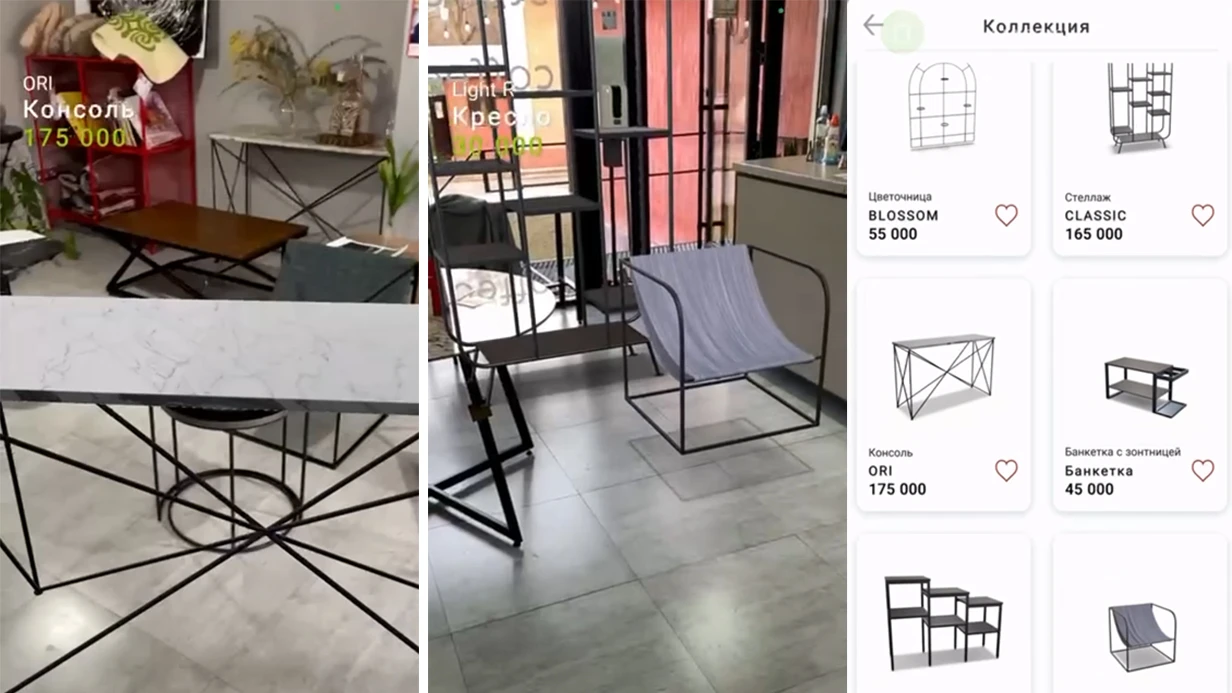
AR enhancement works in physical space: the guest points a smartphone camera at an exhibit and sees a 3D model or video.
The key is not to overpay for unnecessary options. We will help you choose the format that fits your budget and goal: sometimes a web version is enough, and sometimes a combination works better.
For web solutions, we use proven tools, including the modern WebXR standard — this guarantees stable operation on any device without installation.
How the Work Flows: From Brief to Launch
The virtual exhibition development process should be predictable — you know in advance what stages there will be, how long they will take, and what you will get as a result.
We structure our work transparently so that you see progress at every step and can influence the outcome before launch.
- Brief. We discuss the exhibition goals, the visitor profile, key messages, and the expected effect. You get a clear understanding of the tasks, scope of work, and approximate timeline — before the project starts.
- Concept. Based on the brief, we create a scenario for the virtual space: the visitor route, interaction points with exhibits, and interactive scenes. You see how guests will engage with the product or brand.
- Approval. We show you the structure and logic of the upcoming exhibition, discuss details, and make changes at the idea level. This is the most cost-effective stage for changes — you approve the concept before we begin production.
- Production. We develop the virtual space, fill it with your content, and set up interactions. We use proven development tools to ensure stable operation across different devices.
- Testing. We conduct a check with your team or a focus group: we make sure everything works quickly and clearly, and that guests can navigate easily. We fix issues before the exhibition opens to a wide audience.
- Launch and support. We publish the virtual exhibition, hand over access, and train administrators if needed. We stay in touch after launch — to handle any unexpected situations.
This workflow lets you control every stage without going into technical details. You make decisions at a clear level: concept, scenario, test results. The final exhibition matches the task — it attracts attention, holds guests, and works for your business.
What’s Included in the Project Delivery Package
When you order a virtual exhibition, it is important to understand what you will receive. We deliver a complete package: scenario, 3D models, virtual booths, and instructions — everything you need to launch and manage the event on your own.
- Scenario and space logic. A well-designed visitor route: entrance, exposition, meeting rooms, interactive points — the guest easily reaches the point of contact with the brand.
- 3D models of booths and products. Brand visualizations that look natural in the browser and highlight the details that matter to the buyer.
- Virtual booths for exhibitors. Personal accounts with descriptions, videos, presentations, and a feedback form — content can be changed without a programmer.
- Instructions for visitors. A short guide: how to view the hall, open materials, ask questions, and save the representative’s contacts.
- Instructions for the administrator. A content editing panel, exhibitor moderation, attendance statistics, and lead collection in one place.
- Video training and technical support at launch. Setup recording, an update guide, and support for your team during the event.
You receive not just a link but a self-contained product that your employees understand. It is easy to scale for future events and use to attract new exhibitors.
Case Study: How We Increased Booth Traffic
An exhibitor at an offline event invested in a booth, rental, and promotional materials, but visitor flow dropped by the end of the day. Attendees walked past, and brochure distribution brought no results — contacts were collected manually and lost.
We proposed turning the booth into a virtual exhibition: guests use VR glasses to view the products in a couple of minutes, and the system automatically records their contacts.
That gave rise to a case study for PromStandard, a manufacturer that had previously only used traditional expositions.
What We Did
Instead of static samples, we set up several VR zones. A visitor puts on the headset, sees a workshop with operating production lines, can “walk up” to any point, and examine the components.
In parallel, a short presentation highlights the benefits, and at the end the person leaves a business card via an interactive screen — or receives a catalog by email right from the venue.
Booth staff no longer waste time repeating the same information. They focus on live conversations with those who actually completed the scenario to the end.
The Result
Over two exhibition days, more than 400 people visited the virtual booth. From that, we built a database of 180 warm contacts — three times more than neighboring offline booths with ordinary brochures.
At the same time, the average conversation time with a visitor grew from 1–2 minutes to 6–7, because VR immediately filters out casual passersby.
The key point — the client got not just a visually impressive show but a working lead generation tool.
A month later, they ordered a repeat launch for a regional exhibition and integrated the VR tour into the commercial department: managers now visit clients with a headset and show the product without a physical demo sample.
Want the Same Result?
Tell us about your booth, and we will propose a virtual exhibition format for your task — from a single VR headset to a full-fledged digital showroom.
What If You Have Non-Standard Requirements?
Non-standard requirements are not a reason to simplify the task but a reason to build a solution for your situation.
We encounter a wide variety of venues: awkward layouts, non-standard ceiling heights, lighting constraints, or the need to fit a virtual exhibition into a narrow aisle between booths.
At this stage, we do not offer a “boxed product” — we visit the venue, study the geometry of the space, entry points, and visitor routes so that virtual content looks natural and does not interfere with the physical flow of people.
The same applies to branding. Corporate style, color palette, logos, and graphic elements are carried into the virtual environment so that guests recognize your company at first glance.
We adapt interfaces, visuals, and interaction scenarios to your identity rather than forcing the exhibition into a standard template. If needed, we add unusual options: virtual meeting zones, multilingual versions, or different routes for different visitor groups.
As a result, you get an individual project that solves the task of your specific event.
From there, we take over all technical coordination: we align the plan with the venue, check equipment on site, and run through all scenarios in advance so that nothing distracts from the guest experience on opening day.
So non-standard requirements are not a limitation. Tell us about your venue and brand book, and we will propose a scheme that fits your budget and timeline.
Frequently Asked Questions About Project Development
The client trusts us with what matters most — their reputation in front of guests. So let’s address the three fears that most often come up before the start: reliability, flexibility, and timelines. Below are honest answers without technical jargon.
What if something breaks during the event?
We design the system with a safety margin: primary and backup equipment, autonomous scenarios, and remote monitoring on the day of the event. If one element fails, the rest continue to work — the guest will not notice the problem. We also assign an engineer for the duration of the exhibition who monitors stability in real time.
Can changes be made after launch?
Yes. Launch does not mean the end of development: content, texts, locations, and scenarios can be supplemented and adapted. We build in a modular structure, so edits can be made without rebuilding the entire project — quickly and with a clear cost estimate.
What are the development timelines?
A typical project takes 2–4 weeks, including approvals. We give the exact timeline after the brief and confirm it in the contract. It is important to start early so there is enough time for testing and a scenario rehearsal.
Request a Consultation
Designing a virtual exhibition that truly delivers reach and leads is easier when an experienced contractor is by your side.
In a consultation, we will review your task and show you how to turn an idea into a completed project — without unnecessary spending or long approvals.
So you understand what you are working with, in a 15–20 minute call we will:
- send examples of virtual exhibitions for your industry — see how others do it;
- help you choose the format: panoramic tour, 3D space with avatars, or WebVR version without installing apps;
- make a preliminary cost estimate based on your task and expected visitor numbers;
- give realistic launch timelines — from one week to a month depending on complexity;
- advise on how to embed the exhibition into your website, social media, or email campaigns to generate more leads;
- answer questions about equipment and compatibility with visitors’ phones and laptops.
No obligations — just a practical conversation. Send a request, and you get concrete details for planning: what we will do, how much it costs, and when we launch. Leave your contacts via the form below — we will call back at a convenient time and prepare a personal offer.