



Prospective Students Are Slipping Away to Competitors — Why Your University Loses Without VR/AR
A prospective student chooses a university in a matter of minutes: flips through the website, looks at campus photos, reads reviews. They grew up in a digital environment and expect the university to present itself as vividly and modernly as their favorite brands.
A regular website with photos and text does not convey a sense of space — it does not answer the main question: “What is it actually like to study, live, and see everything in real life?”
Universities that are the first to offer a virtual tour for applicants and an interactive campus instantly capture attention. A prospective student sees the difference: one university lets you “walk through” classrooms, labs, and dormitories via VR; another shows flat pictures.
The choice is obvious, and the most motivated applicants go where they feel modernity and care. The university that speaks to young people in their language gains the competitive advantage.
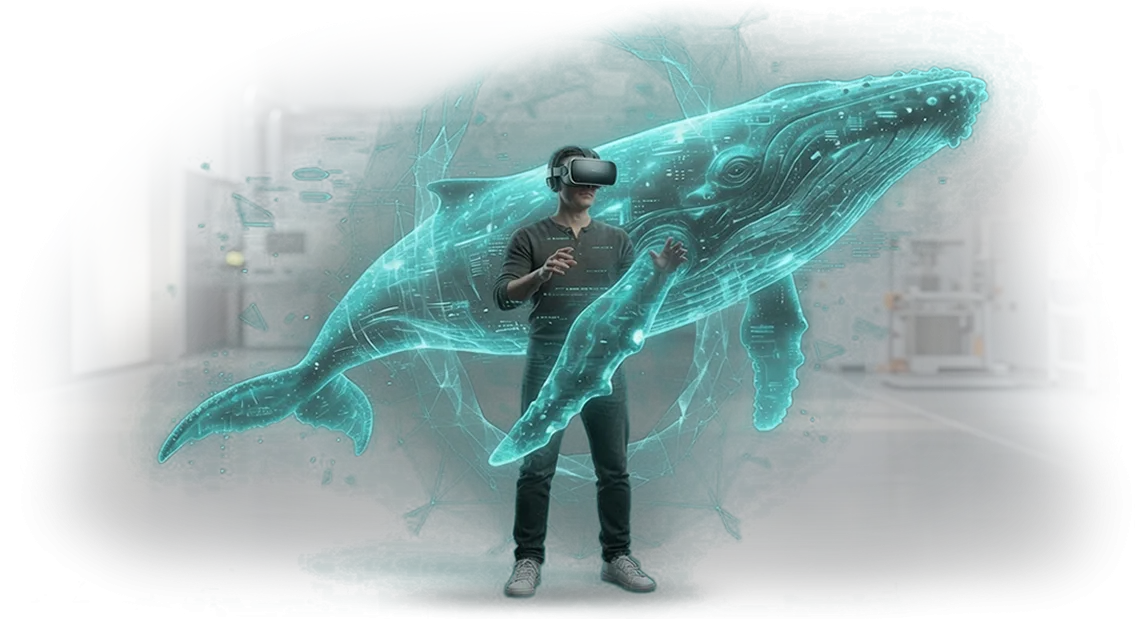
VR technologies in education are not entertainment but a working tool for attracting prospective students. They let you show the university at any time and from any point in the world, removing barriers for out-of-town and international students.
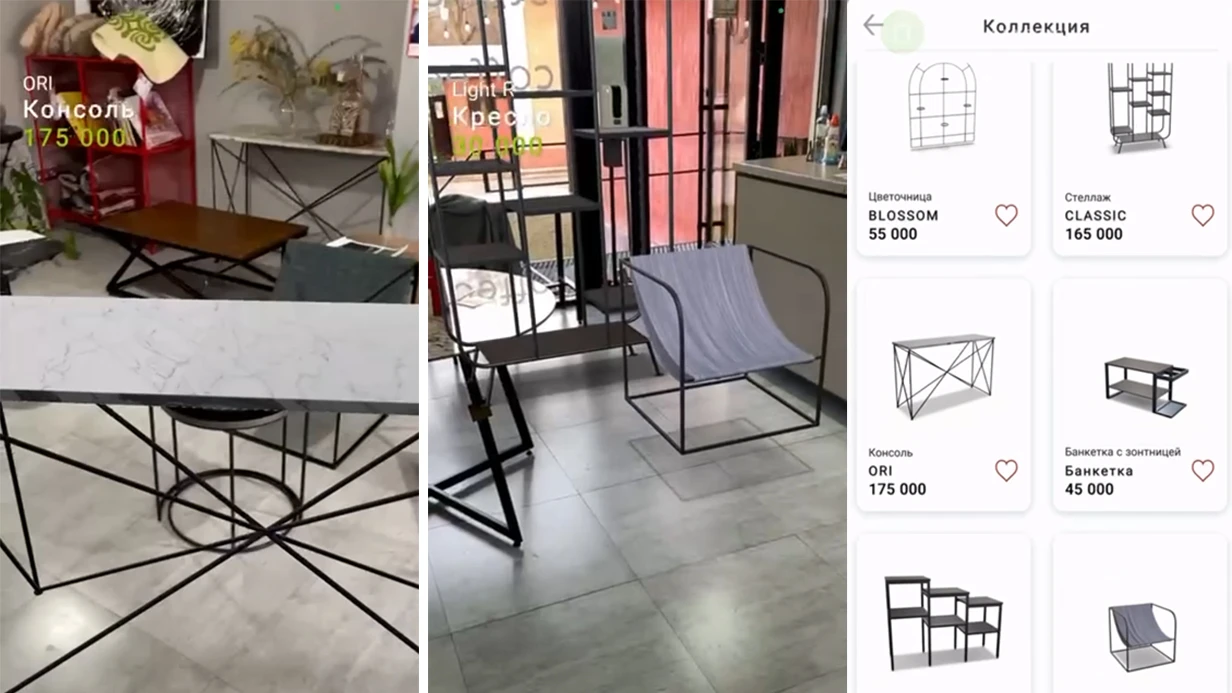
An interactive campus allows exploring the infrastructure without extra trips, and augmented reality brings brochures and presentations to life, making them memorable. This way the university communicates its openness and innovativeness even before the first personal contact.
We help universities implement such solutions. We develop virtual tours, interactive maps, and AR elements that work to attract prospective students.
This is not just a “fancy website” — it is systematic work with impressions that increases the number of applications, strengthens reputation, and sets the university apart from competitors. Prospective students remember you, recommend you to friends, and choose you.
What VR/AR Implementation Brings to the Educational Process
Modern students grew up in a digital environment, so classical lectures are increasingly losing the battle for attention.
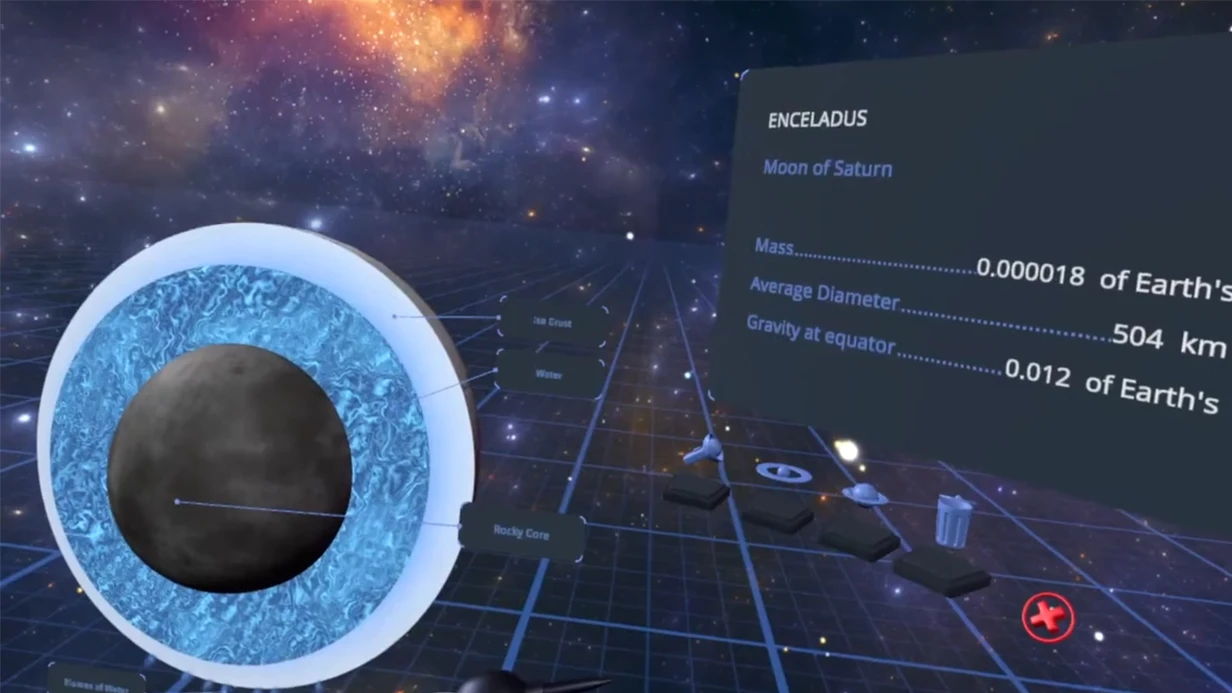
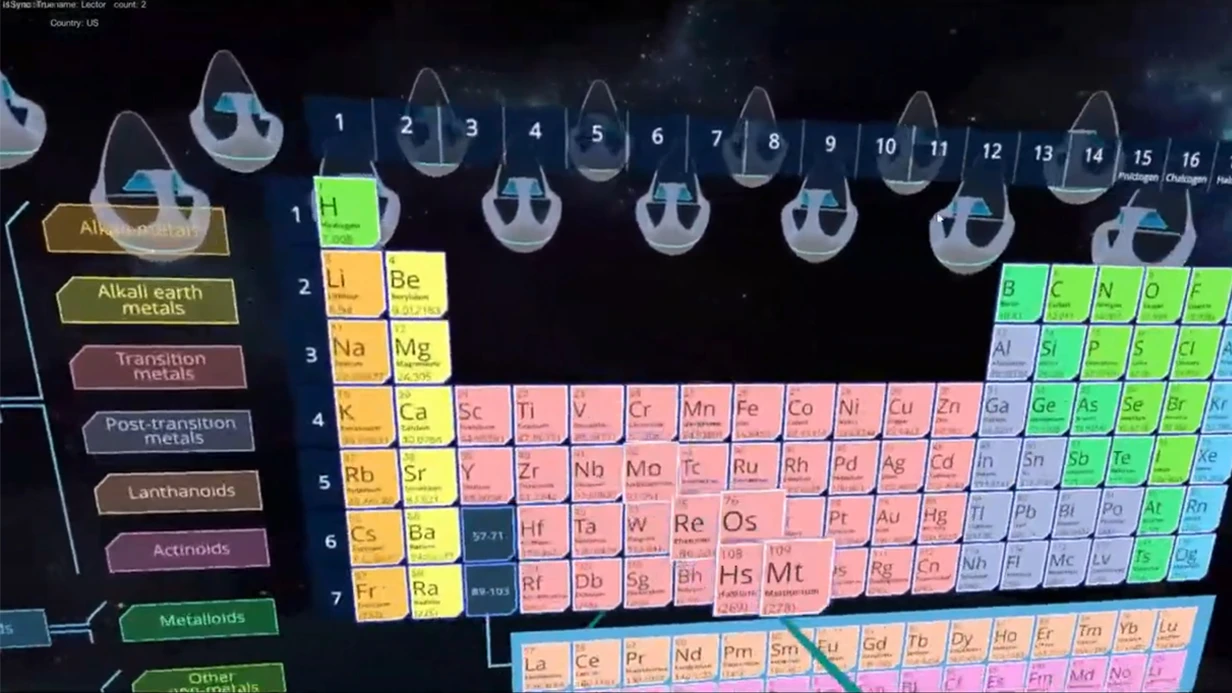
Immersive technologies in learning turn abstract topics into visual scenarios: a future surgeon trains on a virtual patient, an architect — in a volumetric space, an engineer — on a digital twin of equipment.
This approach holds interest throughout the class and increases student engagement, and therefore academic performance and the desire to continue studying specifically at your university.
For the university, this is also a tool for digital transformation. Implementing VR/AR shows that the university is developing, keeping pace with the industry, and giving students skills that will be in demand in the coming years.
This distinguishes you in the eyes of applicants and their parents, and increases the university’s visibility in media and social networks — every immersive lab or virtual tour becomes a news hook.
There is also a separate effect: a higher conversion of prospective students. A virtual campus tour, interactive presentations of faculties, and trial VR classes let an applicant “try on” the university before submitting an application.
Instead of dozens of identical brochures, you provide a living experience that is remembered and pushes them toward choosing your institution.
Finally, immersive technologies help build long-term relationships: students participate more willingly in research and startups, faculty create cutting-edge teaching materials, and alumni return for continuing education courses.
Implementing VR/AR addresses several tasks at once — from increasing engagement to strengthening the brand — and does so with measurable results in the form of a growing number of strong applicants and a lasting reputation as a modern university.
VR/AR Project Formats: From Tour to Simulator
Prospective students don’t choose a university based on a brochure — they need to see campus, classrooms, and laboratories with their own eyes. But not everyone can travel to an open house, and the university cannot physically show every building.
That is why we develop different VR/AR formats: from virtual tours to training simulators and games. Each format solves a specific task: attracts prospective students, makes learning more visual, or strengthens the university brand’s recognition.
Below are the main formats we implement and their benefits for the university.
| Format | Target Audience | What It Gives the University |
|---|---|---|
| Virtual campus tour | Prospective students and parents | Shows the university without a trip — more applications from out-of-town students |
| 3D simulator for learning | Students and teachers | Skill practice without risk or consumables — lower practice costs |
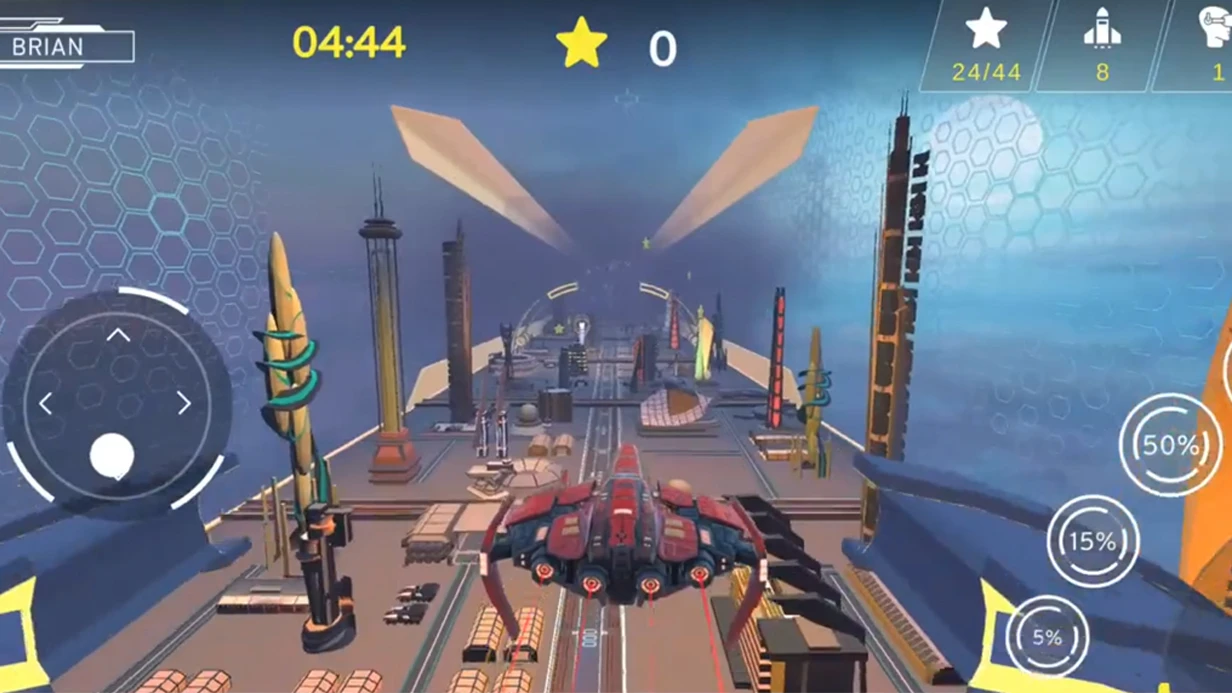
| Web quest on specialties | Prospective students | Engagement through a game — higher recognition and viral reach |
| AR navigation across buildings | Guests of open houses | Helps navigating the building — higher event satisfaction |
| Scientific experiment simulator | Students and research groups | Safe experiments that are expensive or dangerous to conduct in real life |
Which format should you choose? If the goal is to increase applications from out-of-town students, a virtual tour is the fit. If you need to reduce practice costs, choose a 3D simulator. For buzz around the admissions campaign, opt for a web quest or a game.
We will help you choose a format for your budget, timeline, and audience, and implement it so the result is visible right away. All formats work in the browser — the user doesn’t need to install anything, just open a link.
How VR/AR Application Development for a University Works
Developing a VR/AR application for a university is not just delivering software; it is building a new learning process. Clear VR development stages allow you to control timelines and budget, and the team’s task is to guide you from the brief to launching a virtual laboratory.
-
Brief and needs audit. We study working programs and meet with teachers. We determine where a virtual laboratory or AR overlay will provide the most value and set timelines for integrating AR scenarios into the curriculum.
-
Learning scenario prototype. We create an interactive class diagram: how the student enters the environment, what they do, where they get hints, and how the system reacts to mistakes. We align the logic before development — this saves budget.
-
Content development. We create 3D models, the interface, and teaching materials for instructors so the class is ready to run. In parallel, we configure the technical part for the university’s equipment — no surprises at launch.
-
Pilot launch. We test the application in one academic group and collect feedback from students and teachers. We adjust the scenario and interface — you receive a product refined on a real audience.
-
Virtual laboratory launch. We deploy the system at workstations, train instructors, and integrate the application into the schedule. Within a few days, the laboratory is fully operational.
-
Ongoing VR project support. We stay in touch after launch: update content, add new disciplines and scenarios, and help with equipment. Long-term support is the confidence that the application will stay relevant for years.
What the VR/AR Solution Includes
For a university, it is important not just to get an application but to integrate it into the learning process and keep it up to date. That is why the delivery includes a complete package — from a ready solution to staff training and ongoing support.
Here is what the VR/AR solution includes:
- A ready VR/AR application configured for the university’s needs: laboratory work, virtual tours, demonstration of complex processes for students and prospective students.
- Application administration — a clear interface for content management: you can add new scenarios, materials, and assignments yourself, without a programmer.
- Instructions and documentation — short guides for teachers and administrators that explain how to work with the system in simple language.
- University staff training — practical sessions with your employees: they review all scenarios, learn to launch classes, and resolve common issues.
- VR system support — help at all stages: from equipment setup to consultations during classes. We stay in touch after launch.
- Update plan — regular improvements to functionality and content so the application matches curricula and technological progress.
In the end, the university gains autonomy: staff manage the system themselves, while updates and support keep it aligned with educational goals. You don’t need to hire separate specialists or dig into technical details — everything has already been thought through for you.
Case Study: How We Implemented a Web Tour for the Campus and Increased Applications
A Polytechnic University approached us with a challenging task: applicants from other regions could not come to the open house, and flat photographs and videos did not convey the campus atmosphere.
The admissions committee was losing some motivated students even before they submitted their documents. We proposed a campus web tour — it opens in the browser on any device, without installing apps. The applicant gets the effect of being personally present, even from thousands of kilometers away.
Implementation Approach
We put together a route through key points: classrooms, library, laboratories, dormitory, cafeteria. At each point, the applicant can look around, view a panorama, and “walk” through corridors.
We added interactive hints and navigation — the user understands where they are and what to see next. The web tour was embedded in the university website and in the applicant newsletter, and it loads in seconds even on mobile networks.
What This Gave the University
Over two months, more than 4,500 prospective students viewed the tour, with an average viewing time of 6 minutes. The number of applications through the website grew by 35%, and 70% of tour visitors reached the application form.
During peak weeks, the tour gathered up to 300 views per day. The link to it became the main material of the admissions campaign — it was sent in response to every inquiry.
The result confirmed that the web tour works not as entertainment but as an attraction tool. The university valued the effect so much that it ordered an additional tour for its branch — already for the next admissions season. For us, that is the main indicator: the client sees a measurable result and comes back again.
Answering Frequently Asked Questions About VR/AR in Education
Before implementing VR/AR in a university, the same questions always come up: how much does it cost, how to integrate it into the learning process, and whether there will be safety issues. Below we answer the main objections — so your decision is well-considered and justified.
How much does VR implementation for a university cost?
The cost depends on scale: you can start with one course or module, then cover a whole faculty. We match the format to your budget and show how it pays off — through increased student engagement, savings on consumables, and the ability to run practice without risk.
A phased implementation lets you start within one semester without overloading the financial plan. You get a measurable result from a pilot project and plan scaling based on actual outcomes.
How to integrate AR into learning without special equipment?
AR only requires smartphones and tablets that students already have. Digital objects are overlaid on the real world: for example, on the phone screen a student sees a 3D model of a part on a training stand. The teacher launches the scenario and sees the group’s progress.
This approach does not require redesigning classrooms and fits easily into existing classes — AR works as an additional tool, not a replacement for the usual process.
Are VR applications compatible with Moodle?
Yes, we provide full integration with distance learning platforms. Results of VR practice sessions, grades, and student progress automatically go into the Moodle gradebook. The teacher does not need to transfer data manually — this saves hours of administrative work.
How secure is student data when using VR?
Data is stored on your university’s servers and is not transmitted to third-party services. Access is role-based, and communication channels are protected. We comply with personal data requirements and are ready to provide documentation for internal audit.
If your question is not here, ask it directly. We will advise you on budget, timelines, and choose a solution for your university’s tasks.How to Choose the Right VR/AR Format for Your Task?
You are facing a choice: create a virtual campus tour, an AR application for open house days, or maybe a full VR quest for prospective students?
Each option solves its own task, and the wrong choice is not only a wasted budget but also lost attention from applicants who expect the university to be modern and engaging.
There is no universal answer — it depends on the goal. If you want to show audiences your laboratories and dormitories without requiring them to travel to another city, that is one format.
If the task is to keep visitors at your booth during an exhibition and collect contacts, that is another.
Therefore, the first step is always the same: clearly define what result you expect — an increase in applications, brand awareness, or social media reach through visitor photos.
The key selection criteria are the audience, the usage scenario, and the platform. Will prospective students use it from their own smartphones, or do you need a stationary solution with equipment at the event?
Do students have experience with VR, or is a maximally simple and intuitive interface needed? These questions cannot be answered without analyzing your specific situation.
That is why we recommend starting with a VR/AR project consultation.
An expert from our team will study your task, audience, and infrastructure, and then propose a format that delivers results, not just an “expensive toy.” Over the years, we have conducted dozens of such reviews for universities and understand which approach justifies the budget and which does not.
Leave a request for a consultation — together we will define the criteria for choosing an AR solution or VR format for your task. It takes 30 minutes and will save you months of trial and error.
Ready to Discuss Your Project? Leave a Request
Virtual reality at a university is a tool that makes learning visual and the university attractive to prospective students. With VR solutions, you can conduct virtual laboratory works, tours, and simulators for skill practice.
Students won’t need special equipment — they can work from any device through the browser. But to get a working product, you need a well-thought-out project. Let’s start with an audit of your task.
Leave a request for VR development, and we will prepare a complete package for you:
- Audit — we will analyze which educational tasks are best solved through VR/AR/MR and assess the project’s feasibility.
- VR development cost estimate — a transparent budget tailored to your needs: we will account for complexity, timeline, and format.
- VR project demo — we will show working examples and a prototype adapted for your university: a virtual tour, trainer, or simulator.
- Implementation recommendations — we will advise on how to integrate VR into the curriculum and which class formats will deliver the greatest impact.
- Plan and work stages — you will know what happens at each step and be able to control the process.
- Post-launch support — we will train instructors, help with technical support, and updates.
After the first meeting, you will have a clear understanding of how a VR project solves your university’s goals and a cost estimate with no obligations. We will show the demo right at the consultation — so you can immediately assess the technology’s potential. Tell us about your project, and we will find the optimal solution.