

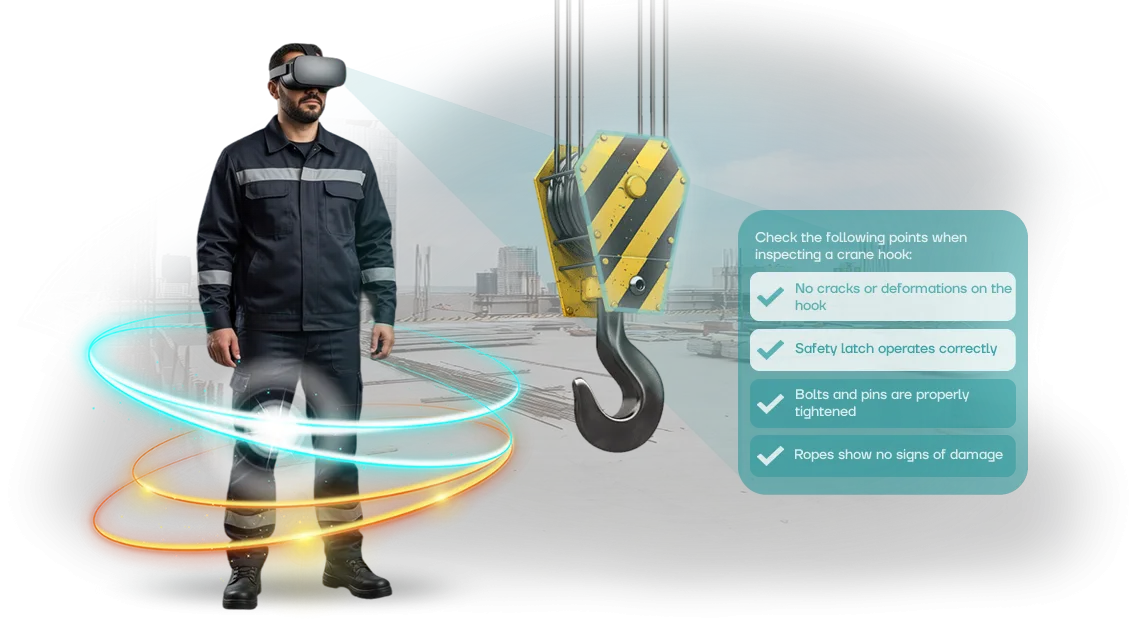
Mistakes in Brewery Production — A Direct Threat to Business
Brewery production is a combination of hot equipment, high pressure, chemical vessels, and moving machinery. Every day, employees work in conditions where the cost of an error is high: only seconds pass from a wrong action to an accident.
Any oversight can lead to serious injury, line stoppage, or equipment failure. For the plant owner, the result is emergency payouts, unscheduled inspections, lost output, and reputational damage. Production incidents directly hit the financial stability of the business.
Therefore, occupational safety and industrial safety in brewery production are not a formality but a risk-reduction tool. Regulatory bodies evaluate not only documents but also the actual readiness of personnel to respond to an emergency. An unprepared worker becomes the main source of danger.
Traditional briefings and tests provide theory but do not build skill. In an emergency, people freeze because they have never seen it with their own eyes. A VR simulator lets employees practice a fire scenario, vessel depressurization, or evacuation without health risks. Mistakes are safe here, and the outcome is remembered at the level of automatic response.
The company our team develops VR simulators for industrial safety specifically for brewery production. We create scenarios as close as possible to real shop-floor conditions and integrate them into the personnel training system. This way, employees gain practical experience before facing a threat.
Implementing virtual training addresses the key need: incident prevention instead of dealing with consequences. Trained personnel protect lives, equipment, and company profits, while the owner gets a predictable and safe production process.
What VR Training Gives to Occupational Safety for Workers
In brewery production, employees work daily with hot surfaces, moving mechanisms, and chemical reagents. An error under such conditions is costly — from a minor injury to a serious incident that stops the line.
Classic briefings provide theory but do not teach how to act under stress, and it is precisely in stressful situations that people most often lose control and make fatal mistakes.
VR occupational safety training shifts preparation from a “listen-and-forget” format to real experience. The employee steps into a virtual copy of the shop, sees familiar equipment, and runs through scenarios: from a planned filter change to an emergency line stop.
They train safe skills until they become automatic, and when a similar situation occurs in reality, their body already knows the correct response. This directly reduces injuries, which means fewer sick leaves, less downtime, and fewer inspections by supervisory authorities.
The second important effect is savings on staff training. To conduct a practical session on real equipment, you need to stop production, bring in an instructor, and allocate time.
A VR simulator lets you train people without stopping the line: one employee completes a scenario in 15–20 minutes, and the simulator is available at any time, even during the night shift.
Training becomes faster and cheaper, and it can be delivered without disrupting the production schedule.
The third benefit is employee engagement. Instead of a boring lecture, the employee gets an interactive scenario where they make decisions and see the consequences. This format holds attention, and knowledge is retained several times better than during passive listening.
Employees themselves ask for new scenarios, discuss situations with each other, and the safety culture ceases to be a formality and becomes part of daily work.
As a result, the client gets not just a “checkmark” confirming a briefing was held, but a real system for protecting people and production.
Reduced injuries, training savings, and engaged personnel are the three pillars on which the payback of a VR simulator is built within the first months of use.
This is especially noticeable at large sites where staff turnover requires constant retraining, and every new employee must be maximally prepared to join the line.
VR Simulator Formats for Brewery Production
The same VR occupational safety simulator can be deployed in different ways, and the format determines training speed, staff workload, and budget.
In brewery production, it is important that training does not stop the lines and covers all shifts — this is possible only with proper organization of training stations.
A stationary classroom, a mobile kit, and rental solve different tasks.
A stationary setup is justified when training runs continuously; a mobile one when workshops are spread out or you need to visit sites; rental when you have a one-time event or a capabilities demo for management.
Comparison of VR Simulator Formats
| Format | Who it is for | What it gives the client |
|---|---|---|
| Stationary VR classroom | Enterprises with a regular training flow and a large number of shifts | Full schedule control, instant readiness for briefings, fast payback with continuous use |
| Mobile virtual reality | Production sites with multiple workshops or remote locations | On-site training without stopping operations, savings on employee travel and room rental |
| VR equipment rental | One-time events, inspections, open days, investor presentations | No capital expenditure, launch in a few days, impressive safety-culture demonstration for guests and management |
In any of these formats, we adapt scenarios to your specifics: bottling, brewhouse, warehouse, keg handling, and equipment maintenance. We will help you choose the optimal option and calculate the workload so that training proceeds without disrupting the production cycle.
How VR Simulator Implementation Goes at an Enterprise
Implementing a VR simulator is a clear process built in several stages. You are not left alone with the technology: we support you from the first brief through launch and ongoing support.
-
Brief and audit. We study the specifics of brewery production, your regulations, and typical risks. We align training goals and expected outcomes.
-
Prototype and approval. We create a scenario demo, show it to you, and make revisions until approval. You see the future simulator before full development.
-
Simulator customization. We adapt scenarios to your instructions and safety standards, embedding specific situations for your workshops.
-
Integration and room preparation. We help place equipment, set up the VR system, and check all training stations.
-
Employee training. We prepare your specialists to work with the simulator independently and hand over instructions and materials.
-
Pilot launch. We conduct test training with real employees, analyze results, and make final adjustments.
-
Launch and support. We launch VR training as a regular process and remain available for consultations and scenario updates.
What Is Included in the VR Simulator Delivery Package
The package includes everything needed to start training from day one. We deliver not just a program but a complete working process: scenarios, equipment, methods, and support.
Your specialist will not need to figure out the hardware or create training materials from scratch — everything is already thought through and tested in production.
Here is what is included in the package:
- Training scenarios — virtual situations reflecting real brewery risks: working in hazardous areas, pressure control, actions in the event of a leak or fire. Scenarios are adapted to the specifics of your workshops.
- Equipment for a group — professional VR headsets and controllers designed for intensive use in employee training. Everything is configured and tested before delivery.
- Methodological materials — ready-made lesson plans, briefing scenarios, and checklists for the instructor. You will be able to conduct training without external specialists.
- Operation instructions — simple guides on how to launch the simulator, run a session, and maintain equipment. They are written in plain language and require no technical background.
- Training your team — we give a demonstration, show how to work with the system, and answer questions. After that, your specialist runs training independently.
- Technical support — we are available during business hours to help resolve issues, update scenarios when regulations change, and provide usage recommendations.
- Update package — we periodically adjust scenarios to new requirements and the specifics of your production to keep training relevant.
This package covers all stages: preparation, delivery, control, and development of the training program. You invest in a ready-made process rather than separate pieces, and you can start sessions in the first week after delivery.
Employees remember safety rules faster and violate them less often, and you get visible results in the form of reduced risks and a more responsible approach to work.
Case Study: Cutting Injuries at a Brewery by Half
In brewery production, danger is not always immediately visible: hot surfaces, rotating lines, chemical solutions, and enclosed tanks. Classic briefing explains the rules but does not train fast reaction.
When the Volga-Bir plant asked us to reduce the number of accidents, we proposed not paperwork but VR simulators.
We built this VR training case study on five scenarios that replicate typical brewery accidents: ammonia leak, hot wort rupture, conveyor jamming, smoke, and depressurization. 340 shop-floor employees went through the simulators, from operators to mechanics. Each session lasts 7–10 minutes, and in that time a person trains correct actions to automaticity.
Results after six months
We measured training results not by surveys but by plant statistics: the number of injury-related incidents fell by half over six months. Employees notice abnormal situations faster, lock out equipment, and follow procedures during emergency stops. At the same time, line downtime decreased — fewer errors, more stable operation.
Seeing these numbers, plant management ordered simulators for the bottling line and finished-goods warehouse without lengthy approvals. For us, a repeat order after implementation is the main result: it means VR training solves the problem it was created for.
How to Choose the Right VR Training Format for Your Objective?
Choosing a VR training format is not about “which simulator is cooler” but “what exactly the program must solve.” For a small shift of ten people, a single universal scenario that practices key actions during an accident is enough.
For a plant with hundreds of employees and several production lines, you need a whole set of modules for different roles and skill levels.
Therefore, we first define the scale and objective: who we are teaching and what, which errors led to injuries, and how many people undergo training per month. If there are few employees and risks are typical, a compact format with basic scenarios will deliver quick results.
If the production is large, with hazardous areas and strict reporting, it is better to build a system with separate modules for novices, experienced workers, and supervisors.
This way, everyone gets exactly the complexity level they need, and you get a transparent picture of progress.
Equipment selection also depends on your objective. For mass training, standalone headsets are convenient: they are easy to distribute, do not require powerful computers, and allow training right in the classroom.
For practicing precise actions — for example, equipment repair — more advanced systems that provide detailed motion feedback are suitable. We select technology to fit your budget and scenario, not the other way around.
There are also specific requirements of brewery production: working with pressure vessels, bottling lines, and chemical cleaning agents.
The VR scenario must address these specific risk areas rather than being an abstract “factory in general.” Therefore, we adapt each program to your shop layout, actual instructions, and typical emergency situations.
The bottom line is simple: the right format is the one that covers your risks and fits the training process, not the one that looks more impressive in a presentation.
Tell us about your objective — we will propose an option with specific implementation timelines and a result measurable in reduced injuries and faster certification.
FAQ on VR Simulators: Answers and Guarantees
When implementing VR training, brewery production managers ask the same questions — about timelines, cost, health impact, and guarantees. We answer them so you understand what you will get.
Is it difficult to integrate a VR simulator into an existing production process?
We handle everything: we analyze your regulations, create scenarios for specific workshops and hazardous areas, install equipment, and train instructors. Workers simply put on the headset and repeat the actions — it is faster than reading instructions.
Implementation does not stop production, and all you need is one free room or a place in the training classroom.
How much does VR training cost?
The cost depends on the number of scenarios, training stations, and the level of detail of your production. We offer phased payment and packages for different budgets.
Unlike traditional courses, VR pays off: downtime from injuries decreases, and there are fewer fines and insurance payouts. Staff learn to make mistakes in a virtual environment rather than on real equipment.
Is the technology safe for employee health?
We use professional equipment with certified screens and systems that prevent overload of the vestibular system. A session lasts 10–15 minutes, so a person does not get tired.
The scenarios contain no sudden movements or flashing effects — even employees with a sensitive vestibular system complete training without discomfort.
What guarantees do you provide?
The company our team with 10 years of development experience guarantees that the simulators will accurately replicate your production processes and comply with occupational safety requirements.
We support the project: we train personnel, update scenarios when regulations change, and stay in touch. If anything is unsatisfactory, we will refine it within the warranty obligations.
Get a Cost Estimate for a VR Simulator for Your Production
Every VR occupational safety simulator for brewery production has its own specifics: its risks, stages, and regulations. Without taking these factors into account, the cost calculation becomes a broad range that will satisfy neither you nor us.
So we start with a short consultation: we review your staff training objectives and return within one business day with an exact cost.
What is included in the cost estimate for your production:
- Full cost calculation for your training scenario — no hidden charges or “surprises” during VR implementation.
- Individual recommendations on equipment and the number of simulators for your site.
- A plan for integrating VR training into your existing occupational safety system — with stages and responsible persons.
- Clear timelines for development, delivery, and launch — from scenario approval to training the first employees.
- Examples of projects for food and brewery production with the achieved personnel coverage stated.
- A demonstration of ready-made scenarios that can be adapted to your internal instructions.
We will calculate the cost taking into account the number of people, training frequency, and the requirements of your regulations. We will advise where VR can replace expensive practical sessions and where it should remain an additional tool. We will explain how to avoid typical launch mistakes: an inflated budget and unused simulators.
Leave a request on this page — we will call you back within one business day, answer your questions, and prepare a detailed estimate. If the terms suit you, we will move on to VR implementation. If not, you will receive a transparent quote and a clear understanding of the market.