

Why Deals Get Stuck in Salesforce and How to Fix It
In any CRM, including Salesforce, deals get stuck not because of system failures but because of human behavior. Sales managers put off filling out deal cards, forget to set the next step, and some leads quietly settle into "new" status.
A manager sees the pipeline but can't understand exactly where customers are lost — and why the sales plan falls apart even with a fully staffed department.
The problem isn't discipline — it's motivation. For a salesperson, a CRM is extra paperwork that doesn't put money in their pocket. As long as filling out a deal is seen as an obligation, it gets done on a leftover basis.
The result: data in Salesforce goes stale, forecasts become inaccurate, and decisions are made on intuition rather than facts.
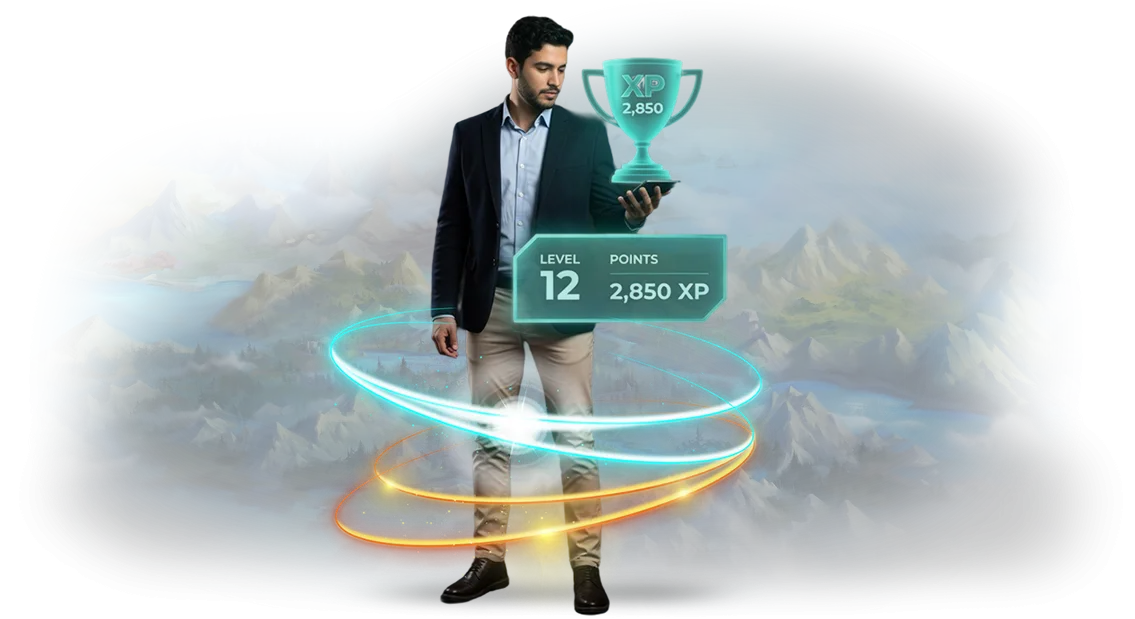
We solve this through gamification of business processes. Right inside Salesforce, clear mechanics appear: points for updating deals, levels for hitting the plan, competition among sales managers, and visible progress toward the goal.
The seller starts maintaining the CRM not because they "have to" but because it helps them win and earn more.
Gamification turns routine into a game with clear rules and quick wins. Managers see how their actions affect the outcome and strive to keep data in order on their own.
The leader gets a live pipeline, accurate forecasts, and higher conversion, because no lead gets lost in statuses anymore.
Implementation takes a few weeks and doesn't require replacing Salesforce — we embed motivation mechanics into the existing system. You get not just "reminders" but a tool that systematically improves discipline and sales.
What You Get from Game Mechanics in a CRM
When a CRM is perceived as "yet another reporting program," managers fill it in half-heartedly and pipeline data goes stale.
Gamification turns system work into a clear, engaging process: every client, every deal, and every action becomes a step toward the employee's personal goal.
Game mechanics in your CRM drive sales growth not through coercion but through the natural desire to win.
Managers see how many steps remain until the deal closes, which tasks are overdue, and where the pipeline "gets stuck" — chaos disappears and the team's efforts focus on what matters most.
By embedding gamification into Salesforce, you get a transparent pipeline: points, levels, and ratings highlight active employees and problem areas. The leader sees who needs support and who is ready to share experience.
Conversion grows because every stage — from the first call to payment — becomes a measurable, manageable step rather than abstract "database upkeep."
For employees, it's clear motivation: rewards for meeting plans, statuses for consistent work, and instant feedback. They burn out less, enter data more willingly, and look for ways to close more deals on their own.
CRM productivity rises because the system starts working for the team, not the team for the system. The result: increased activity, healthy competition, and predictable revenue growth.
Gamification Formats for Your Salesforce Goals
A sales pipeline comes alive when managers understand why they should keep moving forward. Gamification in Salesforce turns routine steps — calls, meetings, filling out cards — into a clear game with transparent rules.
But the format should be chosen for the specific task: what accelerates plan fulfillment doesn't always help onboard a newcomer.
We use three core formats that cover most business scenarios. The table below is a quick guide to which format fits which case.
| Format | Who it's for | What it gives the client |
|---|---|---|
| Manager competition | Sales department with similar roles and plans | Healthy drive, increased activity across all pipeline stages — the result is visible immediately on a shared dashboard |
| Challenge | A team focused on one stage — calls, meetings, payments | A quick burst of the desired action: managers pull the pipeline themselves, and you see progress in real time |
| CRM quest | Newcomers and employees learning a new process | Hands-on training: the employee walks through a deal scenario and starts working in the system without instruction |
Formats rarely exist on their own. For example, a challenge is great for warming up the team before a competition, while a quest becomes the foundation for onboarding.
We design the game around your pipeline and configure it so the system automatically awards points and shows the overall rating.
As a result, you get not just a "motivation game" but a tool that affects conversion and revenue. Managers see the link between their actions and outcomes, and the leader gets transparent statistics for management decisions.
How Gamification Implementation Works
We know predictability matters to a leader. That's why we structure the gamification implementation process so that at every stage you understand what's happening, what the timeline is, and what the output will be. Below are the standard project stages we follow.
- Brief and immersion. We hold a meeting with your team, study current business processes, and identify the areas you want to strengthen. We define goals: sales growth, employee engagement, increased customer loyalty.
- Plan and timeline. Based on the brief, we prepare the game concept, implementation plan, and development timeline. We agree on all details with you before the start — no surprises on time or budget.
- Mechanics design. We create scenarios, rules, levels, rewards, and map out how gamification will fit into your CRM, including integration with Salesforce if you use it.
- Prototype approval. We show an interactive mockup or demo version. You see how everything will look and make adjustments before full development starts.
- Development and integration. We configure the system, connect it to your data, and test it in real conditions. You get a stable version ready for daily work.
- Launch and training. We deploy the solution, onboard employees, and run short training sessions. We explain how to use the system and how it affects metrics.
- Support and growth. We support the system after launch: collect analytics, refine mechanics, and help business processes improve.
What's Included in the Turnkey Solution Delivery
You get a finished solution, not a pile of code and a "figure it out yourself" manual. The delivery package includes everything needed to launch gamification and run it daily: from interfaces to employee training and post-launch support.
-
Employee and manager interfaces. Clear screens with tasks, progress, and rewards. The employee sees their points and ranking position; the manager sees team activity in real time.
-
Game rules and reward scenarios. Configured levels, points, badges, and team competitions aligned with your business processes. You set the rules once — the system automatically enforces them.
-
Integration with your CRM (Salesforce). Events in deals and tasks automatically change points and statuses, eliminating manual entry. Work results flow into the CRM without delays.
-
Reports for managers. Visual tables and charts on activity, plan fulfillment, and metric dynamics broken down by employee and department. All analytics in one place — no need to gather data from multiple systems.
-
Training for employees and managers. Short hands-on sessions, cheat sheets, and video guides. The team gets comfortable in a few hours and uses the system in daily work within a week.
-
Technical support. Post-launch maintenance, game rule updates, and help with user issues. Requests are resolved within one business day.
The full package is fixed in the contract with clear timelines and a performance guarantee. You get a tool for growing engagement and sales, not a "game for the sake of a game."
Case Study: How We Brought Salesforce Sales to Life
When managers work in Salesforce but don't see their results over time, motivation drops. Our client — a distributor with a 40-person sales team — was facing a plan fulfillment rate of just 62%, with half of the deals stuck at the negotiation stage.
We proposed turning the CRM from a "reporting database" into a game space where every step toward a deal becomes visible.
Two weeks after launch, the department worked differently: managers started unpacking lagging deals on their own, and the number of calls grew by 30%.
What We Did
We embedded gamification directly into the CRM interface: the manager's personal progress, a team race toward the goal, and automatic "wins" for completing deal stages.
Importantly, we launched the game without interrupting the department's work — all changes happened inside the familiar system, with no retraining required.
The Numbers After Two Months
Plan fulfillment rose from 62% to 99% — a 37% increase. The average deal size grew by 12%, and the deal cycle shortened from 14 to 9 days.
The sales department head ordered a second gamification stage — for working with the "dormant" customer base. We covered all 40 managers, and within a month the share of repeat sales in the team grew by 18%.
This case proves that gamification isn't entertainment — it's a revenue growth tool. It works even where there were only spreadsheets and reports before. If you want the same result, we'll start with an audit of your Salesforce processes and prepare a plan of quick wins.
Frequently Asked Questions About Gamification and CRM
We answer the doubts that most often come up before launching game mechanics. Below are honest responses to objections about pushback, speed of results, and budget.
What if employees reject gamification or simply sabotage it?
Resistance appears when a game is imposed as a mandatory requirement. We build mechanics into familiar actions: the employee keeps working in the CRM — Salesforce or another system — while rewards, levels, and recognition appear on their own.
Importantly, gamification doesn't force anyone to "play." It turns routine into clear goals and shows progress. Even skeptics get involved when they see their own contribution on the shared leaderboard.
Resistance usually fades within the first weeks, especially when the leader participates and encourages early wins.
How quickly will business results show?
The first shifts — increased CRM activity, better deal card completion, faster deal processing — are visible within 2–3 weeks. Sustained habit change takes 1–2 months: regular behavior forms during this period.
Don't expect a miracle right after launch. Gamification works systematically: you set the rules, engage the leaders, and fine-tune scenarios based on initial data.
After that, pipeline conversion typically grows by 10–20%, and the repeat rate of desired actions increases many times over.
Is it safe to share employee and deal data?
We work strictly within your rules. Access to employee and deal data is role-based: a regular user sees only their own progress and the shared anonymized leaderboard, while the manager sees detailed team statistics.
Salesforce integration is built on native security mechanisms, with no sensitive data stored on third-party servers. Access rights are configured according to your policy, so data leaks or unauthorized viewing are excluded.
How much does it cost and when does it pay off?
The investment depends on the number of employees, integration depth, and the number of game scenarios.
We evaluate the project not by estimates but by return: if gamification increases plan fulfillment by 10–15% or shortens the deal cycle, payback happens within the first months.
You get a transparent commercial proposal with stages and timelines. And if metrics don't grow, we figure out together what's holding them back and adjust the settings — flexibility is built into the project.
How to Choose the Right Format for Your Task?
Choosing the right gamification format determines whether you get growth in engagement and sales or team indifference. There's no universal mechanic: what motivates a sales department doesn't work for service support, and competition in one unit can break teamwork in another.
To make the gamification selection precise for your tasks, we start not with solution options but with an analysis of your goals and current processes.
Together with you, we clarify which business objective the game must support: increase conversion, shorten lead processing time, raise customer loyalty, or improve team discipline. The format, scenario, and point-accrual rules all depend on this.
To do this, we study your workflow and the metrics already captured in Salesforce. That lets us tie game achievements to real business results — such as closed deals, completed tasks, or the number of served clients.
As a result, gamification doesn't become an abstract "entertainment" but a tool embedded in employees' daily work.
We also consider the team culture and its habits. In some places, public rankings and recognition of leaders work best; in others, personal goals and rewards invisible to colleagues are more effective.
After the analysis, we propose 2–3 suitable formats, describe how each will change employee behavior, and pick the one together with you that delivers maximum effect with minimal risk.
In the end, you get not a template solution but mechanics that exactly match your business objective.
And thanks to Salesforce integration, all results automatically appear in your familiar reports — you can see how the game affects key metrics within the first weeks after launch.
Ready to Bring Your Salesforce to Life?
You've invested in Salesforce, but employees still work "the old way" and metrics aren't growing? Gamification turns routine into competition: managers reach for the plan on their own, close deals faster, and put off tasks less often. We'll help embed game mechanics directly into your CRM — and show results before you even start.
Leave a request for gamification — get a consultation on your situation. Here's what the first contact includes:
- Review of your business processes and the points where motivation drops.
- Demo of how game mechanics will look in your Salesforce: tasks, levels, ratings, rewards.
- Estimate of potential engagement and sales growth based on your data.
- Step-by-step Salesforce gamification implementation plan: timelines, stages, responsible parties.
- Transparent cost estimate without hidden fees or "add-ons" along the way.
- Post-launch support: mechanic adjustments, team training, and maintenance.
We've been working with Salesforce for over 10 years and know how to adapt the system to your business needs.
No need to change your familiar CRM — we'll carefully embed gamification into your current architecture so employees get a clear interface and you get growth in key metrics.
Leave your contact — within one business day we'll show you how gamification will bring your Salesforce to life. You'll see the interface, mechanics, and benefits before making any decision. The request carries no obligation, and you'll see the value right away.