

Wellness gamification: how to engage audiences in health care
Employees increasingly talk about a healthy lifestyle, but in practice, interest fades after just a couple of weeks. One-off campaigns, posters, and lectures don't create systematic motivation — people return to their usual rhythm, and corporate health programs go to waste.
Managers see this as an additional expense item, although in reality they are losing the most important thing: team engagement and its energy.
When health care stops being a formality, everyone wins: the employee gets energy and well-being, the business gets reduced sick leave, higher productivity, and team loyalty.
The problem is how to hold people's attention for weeks and months, not just at the moment another initiative is launched.
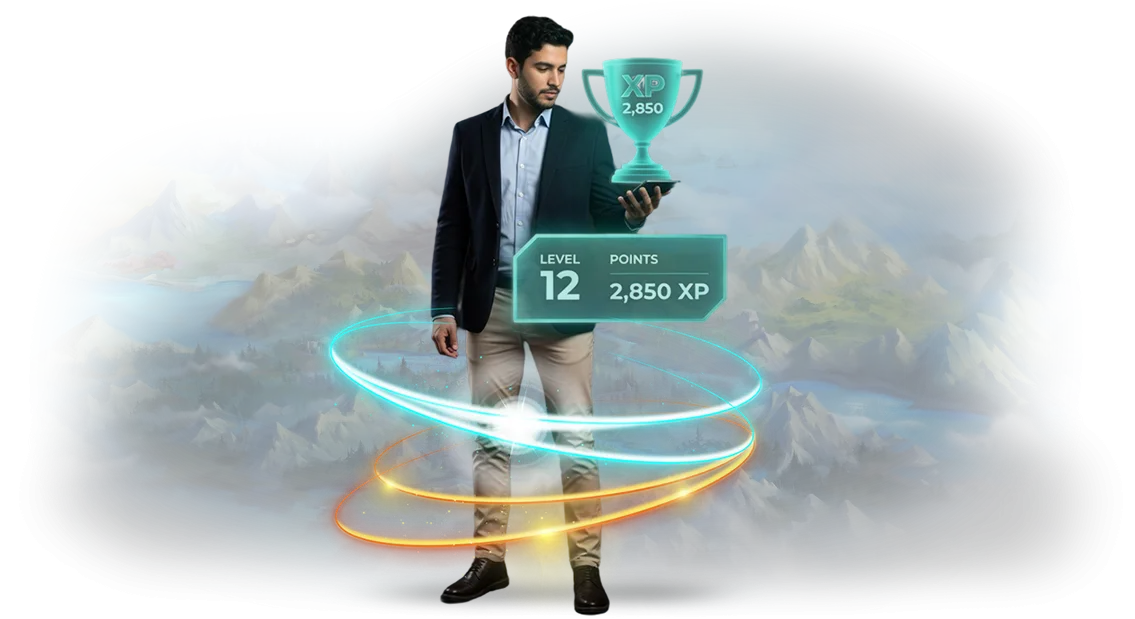
Wellness gamification solves exactly this problem. Mechanics of competition, point accumulation, levels, and rewards turn self-care into a regular habit and a natural part of the work process.
Participants see progress, compare results, and get feedback — motivation becomes built-in rather than imposed from above. Corporate health programs come alive: instead of boring reports, there is a living community that keeps each other interested.
We help design and implement such a system for your company's tasks. We don't just add game elements — we build mechanics that hold attention and deliver measurable results: higher participation, lower turnover, and real health care in employees' daily lives. You get a tool that works every day, not just during corporate marathons.
What wellness gamification gives business and clients
Gamification in the wellness sector turns familiar procedures and workouts into an engaging process that people want to continue. Instead of boring task lists, the client gets a motivation system: points, levels, rewards, and challenges. It works on emotions — and emotions, as we know, drive decisions.
For business, the main result is increased loyalty. When a guest sees their progress and receives bonuses, they come back, buy additional services, and bring friends.
According to our data, implementing game mechanics increases visit frequency by 1.5–2 times, and the average check grows thanks to interest in new offers.
Employees also benefit — gamification boosts team productivity. Personal goals, ratings, and team competitions turn routine into meaningful activity. This reduces burnout and staff turnover, which means the business spends less on hiring and training.
For clients, gamification is a path to better well-being. Regular workouts and healthy habits are reinforced through rewards, and the sense of achievement increases satisfaction.
As a result, the client doesn't just buy a service — they change their lifestyle and stay with you long-term.
Thus, game mechanics benefit all participants. Business gets a steady flow of clients and a motivated team, clients get health and positive emotions, employees get engagement and career growth. This is an investment that pays off through systematic growth of key metrics.
Gamification formats for different tasks
The main challenge in the wellness sector is keeping client interest beyond the first visit. Motivation quickly fades: people quit workouts, skip procedures, and forget about programs.
Gamification solves this through game mechanics: it provides visible progress, competition, and a reward for regularity.
We select the format for a specific task — attract new clients, retain current ones, increase the average check, or engage employees in health care. It's important that the game is easy to use and requires no training: a person participates from the very first screen.
Which format to choose
| Format | For whom | What it gives the client |
|---|---|---|
| Quest program | Corporate clients, sanatoriums, fitness centers | Higher attendance: participants go through stages for 2–4 weeks and return to you regularly |
| Challenges and marathons | Clinic networks, companies with branches | Engage remote teams, create a healthy competitive spirit, and regular reasons to come in |
| Health games | Clinics, insurance, preventive programs | Raise health awareness, reduce risks, and strengthen brand trust |
| Points and rewards for activity | Loyalty programs, spas, and wellness clubs | Increase the average check and share of repeat orders: guests return to get a bonus |
Any format is adapted to your brand and integrated with an app or website. Analytics shows which mechanics work for your audience — we refine them based on results so the game brings measurable value: more bookings, guest returns, higher loyalty.
How a gamification project goes through 6 steps
A transparent process is what removes the fear of a complex task. We guide you from the first brief to the launch of a working program, staying in touch at every stage. You always know what is happening and what comes next.
- Brief and audit. We analyze your task: who your guests are, how their journey works, where they lose interest. We collect source data and constraints — so the program fits into real processes rather than a vacuum.
- Concept and scenario. Together we choose the mechanics: points, levels, challenges, team competitions. We work out exactly how to encourage regular visits and engagement in wellness activities.
- Design and prototype. We draw screens that guests understand and build a clickable prototype. You see the future program through the user's eyes and adjust it before development starts — without extra costs.
- Development and setup. Our engineers implement the gamification, connecting it to your booking system and visitor cards. Your staff gets a simple control panel — no special knowledge required.
- Testing and launch. We run scenarios on real users, check load and errors. We help your team prepare for the start: materials, instructions, quick Q&A.
- Support and development. After launch, we stay close: we monitor quality, collect feedback, and propose improvements. The gamification continues to evolve with your business.
Each stage has a clear result — you see progress and understand what you are paying for. In the end, you get a working program that increases client engagement and brings them back again and again.
What is included in the delivery when developing gamification
Gamification brings results when it can be managed without a development team. That's why the delivery includes not just a product but a complete package — from game mechanics to an admin panel and instructions for your staff. You get a system that is easy to implement, change, and scale to your tasks.
- Ready-made game mechanics — points, levels, rewards, tasks — configured for your processes and already tested on real users.
- Admin panel where you create promotions, change rules, and see client activity yourself — without contacting programmers.
- Statistics panel: visual reports on engagement and effectiveness — who participates, which mechanics bring the most visits and repeat orders.
- Integrations with your tools: client management system, loyalty programs, electronic cards, and memberships — everything works as a single unit.
- Documentation: description of logic, rules, and scenarios so your team can quickly understand the system and make edits.
- Staff training: training sessions and short instructions on how to use the admin panel and run game promotions.
- Post-launch support: a dedicated manager is in touch, we answer questions and promptly refine the system to match your ideas.
With this package, you launch gamification in 2-3 weeks and fully control its operation. You make all decisions, and we are responsible for the reliability and development of the system.
Case study: how gamification increased engagement by 40%
The wellness club network Vita-Sfera approached us with a typical pain point: memberships are sold, but guests come to the gym two or three times and disappear. Management understood that client acquisition costs were rising, while retention stood still. We proposed not another discount campaign but a gamification system that makes workouts a habit.
We analyzed visitor behavior, identified the points where motivation is lost, and launched mechanics with point accumulation, activity levels, and team challenges.
Our engineers built it into the branded app and client's personal account, so guests didn't have to learn anything new — they just needed to book workouts.
The main thing is the measurable result. After two months, the share of guests who visit the club regularly once a week or more grew by 40%. Repeat bookings for group classes increased by 1.5 times, and the number of those who renew their membership grew by a third.
Clients shared their achievements on social media themselves, which brought an additional flow of requests without advertising costs.
Now the club team manages the mechanics through a simple admin panel: they set new goals, change points, and support challenges. We stayed on for support and continue to improve scenarios together with their marketing.
For management, this means: engagement is not a one-off event but a manageable growth tool that provides a steady influx and return on investment.
How to choose the right gamification format for your task?
First of all, you need to determine what specific task you are solving.
Gamification in wellness works differently: if the goal is to increase loyalty and bring guests back, accumulation programs and levels are suitable; if you need to motivate employees — internal ratings and team competitions. A clear goal statement immediately narrows the choice and saves budget.
Next, it's important to rely on real data about your audience. Visit frequency, visit duration, popular services — these metrics show where gamification will have the maximum effect.
Our team starts with a short audit of business processes, after which we propose a format that fits your current infrastructure and won't require unnecessary costs.
We don't use ready-made templates: each client has their own customers, service, and internal rhythm. Therefore, we consider several options at once — from digital mechanics in an app to offline games in the hall — and choose the one that brings results specifically for you.
At the same time, you always understand what you get at each stage: first a plan, then a prototype, then launch.
If you're unsure where to start, you can run a pilot project on one group of clients or one department. It will take 2-4 weeks but will give real numbers: engagement, repeat visits, feedback.
We support the entire process and are responsible for the result, and after launch we help adjust the mechanics based on data.
The main thing is not to choose a format based on what's "trendy" but to rely on the task and audience. We help make the right choice without overpaying or downtime.
Frequently asked questions about gamification implementation
Before launching gamification, clients most often ask about budget, data security, and CRM integration. That's normal: gamification changes familiar processes, so it's important to understand how it will fit into operations. Below are answers to the most frequent questions.
How much does gamification implementation cost?
The cost depends on the scale: the number of employees, activity formats, and the need for CRM integration. We calculate the project for your scenario and give a transparent estimate before the start.
A pilot is more affordable, while a full system with integration and analytics is a larger investment — the exact cost is calculated after audit.
How safe is data storage?
We use secure server solutions and separate access levels. Personal data is stored in accordance with security requirements, and the connection to CRM goes through secure channels. You retain control, and we do not transfer data to third parties.
How does gamification integrate with CRM?
We connect it to your CRM through standard data exchange: we automatically pull information about clients and deals, and return activity results back. This allows you to see team actions and the effect on sales in one window. The integration does not break current processes and does not require replacing familiar tools.
What if gamification doesn't deliver results?
We start with a pilot on one team or area to quickly test the hypothesis and adjust the mechanics. After launch, you get engagement analytics and decide together with us what to strengthen. This reduces risks: you see the effect before scaling to the entire business.
Order turnkey gamification development
Ordering turnkey gamification means getting a ready-made system that increases guest engagement and brings them back from the first weeks.
We cover the entire cycle: we analyze your audience, design the mechanics, develop the interface, and launch the solution without your team's involvement.
For the wellness sector, this is especially important: a client comes for self-care and stays if they see progress. Our mechanics turn regular visits into a habit, and achievements into a reason to return and tell friends about you.
A turnkey project saves your time and budget — no need to search for contractors and control every stage.
What you get after contacting us:
- Precise tuning to your guests — we study their behavior and choose mechanics that work.
- Design and prototypes in your brand's style — the solution looks like part of the product, not an alien add-on.
- A system of rewards, levels, and prizes — from simple points to complex motivation scenarios.
- Integration with your client base and loyalty program — all accumulation history in one place.
- Testing and launch without downtime — you get a working system exactly on time.
- Staff training and clear instructions — your employees will quickly start using the new tools.
- Support after launch and refinements based on the first weeks — we accompany the project until a stable result.
As a result, you get measurable growth in repeat visits, average check, and guest loyalty. Leave a request — at a consultation, we will show examples of solutions for wellness projects and propose a plan for your tasks.