

How to Bring Order to Shift Management on the Production Floor Without Stress
When a production shift descends into chaos, the impact is felt everywhere: deadlines slip, tension between employees rises, and the manager spends time putting out fires instead of improving processes.
The problem is not people—it's the lack of a clear system that synchronizes work and lets everyone see their contribution to the overall result.
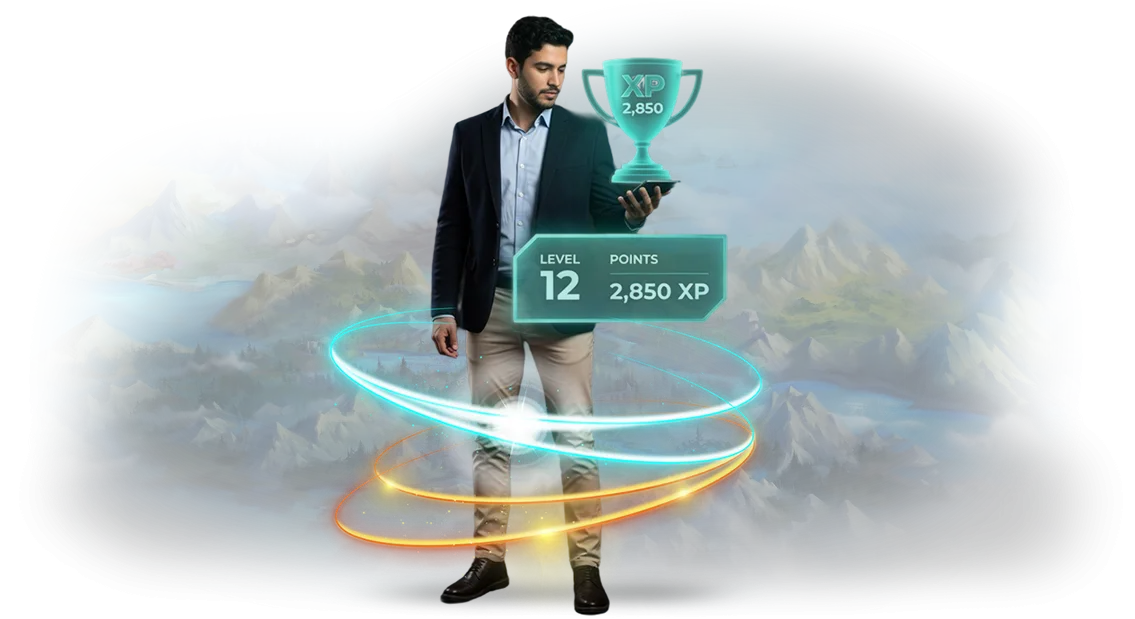
Gamifying shifts solves this without stress or administrative pressure.
We turn routine production tasks into a clear game with transparent rules: the employee sees goals, receives feedback immediately after completing an operation, and understands how their actions affect production efficiency. Staff motivation grows not from fear of punishment, but from interest and healthy competition.
Game mechanics are built around real shift metrics: plan fulfillment, quality, interaction between departments. For example, shift teams compete for the best weekly result, and personal achievements are marked with levels and symbolic rewards. Nothing extra—only what helps bring order and make work predictable.
As a result, shift management on the production floor stops being a fight against chaos: the manager sees an objective picture at any moment, employees understand exactly what they are recognized for, and overall production efficiency grows without overtime or burnout. This is the kind of order that relies not on control, but on engagement.
We have already implemented such a solution for manufacturing companies: within a few weeks, shifts start working as a single mechanism, and employee turnover decreases. Tell us about your situation—we’ll show how gamification can fit your specific production.
What Gamification Delivers: 5 Benefits That Pay Off
Gamification turns plan-fulfillment control into a game: each employee has a goal, visible progress, and a clear understanding of how their work affects the team result. Instead of pressure—competition and recognition, and for the client, measurable changes in key shift metrics.
Employee Engagement in Fulfilling the Plan
When every worker understands how their actions affect the overall result, downtime and lateness decrease. Employees themselves strive to close the shift with the best metrics because they see their progress and the team’s progress.
Transparent Production KPIs
Gamification turns accumulated work data into a clear picture for the entire shift. The manager sees where bottlenecks arise and can quickly adjust processes.
KPIs become understandable not only to managers, but also to the workers themselves—this increases each person’s personal responsibility.
Productivity Growth Without Additional Costs
The competitive element motivates teams to perform more volume in the same time. Product quality does not suffer because the rewards reflect not only speed, but also the correctness of operations. The effect is achieved through intrinsic motivation, not by increasing headcount or overtime.
Staff Loyalty and Reduced Turnover
Regular recognition and rewards make work emotionally comfortable. On a production floor where everyone’s contribution is valued, employees stay longer and recommend the employer to their acquaintances. This reduces costs for recruiting, onboarding, and training new people.
Fast Payback and Measurable Results
The system is implemented into current processes without restructuring production, and the effect is visible in the first months. We record starting points and regularly measure changes, so you always know what return the game mechanics bring. Gamification becomes a management tool that gradually improves your shift's key metrics.
Gamification Formats for Shift Management
Shift schedules and cyclical operations are a difficult environment for motivation: after night shifts, engagement drops, and routine dulls attention. Gamification solves this not with one-off campaigns, but with a system embedded in daily processes.
The main thing is to choose a format that matches the goal: unite the team, accelerate onboarding, or improve work quality.
Here’s how different formats work in shift management:
| Format | For whom | What it gives the client |
|---|---|---|
| Team game | Teams and shifts working toward a common result | Strengthens collaboration within the shift, reduces conflicts, and makes plan fulfillment a shared cause |
| Quests for employees | Newcomers and experienced workers on shift schedules | Fast adaptation to standards, fewer errors, clear progress in training |
| Personal shift rating | Operators and line personnel | Increases personal responsibility, provides clear criteria for bonuses and career growth |
| Shared shift goal | Workshop or production area | Creates a sense of being part of the result, reduces turnover, and improves work rhythm |
We select the format based on your specifics: for some productions, team games are more effective; for others, individual quests. At a consultation, we’ll show which option will deliver the maximum effect at your site.
How the Project Works: 7 Steps from Brief to Support
We understand: gamification in shift management on the production floor looks like a complex task, especially when the goal is not to distract people from work, but to help them.
That’s why we divide the project into seven transparent stages—you always know what’s happening and what you’ll get.
- Development brief — you tell us about your production, shifts, and tasks (daily plans, quality, safety). We record goals and constraints.
- Process and motivation audit — we look at where shift efficiency is lost, what already works, and what causes resistance. We understand what will keep employees engaged.
- Game design and balance — we create the scenario, levels, reward rules, and feedback. The balance is tuned so that meeting standards becomes a habit, not an exhausting competition.
- Prototype approval — we show a sample of the future system using your shift’s real data. We make adjustments before launch, not after.
- Development and implementation — we integrate gamification into existing shift management tools: dashboards, briefings, reports. Minimum new training, maximum compatibility with what you already have.
- Pilot launch — first on one shift or area. We collect feedback, quickly adjust the mechanics, and only then scale.
- Support and development — after launch, we stay in touch: we monitor metrics, tweak the balance, and add new levels when interest starts to fade.
This rhythm helps avoid surprises: at every stage you see the result and can influence the project’s direction.
What’s Included: A Complete Kit for Launch
The delivery kit is not just files and access—it’s a ready-to-use shift management tool. We provide everything needed for launch and daily use: from tuned mechanics to trained staff and full documentation. You get a turnkey solution that can be implemented immediately after delivery.
- Ready-made game mechanics adapted to your shift’s production cycle: rules, roles, point criteria, and achievement levels.
- A set of materials for employees: memos, instructions, visual posters—everyone understands how to participate and what they get in return.
- A training program for managers: how to maintain engagement, review shift results, and help the team achieve goals.
- A manager dashboard: real-time visibility into activity, task completion, and problem areas—everything for quick decisions.
- Full documentation: regulations, operating and administration guides—transparency and order in processes.
- Reward templates: certificates, badges, electronic awards—public recognition of achievements raises an employee’s status.
- Training for your support team: specialists can independently manage the system, change rules, and add participants.
- A development plan: step-by-step actions to expand gamification to other shifts or departments of the company.
Case Study: How Gamification Increased Output in a Workshop
On a production floor, a shift is not just working hours—it’s a whole rhythm: tasks, people, control. When operators are engaged in monotonous work, engagement drops by mid-day, and this directly hits output.
At one plant, we saw a familiar picture: by the end of the shift, productivity sagged by almost a third, and the number of errors grew. Instead of pressuring people with fines, we proposed changing the work mechanics themselves.
We developed a gamified shift management format: teams receive a common goal, and each employee gets clear personal metrics. The system awards points in real time for results, quality, and mutual support, showing the rating on a shared scoreboard.
This makes achievements visible: people start competing not with colleagues, but with themselves and yesterday.
The results were measurable. Within two months after the launch, output in the workshops increased by 18%, the share of defects dropped by a third, and operator turnover almost disappeared.
The shift manager received a tool that everyone can see: tasks are distributed evenly, and disputable situations resolve themselves—because the rules of the game are clear in advance.
The project for "Promyshlennye Sistemy" confirmed: gamification is not entertainment, but a working management tool. The investment paid off already in the first quarter, and the client extended the format to all production sites.
When mechanics produce such an effect, it’s the best recommendation for implementation in other areas.
How to Choose the Right Gamification Format?
Choosing a gamification format for shift management on the production floor starts with a question: what exactly should the game change—task speed, discipline, newcomer training, or overall team engagement?
This determines whether you need competitive mechanics between teams, an individual achievement track, or gradual skill development through real production scenarios.
The second criterion is the shift itself: the team’s age, their familiarity with digital tools, the work schedule, and the level of responsibility. A game that works well for a young team on an assembly line may not suit experienced employees who value stability.
So we assess the actual situation and offer a format that doesn’t require retraining people and doesn’t disrupt the production rhythm.
The third criterion is the result horizon. If you need to quickly test a hypothesis and see an effect within a few weeks, we choose lightweight mechanics with a clear rating and fast rewards.
If the goal is a sustainable change in the shift’s habits and work culture, we design a long-term program with levels, cycles, and regular feedback. The earlier you indicate the available implementation timeframe, the more precise the format will be.
Finally, data matters: what metrics are already being collected on the production floor—output, number of errors, operation completion time. Task gamification is built on these metrics so that game points reflect real results, not abstract scores.
We choose mechanics so that employees see a direct link between their actions and the benefit to the entire area.
The right format is not a universal solution, but the result of a short analysis of goal, audience, timeframe, and metrics. We conduct such an audit, offer a solution with a clear launch plan, and support the first game cycles.
This way, shift management on the production floor changes predictably and with a measurable effect for the business.
Frequently Asked Questions and Concerns: Honest Answers
Implementing gamification in shift management on the production floor raises questions not because the idea is weak, but because any change in work processes is a step into the unknown.
Concerns are logical: how will employees react, won’t we miss deadlines, won’t it be too complex for the team and equipment. We answer in plain language—addressing the specific fears we hear from managers on every second brief.
Employees won’t accept a game — we have serious production, not entertainment
Gamification is not about “fun with prizes,” but about clear visibility of results. When an operator sees how their shift completed the plan, received bonus points, and brought the team closer to a common goal, it boosts engagement.
We design the mechanics to reflect real KPIs: speed, quality, safety. No childishness—only a healthy competitive spirit, which your workers already know from sports and collective tasks.
Implementation will take months, and we don’t have time to stop the workshop
We don’t stop production. Gamification works in parallel with current processes: we layer game mechanics on top of existing tracking systems, configure screens, training, and the first pilot shifts—then launch.
For a typical line, preparation takes 2–3 weeks, including approvals and training for shift supervisors. First results become visible within a month after the start, and piloting on one line reduces risks to zero.
It’s too hard to implement — we don’t have dedicated people for “games”
We handle the entire process: audit of current metrics, scenario selection, balancing points and rewards, preparing materials for training. From your team, we only need one thing—assign a responsible shift manager for feedback during the pilot.
All the technical part, from displaying on screens to calculating points, is covered by us, so you don’t need to hire additional specialists.
What if interest disappears after a couple of weeks?
Interest disappears when the game is static. We build “focus shifts” into the mechanics in advance: seasonal goals, increasing difficulty, unexpected bonuses, and feedback from teams.
After a month and a quarter, we analyze the data—what works and what doesn’t—and adjust the balance. We also set up an autonomous mode: after launch, you get a clear dashboard to change scenarios without our involvement. We remain on support until the system starts delivering consistent results.
If you still have doubts, ask a question directly—we’ll send examples of mechanics from your industry and calculate a preliminary result based on your metrics. We’ll honestly tell you where gamification will deliver the most, and where it’s better to focus on other tools.Ready to Boost Your Team’s Efficiency? Leave a Request
Optimizing shift management on the production floor is not about control for control’s sake, but about predictable results: less downtime, higher output, orders delivered on time.
Gamification helps engage the team in this process, and we’re ready to show how it works at your site.
Leave a request for gamification—we’ll analyze your situation, suggest where the mechanics will deliver quick results, and calculate the project cost for your scale. No abstract presentations: only specifics on your tasks and planned figures.
What you get after contacting us:
- Within 1–2 days—an analysis of your shift and scenarios where game mechanics will increase engagement and performance.
- A concrete implementation plan: which processes we’ll automate, which mechanics we’ll add, and how we’ll measure the effect.
- Transparent cost calculation: we fix the scope of work, timeline, and expected result before the start.
- An entry point without unnecessary expenses: you can start with a pilot area and then scale to the entire shift.
- Examples from production and adjacent industries—we’ll show what worked for companies with similar tasks.
- Support at all stages: from brief to launch and analysis of first results.
We work remotely and have been implementing game mechanics into business processes for over 10 years. Take a step toward stable shift operation—fill out the form or write to us on messenger.
We’ll respond within a business day, find a time for a call, and prepare for the conversation based on your industry.