

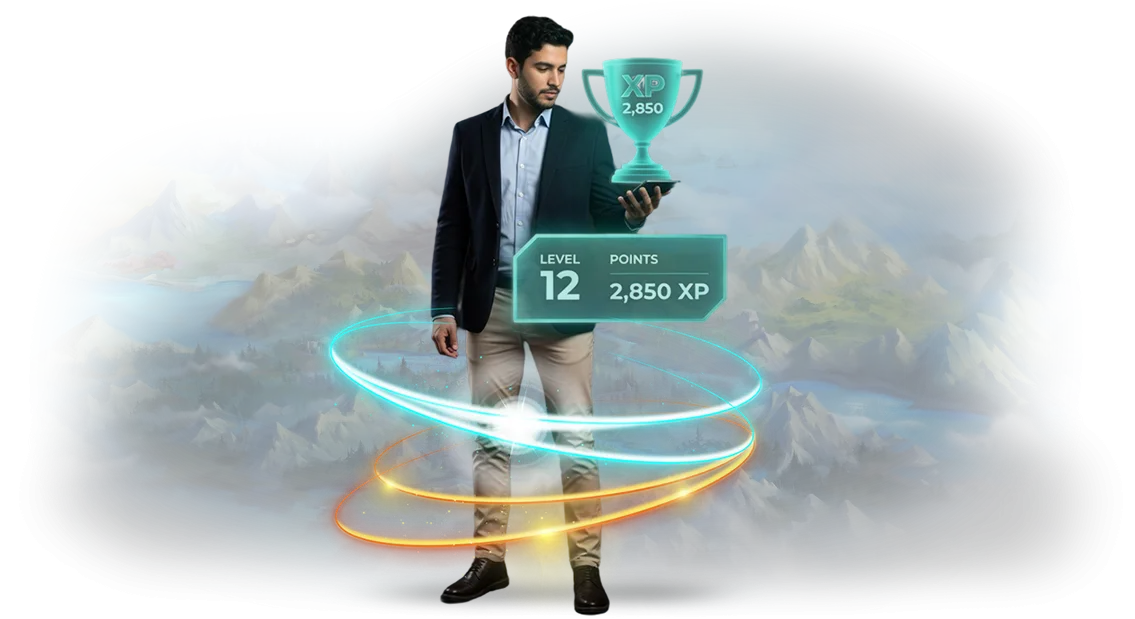
Conflict Resolution Training Saves Business and Nerves
Conflicts in a team are not just a spoiled mood — they are direct losses. Disputes between employees eat up hours of working time, delay project delivery, and drive clients to more reliable contractors.
A disgruntled employee becomes less productive or leaves entirely — finding a replacement takes weeks, and working capital goes into recruiting and onboarding.
Burnout is especially costly: constant arguments and tension exhaust the team, and eventually the best specialists lose motivation — and with it, their value to the business.
Classic lectures and presentations do not work here: employees listen with half an ear, and after a week they fall back into old habits. The effectiveness of such training approaches zero, and the money spent on it is wasted.
A different approach is needed — one that engages emotions, immersive experiences, and practice with real scenarios. Training where employees practice resolving disputes, negotiating, and exiting conflicts without losses in a safe environment.
This is not one-off workshops with handouts, but immersion in situations that closely mirror real work.
We develop gamified formats on Unity — with 3D avatars and a virtual company space. An employee does not just read theory but acts: speaks, chooses a behavioral strategy, and sees the consequences of their decisions.
Such training is absorbed far better: people learn through lived experience, not through notes. This means the acquired skills are actually applied on the job — conflicts are defused faster, nerves stay intact, clients stay with you, and profit does not slip through your fingers.
Why Game-Based Learning Strengthens a Business Team
When a business invests in training, it expects not just a "course completion checkbox" but real changes in employee behavior. Classic lectures and presentations produce a weak response: attention scatters after 15 minutes, and knowledge remains theory.
Game-based learning solves this problem — it turns the process into deliberate practice where each participant acts, makes decisions, and sees the consequences.
Employee engagement. Game mechanics — story, tasks, feedback, and a competitive element — keep employees engaged to the very end of the training.
They do not get distracted by notifications or "drop out" of the process because they want to complete the scenario and achieve a result.
As a result, training is completed not "for show" but with full immersion, and the knowledge gained is reinforced naturally.
Risk-free skill practice. In a business simulation, employees can try different behavioral strategies, make mistakes, and immediately correct them — without harming clients, reputation, or budget.
This is especially valuable for topics where the cost of error is high, such as conflict resolution. The employee lives through a difficult situation in a safe environment, builds confidence, and approaches real conversations with a ready-made script.
Team cohesion. Shared game scenarios require interaction: participants discuss decisions, help one another, and look for a way out of a conflict together.
This brings colleagues closer, breaks down communication barriers, and creates working connections that later carry over into daily tasks. A team that has trained together finds common ground faster and has fewer internal conflicts.
Measurable results. Business simulations are not just an experience — they are also data. You see how employees act in difficult situations, how much time they need to make decisions, and which behavior models they choose.
These metrics allow you to assess the progress of each individual and the team as a whole — and therefore understand the real effectiveness of the training and adjust it to the business's objectives.
Game-based learning is a practical tool for HR and managers. It boosts engagement, gives employees applicable skills, strengthens team spirit, and provides the business with clear data on staff growth. Implementing such formats is a step toward training that works for results, not just fills time.
Gamification Formats for Different Business Tasks
Conflicts in the workplace are expensive: they reduce productivity, worsen the atmosphere, and increase turnover. Traditional lectures and tests do not change behavior — employees know the theory, but in a stressful situation they act the old way.
Gamification makes it possible to practice complex scenarios in a safe environment, where a mistake does not cost money or nerves, and experience is reinforced through practice.
One and the same game does not suit every task. For training to deliver results, the format must match the goal: some need reaction practice, others need situation analysis, and others need memorization of procedures.
That is why we choose a format for your task and audience, then measure the effect and adjust the mechanics if needed.
| Format | Target Audience | Value for the Client |
|---|---|---|
| 3D avatars | Managers, HR specialists, team leads | Dialogue practice with a virtual interlocutor, refining tone and arguments without the risk of damaging relationships |
| Learning quests | New employees, mass onboarding | Fast engagement with corporate rules, memorizing procedures through story and rewards |
| Conflict simulations | Team leads, sales staff, support teams | Practicing difficult negotiations, managing emotions, finding win-win solutions |
This approach pays off: employees do not just complete training — they apply the skills in real situations. You get a game that solves a business task, not just entertains.
The format is easy to scale: the story changes, new modules are added, and the game stays relevant for different teams.
Game Implementation Stages: From Brief to Launch
We structure our work so you always understand what is happening and when you will get the result. Instead of a "black box" — clear stages with control points and a dedicated project manager. Below is a typical implementation plan that we adapt to your task.
-
Brief and interviews with managers and key employees. We identify your goal — reduce conflict, handle difficult situations, increase engagement. We study regulations and real cases and define success metrics.
-
Concept and script. We propose the game format, storyline, and participant roles. We show how game mechanics fit your business processes and which skills they train.
-
Approval and prototype. We lock in key decisions and demonstrate an interactive prototype — you see how the game looks and works before full development. We make changes before large resources are committed.
-
Development and content. We build 3D worlds, avatars, dialogue scenarios, and an action assessment system. We work in iterations: you receive intermediate versions and comment on them.
-
Testing and launch. We run the game with real users, fix errors, and package it for your platform — web, mobile app, or corporate portal. We ensure a seamless launch for employees.
-
Support and evolution. After launch, we stay in touch: we update content, add new scenarios, and monitor stability. Based on initial runs, we propose data-driven improvements.
Each stage ends with a concrete result — a document, a prototype, or a working version. This way you control the budget and timeline instead of just waiting for "when it's ready."
What the Project Includes: Complete Package for the Team
You get not a "raw program" but a complete training package: goals, roles, scenarios, and mechanics are tied into a single system. No need to improvise or look for a contractor to "finish the job" — everything is assembled and ready to launch.
Here is what the project contains:
- Training script — 3–4 typical conflict situations with different solution options. The script is adapted to your specific context: clients, colleagues, contractors, or mixed cases.
- 3D characters — heroes with emotions and natural reactions to the employee's actions. This helps detach from personal grievances and discuss behavior rather than the "rightness" of a person.
- Virtual company world — a recognizable space with elements of your brand identity. The employee operates in an environment similar to real working conditions, so the skill transfers into actual practice.
- Game mechanics — points, difficulty levels, and hints after questionable decisions. They hold attention and show the participant's progress, while giving the trainer an objective picture of results.
- Trainer's guide — a step-by-step manual: timing, discussion questions, and analysis of common mistakes. An internal specialist without gamification experience can run the session.
- Instructions and update rights — simple steps for launch and configuration, plus the ability to adjust scenarios and lessons for new team tasks.
Each element addresses a specific need — from immersion to skill assessment. Together they form a system that works from day one.
Case Study: How We Cut Staff Turnover by Half
When the service company Atlas approached us, turnover among line employees had reached a third per year. The main reason was new hires' inability to handle conflict situations: with clients, within the team, with management. Standard training did not help: theory was forgotten within a week, and the skill never took hold.
Instead of lectures, we proposed a simulator built on Unity — an interactive environment with 3D avatars where employees live through difficult dialogues and see the consequences of their words.
The training used short 10–15 minute scenarios, and each employee completed them at their own pace, without fear of making mistakes.
What we achieved after six months
- Turnover dropped by half — from 32% to 16% annually.
- Conflict-related client complaints fell by a quarter.
- 85% of employees completed the training to the end — with in-person workshops, no more than half finished.
- Job satisfaction grew: people saw that the employer was investing in their development.
Why it worked
Gamification engages emotional memory: a conflict experienced in a virtual world is remembered far more reliably than slides. And the business owner gets a clear control system — you can see who completed the modules, who retook them, and which topics cause difficulties.
The project took two months, and the investment paid off within the first year through reduced hiring and training costs. After the launch, the company extended the contract for the next modules — to train supervisors.
How to Choose a Game Format for Your Business Task?
Choosing a format always starts from the business task, not from technology trends. If the goal is to teach employees to resolve conflicts, what matters is not the number of mechanics but how realistically an employee can practice the skill in a safe environment. That is why we first analyze which behavior needs to change, and only then propose a game format.
For practicing complex dialogue skills, 3D simulations with avatars work best: the employee enters a tense situation, makes decisions, and immediately sees the consequences.
If the task is to unite the team and teach it to negotiate, a competitive format with shared scenarios is a good fit. And for quickly training large numbers of people, short interactive modules are optimal — they can be completed in 15–20 minutes at a convenient time.
The project budget affects the scale and timeline, but not the value of the training. We often recommend starting with a pilot module for one department, assessing the changes, and then scaling the solution.
This way you get a predictable result and an understanding of which format actually works for your team.
The key is that game-based training addresses a specific business task: reducing the number of conflicts, speed of reaction in a critical situation, or unified communication standards.
At the first brief, we will help you navigate and propose 2–3 suitable formats with an effect forecast, rather than just "a game for the sake of a game." This way you choose a solution that fits your budget and goals, not someone else's portfolio example.
Frequently Asked Questions About Gamification and Training
Every manager asks the same questions before launching training: what if employees do not accept the format? How do we know the training actually worked? Will implementation drag on for months? We answer honestly — without promising a "magic pill," but grounded in practice.
We have been gamifying business processes for over 10 years, and most doubts are resolved already at the pilot stage. Below are answers to the questions we hear most often.
What if gamification does not work in our team?
There is a risk with any new tool, but we reduce it through a pilot launch with one group. You see the real reaction of employees, collect feedback, and only then roll the program out to the entire team. If something goes wrong, we adjust the scenario rather than abandon the project.
How do you measure the effect of conflict resolution training?
We define measurable indicators in advance: frequency of conflict situations, resolution speed, employee satisfaction with interactions. Before the launch, we record the current state; after it, we compare the results.
Additionally, you get scenario-level data: which techniques employees master and how confidently they apply them at work.
How long does implementation take?
On average, two to four weeks: brief, scenario design, adaptation to your specifics, pilot, and launch. If you need a standard conflict resolution module, it is faster.
Most of the time goes into aligning scenarios with your experts so the training reflects exactly the situations that arise in your team.
Submit a Request for Business Process Gamification
Creating gamification for conflict resolution training is a task that requires not only a solid scenario but also a reliable technical foundation.
We work on the professional Unity platform, so your simulator will run stably on computers, tablets, and in browsers — without failures at the most critical moment. Submit a request, and you will receive not generic words but concrete information for making a decision.
We understand that before launching a project you have questions: how much it will cost, what results it will bring, and what games we have already built. After your request, you will receive:
- a consultation with a gamification expert — we will analyze your task and propose a suitable format;
- a preliminary cost estimate within two business days — you will immediately understand the budget and scope of work;
- examples of our projects and games similar to your task — so you can see the quality level;
- an analysis of your conflict scenarios with recommendations for translating them into learning mechanics;
- an assessment of development timeline and a launch plan — without hidden stages or surprises.
All the information stays with you — you can calmly compare, weigh, and make your decision. Submitting a request carries no obligation, and we are always ready to answer questions by phone or messenger. Describe your task in the form below — and you will receive the first solution options today.