

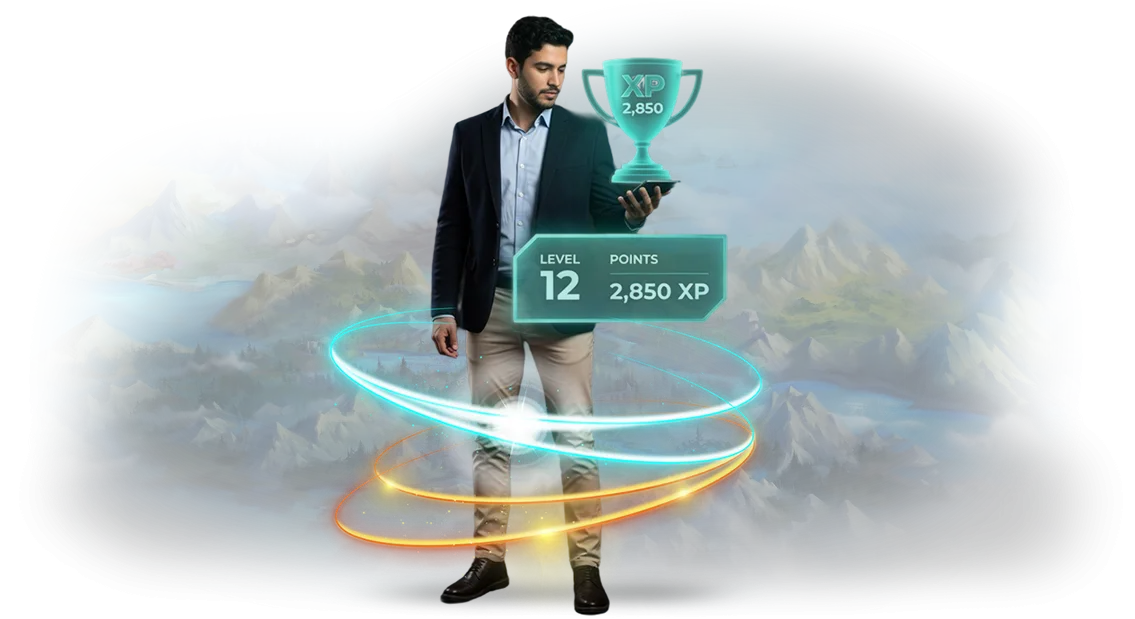
Restaurant and Café Chains Lose Guests Without Gamification
Owners of restaurant and café chains know how hard it is to retain a guest. New venues keep appearing, while familiar marketing promotions work worse and worse: discounts eat into profit but don’t bring loyalty back.
A guest comes once, spends less than expected, and leaves for competitors — without game mechanics for retention, this is almost inevitable.
A declining average check and fewer repeat visits are becoming a systemic problem. Guest loyalty no longer rests on food quality and service alone: these are basic expectations, not a reason to come back.
Ordinary promotions quickly get old, and every new discount eats into margins. The guest feels no connection to the brand; to them, you are just one more point on the map.
You can only stand out through emotions: when every visit becomes an event, people want to come back and try more. Game mechanics, ratings, and competitions do exactly that. They create excitement and a sense of progress that a guest won’t find at an ordinary café.
We address this need for restaurant and café chains: we build a game system of competitions and leaderboards integrated into the natural ordering flow. Guests accumulate points, compete for statuses, and unlock new levels — visit frequency grows and the average check rises.
Instead of one-off discounts, you get a long-term loyalty model where every visit brings the guest closer to their goal and strengthens the connection with the brand.
What Gamification Brings to a Restaurant Chain: Check Growth, Reach, Loyalty
Guests of restaurant and café chains today choose not only by cuisine — they look for a place they want to return to. Competition grows, and with it the cost of attracting a new visitor.
Gamification turns an ordinary visit into a game: the guest sees a rating, competes with others, receives rewards — and this directly affects key business metrics.
The first result is an increase in the average check. When a guest has a goal of overtaking a neighbor in the ranking or completing a game challenge, they are more willing to add a dessert, a drink, or a signature dish to their order.
Leaderboard mechanics gently nudge toward additional purchases without feeling like an aggressive sales pitch.
The second effect is visit frequency. To stay on top or catch up with competitors, guests return more often. A habit forms: come to the café not just for lunch but to level up, get a status, or earn an advantage. This provides a steady stream of repeat orders and predictable revenue.
Third, engagement and organic reach. People want to share achievements and ranking positions: guests post screenshots, show off rewards, and invite friends to compete. This gives the chain free advertising on social media and brings in new guests without spending on promotion.
The key point is that gamification builds long-term loyalty. Instead of one-off discounts that quickly lose value, you get a system where each new game strengthens the bond with the brand.
Visitors stay engaged for weeks and months, and the chain benefits from higher checks, customer retention, and a stable flow of orders.
Gamification Formats for Restaurants and Cafés: Ratings and Quests
For a chain restaurant or café, it is important that gamification solves a specific business problem: guest retention, average check growth, or attracting new visitors.
Each task has its own format, and choosing the right one determines whether you get a measurable result or just a nice-looking app.
We have examined three formats most commonly used in food service and seen in practice how they affect foot traffic and loyalty.
Three Formats for a Restaurant or Café Chain
| Format | For whom | What it gives the guest |
|---|---|---|
| Ratings and leaderboards | For regular guests who care about status | Stimulates regular visits and competitive interest. Guests return to move up the ranking and receive special treatment |
| Quests and collections | For younger audiences and families with children | Turns a visit into a game: collect dishes, complete challenges — get rewards. Increases visit frequency and engages guests with the brand |
| Game promotions | For all guest categories | Familiar mechanics (“collect stickers,” “double points during peak hours”) increase sales of specific items and help manage hall capacity |
Which format is right for your establishment? It depends on your guest profile and marketing goal. If you need to quickly boost weekday foot traffic, game promotions with visit bonuses work well. If you want to build long-term loyalty, implement ratings and quests.
Our role is not just to develop a mechanic but to adapt it to your business process and integrate it with your existing loyalty program. You get a format that pays for itself and contributes to your revenue.
Stages of Gamification Implementation in a Restaurant Chain
Implementing gamification in a restaurant chain is not purchasing a software program but a phased project with clear results: higher average checks, repeat visits, staff engagement.
We take on the entire journey — from the brief to launch and support — while you see at each stage what is changing and when the effect appears.
- Brief and audit — we review your chain’s objectives: raise the average check, increase loyalty, motivate staff. We define the target audience and success metrics so there is a baseline to compare after launch.
- Scenario plan — we design the competition and rating mechanics: points, levels, rewards. We align how this fits your menu, promotions, and team training.
- Design and setup — we create visuals and copy for your brand. We configure everything around your infrastructure and loyalty programs so guests don’t have to change their usual behavior.
- Pilot launch — we test the mechanic at 1–2 locations and gather feedback from guests and administrators. We make adjustments before scaling, so you don’t risk the entire chain at once.
- Chain-wide launch — we roll out the system across all restaurants and cafés, train staff, and provide simple instructions and checklists.
- Support and development — we monitor indicators, update scenarios, and add seasonal promotions to keep guest interest alive.
Timeframes depend on the size of the chain and the complexity of the mechanics. Usually, implementation stages take 3 to 6 weeks, and launching gamification at a single location after a completed scenario takes just a few days.
Within a month, you will see the first changes in guest behavior and be able to assess the return on investment.
What a Gamification Project Includes: Launch Kit
A finished gamification project is not “here are the files, figure it out yourself,” but a complete launch kit. You get everything you need to start a competition between restaurants or teams within the first weeks, without involving developers or diving into technical details.
The package includes:
- Game mechanic scenarios: from seasonal promotions to year-round ratings. Each is described in business language: goals, rules, duration, control points.
- Participation rules for guests and staff: clear terms, point criteria, prize conditions. Administrators can answer any question without a manual.
- Ratings and leaderboard system: tables update automatically, guests see progress online, and staff see the position of their location. The design matches your brand style.
- Roles and access rights: the owner sees analytics for the whole chain, the manager sees their own locations. You decide who sees what.
- Staff training materials: short instructions and guest communication scenarios. Staff can motivate guests to return using ready-made prompts.
- Advertising templates: layouts for social media, stories, menus, and promo stands. Launch the campaign on day one.
- Technical support and maintenance: performance monitoring, rule updates, help at every stage. If your processes change, we adapt the mechanics.
All of this is packaged into a clear launch procedure: you get not scattered files but a ready-to-use tool.
Our team stays in touch after implementation as well — we take responsibility for keeping gamification running and generating a steady flow of repeat visits, not gathering dust on a server.
Case Study: How We Increased the Average Check and Loyalty for a Coffee Shop Chain
The coffee shop chain BaristaLand approached us with a typical market challenge: guests come in for one cup, the average check barely grows, and competition for loyalty is only getting tougher.
The owners understood that retaining customers requires more than service — it needs an emotional reason to come back.
We designed a gaming system of competitions and ratings integrated into the loyalty program. Instead of boring point accumulation, there is dynamics: visit streaks, statuses, challenges, and an overall guest ranking.
Visitors see their progress, earn rewards for activity, and watch with interest as their position in the table rises — an ordinary coffee purchase becomes participation in a game with a goal and a result.
Case Results
- The average check increased by 18% in the first two months after launch.
- The share of repeat visits grew 1.4 times: guests started returning for statuses and bonuses.
- 70% of active buyers joined the gamified loyalty program — giving the chain a stable base of regular customers.
The chain’s director noted: “We expected growth, but didn’t think it was possible to engage guests this much. People ask about the rating themselves, move each other up levels, and choose our coffee shop for the rewards.
The average check went up, and morning traffic has become predictable.” Gamification paid for itself in the first month and kept working as a systematic tool: we are now implementing it at other locations in the chain.
How to Choose the Right Gamification Format for a Restaurant Chain?
Choosing a gamification format for a restaurant chain starts not with mechanics but with a business goal. If you need to raise the average check, point accumulation and personalized offers work. If the task is to bring a guest back within a week, quest series and quizzes work.
If you want to engage staff and reduce turnover, use an internal rating with transparent criteria. So first we define the metric we want to move: repeat visits, order value, visit frequency, or brand loyalty.
The second step is to assess reach and resources. Chain restaurants and cafés operate across different locations, each with its own foot traffic and audience. A format that works for one location may not work for another.
We help you choose a scalable type — for example, a chain-wide rating or regional competitions between locations. This lets guests compete in a familiar context while you see results for each location without extra manual work.
The third step is budget and timeline. A quick program (1–2 months) solves a local task, such as reviving evening hours. A long-term system builds a habit and gathers analytics for future seasons.
We offer options to fit different budgets: from simple campaigns based on ready-made tools to custom-designed systems integrated with your loyalty program.
The main thing is not to copy someone else’s format but to choose one that strengthens your strengths. That’s why we start with an audit: we look at how guest-brand interaction currently works, where attention is lost, and what already works.
Based on that, we provide a recommendation with an impact forecast and a clear launch plan. This turns format selection from a lottery into a controlled decision.
Addressing Doubts: What If Gamification Doesn’t Work?
Implementing gamification is a step that always comes with questions. You invest your team’s time and answer to management for the results, so doubts are normal. We hear them on every project for restaurant and café chains and address risks in advance.
We don’t just “install the system and leave.” We choose mechanics that fit your format, support the launch, and stay in touch after the start. Below are answers to common questions.
What if guests or staff don’t like it?
Before the launch, we analyze the audience and choose clear mechanics: ratings, points, levels. In the first weeks, we monitor engagement and adjust the scenario if interest is lower than expected.
Can the rules be changed after launch?
Gamification is a living system, not a strict questionnaire. We design it so you can change rewards, launch new competitions, and raise the bar on the rules.
What support will there be after launch?
Support includes staff assistance, launching new seasons, and monitoring technical stability. We track metrics and will tell you when to change conditions to keep interest alive.
What if the system fails on promo day?
Launches at venues take place under our supervision: we check load in advance, stay in touch with administrators, and have an action plan. This is critical for restaurant and café chains — a failure is immediately visible and affects guests’ mood.
Order Gamification Development for Your Chain
Competitive mechanics for a restaurant chain work like ongoing advertising: guests track their positions in the rating, talk about their achievements, and come back again.
We turn your café into a playground where every order brings you closer to a prize and sparks interest among other visitors.
To get started, just fill out the form — we will calculate the game format for your traffic and goals. At this stage, you will receive:
- A concrete implementation plan: stages, timeframes, people responsible — from task definition to launch and support.
- An estimate of average check growth and visit frequency: what dynamics you can realistically expect.
- Mechanic selection for your guest segments: from family visits to business lunches, taking your menu into account.
- A staff training scenario: your employees will become ambassadors of the game and keep the excitement going.
- A calculation of kitchen and dining hall load so growing popularity doesn’t create queues or reduce service quality.
- A transparent estimate for development and support — no hidden payments or add-ons.
Contact us however is convenient for you — write via messenger or request a callback. A manager will respond within one business day and prepare a calculation. This is not an obligation, but you will get a ready-made action plan for your chain.