

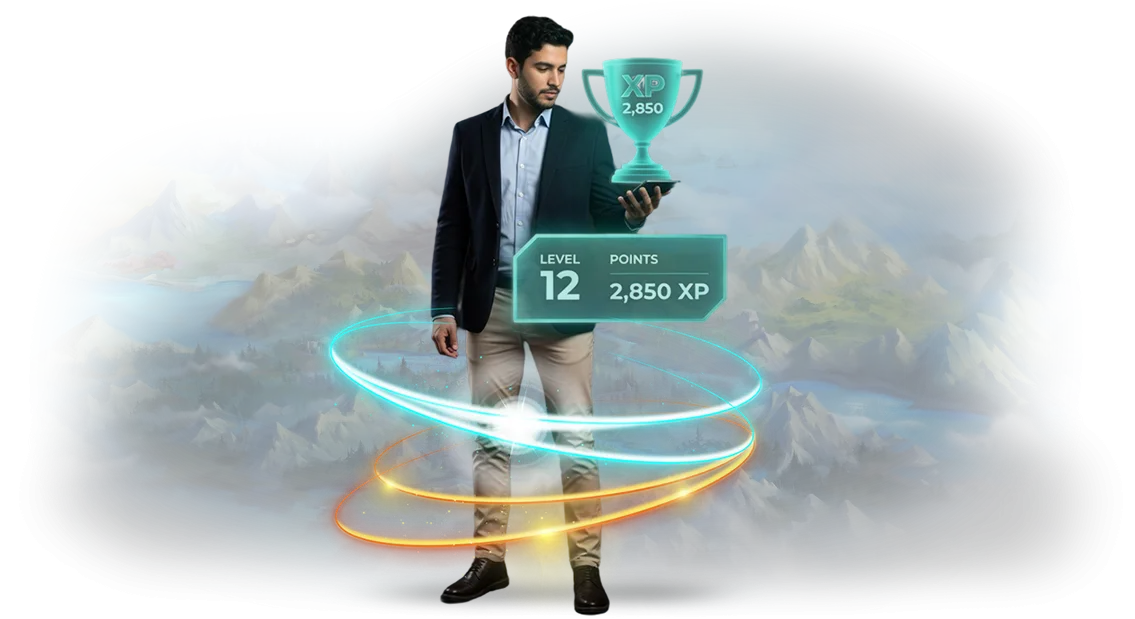
Why Points Get Lost: How to Restore the Value of Rewards in Slack
Corporate points and bonuses often turn into "virtual money that can't be spent." An employee receives a reward, sees it in their Slack profile, and... doesn't know what to do with it.
The value of the bonus drops rapidly: without a clear way to exchange points for a real outcome, motivation fades, and the recognition program becomes a formality.
Slack has already become the team's work hub, which is why the problem of reward devaluation is especially noticeable there. Points get lost between channels, are forgotten after notifications, and don't inspire anyone to new achievements.
We close this gap with a virtual corporate rewards store that gives points back their main function — real value.
When every achievement can be exchanged for a specific prize, the bonus becomes desirable. The employee sees that their efforts convert into a tangible reward — this boosts engagement and creates healthy competition.
A rewards store in Slack solves three business problems at once. First, it restores interest in the motivation program — points no longer gather dust in a profile.
Second, it makes recognition public and transparent: colleagues see who receives awards and for what, and strive for similar results. Third, it reduces the burden on HR — the process of selecting and issuing prizes is fully automated.
Corporate rewards stop being an abstraction and become part of work culture. This is what turns a one-off campaign into a long-term motivation management tool.
What a Virtual Rewards Store Brings to Business
A virtual rewards store turns one-off incentives into a clear system that works on employee loyalty every day. Employees see what they earn points for, which achievements are valued at the company, and immediately understand how their contribution affects recognition.
This removes the feeling of randomness and builds trust in leadership — the foundation of long-term engagement.
For business, the main effect is measurable dynamics: increased activity, reduced turnover, and a clear connection between employee actions and value for the company.
Instead of one-off "carrots," systematic gamification of business processes is built, where every step an employee takes matters and leads to a specific reward.
This approach motivates more strongly than regular bonuses because the employee chooses what they want to receive.
Motivation transparency saves the HR department time and makes people processes predictable. HR no longer spends hours on bonus approvals and manual reports — the full picture of incentives is collected automatically, and managers see real team activity.
Motivation costs become manageable and visible rather than a "black box" with unclear effectiveness.
Implementing a virtual rewards store doesn't require restructuring workflows. It integrates into the familiar communication environment, so employees adapt quickly, and the business gets a tool that works for retention and engagement without extra effort.
As a result, you get not just a game but a manageable mechanism for improving the entire team's performance.
How the Corporate Store Launch Process Works
Launching a corporate rewards store is a clear process, not a "black box." We work so that at every stage you see what's happening, what's already ready, and what result you'll get.
From the first brief to the moment employees start exchanging points for rewards, little time passes — and throughout it all, you stay informed.
-
Brief and plan. We start with a short meeting where you share your business objectives: what needs strengthening — engagement, recognition, meeting targets.
We ask clarifying questions, study your specifics, and then send a written plan: timeline, stages, and a list of what we need from you.
-
Reward catalog and mechanics design. Together we determine which rewards will motivate your specific employees: from gift certificates to corporate merch. We design point accrual rules for meaningful actions and achievements so the system is fair and clear.
-
Store layout and logic review. We show how the storefront inside Slack will look, and which reward categories and descriptions employees will see. You make edits, we adjust until final approval — so the result matches your brand and expectations.
-
Setup and integration. We connect the store to your Slack workspace and automate point accrual for events (for example, a successfully delivered project or a colleague's thank-you). At this stage, the system already runs in test mode — you see it live.
-
Testing and launch. We check the entire employee journey: earning points, opening the storefront, choosing a reward, receiving a code or certificate. We fix any issues and then grant access to all employees. You get a fully working store from day one.
-
Team training and support. We run a short session for administrators: how to edit the catalog, manage points, and view statistics. We explain how to handle employee questions. Afterward, we stay in touch — you can reach out to us for improvements and consultations.
This step-by-step approach eliminates risks and surprises. You always know what stage the process is at and when the result will be ready. Most importantly, after launch you get a working motivation tool, not just an "implemented module."
What's Included in the Rewards Store Delivery
Rewards store delivery is a complete solution, not just a technical connection. We hand you a fully configured corporate store that works inside your workspace and is immediately visible to employees. You don't need to dive into details: we handle the setup, content, and team training.
What Exactly You Get
- Brand customization — logo, brand colors, currency names, and point accrual rules. The store looks like part of your corporate culture rather than a third-party service.
- Reward catalog content — we select items, descriptions, and images, and assign point prices. The catalog reflects your values and motivation goals: from merch to an extra day off.
- Slack integration — employees open the store right in the workspace, without installing new apps or going to external sites. This lowers the entry barrier and increases participation.
- Instructions for employees and administrators — we write simple guides: how to earn points, what can be purchased, and how to exchange rewards. All in plain language, without technical jargon.
- Handover of rights and roles — we train your administrator and hand over access and documentation. From then on, you manage the catalog, points, and rewards yourself without involving a contractor.
- Short post-launch support — in the first weeks, we adjust settings and replenish the catalog if we see something isn't working as expected. You don't face the system alone.
Delivery Summary
You get a working rewards store with a clear management system and a trained team. Launch takes just a few days — from catalog approval to the first point accrual.
After project handover, all roles and rights stay with you, and we remain available if further development is needed.
Case Study: How a Rewards Store Boosted Team Engagement
A retail chain with 1,200 employees had long launched a rewards program, but it worked at a fraction of its potential. Employees rarely rewarded colleagues, points accumulated and lost value, and the HR team didn't understand what truly motivated people. Regular mailings and reminders didn't change the picture.
We solved the problem with a virtual corporate rewards store built into Slack. Instead of abstract points, people see concrete prizes and can exchange their accumulated points for something useful — from branded gifts to leisure certificates.
Notifications about new rewards appear in the shared chat, so colleagues' successes are visible to the entire team.
The results exceeded expectations in the first month alone. Program activity more than doubled, and the share of employees regularly rewarding each other grew from a third to half the team.
People stopped hoarding points — they started spending them on nice bonuses, which means they felt the value of recognition.
For the business, this is measurable engagement growth without additional motivation costs. Managers get live statistics: the issuance and redemption of points reveal what actually matters to employees. The HR team no longer has to invent quarterly campaigns — the system works on its own, every day.
This case shows that gamification delivers value when it's built into the tools a team already uses. We're ready to launch the same store for your company — through Slack, tailored to your goals and business specifics.
How to Choose a Reward Format for Your Objective?
Corporate reward formats should be chosen not by trends but by three criteria: team size, program budget, and the specific motivation goal.
For a small team of 10-20 people, a virtual badge in Slack and a personal "thank you" from the manager is enough — it's fast, cheap, and sincere.
For a team of several hundred employees, a structured catalog with categories, levels, and validity periods is needed, otherwise the program will quickly fizzle out.
The second criterion is what you want to reinforce. For support during a demanding period, simple incentives are enough, but for a long-term recognition culture, you need accumulating points, public nominations, and clear rules for exchanging points for prizes.
In Slack, such rewards are visible to the whole team, so they motivate both the recipient and those around them.
The budget determines the format, not the other way around. Don't overpay for multi-tier mechanics if a simple storefront covers the task. Start with the minimum sufficient option, measure engagement, and expand the program only as needed. We select a solution to fit your budget without inflating the estimate.
The main mistake is copying someone else's program: what works for a thousand people doesn't suit a team of fifteen. That's why we first analyze your structure, motivation goals, and employee expectations, then offer two or three formats within your budget. You choose — and within a couple of weeks, the program is running.
Answering Questions Before Launching a Rewards Store
Before launching a corporate rewards store in Slack, clients typically have the same doubts: how quickly will it be implemented, will employees adapt, what happens if there are failures, and who provides help after launch. Below are answers to the main questions we hear during negotiations.
How long does the rewards store implementation take?
A typical project takes 2 to 4 weeks: from brief to launch. In the first week, we set up the structure, storefront, and access rights; in the second, we test together with your team. Then we connect employees and support the launch.
How do employees adapt to the new system?
We design an interface that requires no training: a rewards storefront, a catalog, and an "Exchange" button. People already know how to choose bonuses in apps — getting used to it takes a couple of minutes. We also prepare a short guide and run a demo for administrators.
What happens if failures occur?
We're responsible for stable operation: server architecture and 24/7 monitoring. If an emergency arises, our team gets notified and restores access within a business day. Backup scenarios are in place for critical cases — accumulated rewards and employee history are never lost.
Who supports the store after launch?
We stay in touch: technical support answers administrators' questions, helps fill the catalog, and updates rewards. If needed, we extend functionality — adding new categories, accrual rules, or reports for HR.
If you still have doubts or need a cost estimate for your project — just write to us. We'll explain how implementation will go at your company and what's needed to get started.What You Get After Submitting a Request: Next Steps
It's good when it's immediately clear what happens next after submitting a request. We shorten the path to results: you submit a request, and then comes a short consultation and a concrete plan with checkpoints.
Here's what the next steps look like:
- You submit a request on the website — we get in touch within a business day to clarify the goals and purpose of the motivation program.
- We hold a consultation: we analyze which processes are worth gamifying and how a rewards store will fit into your current incentive system.
- We show solution examples and propose a scenario tailored to your goals — with clear timelines and a pilot launch format.
- We select a pilot group of employees and launch the store in a limited mode — this allows you to quickly see initial results without significant investments.
- After the pilot, we adjust settings and then roll out the solution to the entire team right in Slack, where employees are already used to working.
- Throughout the entire support period, we stay in touch: we monitor engagement, answer questions, and fine-tune the mechanics as goals evolve.
Each of these stages brings you closer to the goal — boosting employee engagement and building a habit of achieving results. You always know what step the project is on and what comes next.
A pilot launch is a way to test the idea without risks: you see how rewards affect team activity and only then decide whether to scale. After the start, we don't disappear — we stay on for support and help develop the program.
Submit a request — and we'll prepare a plan for your team so the rewards store starts working for your business within the next few weeks.