

Employees Aren't Using Zendesk's Full Potential: How to Restore Motivation
Typically, implementing Zendesk starts with high expectations: transparent processes, fast responses, happy customers.
But within a few months, managers notice employees going through standard operations on autopilot: ticket processing speed drops, customers wait, and previous efficiency metrics slide.
And it's not the tool's fault — Zendesk has fallen victim to routine, and the team has lost the internal drive to perform better.
The problem is that standard KPIs and bonuses stop working when the work is the same day after day. Customer conversations, filling out tickets, handling requests — it all blurs into a gray mass, and interest in the process fades.
The manager sees engagement drop and tries to fix it with reprimands or process overhauls, but that only temporarily boosts activity — then everything returns to baseline.
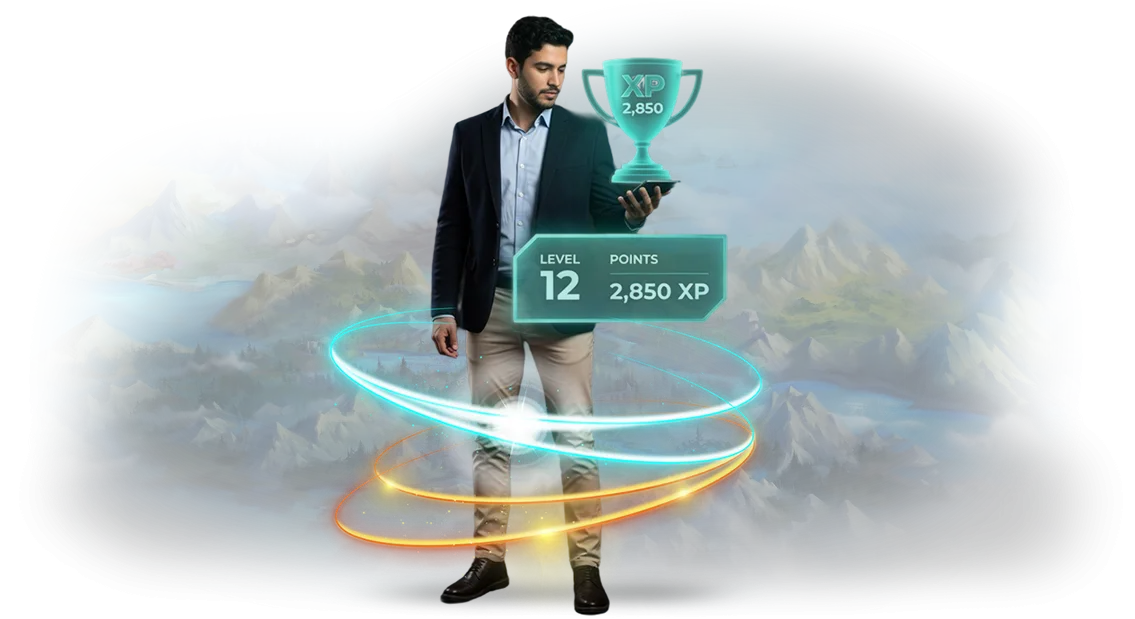
The solution is gamification of business processes right inside Zendesk. We turn the daily routine into a deliberate game with a clear goal system and meaningful rewards.
Employees earn points for specific actions: fast ticket resolution, courteous correspondence, high-quality handling of complex issues. Points accumulate and can be exchanged for real perks through the corporate reward store.
Zendesk gamification brings back motivation not through manager approval, but through constant, transparent, and fair recognition of each person's contribution.
When employees see that their efforts directly affect their rewards, their attitude toward work changes. Healthy competition returns, response times improve, service quality rises — and so does customer satisfaction.
The team stops coasting and starts looking for ways to resolve more tickets and do it better. Employee motivation in Zendesk becomes a managed process, not a passing mood.
We help close this gap: we design an engagement system that activates each employee's internal driver. The result is not just a working tool, but a team that wants to do better work with it.
What You Get from Gamifying Business Processes
Any business process is a set of repeating actions. Make them visible and rewarding, and employees will start performing them with interest rather than under pressure.
Gamification turns routine into a clear achievement system: instead of abstract KPIs — concrete goals, points, and levels.
The first benefit is growth in key metrics. When ticket resolution, dialogue quality, and response speed earn visible points, the team naturally strives to do more and better.
Experience shows that within a few months, service metrics grow by tens of percent, and error rates drop. The manager doesn't need constant pressure — motivation becomes internal.
The second benefit is staff loyalty. A virtual reward store integrated with Zendesk lets employees accumulate points and exchange them for real prizes: gadgets, days off, training.
This works more powerfully than one-off bonuses — people see that their efforts are systematically valued. The team stays with the company longer, and the cost of recruiting and onboarding new employees goes down.
The third benefit is transparency in recognizing achievements. Everyone can see who earned points and for what, so rewards don't seem subjective. Clear rules remove the sense of unfairness, reduce conflict, and build trust in leadership. This is especially important in large teams where personal praise doesn't always reach everyone.
In the end, gamification gives you not just a fun game but a managed instrument. You get growth in employee KPIs, lasting loyalty, and a clear motivation system that's easy to manage and scale. Implementation takes a couple of weeks, and the effect lasts long after.
Gamification also produces data: you see which tasks motivate employees and which don't — and adjust the system in time.
Corporate Reward Store Formats
When it comes to a corporate reward store, it's important to understand: its format should solve a specific business problem.
For one company, a simple storefront is enough to recognize top performers; another needs a full-fledged motivation management tool with analytics and automation.
We offer three reward storefront formats, each covering a different level of needs. The difference is not in the feature set, but in the business outcome: from a quick loyalty program launch to deep integration with your company's internal processes.
| Format | Who it's for | What the client gets |
|---|---|---|
| MVP | For launching a motivation program and testing the idea | Quick storefront launch with a basic reward catalog, minimal admin panel, and point issuance. Shows results to employees within 2-3 weeks and collects initial data |
| Standard | For an active motivation system with a growing number of participants | Extended catalog, automatic point accrual based on rules, order history, and role-based access. Employees see their achievements; managers see team progress |
| Premium | For companies where motivation affects key business metrics | Full synchronization with internal services, flexible accrual logic for KPI achievements, personalized reward selections, and program performance analytics. The storefront becomes part of the HR strategy |
It's important that each format scales: you can start with MVP, and when you see engagement grow — move up to Standard or Premium. We'll find the right fit for your goals and budget, without overpaying for unnecessary options.
Whichever format you choose, employees get a clear, convenient service that shows the value of their work. This directly affects retention of top specialists and increases interest in participating in internal company projects.
How the Gamification Implementation Process Works
When implementing gamification, we follow a transparent procedure — from brief to launch and support. No "black boxes": you always know where the project stands, what comes next, and what result you'll get at each step.
- Brief and task analysis. We pin down the goals: which employee actions we reward, which business metric we want to improve. The output is a document covering the mechanics and integration points.
- Scenario and prototype development. We propose a concept for rewards, levels, and point accrual rules. We show an interface prototype on your data, so you see the future product before development starts.
- Approval. We discuss details and refine the scenario and design. We lock the final version and move to implementation — no surprise add-ons or hidden costs during the work.
- Development and integration. We build the virtual reward store and connect it to your CRM — for example, Zendesk. You get a working tool that fits into current processes and doesn't require replacing familiar systems.
- Testing and launch. We verify scenarios with real users and fix any issues. We launch a pilot version, train administrators, and hand over clear instructions.
- Support and growth. We stay in touch: analyze engagement, adjust mechanics, and add new rewards as your company grows.
The result is a managed motivation system that solves business tasks — not just a collection of "points." The process is structured so that at every stage you see results and keep control of the work.
What's Included in the Corporate Store Delivery
A corporate reward store turns scattered incentives into a single system that works for employee retention and engagement. We don't hand over "source files" — you get a complete package: clear, ready to use, and ready to grow right inside your current ecosystem.
The delivery includes:
- Design and brand adaptation — the storefront looks like part of your corporate style. Employees see it as a native tool, not a third-party service, so they participate more willingly.
- Reward catalog — content tailored to your goals: merch, gift certificates, extra days off, or training. You decide what motivates your team and can change the catalog at any time.
- Point accrual logic — transparent rules for earning points based on achievements. Clear conditions eliminate disputes and make the system fair in the eyes of the team.
- Analytics and reporting — clear data on leaders, popular rewards, and overall activity. Managers see the program's return without manual number-crunching and can adjust motivation in time.
- Instructions and training — detailed guides for employees and administrators, plus a short onboarding course. Implementation doesn't require a separate department: anyone can get up to speed.
Everything works in the familiar environment — thanks to the Zendesk integration, employees receive rewards without leaving their workspace.
Case Study: How Zendesk Improved Support Team Efficiency
When a support team handles identical requests, motivation drops — and so does response speed. At Zendesk they faced a classic problem: employees were burning out, metrics were slipping, and turnover was rising.
Management needed a way to retain valuable specialists and make the routine meaningful — without increasing the payroll or resorting to strict oversight.
What We Did
We built a corporate reward store embedded in the workflow. Employees earned points for response speed and quality, helping colleagues with complex cases, and actively improving the knowledge base.
Accumulated points could be exchanged for real prizes: from merch to extra days off. The system showed immediately: results depend not on discipline, but on interest.
Implementation Results
Within two months of launch, average first response time dropped by 30% — the team became faster on its own because employees could see their progress through the game mechanics. Turnover fell by nearly half: employees felt their contribution was noticed and valued.
The internal peer-help ranking rose by 40%, and the number of tickets closed without escalation increased by a quarter.
A bonus: the launch itself took just a few weeks — we handled the setup, team training, and integration with existing support tools. The client didn't distract their developers and received a turnkey solution.
After the initial results, Zendesk expanded the program to adjacent departments — the best proof that gamification paid off.
How to Choose the Right Gamification Format for Your Goal?
There's no single "correct" gamification format — it depends on the behavior you want to reinforce, who your audience is, and how often they interact with the system.
A virtual reward store is not just points — it's a way to make recognition visible: employees see their progress and choose what to spend their earnings on.
Embedding the store in Zendesk removes the main barrier — switching between systems. Agents earn points for response speed and quality, open the storefront in the familiar interface, and exchange points for a prize without interrupting their workflow.
Look at three parameters: action frequency, result transparency, and reward value. If the rewarded action happens once a month — you don't need a storefront; if it's daily — points and levels work better than one-off bonuses.
| Format | Who it's for | What the client gets |
|---|---|---|
| Points and levels | Teams with recurring tasks | Lasting engagement, clear dynamics |
| Corporate store | Distributed teams | Employees choose their own prize — perceived value is higher |
| Rankings and leaderboards | Sales and support departments | Healthy competition, visible contribution |
For service support, the optimal combination is points plus a storefront: points accumulate for every action, and the store provides an immediate reward. The same mechanics work for quests if you need to focus the team on launching a new product.
Before launching gamification, check: is the goal clearly defined (loyalty growth, processing speed, lower turnover), are audience preferences understood, are meaningful rewards and ways to measure results in place?
We can walk this path in one or two briefs: we pin down the task, select the mechanics, and show how they work in your process. Start with a short message — we'll send examples tailored to your goal.
Frequently Asked Questions About Gamification and Integration
Managers often put off gamification because of three fears: "it takes too long," "it costs too much," and "employees won't get it." In practice, most concerns are resolved at the brief stage — especially when it comes to a reward storefront inside Zendesk, where employees already work daily. Below are direct answers to the most common questions.
Will implementation take several months?
No. A typical project takes two to four weeks, including design and content approval. We work in stages: first a basic reward store, then we add levels, quests, and reports — you see results after the first stage and can launch it for a pilot group.
Will it require a large budget?
The budget depends on the set of mechanics, so we always propose a modular approach. You can start with a simple reward storefront and add features as you grow.
That way you get a measurable effect — higher engagement and repeat interactions — without paying extra for unused options.
Is integration with Zendesk difficult?
Integration relies on the platform's native mechanisms: employees earn rewards for completed tasks, tickets, and training, and data is pulled into their profile automatically.
Support operations don't stop — the system runs in parallel and doesn't require migrating historical data.
What if employees aren't interested?
We design mechanics around real work scenarios, not abstract "points." Employees immediately see what they earned a reward for and how to redeem it.
Plus, at launch we provide short training and show administrators how to keep the momentum going: seasonal missions, rankings, and personal notifications.
Launch Employee Motivation Today
Leave a request — and we'll get straight to work: we'll review your current motivation system, show how a virtual reward store can strengthen it, and offer a clear action plan for your budget.
Here's what you get when you reach out to us:
- Individual consultation on gamification and rewards — we'll identify which mechanics fit your team, not generic advice from the internet.
- A preliminary implementation plan for a virtual reward store for Zendesk — with stages, timelines, and areas of responsibility.
- Examples of completed projects from adjacent industries — we'll show how peers solved similar problems and what results they achieved.
- Cost and timeline estimate for your scale — you'll know the budget before development starts, with no hidden extras.
- Recommendations for store content — which rewards actually motivate and which go unnoticed.
We work remotely and have been building gamification systems for business for 10+ years. Over that time we've built a base of ready-made solutions, so we don't start from scratch — we adapt proven mechanics to your task.
Fill in the form or message us — within one business day we'll send initial materials and answer your questions.
Launch employee motivation today — start with a short, no-obligation consultation.