

Why e-commerce without gamification loses customers
Every day, a shopper sees dozens of offers from online stores — and chooses the one where buying is easier and more enjoyable. If your e-commerce gives no reason to come back, customers leave for competitors that engage them with games, bonuses, and emotions. Without gamification, you lose not just a one-time sale but future loyalty as well.
The result is a familiar picture: e-commerce conversion stays flat, and customer churn grows. You have to invest more and more in advertising to attract new buyers instead of developing those who have already placed an order.
The problem is not the assortment or the prices, but the lack of engagement at every stage — from the first visit to the repeat purchase.
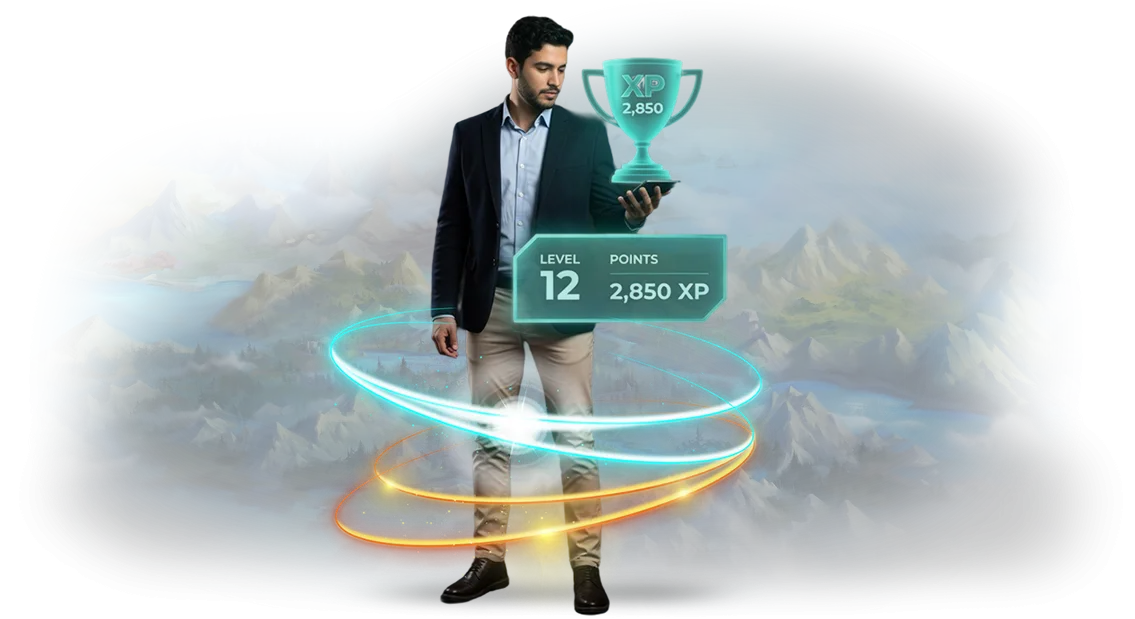
Gamification turns ordinary shopping into an exciting experience: the customer earns points, unlocks bonuses, takes part in promotions, and enjoys interacting with the brand.
This directly affects customer retention and e-commerce conversion growth — the customer comes back not because they have to, but because they like it.
We specialize in developing gamified Telegram Web Apps for e-commerce and help close this gap. Our solutions integrate into an existing business process and quickly deliver measurable results: more repeat orders, a higher average check, and steady audience interest.
What results gamification will bring to your business
In e-commerce, the one who knows how to hold attention wins. Regular discounts and newsletters are working worse and worse: customers switch between stores and choose the lowest price.
Gamification changes the behavior model — the customer gets involved in a game, receives rewards for actions, and returns not out of habit but for the pleasure of it.
That is why we see three key results for e-commerce clients.
The first is growth in repeat purchases: game mechanics encourage customers to come back for the next reward rather than waiting to “think it over.” The second is a higher average check: customers add items to reach a bonus threshold or use accumulated points as a partial payment.
The third is loyalty: the game creates an emotional connection, and the customer starts to associate the brand with positive emotions.
An additional bonus is the viral effect. The “invite a friend and get a reward” mechanic turns every customer into a carrier of advertising: reach grows without spending on targeted ads, and new users arrive already trusting the brand.
To make these mechanisms work seamlessly, we use Telegram Web App — a technology that launches the game right inside the messenger, without installing an app.
For e-commerce, this means a seamless path from game to payment: Telegram is already familiar to the customer, so the entry barrier is minimal, and we connect all data about actions and rewards to your CRM and cart.
In the end, gamification turns one-time visits into a permanent audience. Sales growth, repeat orders, and a loyal base — these are not abstract promises but a measurable effect you will see in your metrics within a few weeks after launch.
Gamification formats for e-commerce: choose the right one for your goal
In e-commerce, every customer touchpoint should work toward a sale. But standard discounts have stopped grabbing attention: buyers are used to them and do not react.
Gamification turns a purchase into a game scenario — it boosts engagement, retains customers, and motivates them to come back. The main thing is to choose a format that solves your specific task.
| Format | Who it is for | What it gives the business |
|---|---|---|
| Quizzes | Stores with a wide catalog | Product selection in a couple of minutes, higher conversion and average check |
| Giveaways | Brands looking for quick reach | Active growth of subscribers and social media mentions |
| Levels and points | Stores with regular purchases | Repeat orders and the habit of returning to the site |
| Club programs | Premium brands | A community of loyal customers who bring their friends |
Quizzes combine entertainment and sales: the customer answers questions, gets a personalized selection, and immediately sees the right product. Giveaways create a quick spike of activity — in a week you can collect several times more contacts than with regular advertising. Levels and club mechanics work over the long haul, turning random visitors into regulars.
We often combine 2-3 formats in one interface, for example quiz + giveaway + participation bonuses. This gives both engagement and database collection and increases the value of each customer. We will select mechanics for your niche, test them, and show results within the first month.
How gamification development works: from brief to launch
Gamification development is not a “magic button” but a well-structured process where every stage brings you closer to revenue growth. We work transparently: you always know what stage the project is at and what you will get as a result. Here is how it looks in practice.
-
Brief and business immersion. We gather the goals: raise the average check, reduce churn, increase repeat purchases. We clarify the customer profile and touchpoints — this is the foundation on which all mechanics are built.
-
Concept and prototype. We propose a gamification format: points, levels, quests, giveaways. We show how a specific mechanic affects customer behavior and which metrics we can improve.
-
Approval and plan. We discuss the details, adjust scenarios, and set the timeline and budget. You approve the mockup and understand what will happen at each stage.
-
Development and integration. We build the interface on a professional platform and connect it to your store and key services. All technical details stay behind the scenes — for you, it is a ready-made working mechanic.
-
Testing and launch. We test scenarios on real users, fix any issues, and launch. You get an active gamification system that immediately starts engaging customers.
-
Analysis and support. We track key indicators, fine-tune scenarios, and add new mechanics. This turns gamification into a constantly growing sales channel.
What you get after implementing gamification
You receive not abstract promises but a complete set of deliverables — from scenario to technical documentation. Each element solves a specific task: it helps align the logic, see the interface before development, and launch the system without depending on a contractor.
Here is what is included in the final result:
- Technical specification — requirements, deadlines, and acceptance criteria are documented. You know exactly what you are ordering and how to check the quality of the work.
- Gamification scenario — mechanics, stages, and rules are described in plain language. You see how a customer moves from first purchase to repeat visits, instead of just getting “some kind of game.”
- Design mockups — a polished interface in your brand style. Before development starts, you can see how the gamification looks to the user, and edits are made without unnecessary costs.
- Configured logic — all business rules are already working: point accrual, levels, discounts, prizes. The system calculates and rewards users automatically, without manual control.
- Employee instruction — a step-by-step guide to managing the mechanics. Your team can launch promotions, change conditions, and analyze results without involving developers.
- Technical documentation — a description of the architecture and integrations with your online store. This is a guarantee that the system is easy to maintain, improve, and scale in the future.
This set provides full transparency and control. You launch gamification quickly, and you measure the result in business metrics: growth in repeat purchases, higher average check, audience engagement.
Case study: how we increased repeat purchases in an online store
For an online store, loyalty is not about discounts but about the habit of coming back. We worked with a client who had a strong first order, but customers did not return: competitors pulled attention away, and “dead” promo-code emails no longer worked.
We suggested turning the purchase into a game and packaging it in a Telegram Web App so the customer could launch the mechanics without installing any apps. The electronics online store agreed to the experiment — and within two months got results that paid for the development.
A game that works for retention
The gamification was built around an accumulation mechanic: with each purchase, the customer received experience points and unlocked new levels with privileges — free delivery, early access to sales, exclusive prices. This shifted the focus from price to status and progress.
The Telegram Web App made it possible to launch everything in one click: users do not need to download anything, and the page opens instantly.
For the business, this means a minimal entry barrier, and reach grows through built-in sharing mechanics — guests invited friends to earn bonuses together.
Specific results in 8 weeks
- Repeat orders grew by 37% — customers started coming back not out of habit but to “level up.”
- Time on site doubled — instead of quickly placing an order, visitors explored the mechanics, collected points, and looked at bonuses.
- Conversion to repeat purchase among game participants was 22% higher than for the rest of the base.
- The client received its own loyalty ecosystem that can be developed without marketplaces or aggregators.
The main takeaway: game mechanics in e-commerce are not entertainment for likes but a tool that directly affects revenue. If a customer sees progress and rewards, they come back on their own — and bring friends. That is what sustainable growth looks like without burning budget on discounts.
Frequently asked questions about gamification of business processes
Implementing gamification in an online store raises reasonable questions from business owners. We have collected the most common ones and answer directly — no complex technical terminology, only what matters for the result.
What if the game does not resonate with our customers?
We do not abandon the project after launch. First, we record current user behavior, then run a pilot version of the mechanic on a limited audience segment. We look at engagement, repeat visits, and average check.
If activity is lower than expected, we make changes before full rollout — for example, adjust rewards or the thresholds for earning them. That is why the risk of “it won’t resonate” is minimized.
How do we integrate gamification with our CRM?
CRM integration is a standard task for our team. We set up data exchange about purchases, bonuses, and loyalty levels through secure channels.
You do not need to replace your existing system or retrain employees: gamification becomes an additional module that enriches the CRM with customer behavior data.
This way you keep working in familiar interfaces, while the game in the Telegram app automatically receives up-to-date order information.
What does the cost of gamification depend on?
The cost is built from the complexity of the game mechanics, the depth of CRM integration, and the amount of content — texts, images, levels. We prepare a transparent cost estimate before work begins, broken down by stage.
You pay only for the features your business actually needs at the first stage. Later, you can gradually expand the set of mechanics, adding new activities as your audience grows.
Is it difficult to change the game logic after launch?
No. We build the game on a modular principle: level settings, rewards, and rules are placed in a separate block and do not require changing the entire structure. We discuss edits with you and implement them quickly — from a few days to a week depending on the volume.
You do not have to wait for major releases: priority changes are launched separately without affecting other sections of the application.
Ready to discuss your gamification project?
Ready to talk about how gamification can increase conversion and repeat purchases in your e-commerce? If you want to order gamification for your store, start with a short consultation — it will take no more than 15 minutes and save weeks of trial and error.
Send us a request, and we will explain how to turn ordinary purchases into a game that retains customers and increases the average check.
After your request you will receive:
- A consultation with a gamification specialist: we will analyze your business task and suggest which mechanics will deliver quick results.
- A cost estimate for the project tailored to your goals: a transparent estimate without hidden fees or forced options.
- Scenario recommendations: from a simple loyalty program to a full-fledged mini-app in Telegram with quests and rewards.
- A timeline and stage assessment: you will understand when we launch the project and when you will see the first metrics.
- Examples of similar solutions: we will show how gamification worked in your niche and which indicators grew.
- A clear division of tasks: what we take on and what will be required from your team.
Leave a consultation request — it is non-binding. We will contact you within one business day, ask a couple of clarifying questions, and propose a solution that will pay off.
And if you need a cost calculation first, just mention it — we will send you a commercial proposal with a fixed cost and timeline.
How to choose the gamification format that is right for you?
There is no universal format — the choice depends on your task and budget. We help you choose mechanics for a specific result: growth in repeat orders, higher average check, attracting new audiences, or reactivating inactive customers. A properly chosen game brings measurable benefit, not just entertainment.
First, we determine what action the customer should take. For customer return — accumulation mechanics and personal goals; for a seasonal promotion — a bright game with prizes; for holding attention in the catalog — mini-games with bonuses.
Each mechanic solves its own business problem, so we design a scenario for your sales funnel rather than offering “a bit of everything.”
The budget determines the format, but not the quality. A small budget — simple mechanics in a chatbot or a short campaign; a medium budget — a full-fledged game with stages and a prize pool; a large budget — a comprehensive loyalty system with competitive elements.
We honestly explain what is possible with your budget and offer a phased launch: first a basic version, then refinement based on results.
We take into account the specifics of the online store: purchase frequency, average check, product type, seasonal peaks. What works for cosmetics may not work for electronics or groceries.
At the start, we do a short analysis and within a few days show 2-3 suitable formats with a forecast for key indicators — you choose instead of guessing.
In the end, you get gamification embedded in your business process that pays for itself. We will send a clear proposal with the format, timeline, and expected effect — all that remains is to launch and get the result.