

Why HoReCa Loses Regular Guests Without Gamification
In the restaurant business, a visitor becomes a regular only when they keep coming back again and again. But without a deliberate retention strategy, guests drift to competitors — they are drawn by new places, interesting promotions, and emotions.
Ordinary discounts and loyalty cards stop working: customers get used to them, devalue the bonuses, and lose interest in the venue.
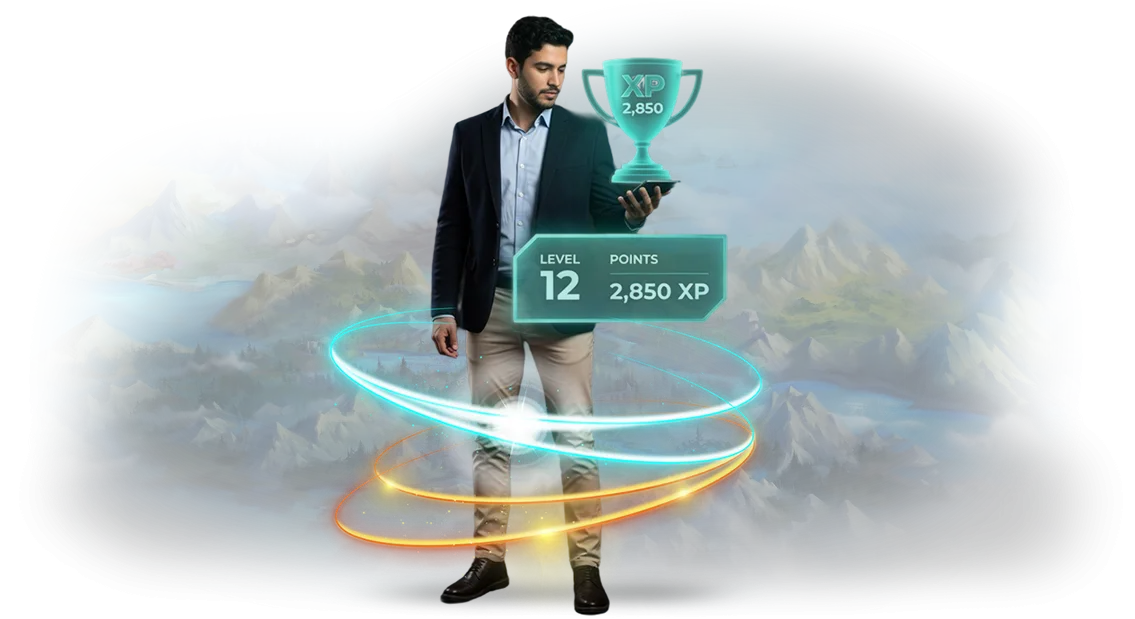
Gamification for restaurants solves this problem differently: it turns a visit into a game with rewards, levels, and unexpected bonuses. The visitor doesn’t just get a discount — they take part in a process, accumulate achievements, and want to return to unlock the next level. This creates an emotional connection that standard loyalty programs don’t provide.
That’s why we at our team develop gamified solutions for HoReCa that drive customer retention and increase the average check. We combine guest loyalty with clear game mechanics — so marketing becomes part of the experience, not intrusive advertising.
In practice, this can be a digital guest card with tasks, bonus points for visits, personal challenges, and statuses. Guests see their progress and receive rewards exactly when they expect them — this increases visit frequency and the share of repeat orders. HoReCa marketing stops being “about discounts” and becomes “about experiences.”
The result is measurable: guests visit more often, participate in promotions more willingly, and bring friends. If you want not just to retain your audience but to turn it into a community of regular guests, gamification will become a key tool in your marketing.
What Gamification Will Bring to Your Business
Guests don’t return for beautiful interiors — they return for the emotions they experienced with you. A well-designed game mechanic turns an ordinary restaurant visit into an engaging scenario: guests earn points for orders, complete tasks, and receive rewards.
As a result, you not only delight regular customers — you create a predictable flow of repeat visits and, with them, steady profit growth.
Each such visit is also a natural reason to talk about you. When a customer gets an interesting task, unlocks a new reward, or shares the result in a messenger, they trigger viral marketing without an additional advertising budget.
Personalized offers and reminders work omnichannel: in Telegram, at the checkout, on social media. The guest sees a single “loyalty map” and understands that they are valued — this strengthens the bond with the brand.
Gamification changes the economics of the venue: the average check grows through “add-on orders” and tastings, and repeat visits become a habit. A loyalty program that used to be a dull card and a discount turns into a living story where statuses and rewards keep interest alive.
In this way, the entertainment element starts working toward the main goal — increasing profit without price dumping or aggressive advertising.
We implement gamification according to your business goals: from welcome mechanics for new guests to complex multi-level scenarios for a regular audience. At the same time, you get clear analytics, see exactly what affects loyalty, and can quickly adjust the mechanics. Below we answer common questions — so you can make an informed decision.
HoReCa Gamification Formats for Different Goals
The same gamification approach will not work for both a small coffee shop and a restaurant chain with banquet halls.
Each HoReCa venue needs mechanics that solve a specific problem: increase the average check, bring a guest back within a week, or gather an audience for an opening.
We have put together four formats that are already delivering results in restaurants, cafes, and hotels. Choose your goal — and see which option covers it.
| Format | For whom | What it gives the customer |
|---|---|---|
| Guest quest | Venues with a family audience and a high flow of new visitors | Extends time spent, turns a visit into an adventure, and creates a reason to return to complete the story |
| Accumulated points | Coffee shops, bakeries, restaurants with short and frequent visits | Increases visit frequency, builds a habit, and replaces paper loyalty cards without printing costs |
| Prize draws | Bars, cafes, and hotels on opening days or before holidays | Attracts new guests, collects contacts for mailings, and gives a news hook for social media |
| Leaderboards | Restaurant chains and hotels with corporate clients | Sparks a competitive spirit, increases engagement in the program, and encourages trying new menu items |
The formats can be combined: for example, launch a quest and simultaneously award guests points for completing tasks.
We will help you choose the optimal scheme for your visitor profile, season, and scale of goals — so the mechanics work for the business, not just as entertainment.
How We Develop Gamification: Stages of Work
Developing gamification for HoReCa is a transparent process. The development stages are arranged from brief to launch, so you understand the timeline and your role, while guests get a simple application.
- Gamification brief — we meet and break down the goals: what should change in guest behavior, what touchpoints already exist.
- Process analysis — we look at where the mechanics will fit in: ordering, bonuses, reviews, repeat visits. We determine what to automate.
- Concept approval — we show the mechanics and scenario of the mini-app in Telegram, and you make edits before development begins.
- Prototype and design — we create a clear interface for statuses, points, and rewards in the style of your venue.
- Development and testing — we build the application and test it against real waiter and guest scenarios. We fix everything in advance.
- Project launch — we integrate the gamification, train your team, and give guests a short instruction. Launch takes days.
- Support and analytics — we track which mechanics increase repeat visits and the average check, and adjust them. Support stays in touch.
In the end, you get a tool that increases guest loyalty and revenue. On your side, you only need one decision-maker — we handle the rest.
What’s Included in the Project — The Complete Package
As a result of the project, you get not an abstract “app” but a complete working package that your team will start using immediately after launch.
Every deliverable is created for your venue’s goal — increasing loyalty, raising the average check, or engaging guests in the life of the restaurant.
The project includes:
- Ready-made game mechanics — a well-thought-out scenario (points, levels, rewards) that motivates guests to return. The scheme is adapted to your format, so you don’t have to invent it from scratch.
- A branded Telegram Web App — an interface in the style of your kitchen or bar, opened via a link without installation. Guests join the game in just a couple of clicks.
- Admin panel — you can change promotion terms, add prizes, and set limits yourself, without contacting developers.
- Instructions for staff — short guides and scripts on how to invite guests to play and how to answer questions. Waiters and administrators get up to speed quickly.
- Clear analytics — reports on the number of participants, visit frequency, and average check. You see which mechanics actually work and can adjust them.
- Launch and support — we help roll out the project, check that the mechanics work, and stay in touch so you can work with peace of mind.
The entire package is delivered as a single bundle: you get a complete system that integrates into your business without complicated setup. The technical part stays with us — you manage the program and monitor guest reactions. And when a new idea comes up, you can expand the mechanics through the same interface.
Case Study: How a Restaurant Increased Its Average Check
For the “Na Ogne” cafe chain, the main goal was to retain guests and motivate them to return more often. Ordinary promotions gave only a one-time spike: a person came for a discount and then disappeared for a month.
They needed mechanics that would turn a visit into a habit and increase table spending without aggressive discounts.
What we did
We immersed guests in a game right inside Telegram — where they already chat with friends and decide where to go for lunch. For each visit and order, the guest earned points, unlocked levels, and received rewards.
Special tasks encouraged them to order a dessert or a drink with their main dish — which directly affects the average check.
Results in numbers
The system was launched in one restaurant, and we measured the effect over three months, comparing it with the previous quarter.
| Indicator | Before | After | Change |
|---|---|---|---|
| Average check | 100% | 118% | +18% |
| Visit frequency | 1.8 times/month | 2.3 times/month | +28% |
| Monthly revenue per guest | 100% | 151% | +51% |
The game mechanics kept guests engaged: they returned to unlock the next level and brought friends — a joint bonus was built in for that purpose. Some visitors even asked waiters to remind them how many points they had accumulated.
This case is telling for us because the system paid for itself already at the pilot stage.
After the first quarter, the client extended the contract and began rolling it out in three new locations — meaning gamification delivers a measurable result for the business, not just entertainment for the sake of a checkbox.
How to Choose the Right Gamification Mechanics?
There is no direct answer — the right mechanics depend on your goal. Raising the average check is one thing; collecting guest contacts or turning a one-time visit into a regular habit is another.
So first, together with you, we define the goal: what should change in the numbers after gamification launches — visit frequency, order size, or engagement in the loyalty program.
That is exactly what our consultation is for. We ask the right questions about your business process, venue audience, peak hours, and seasonality. Based on your answers, we propose 2-3 suitable mechanics with expected outcomes.
For example, for a coffee shop where guest retention matters, a cumulative mechanic with a surprise after the Nth purchase works well. For a restaurant launching a new menu, a quiz or quest that involves staff and guests in a shared story is a good fit.
Importantly, we don’t sell a “boxed” solution. Every mechanic is adapted to your format: venue size, service model, and communication style with guests.
We also consider how the gamification fits into your existing loyalty system or CRM, so it doesn’t put extra strain on staff or confuse guests.
From there, we take on the entire implementation — from scenario development to launch and training for your team. This is turnkey gamification: you get a ready-made tool that starts working for brand recognition and revenue the very next day. You don’t need to understand technical details — just monitor the results in clear analytics.
If you’re unsure which mechanic will work in your case, start with a short consultation. It will help you save budget and time, and also formulate a clear technical specification for our team.
Leave a request — we’ll discuss your task and propose a solution that will be interesting for both your guests and you.
Answers to Common Questions
Before launching gamification in HoReCa, owners often ask the same questions: timelines, security, effectiveness, support. We answer honestly, without technical details. We have been doing such projects for many years.
How long does gamification development take?
A typical project takes two to four weeks: from brief to launch. On the first call, we give exact dates after clarifying the task. We fix the timeline in the contract — you are protected from delays and know when to announce the promotion.
Is it safe for the business and for guests?
We are responsible for guest data security and the stable operation of the game. We use professional server architecture proven in dozens of projects for restaurants and hotels. Your staff doesn’t need to dive into technical details.
How do we know gamification is really working?
We look at business metrics: number of participants, repeat orders, average check, and time spent in the venue. After launch, we give you a simple report with numbers. With it, you can see your return on investment and decide what to improve.
Who supports the project after launch?
We stay in touch. Warranty support is included: quick fixes, consultations, and refinements for new promotions. Need new mechanics in a month? Write to us — we’ll prepare a plan and implement it.
Start Your Project and Get the First Results
You already know how gamification increases revenue and loyalty in HoReCa: guests return more often, engage with the program, and bring friends. But the main question is where to start and when to expect the first results.
We designed the process so that you get tangible results within the first week, not after months of development.
At the start, we take on the entire organizational part and give you a clear action checklist. Here’s what exactly you get immediately after the project launches:
- A ready launch plan with exact deadlines for each stage — you always know what is happening and what comes next.
- A game scenario adapted to your format: restaurant, cafe, bar, or hotel — taking into account your menu, promotions, and guest preferences.
- A configured Telegram Web App — the game opens via a link without installing an app, so guests don’t waste time registering.
- Loyalty mechanics: points, gifts, levels — everything works automatically and is immediately visible in your personal dashboard.
- Integration with your loyalty system or restaurant management program — so accruals and redemptions happen without manual control.
- Roles and tasks for your team: who participates in the launch and how, and who is responsible for guest support.
The first stage takes 2–3 days: we conduct a short brief, clarify the goals, and come back with a concrete plan and work breakdown. You don’t need to understand technical details — we accompany the project from idea to result, while you only control the key milestones.
Start with a brief: describe your task, and we’ll propose a solution that fits your processes and budget. Leave a request on the page — within a day you’ll receive a preliminary plan with the first steps. After that, everything moves forward only at your decision.