

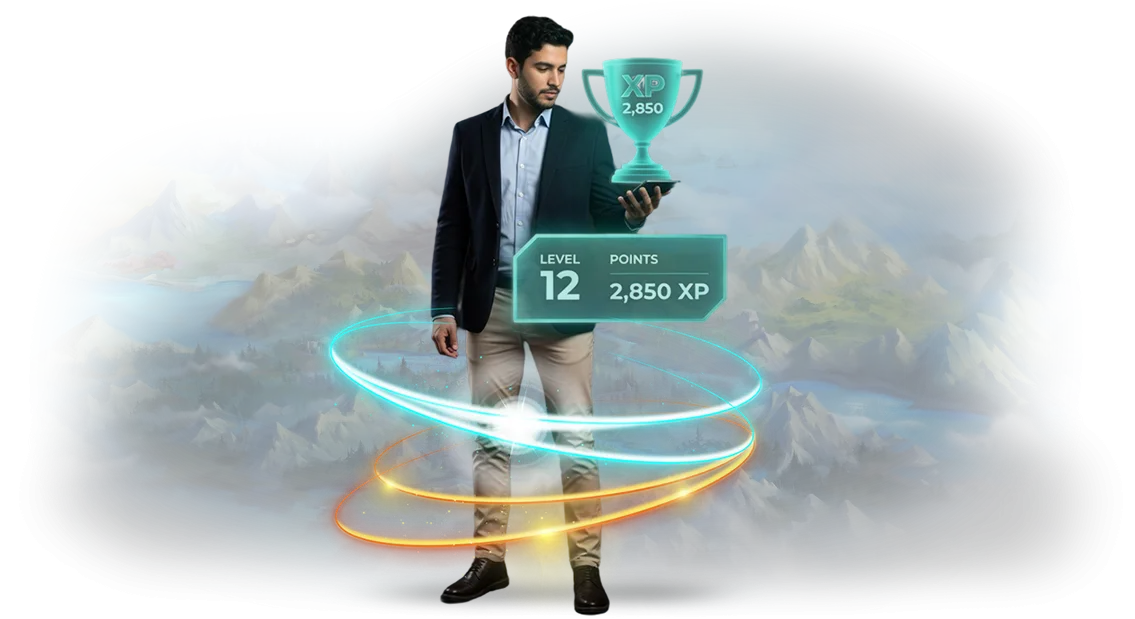
Losing Visitors? Gamification for Nightclubs
Nightclubs spend their budgets attracting new guests, only to discover that last night's packed party doesn't guarantee even a third of visitors will come back. A guest arrives, dances, leaves money at the bar — and heads off to a new club with a flashier lineup and bigger perks.
In the end, marketing becomes an endless race for one-time attendance, while guest retention remains a dream.
Discounts and coupons don't save the day either: they deliver quick reach but don't create a connection with the venue. For a nightclub, loyalty is the reason a guest picks you over five other places on a Friday.
Hospitality has long become a game, and the winner is the one who turns an ordinary night out into a story for social media and internal status.
Gamification solves this problem systematically: a system of points, levels, and rewards turns every visitor into an active player of your club. A person doesn't just dance — they level up, complete challenges, and earn privileges.
This works on emotions and habit: guests start to "miss" your club, and return visits happen without aggressive advertising or constant discounts.
That's exactly why we build gamified Telegram Web Apps for nightclubs. We embed the mechanics into the guest's usual flow: ordering a table, taking photos, visiting the bar counter — every action earns points and brings them closer to a new reward. This gives you predictable growth in repeat visits and stable occupancy even on weekdays.
What Gamification Will Bring Your Business
A nightclub visitor comes for emotions, but without a retention system, they'll easily drift to competitors, and your marketing budget for acquisition will keep burning again and again.
Gamification solves this: through play, you build a habit of returning, participating, and bringing friends. We've been developing these mechanics for over a decade — and we know how to turn a one-time entertainment into a long-term growth tool.
Here are the gamification benefits you'll feel within the first few weeks:
- Growth in guest loyalty. Guests earn points, levels, and rewards for visits — and begin to form an emotional attachment to the brand. This works stronger than discounts because it taps into excitement and status.
- Repeat visits. Game challenges drive people back: "finish the collection," "take first place in the rating," "get an exclusive invite." The club becomes a place guests want to return to.
- Higher average check. Challenges award bonuses for ordering cocktails, joining guest lists, or taking photos in the photo zone. Guests spend more because the game turns each purchase into a step toward a reward.
- Collecting preference data. Through game mechanics, you learn which party formats and promos resonate with your audience. This data lets you sharpen offers and boost conversion.
- In-the-moment engagement and social reach. The game encourages actions right inside the club — for example, tagging in stories. Every participant creates content that builds awareness without extra ad spend.
All mechanics run inside Telegram: guests don't need to download anything — they open the game via a link from the event listing or a QR code on the table. This lowers the barrier to entry and raises participation rates — which means every benefit shows up in full.
Gamification Formats for Nightclubs
A boring night at the club means lost guests and missed revenue. Gamification turns an ordinary visit into a game: the visitor gets an emotional experience, and the club gets an engaged audience and a higher average check.
What Formats Work
Each format solves a specific task: engage a newcomer, turn a regular guest into a loyal one, or create a reason to bring friends. We combine scenarios so guests don't burn out in one evening but keep coming back.
| Format | Target audience | What it gives the club |
|---|---|---|
| Tournaments and leaderboards | Regular guests, competition lovers | Return visits to win a prize spot, higher average check, a packed event schedule |
| Quests and team scenarios | Groups of friends, birthday guests | Natural floor fill, guest photos and stories, a reason to bring the whole group |
| Drawings and random prizes | Newcomers, walk-in visitors | Quick commitment-free engagement, contact base collection |
| Loyalty programs | Regulars, VIP guests | Predictable repeat visits, clear bonuses, compounding effect |
How to Choose the Right Format
There is no one-size-fits-all solution: what energizes young crowds on Friday won't work at a weekday corporate event. At the start, we analyze your guest profile, party formats, and the entry point — the bar queue, the entrance, or the VIP zone.
Then we select 2–3 scenarios for the key moments of the evening: warm-up, main peak, and closing. That way the game doesn't overwhelm guests but works for you — from the first touchpoint with the club to rebooking a table.
How Gamification Implementation Works
We've been implementing gamification in entertainment formats for 10 years, so we've built a clear, surprise-free process for nightclubs. You always know where the project stands, what you're getting, and when launch happens. It's the standard path from brief to a working tool that drives revenue.
- Brief and goals. We analyze your club: average check, foot traffic, guest profile, and objectives. We define exactly what the game should deliver — more orders, longer parties, repeat visits.
- Format audit. We study your bar, stage, seating layout, and visitor behavior. We identify where guests spend time and at what moment the mechanic will work best.
- Scenario and mechanics. We create the game concept — from a welcome quiz to a prize hunt. We map the guest journey from entrance to order and calculate the economics: prize budget and potential check growth.
- Prototype and approval. We show you a sample game screen and interaction logic. You see how it looks and feels, and make edits before development starts.
- Development and design. We build the full application, and update the booking system, bar menu, and quizzes in a unified style. We prepare clear instructions for staff.
- Test run. We launch the game with a focus group or on one of the weekday nights. We check load, guest convenience, and service speed, and fix any issues.
- Launch and support. We hand over the project with training for administrators and bartenders. We help during the first weeks and stay on call: adding new tasks, changing prizes, and adjusting mechanics for seasonal events.
In the end, the club gets not an "app for the sake of an app" but a tool guests actually use. And you get a clear work plan, timelines, and a dedicated contact person at every stage.
What's Included in the Gamification Delivery
The delivery doesn't include "source code" — it's a fully ready instrument for your club. You get a configured Telegram Web App that already works with your audience, plus everything the team needs to launch and grow the mechanic.
- A configured Telegram Web App tailored to your concept: welcome screen, game scenarios, prize showcase — all in the club's brand style.
- Analytics and reports: a dashboard with key metrics — active players, repeat visits, purchase conversion, promo popularity.
- Staff instructions: guides for setup, daily launch, and handling common situations without contacting developers.
- Employee training: a short training session for administrators and the bar team so they can confidently explain to guests how to play.
- Prize and promo module: uploading prizes, limits, automatic bonus awarding — configurable without coding knowledge.
- Technical support at launch: we accompany the first days of operation and quickly respond to staff questions.
The project delivery includes all the listed components — from a configured Telegram Web App to analytics and training. All you have to do is announce the game to guests and watch return visits grow.
Case Study: Guest Return Rate Up 40%
For the nightclub chain Pulse, we launched gamification right inside a Telegram Web App — guests don't need to install anything, just open their familiar messenger.
The club used to face the typical pain point: visitors came for promos but didn't return on their own, and the average check was slipping. We proposed turning every visit into a game: points for entry, challenges inside the club, and exchanging points for drinks and table spots.
We measured the results after three months of the mechanic running. Guest return rate grew by 40% — people started planning their next visits before even leaving the venue.
The average check rose by 25%: guests were more willing to order in order to complete a quest and get a reward. The club got not a one-off promo but a permanent retention tool that works without staff involvement.
What This Means for Business
Gamification is no longer just a marketing decoration. For the club, it means predictable attendance and higher revenue per guest. Visitors return on their own and bring friends — reach grows without an additional ad budget.
The owner doesn't need to change internal club processes: the mechanic is embedded into the familiar "booked — arrived — got a bonus" flow.
We continue to support the project: analyzing guest behavior, adjusting tasks and rewards around seasons and events. That's why the numbers don't stay a one-off result but hold for months ahead.
For the client, this means gamification investments pay off and deliver results systematically, not just in the first weeks.
How to Choose a Gamification Format?
There's no one "right format for everyone" — it depends on the task. One club needs to boost weekday attendance, another needs to build a guest database, and a third wants to turn a party into an event people talk about. Gamification delivers results only when the mechanic matches the goal.
For example, if the goal is more repeat visits, point-accumulation programs with personalized rewards work well. If attracting new guests is the priority, team challenges and referral prizes deliver.
And to create hype around a specific event, time-limited quests and raffles inside the Telegram app are effective.
We start with a short brief: you tell us about the club format, guest profile, and main goal, and we propose 2–3 suitable scenarios. We show how each format will affect engagement, how long development will take, and what resources are needed for launch. You choose not the mechanic itself but the outcome.
Next comes testing with a small group of regular guests. This lets you validate the scenario before a full-scale launch and quickly adjust difficulty, rewards, or interaction frequency. If the format doesn't show the right momentum, we change it without reworking the whole system.
So choosing a format is a joint decision based on data and experience. You get a clear recommendation and a ready-made scenario tailored to your tasks, not a template solution. The key success criterion isn't gamification as such — it's that guests come back and stay engaged.
Common Questions About Business Gamification
Any new solution for a club raises doubts at first: will it be too complex, too expensive, or too risky? Questions about business gamification are a natural part of getting to know the tool.
Below, we address the four most common concerns: implementation complexity, cost, payback, and safety.
Is gamification complex and expensive? Does it only suit large chains?
Implementation takes minimal time and doesn't require any special knowledge from your staff. We handle the entire technical side — setup, launch, and support.
The cost is comparable to a single ad campaign, but unlike a one-off promotion, gamification works continuously, bringing guests back again and again.
How quickly will development pay off?
Payback comes from three sources: a higher average check thanks to rewards and bonuses, repeat guest visits — including the previously disengaged audience — and free social media reach as participants share their results.
With active club promotion, payback happens within a few months, and after that the mechanic keeps generating profit.
How safe is it to use a Telegram app for the club?
We work on the stable Telegram platform — guests don't need to download anything, and you get visitor data protection. All information is stored in reliable infrastructure, and only you have access to the results and statistics. We support the project after launch, so any questions are resolved quickly.
What will be needed from the club to launch?
Only your desire to grow and minimal team involvement: administrators help guests get oriented, while the whole process is automated in the app. We prepare the mechanic, design, and launch, and you get a tool that's easy to manage even without technical training.
Order Turnkey Gamification
Ordering gamification is simple: you submit a request, and we take care of everything — from idea to launch. From the very first stage, you get not abstract promises but a clear plan: what we'll do, how long it will take, and how it will affect attendance and average check.
Here's what you get after reaching out:
- Scenario consultation — we'll figure out which mechanic will engage your specific guests: quizzes, quests, loyalty points, or team competitions.
- Cost and timeline estimate tailored to your format — a transparent estimate with no hidden fees and a realistic launch schedule.
- Demo of the core game scenario — you'll see on a prototype how guests will participate, earn prizes, and come back to the club.
- Integration recommendations with your loyalty program, website, or social media — so the game amplifies existing acquisition channels.
- Implementation checklist with responsibility areas — you'll know exactly what your team needs to handle and what we take on.
- Post-launch support — we adjust the mechanic based on early results so the game keeps driving repeat visits and engagement.
Leave a request via the form — we'll call you back within one business day and arrange a short meeting. After the brief, you'll receive a cost estimate and demo, and then we support the project turnkey: from scenario approval to post-launch analytics.