

Why customers leave your retail store and how to win them back
The offline retail customer has become picky: it's easier to order a product with delivery than to drive to a store. Even those who do come often leave without buying — the shelves are the same, prices are similar, and there's zero emotion.
Classic discounts and loyalty cards only provide a short-term spike: the customer gets used to the discount and waits for the next promotion without feeling any attachment to the brand.
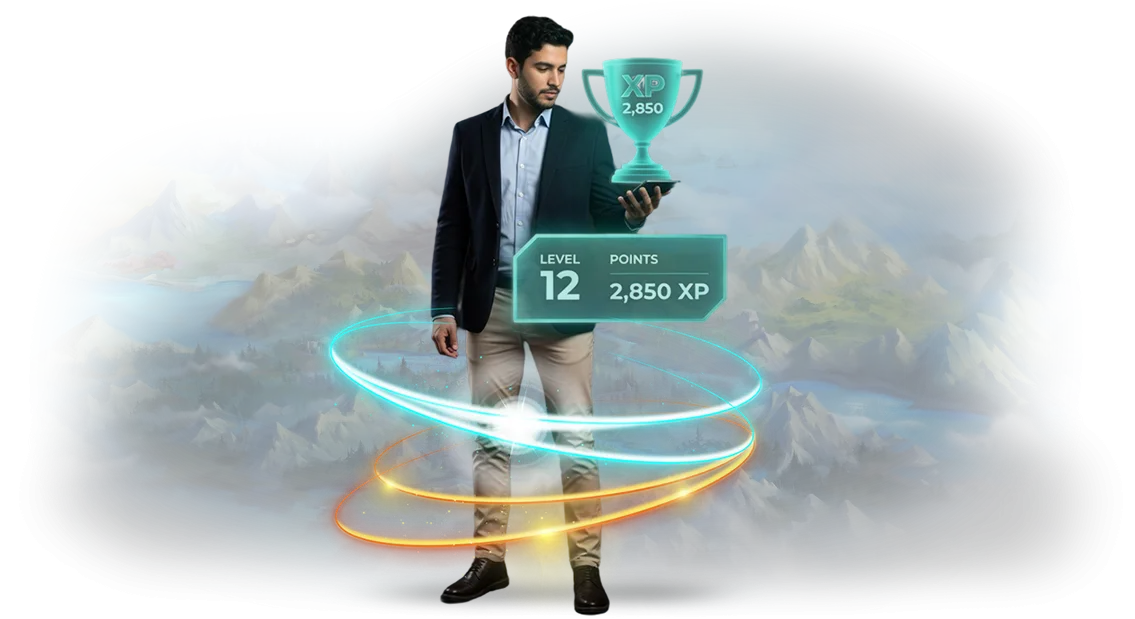
The real problem isn't price, but a lack of engagement. A shopper won't remember a store if it doesn't give them a reason to come back. Gamification for retail changes that: an ordinary grocery trip turns into a game with goals, rewards, and excitement. It's the emotional imprint that makes people choose your store among a dozen similar ones.
Quest mechanics, point accumulation for actions, personal challenges, and prize draws work to retain customers. Every visit becomes a step toward a tangible reward, and progress is visible right in the smartphone.
This creates a habit of stopping by more often, spending more, and telling friends about the store. As a result, not only purchase frequency grows, but also the average ticket — without constant discounts and dumping.
Our team develops a gamified Telegram Web App for retail: the customer doesn't need to install a separate app, everything works through a familiar messenger. This solution brings the customer back offline and makes loyalty growth measurable.
We handle the brief, mechanics, design, and launch — all you have to do is watch ordinary visitors become regulars.
What results store gamification brings
Store gamification isn't a game wrapper, but a system that changes customer behavior. Every step — from entering the sales floor to paying — turns into a game with points, statuses, and rewards. That's why results show up in sales figures, not in the number of installed apps.
According to Gartner, gamified programs increase customer engagement by 30% and purchase frequency by up to 45%.
For a retailer, this delivers six key benefits:
-
Higher average ticket. Tasks like "top up your cart to a certain amount" or "collect a set of three products" motivate customers to take more items in a single visit. The shopper doesn't feel pressured — they're completing an interesting challenge.
-
Repeat visits and sales growth. Daily bonuses, streaks, and "reward for a second visit" build a habit of returning to the store. Purchase regularity grows, and with it — stable revenue.
-
Customer loyalty. Statuses like "newcomer," "expert," and "legend" turn a customer into a club member. They choose your store not because it's cheaper, but because they feel valued and given status here.
-
Staff engagement. Competitions between teams, shift ratings, and shared goals motivate sales associates to perform better. Staff aren't just "serving their shift" — they're part of a game, and that reflects in service quality.
-
Clear analytics for marketing. During the game, you see which mechanics work and which products get chosen more often. This data lets you fine-tune promotions and assortment without unnecessary spending.
-
Long-term customer value. A shopper who has passed several levels stays with the brand for months and years. They bring more revenue than a random visitor and defect to competitors less often.
The bottom line: gamification drives the key metric — sales growth without aggressive discounts. It simultaneously increases the average ticket, customer loyalty, and team efficiency.
Gamification formats for retail objectives
In retail, gamification only works when the format precisely matches the objective. A short-term promotion doesn't require complex mechanics, while a loyalty program must hold interest for months.
That's why for retail chains and brands, we've identified three core formats — each solving a specific business challenge.
Three proven formats
Promo games cover the need for a quick sales boost and campaign engagement. Loyalty programs build long-term relationships and increase purchase frequency. Training simulations turn boring instructions into a visual process for employees and partners.
| Format | Who it's for | What it gives the customer |
|---|---|---|
| Promo games | For promotions, new product launches, seasonal sales | Rapid sales growth, viral reach, emotional connection with the brand |
| Loyalty program | For regular customers and large customer bases | Increased visit frequency, average ticket, and share of repeat purchases |
| Training simulations | For store employees, merchandisers, sales representatives | Faster onboarding, fewer errors, a unified service standard |
The formats combine easily: a promo game can work inside a loyalty program, and a training simulation can be added as a separate stage during hiring. What matters isn't the number of mechanics, but their impact on revenue and loyalty.
We select a format for your objective at the brief stage and show the expected effect before launch.
Turnkey gamification development stages
We've structured the process so you understand what happens at every step: from the initial brief to launch and analytics. No "black box" — you see how the mechanics come to life and control every stage of implementation.
-
Brief and immersion in your objective. We study how store processes currently work, who your audience is, and what specific problem the gamification should solve. We lock in goals: higher average ticket, repeat visits, engagement in the loyalty program.
-
Game scenario and concept. We propose mechanics that fit organically into your sales funnel: quests, accumulation points, levels, competitions between customers. At this stage, you approve the idea, and we calculate its economics — what it will deliver in reach and conversion.
-
Design prototype and user scenario. We show what the game looks like and how the customer interacts with it. We make sure everything is intuitive for a visitor without any training. Your managers and cashiers see the prototype before development even starts.
-
Gamification development and integration with your systems. We build the solution and connect it to your tools: bonus program, CRM, accounting system. Everything is configured so the game automatically receives purchase data and awards rewards — without manual work.
-
Testing on real scenarios. We check how the system behaves under high load, in different browsers, and on mobile devices. We work through failures so the launch goes unnoticed by your customers.
-
Launch and training for your team. We roll the game out to production, help set up admin accounts, and explain how to manage mechanics: change conditions, add prizes, view statistics. You get instructions and support at the start.
-
Analytics and evolution. We track how the game affects business metrics: engagement, visit frequency, average ticket. We regularly suggest improvements so the gamification doesn't get stale and keeps delivering results.
This approach gives you a clear route with no surprises: you always know where the project stands and when launch happens. And we handle all development turnkey — from idea to working mechanics.
What's included in the gamified solution delivery
The delivery package isn't "source files on a disk" — it's a launch-ready tool that delivers measurable results. We hand over everything needed to launch and grow gamification: from game scenarios to training for your team. You get a clear system, not a pile of scattered files.
- Game scenarios and rules. Documented mechanics for retail: point accumulation, levels, challenges for customers, and motivation for employees. Scenarios are adapted to your business objective — higher average ticket, repeat purchases, or Telegram channel engagement.
- Design mockups and interface prototypes. Ready-made Telegram Web App screens in your brand style, adapted for mobile devices. The user doesn't notice the "tech" — they see a clear, attractive interface they want to open again.
- Configured bots and automated chains. Interaction mechanics: greetings, reminders, notifications about point accruals. Everything runs automatically, without manual involvement from your managers.
- Integration with your CRM and accounting system. Synchronization of purchase, bonus, and participant data. You see the funnel and conversion in real time — understanding what pays off and what needs adjustment.
- Team training and regulations. Simple instructions for administrators, access rights setup, templates for communicating with users. Your employees can manage the campaign without involving developers.
- Handover of rights and documentation. Full product documentation, code and server access. You're not dependent on us like a "black box" — if you wish, you can hand support to your own team or another contractor.
All of this is packaged into a clear launch checklist: after project delivery, you know what to do in the first day, first week, and first month. And of course, we stay in touch — final tuning and consultations are included in the cost.
Case study: how gamification brought customers back to a store
One of our clients — a federal chain of digital technology stores — faced a typical retail problem: customers came in for promotions but didn't return. Discounts no longer held the audience, and direct mailings were losing effectiveness. They needed a tool that would create a habit and emotional attachment to the brand.
We developed a gamified Telegram Web App: the customer receives personal missions ("stop by the store," "test a new product," "build a collection"), and for completing them — points and exclusive bonuses.
The mechanics are built on short game sessions that don't get tiresome and encourage more frequent returns.
Results after three months: repeat purchases among active participants grew by 34%, and the average ticket rose by 12%. Most importantly, loyalty became measurable: we could see which mechanics hooked customers and which needed refinement, and we adjusted them promptly.
The system now runs without interruption: updates, new seasonal scenarios, and analytics for marketing. For retail, this isn't a one-off campaign — it's a long-term channel that turns customers into regulars.
How to choose the right gamification format for your retail?
There's no single "best" gamification format for retail — the right choice always depends on the objective you're solving. One format lifts the average ticket, another increases return frequency, a third turns customers into brand ambassadors.
So the first step in choosing isn't picking mechanics, but honestly answering: what exactly should change in customer behavior?
Identify where exactly the profit is being lost. If a customer comes in but doesn't fill the cart — work on impulse scenarios: short quests or accumulation bonuses at the moment of choice.
If customers return rarely — build a long program with levels and prizes that holds interest for weeks. And when you need to collect preference data — interactive surveys and quizzes with instant rewards work well. That's the key piece of advice: the format should hit the target precisely, not just entertain.
The second selection criterion is your store's scenario. For retail with quick checkout purchases, mechanics lasting 10-15 seconds make sense: a mini-game for a discount or random cashback.
For marketplaces and online storefronts — multi-step activities that build a habit of opening the app. Consider your audience too: younger shoppers are more willing to complete task chains, while older customers value simple, straightforward accumulation without extra steps. The simpler the entry into the game, the higher the participation conversion.
Finally, ask yourself what happens after launch. The format should deliver clear metrics: reach, number of participants, average ticket growth, repeat visits.
We always suggest clients start with two or three options, run them on a limited audience, and keep the one that produced measurable results. This approach removes the risk of spending budget on a pretty but ineffective mechanic.
We help you choose the right gamification format for your retail — from concept to launch. We conduct a short audit of your business processes, propose 2-3 suitable mechanics, and implement the one that delivers maximum benefit for your sales model.
Common concerns from business owners before launching gamification
Any business owner asks the same questions before launching gamification: will the system break, will we throw money away, will customers respond. Especially in retail, where margins don't forgive mistakes. But doubts aren't a reason to abandon the idea — they're a reason to remove the risks.
We've been implementing game mechanics in trading processes for ten years and know where entrepreneurs stumble. Below we've addressed the most frequent objections — read on, and if questions remain, just write to us.
What if customers don't take to the gamification?
We don't launch a project blindly: first we study the target audience, test the mechanics on a small group, and only then roll out to the entire base. In retail, simple bonus and competitive scenarios work reliably — the key is that participation should be easy.
Isn't it too expensive?
The cost depends on the project's depth: you can start with a single mechanic in a Telegram bot and expand gradually. Such a solution pays off through repeat purchases — a regular customer brings in many times more than a new one. We always offer a staged launch so you can control the budget.
What if the system crashes on the first day?
We pre-load the platform and build in a safety margin, and we maintain 24/7 monitoring as part of the service. Critical failures are rare in our projects, and response time is fixed in the contract — so you won't be left alone with a problem.
If your doubts remain — come for a consultation: we'll discuss your case, show examples, and calculate the result. We take on the technical risks, and you get a working tool for revenue growth.Order retail gamification and start growing within a month
Ordering retail gamification means getting a tool that engages customers and raises the average ticket without constant discounts.
We use Telegram Web App: the user doesn't need to download anything, the game opens in a familiar interface, and you get statistics on every participant.
Our team develops such solutions turnkey. We start with a brief and select mechanics for your assortment and audience. Within a month, you get a working loyalty program with quests, bonuses, and quizzes.
What you get
- Quick start — the first version within a month after the brief.
- Convenience for customers — participation in one click without installing apps.
- Growth in repeat visits — mechanics that motivate customers to come back.
- Clear metrics — you see conversion and average ticket.
- Flexibility — we adapt the game to seasonal promotions.
- Support guarantee — we stay in touch after launch.
The Telegram Web App technology base allows the project to scale to thousands of users, while costs are lower than for a standalone app. The team's experience — over 10 years in creating digital products — means you get a reliable solution, not an experiment. We stand behind the result and support the launch.
Ready to discuss your task? Get in touch with us — we'll show you retail gamification examples, calculate timelines, and propose an implementation plan.