

Why students leave dance schools and how to stop it
Every dance school director knows this picture: newcomers come in with bright eyes, and after two or three months the roster melts away. The problem isn't the teachers or the program — it's just that training becomes routine, and routine without emotion quickly gets boring.
A student misses one class, then another, and then quietly disappears. That's how you lose clients, which silently eats into your profits and forces you to constantly invest in finding new people.
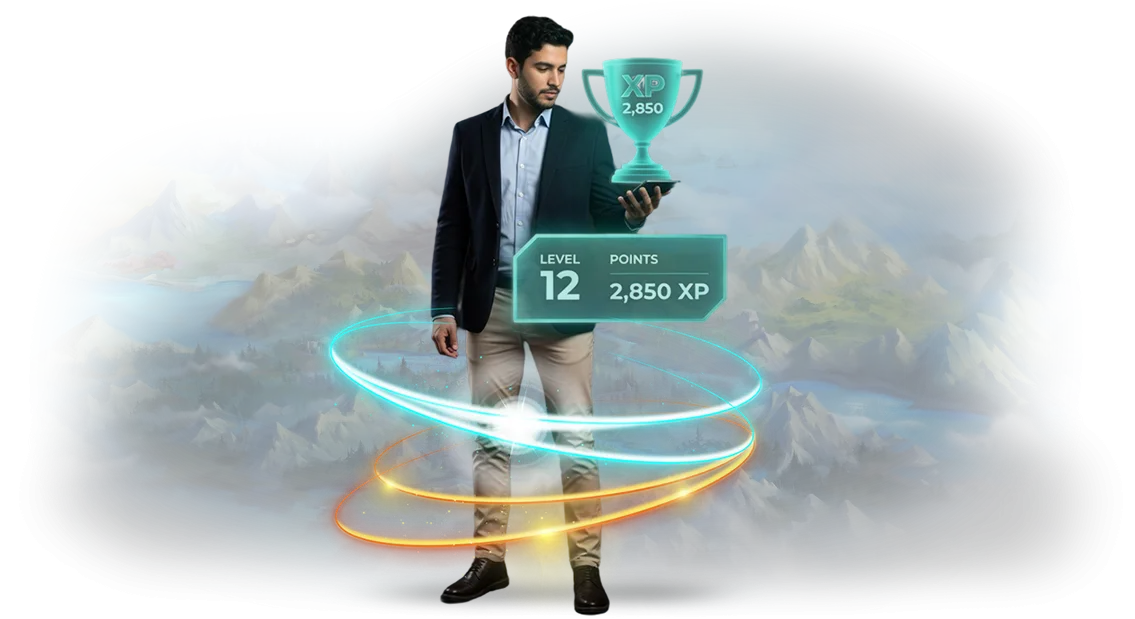
Discounts don't stop the churn — a system that brings back interest does. Gamification turns training into a game with goals, levels, and rewards.
A student sees their progress, earns points for attendance, doesn't want to lose their streak — and already plans the next class on their own. Engagement grows without coercion, and attendance stops depending on mood.
For a dance school, this means predictable student retention. You stop spending your budget on endless new client acquisition and start working with people who are already there.
Repeat visits become the norm: after every training session, a person wants to come back to take the next step in their personal game goal. And all of this is easy to integrate into your current class format — gamification doesn't replace the teacher, it amplifies their results.
We build gamification that lives right inside Telegram — where your students already communicate every day. No extra apps or complicated setups: just a familiar messenger where a person sees their achievements, receives rewards, and gets reminders. You get a working tool that students understand and that requires no technical knowledge.
With this system, you stop guessing who will show up tomorrow. Student retention becomes manageable, and missed classes become a rare exception rather than the rule.
All that's left is to launch the mechanism and watch your school fill with people who come not because they "have to," but because they're genuinely engaged.
5 key benefits of gamification for your business
A dance school student comes for a trial lesson and disappears after a couple of classes. Schedules and discounts no longer retain them — emotional engagement is what's needed. Gamification with levels, points, and rewards solves this problem.
At our team we develop game solutions in Telegram apps — right where your clients already are every day.
Here are 5 benefits of gamification for your school:
-
Increased sales. A "which style suits you" quiz or an interactive game engages a potential student and gets them to leave their contact details. The lead comes from an engaging format, not a boring form.
-
Loyalty and attendance. Points for classes and progress levels turn one-time visits into regular ones. A student sees their growth and comes back again — you get a stable base of regular clients.
-
Higher average check. Rewards and internal currency motivate students to buy extra classes, personal training, and workshops. The average check grows without aggressive discounts.
-
Competitive advantage. Competitions, challenge streaks, and statuses set your school apart from others. People come not just to learn to dance, but to win and become part of a community.
-
Reactivating "dormant" clients. Notifications about new challenges and personal records remind even those who haven't visited in a long time about your school. Churn decreases, and some students return without expensive advertising.
Gamification works because it appeals to emotions and the competitive spirit, not just the wallet. Want to discuss mechanics for your school? Write to us — we'll show examples and calculate the result.
Gamification formats for dance schools: which one to choose
For a dance school, gamification solves two problems: engaging a newcomer right in Telegram and motivating regular students not to miss classes.
There's no one-size-fits-all format — the choice depends on what you specifically need: more leads, higher attendance, or building a base for mailings.
Below are popular formats and the results they bring to a dance school.
| Format | Who it's for | What it gives the school |
|---|---|---|
| Mini-app in Telegram (Telegram Web App) | For schools that want to gather all mechanics in one window | A student signs up for a class, participates in activities, and gets rewards without leaving for the website — fewer steps to a lead |
| Quiz | For attracting new students | An interactive test on dance style or skill level captures attention and pushes toward a trial lesson at the end |
| Points and rewards | For retaining regular clients | A student accumulates points for attendance and friend referrals, then exchanges them for a discount or merch — repeat bookings grow |
| Student rankings | For competitive spirit and consistency | A leaderboard within a group or school motivates students not to skip training and to share results on social media — that's free reach |
One format rarely works alone. More often a combination is more effective: a quiz engages a newcomer, while points and rankings work on retention — the client stays with you for months, not just for a one-time visit.
We'll help you choose the right combination for your school and budget: we'll estimate the number of participants, design the mechanics, and launch them in Telegram — so that the result is measurable in leads and student returns.
How we develop gamification: 7 steps to launch
Gamification is not a random set of bonuses, but a well-thought-out system that integrates into your business processes. We've structured development so that you see the result at every stage and can influence it: from the first brief to launch and further growth.
- Brief and business immersion. We study your dance school: styles, schedule, student profile, and goals. We understand what you want to achieve — retention, acquisition, or a higher average check.
- Gamification concept development. We propose mechanics that fit your specific format: points for attendance, levels, achievements, competitions between groups. We calculate how this will affect attendance and loyalty.
- Scenario and design approval. We show how the user will interact with the app: what screens they'll see, what actions they'll take. You make edits before development starts — this saves time and budget.
- Development and setup of the Telegram Web App. We build an app that opens right inside Telegram — students don't need to download anything. We configure the points system, notifications, and integration with your client database.
- Testing with real users. We run a pilot with students and administrators, checking that it's easy to use and free of errors. We take feedback into account and refine the interface.
- Launch and team training. We integrate the app into your processes and show administrators how to work with points and reports. You get a finished tool, not a "raw" product.
- Support and growth. We stay in touch after launch: we answer questions, fix issues, and help evolve the gamification — adding new mechanics and managing student motivation.
This approach removes risks: you always know exactly what you're getting at each step and control the timeline. In the end, within a few weeks you have a working tool that boosts attendance and retains students.
What's included in the project: gamification delivery package
You get not just an app, but a complete gamification system for your dance school that increases attendance regularity and student retention. The delivery package is designed so that everything can be launched without a development team — by an administrator or director.
The project includes:
- A ready-made Telegram Web App: a student's personal cabinet with schedule, points, levels, and rewards.
- An admin panel: manage promotions, tasks, and point allocation without programming.
- A motivation system: points, training streaks, friend referrals, badges.
- Documentation: instructions, guidelines, point allocation scenarios.
- Team training: a practical session for administrators and trainers.
- Analytics: a dashboard with reports on activity, retention, and attendance.
- Warranty support: consultations during the first month of operation.
Documentation and analytics are the foundation for independent work. You get ready-made guidelines that are easy to adapt to your schedule, and clear reports that show which mechanics increase attendance and which ones should be turned off. That's how you manage gamification as a business tool, not just a technical solution.
Training and support eliminate the "who's going to use this" question. Administrators and trainers know within a day how to issue an invitation, allocate points for a class, and launch a promotion for a new intake. All of this is included in the project cost.
Case study: how gamification increased client retention by 40%
The clients of a dance studio are mostly adults with busy schedules. They come to classes, but after a month or two they often disappear: work, fatigue, motivation fades without quick results. Gamification solves exactly this problem — it turns scattered visits into an engaging journey.
What we did
We took on a project for "Studio No. 1" — a dance school with 400 regular students and several styles, from ballroom to hip-hop. Our task was to retain students after their first month of classes and win back those who had stopped coming.
We developed a gamified app inside Telegram for them: a student earns points for attendance, completing homework, and participating in open lessons. Points unlock levels — from "Beginner" to "Master" — and consistency earns bonuses toward the next class.
For teachers, it became a feedback tool: they can see who's engaged and support those who start missing classes in time.
The result for the studio
Three months after launch, the share of repeat visits grew by 40%. Students who previously quit after their trial month started staying for at least 3–4 months. The number of no-show cancellations dropped by nearly half — people try not to break their streak.
The studio also gained additional reach: participants shared their achievements on social media on their own, because the app gave them a beautiful level card with the school's name.
Former clients started bringing in new friends, and the teen program filled up without additional advertising.
This example clearly shows that gamification pays off both for small businesses and studio chains. The business processes of dance schools — booking, attendance, skill building — stop being routine, and clients come back for the emotions.
We're ready to develop a similar solution for your specifics: from level structures to automated student return scenarios.
What if I have specific gamification requirements?
"We rarely work from templates, and gamification for dance schools is no exception. Specific requirements for us are not a problem — they're a starting point: we first break down your goals, and only then propose mechanics that actually solve them.
Customization doesn't start with design, but with internal logic.
Maybe you don't need classic points, but mastery levels with names from your styles — 'Contempo' and 'High Heels' — where each visit gives a student not virtual points, but real progress toward the next stage of training.
Or maybe you want to track not just class attendance, but also participation in showcase concerts, marathons, and open lessons. All of this can be built in.
Adaptation also covers the external side: your school's brand identity, your colors and logo, welcome screens, and copy with your brand's 'voice' — so the Telegram app reads as part of the school, not a third-party service.
What does this look like in practice? At the start, we gather a brief: student scenarios you like and ones that annoy you; which actions you want to encourage and which you want to steer away from.
Then we propose several gamification options tailored to your schedule and membership structure, align on them, and show a prototype. After that, we make edits, test with a group of students together with you, and only then launch.
This approach lets us account for details that seem trivial at the start but make a big difference in daily use.
If during the process you realize something needs to change — add a new reward, restructure levels, adjust the reminder scenario — we refine the app. The foundation is built modularly, so new features integrate without a full rebuild.
Maybe you'll come with an idea nobody has done before: integrating partner bonuses, connecting your CRM attendance system, or a special mentorship system between senior and new students. That doesn't complicate the project — it makes it truly yours.
So let's answer directly: if you have specific requirements — even better. The clearer you are about what you want, the faster we'll find a working scenario. And if you don't have experience — we'll help you articulate it.
The main thing is that after launch you feel it: this gamification was built for your school, not just 'like everyone else's.'"
Common questions and doubts before ordering gamification
Any new mechanic raises questions — that's normal. Especially when it comes to your time, budget, and the school's reputation. We've collected typical client concerns and honestly explain how we work to make sure you get results without surprises.
Isn't building gamification for a dance school too time-consuming?
Usually two to four weeks is enough for the full cycle — from brief to launch. It all depends on the complexity of the scenario: a simple points-for-attendance system launches faster, while a multi-level quest-style experience takes a bit longer.
We lock in timelines in the contract and show progress at each stage. You always see what's ready and what's left, so the process stays transparent and predictable.
What if gamification doesn't fit our students?
To avoid guessing, we discuss your audience profile and class specifics in advance. After the initial launch, we look at the statistics: how many students participate, which mechanics spark interest, and where activity drops.
If we see that something isn't working, we adjust the scenario — usually these are edits to the interface or motivation settings that don't require rebuilding the whole system. So we get the result to a working state together with you.
Will this be difficult for administrators and trainers?
Quite the opposite — we design the system so it's easy to manage without technical skills. An administrator can issue bonuses, view rankings, and launch promotions in a couple of clicks.
Trainers don't need any additional training at all — their job is to stay close to the students, and all the automation works in the background. We also record a short video guide and stay available if questions come up.
What guarantees do you provide?
The main guarantee is the contract, which specifies timelines, scope of work, and our obligations. You pay for the result, not the process: after the project is complete, you get a working tool, not an abstract promise.
Additionally, for a month after launch, we monitor the system for free and make small refinements if we spot any issues. This is our standard practice, not an extra paid service.
So most fears are resolved at the discussion stage — invite us for a consultation, we'll review your case and show how gamification can strengthen your dance school.Get a consultation on gamification
Every dance school owner faces the question of how to retain students after their first trial class and motivate them to buy memberships regularly.
Gamification in a Telegram app helps solve this problem: it turns routine into a game, boosts engagement, and brings clients back again and again.
But before implementing mechanics, it's important to understand what fits your specific school. That's why we offer a consultation and an audit of your current booking and student retention process. You'll get not general talk, but a concrete action plan.
What's included in the analysis:
- Audit of your current booking, reminder, and student motivation system: we find bottlenecks and growth opportunities.
- Development cost calculation: an accurate estimate tailored to your goals, with no hidden fees or "surprises."
- Implementation plan: stages, timelines, which mechanics to launch first and what to defer.
- Gamification examples for dance schools: what's already working for colleagues and how to adapt it to your specifics.
- Engagement recommendations: how to increase the share of repeat bookings and boost student loyalty.
- Clear next steps: what to do right after the consultation and what to do in a month.
We work remotely, so you can submit a request from any city. During the consultation, you'll understand how a Telegram Web App fits into your current work with students, which scenarios can be automated, and what results to expect. We'll also explain how gamification will affect attendance and class regularity.
Submit a request for a consultation — we'll send the audit and cost calculation within two business days. No obligations, just concrete details for your dance school.