

Gamification for food delivery companies: how to retain customers and couriers
Food delivery is one of the most competitive markets. A customer places an order in three clicks, and if the service doesn't retain them, they leave for a competitor. Traditional discount loyalty programs no longer work: they don't create emotional attachment or build a habit.
Delivery gamification solves this problem: it turns ordering into an engaging game where every step brings a reward.
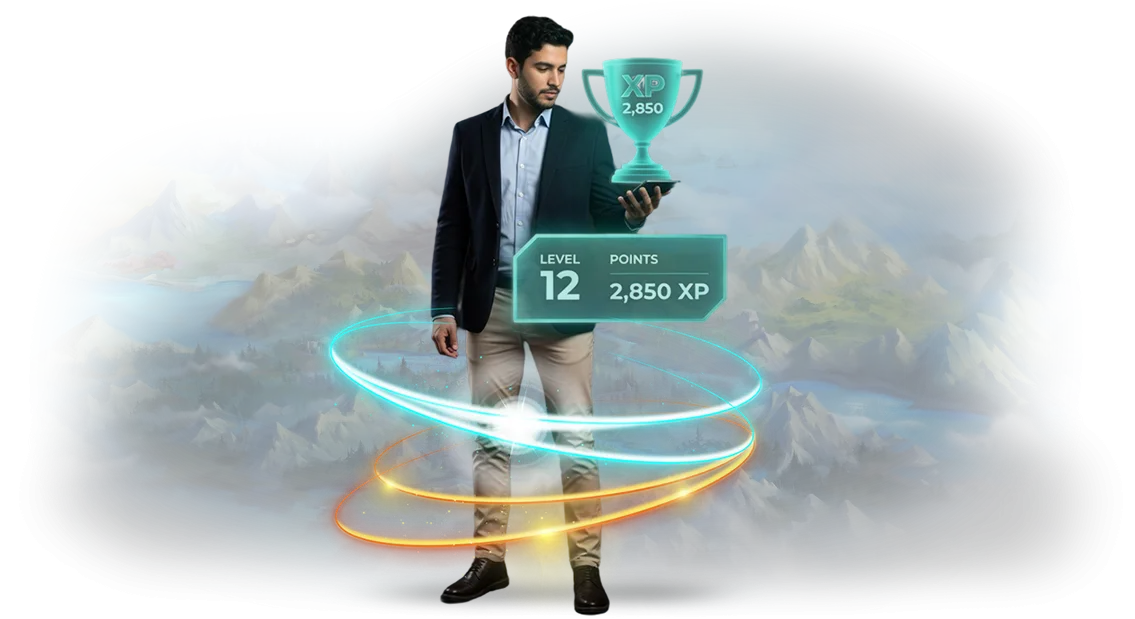
For customers, this means levels, points, personal challenges, and statuses that grow with the number of orders. Instead of one-time discounts, it creates long-term engagement and a sense of progress.
A loyal customer doesn't just come back themselves—they bring friends, increasing reach and revenue without large advertising investments.
The second pain point of any delivery service is couriers. High turnover, missed deadlines, and demotivated employees directly hurt reputation and profit. Gamification for couriers means ratings, competitions, and bonuses for speed and quality.
Work stops being routine, people start taking pride in results, and the business gets stable and fast delivery.
Any gamification only works when it is embedded in the company's real business processes. We design mechanics so that they collect and analyze data on orders, customer behavior, and courier performance.
This allows you to manage motivation precisely, quickly find weak points, and make decisions based on facts rather than intuition.
We have already helped delivery companies implement gamification that retains customers, reduces courier turnover, and makes business processes more transparent. Tell us about your goals—we'll suggest which mechanics will work in your specific case.
What business gamification delivers: growth in loyalty, profit, and engagement
Food delivery gamification is not "points for the sake of points" but a tool that directly influences three key business metrics: customer loyalty, profit, and staff engagement.
When a courier sees the progress of their shift and a customer gets a reward for a repeat order, the process stops being routine and becomes a game where everyone wins.
Loyalty growth starts with emotions: game mechanics turn an ordinary order into a small event. The customer accumulates points, unlocks levels, receives personal challenges ("order 3 times this week—get a dessert"), and comes back because they feel valued.
For the company, this is not a one-off promotion but a systematic connection with the audience that reduces dependence on discounts and increases the share of repeat orders.
Profit growth comes from a higher average order value and increased order frequency. Mechanics like "top up your basket to the next level" or "free delivery for activity" gently nudge the customer toward a larger order without feeling pushy.
Internal challenges for couriers and operators reduce delivery time and the number of errors—which directly saves on logistics and returns.
Staff engagement is a separate lever. Game mechanics in the employee portal interface make work transparent: everyone sees their rating, areas for growth, and specific rewards for speed and quality.
This reduces turnover, especially among couriers, and motivates the team to work more consistently—without daily manual oversight.
Importantly, game mechanics are integrated into existing business processes rather than breaking them. We design scenarios to account for delivery specifics: peak hours, seasonality, and district workload.
That's why results become visible within the first few weeks—in conversion, average order value, and return rates.
Gamification formats: from courier motivation to loyalty programs
Gamification in food delivery only works when the format matches the task. Couriers need motivation and quick feedback, customers need a reason to return, and the team needs clear scenarios within their workflows.
That's why we don't offer one "universal" quest but build game mechanics around a specific business goal.
Below are three basic formats that we adapt to your portal. Each one solves its own task and can work separately or in combination.
| Format | For whom | What it gives the client |
|---|---|---|
| Courier motivation | Drivers, foot and bicycle couriers | Ratings, levels and rewards for speed, accuracy and number of orders. Reduces turnover, increases punctuality, fewer idle periods |
| Loyalty program | Customers and regulars | Points, badges and personal challenges for order frequency. Increases average order value and repeat purchase share |
| Game scenarios for staff | Managers, call-center operators | Competitions and quests inside the internal portal. Increases engagement, faster onboarding of new employees, transparent KPIs |
We don't just add a "points button." First, we analyze your processes, find the bottleneck—from delivery speed to customer retention—and select a format that closes that gap.
As a result, you get not entertainment but a working tool: the numbers in reports change, and employees and customers engage with the game on their own.
Turnkey gamification launch stages: from brief to support
Gamification helps food delivery companies speed up order assembly, reduce courier turnover, and increase repeat orders. To deliver results quickly, we have built a turnkey gamification implementation process: from the first brief to ongoing support. At every step, you understand what is happening and how it affects your business.
- Briefing and audit. We analyze your business processes: how couriers, operators, and cooks work, and where delays happen. The output is a clear list of tasks that gamification can solve, plus an estimate of the expected impact.
- Concept development. We propose 2–3 mechanic options: ratings, quests, team competitions, bonuses for speed and quality. We discuss which metrics we will improve: delivery time, number of completed shifts, customer loyalty.
- Implementation plan. We set timelines, stages, and responsible people. You know in advance when the prototype will appear, when the pilot will run, and when the system will fully go live.
- Development and pilot. We build a working prototype and launch it with a limited group of employees. We collect feedback and adjust the mechanics so the final version is convenient and motivating.
- Launch and onboarding. We connect gamification to your processes and train managers and the team. We help you launch the reward program so the first results appear within days.
- Support and development. We analyze metrics, update scenarios, and add new contests and rewards. Gamification is not static—it evolves together with your business.
What's included in the delivery: a complete kit for launching and developing the game
The delivery includes everything you need to launch and independently develop gamification.
You get not just a web portal but a ready-to-use working tool with documentation and training—for a food delivery team that wants to manage motivation without constant involvement from developers.
- A working web portal: couriers, operators, and managers see tasks, points, levels, and rewards in real time.
- An admin panel: easily change rules, prizes, and seasonal promotions through a simple interface—no programmers needed.
- Project documentation: a full description of the game logic, setup instructions, and typical scenarios for your team.
- Staff training: training for administrators, HR, and department heads.
- Gamification launch: we help with the initial rollout, the pilot period, and adjusting rules to your goals.
- Analytics and reports: data on employee engagement, task completion, and the impact of the game on delivery speed and service quality.
- Guarantee and support: we respond quickly to questions and resolve issues after launch.
With this kit, your delivery service can run the game on its own, launch new promotions, and maintain high employee motivation. And we stay in touch for system development and future projects.
Case study: how a food delivery chain increased repeat orders by 30%
A food delivery chain faced a typical problem: most customers ordered once and then left for competitors. Nothing kept guests coming back—not the discount loyalty program, not standard promotions.
The team was looking for a way to bring users back without large advertising investments, and we proposed a gamification scenario built around the web ordering portal.
Instead of boring point accumulation, we launched a chain of game mechanics: uninterrupted order streaks, personal challenges for favorite food categories, statuses with pleasant bonuses, and visible progress toward free delivery.
There was no need to explain the rules to customers—everything happened at the moment of ordering, and notifications gently reminded them of an unfinished streak.
The effect became noticeable within a couple of months.
The share of repeat orders grew by 30%, the average order value increased by 12% thanks to "top-ups" to the next game level, and returning customers began bringing friends—reach grew without an additional advertising budget. At the same time, implementation costs were recovered within one quarter.
We especially liked that the team suggested not a template loyalty program but mechanics that genuinely draw guests into the game. We got not just growth in repeat orders but a live audience that talks about our service on its own. — Maria, marketing director of the delivery chain Tasty Route
For us, this case confirms that gamification works with real business metrics, not just emotions. Want the same result for your delivery service? We already know how to adapt these mechanics to your audience.
Frequently asked questions and concerns: answers before the project starts
Gamification is often seen as entertainment that doesn't generate profit. In food delivery, it's a working tool: it retains couriers, speeds up training, and increases repeat orders. Let's look at common questions and concerns before the start.
Isn't this just a game that doesn't affect real metrics?
No. Every mechanic is tied to a metric: delivery speed, number of orders, repeat purchases. The courier sees levels and rewards; you see the numbers grow.
Could customer or employee data leak?
Role-based access is in place: couriers see their own tasks, administrators manage reference data, and leadership reviews analytics. Backup and an action log are configured.
When will we see payback and first results?
Launch takes 4–8 weeks. First results appear within a month: onboarding of new employees is 1.5–2 times faster, and repeat orders grow by 15–20%. We calculate payback based on your funnel.
Employees aren't used to games. Will they accept the system?
The interface is easy to understand within a day: points, levels, team competitions. Before launch, we test the mechanics with couriers and operators.
What happens after launch? Will you leave us?
We hand over instructions, train administrators, and review metrics monthly. We change rewards and scenarios as part of ongoing support. The project doesn't end at sign-off.
Leave a request—we'll calculate gamification for your goals
Every delivery business is unique: its own audience, growth points, and logistics bottlenecks. A ready-made gamification scheme rarely delivers the right result—so we start with calculations tailored to your goals.
Leave a request, and we'll show how game mechanics can increase repeat orders and engage customers without discounts that eat into margins.
For over 10 years, we have implemented gamification for delivery companies and know which mechanics retain couriers and increase average order value.
During a consultation, we'll review your process, propose a concept, and answer all your questions—without obligation.
What you get after contacting us:
- Gamification calculation for your funnel—from courier motivation to repeat customer orders.
- A custom project—mechanics adapted to your business, not a template solution.
- Consultation with an expert—we'll identify where gamification will deliver quick results.
- Free demonstration on your data—see the result before launch.
- A clear plan of stages and implementation timelines—no surprises or downtime.
- Impact assessment on business metrics—customer return rate, average order value, delivery speed.
Leave a request—we'll contact you within one business day, clarify your goals, and prepare the calculation. Then the decision is yours: implement it or not.
Even if the project doesn't move forward, you'll get a fresh perspective on your delivery process and ideas you can apply immediately.
How to choose a gamification format for the specifics of your food delivery service?
There is no universal gamification format for food delivery—and that's good news. What motivates couriers to complete more orders won't necessarily retain customers in the app, and mechanics for a restaurant chain may be unnecessary for a small service with its own courier fleet.
So choosing a format starts not with trendy features but with questions: what exactly do you want to change—delivery speed, customer loyalty, staff engagement? And where are you losing the most right now—at the ordering stage, while waiting, or with repeat visits?
We approach each task individually. First, we study your model: the size and geography of delivery, audience type, order seasonality, and employee motivation. Based on that, we propose a scenario that fits into your processes rather than requiring them to be rebuilt.
For example, for a service with partner couriers, ratings and challenges for accuracy and speed are effective—they reduce the number of late deliveries.
For a pizza chain, cumulative mechanics for guests work better: free delivery or a dessert for every five orders, which increases order frequency.
Training and onboarding new employees is a separate story. Kitchens and call centers get up to speed faster when standards and scripts are presented as a quest with levels.
And if you're an aggregator connecting multiple restaurants, gamification can encourage users to choose partners with shorter preparation times—through bonuses and statuses.
At the same time, we don't force complex systems where a simple mechanic is enough.
Often the winning approach is a careful combination: one mechanic for customers, another for staff, plus shared analytics so you can see the effect in numbers—growth in repeat orders, shorter delivery times, lower turnover.
The main thing is to define the right format for your specifics, and we're ready to help with that during a brief: we'll analyze your situation and show which options will deliver results fastest.