

Gamification in Logistics and Delivery: Why Clients Leave for Competitors
Client churn in logistics and delivery is a problem that hits revenue harder than it seems. Carrier services are almost indistinguishable: similar timelines, comparable prices, identical routes.
So a client easily switches to a competitor after the first delay or inconvenience — and winning them back requires expensive advertising and discounts.
The root of the problem is not poor service but a lack of engagement. The customer perceives delivery as impersonal routine: submitted a request, received the cargo, forgot about it.
Classic loyalty programs do not work here — a discount creates neither emotions nor a habit of choosing this particular company. As a result, loyalty stays low and repeat orders decline.
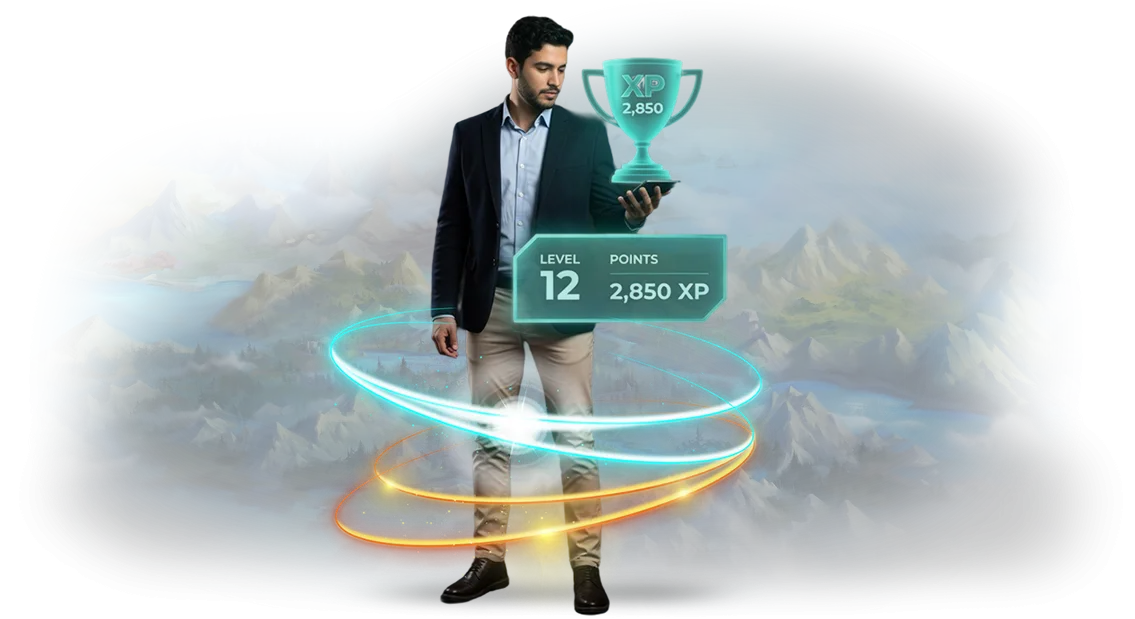
Gamification of logistics and delivery changes this dynamic. It turns ordinary interactions into a game with goals, levels, and rewards: clients accumulate points for order volume, unlock new statuses, and receive privileges for regular shipping.
This creates a conscious choice in your favor — and clients return not because "that's just how it happened," but because it is profitable and interesting to work with you.
Companies that implement such mechanics report growth in repeat orders and reduced churn. An engaged client not only continues using the service but also recommends you to partners — and that is new revenue without acquisition costs. In the competitive fight for shipping, this factor often proves decisive.
We develop gamified web portals for logistics and delivery that solve this problem. Professional game mechanics and a well-calibrated motivation system are embedded into your workflow to retain clients and increase their engagement. As a result, you grow not through price dumping but through loyalty.
What You Get: Growth in Engagement and Profit
Logistics and delivery involve plenty of routine: tracking orders, planning routes, waiting at warehouses. Gamification turns these processes into engaging interaction that directly affects key business metrics — engagement, loyalty, and profit.
We have already implemented such solutions for companies in logistics and delivery, so we know exactly which mechanics deliver results.
Engagement at Every Stage
Employees and clients get tired of monotonous actions. Game mechanics — levels, badges, challenges — bring the process to life. Participation in the game requires action: placing an order, increasing the delivery leg, reducing waiting time. This multiplies engagement because people gain a goal and visible progress.
Loyalty and Repeat Orders
Clients return not only because of price but also out of habit and emotion. Accumulating points, achieving statuses, and receiving rewards for each order create a positive experience.
This approach helps increase the share of repeat orders by 15–30% without additional advertising investment.
Team Motivation Without Extra Costs
Couriers, operators, and dispatchers stop working on a "clock-in, clock-out" basis. Competitions, personal ratings, and a reward system motivate the team to work more efficiently.
Managers get a transparent evaluation tool, and employees understand how their efforts affect overall success.
A Transparent Path to Profit Growth
Growth in engagement, client retention, and improved team efficiency deliver measurable revenue gains. You see which game mechanics pay off faster and can scale successful scenarios.
Gamification in logistics and delivery is an investment that returns in the form of numbers on a report.
Gamification Formats for Logistics and Delivery
Logistics and delivery involve different business tasks: retaining drivers, training dispatchers, increasing client loyalty. There is no one-size-fits-all game, so we select a format for the specific metric that needs improvement.
Below are the typical formats we embed into transportation web portals. They work for both the internal team and external users.
Which Formats Deliver Results
| Format | For Whom | What the Client Gets |
|---|---|---|
| Ratings | Drivers, couriers | Increased motivation, less downtime, and careful driving |
| Training simulators | New dispatchers | Fast ramp-up to full workload without errors in requests |
| Quizzes and mini-games | Warehouse staff | Verification of procedure knowledge, fewer violations |
| Points and levels | Regular clients | Higher order frequency and share of repeat inquiries |
| Team challenges | Logistics departments | Improved collaboration and a shared result |
Each format is tailored to the company's processes: first we analyze where losses occur, then we design mechanics for the required metrics. In the end, the customer gets a working tool with transparent rules and reporting for management.
How a Gamification Project Proceeds: 7 Steps
For gamification to pay off, its implementation must be clear and transparent. That is why we have well-defined stages: from the initial brief to post-launch support. You always know what is happening, what decisions are needed from you, and when results will appear.
-
Brief and process audit. We discuss how your logistics and delivery are organized: where time is lost, what reduces courier and dispatcher motivation, which metrics need strengthening. We document the project goals.
-
Concept and project plan. We select mechanics that solve your task: points, levels, competitions between branches, rewards for speed and quality. We agree on the stage plan, timeline, and key metrics — what we consider success.
-
Platform setup. We build the portal to your specifics: employees understand what to do, data is pulled automatically. We configure the reward system, leaderboards, and reporting for managers.
-
Pilot group testing. We launch the mechanics on one team or site — without risk to the whole workforce. We smooth out rough edges and only then scale up.
-
Gamification launch. We onboard all employees, provide brief training, and announce the start. Couriers and logistics staff see their results, understand how to earn bonuses, and dive straight into the game.
-
Results evaluation and refinement. We compare "before" and "after": order fulfillment speed, orders per courier, staff turnover. We adjust the mechanics if we see something is not working as intended.
-
Support and development. We stay in touch after launch: we refresh competitions, add new rewards, and monitor engagement. Gamification keeps delivering value rather than dying out after a month.
What Is Included in the Delivery: A Complete Package for Business
When you order gamification, you get not a game but a working team management tool. The delivery package includes all elements for launch and day-to-day control.
- Game mechanics tailored to logistics: points and levels for on-time delivery, accident-free driving, and quality of client communication. Employees see their status grow.
- Reward system: a showcase with prizes, internal bonuses, and badges of distinction. Easily linked to your existing motivation system — from merch to bonuses.
- Employee personal account: clear progress, reward history, and transparent rules for point accumulation. This reduces questions to management and builds trust.
- Manager dashboard: activity metrics by employee, department, and branch. You can see who is leading and who needs support.
- Reports and analytics: exports on the number of completed tasks, expired bonuses, and mechanic effectiveness. Data helps fine-tune motivation without guesswork.
- Team training: short instructions, a video course at launch, and regulations for administrators. No chaos during implementation.
- Launch support: customization for your processes, assistance at the start, and ongoing support. If anything goes wrong — we are available.
Essentially, this is a turnkey solution: from mechanics design to training and support. You get not just a portal but a manageable motivation system that improves delivery punctuality and reduces staff turnover.
Case Study: How Gamification Boosted Team Productivity
What Happened
Logistics operator Northern Express faced a typical industry problem: dispatchers and couriers lost motivation with repetitive tasks, and request processing speed dropped during peak hours.
Management tried standard performance metrics, but they only increased tension and did not change employee behavior. We proposed not a punitive system but a game mechanic inside the work portal — with levels, points, and team goals.
Within a month, we developed a web portal where every completed request earned points, unlocked new levels, and brought the team closer to a shared result.
Employees saw their progress and their colleagues' progress in real time, and managers got a transparent view of workload without manual report collection or long meetings.
Project Results
After three months of operation, dispatcher productivity grew by 18%, and average request processing time dropped by a quarter.
The number of errors in delivery paperwork decreased noticeably, and engagement of the 40-person team grew so much that management ordered a second phase — gamification for couriers.
An important point: the effect proved sustainable. After six months, metrics did not revert to previous levels, and employees themselves proposed new game scenarios and competitions between shifts.
This implementation example shows: gamification improves efficiency when it is embedded in real work processes rather than existing as a separate "toy" for entertainment.
If you want to achieve a similar result — we are ready to audit your processes and offer a solution tailored to your task.
How to Choose the Right Gamification Format?
There is no universal answer — and that is normal. The gamification format is chosen for a specific business task: increasing order processing speed, reducing courier turnover, training newcomers, or increasing the share of repeat deliveries. First the metric to be moved is identified, and then the mechanics are matched to it.
The first criterion is the audience. Couriers and warehouse operators respond to certain mechanics, while managers and clients respond to others.
For frontline logistics staff, visible ratings, speed challenges, and accumulating bonuses work well; for clients — levels and rewards for order frequency.
The second criterion is implementation complexity: if processes are already automated, gamification can be layered onto the existing system without restructuring workflows.
We start with an audit of the business process and choose mechanics that deliver measurable results.
For a logistics and delivery portal, this often means combined formats: team competitions — for productivity growth, training quests — for rapid onboarding of newcomers, personal goals with rewards — for retaining couriers.
The key is that participants understand what they are tracking and what they will get for the result.
Follow this rule: one task — one leading mechanic. Do not try to implement ten elements at once — it dilutes the focus. Start with a key metric, choose a format that can be launched in a couple of weeks, and track the dynamics. If the metric grows — scale up; if not — change the mechanic.
We will help you choose a format for your task and already at the brief stage show how we will measure effectiveness. Tell us about your goal — we will offer 2-3 options with forecasts on timeline and engagement.
Answers to Frequently Asked Questions About Implementation
Implementing gamification in logistics and delivery naturally raises questions: how much does it cost, when will the investment pay off, will warehouse or courier operations need restructuring. We answer the main ones — honestly, based on real projects.
How much does a gamified portal cost?
The cost depends on the scale: the number of employees, the number of game mechanics, and the depth of integration with your systems. We always prepare a transparent cost estimate before work begins and fix it in the contract — with no hidden extras.
What are the implementation timelines?
A typical project takes three to eight weeks. We work in stages: first we run a pilot on one team, then scale to the whole company. Your current processes do not stop for a single day.
How difficult is it for employees and the IT department?
Gamification does not require restructuring business processes. Employees only need a familiar browser or mobile app, and your IT department does not have to maintain complex infrastructure — we handle technical support ourselves.
How does the portal integrate with our CRM and accounting system?
We use proven data exchange tools, so the portal quickly connects to your CRM, order accounting system, or warehouse software. All data is synchronized automatically, and access is role-based — it is secure and transparent.
What does gamification give a logistics business?
Faster order processing, fewer losses on routes, and higher engagement among couriers and warehouse staff. As a result, delivery metrics improve and turnover decreases — employees see their progress and earn more under the same standards.
Order Gamification and Get Your First Project in 2 Weeks
Gamification in logistics and delivery is a way to make couriers, operators, and dispatchers work more efficiently: less downtime, faster order processing, higher engagement. Such projects are often prepared over months with unclear results.
We launch differently: you order gamification — and in two weeks you get the first working project, already embedded in your business processes.
No lengthy approvals. We handle analysis, development, launch, and team training — employees immediately understand how to work with the new tool.
What the quick start includes:
- First project in 14 days — clear stages and fixed deadlines.
- Team training — a short workshop and instructions for quick onboarding.
- Service delivery — we support the launch and promptly refine details.
- Customization to your metrics — we speed up delivery and improve quality.
- Integration with current processes — operations do not stop.
- Post-launch support — analytics and mechanic refinement.
The quick start is possible thanks to proven mechanics for logistics and delivery. We adapt them to your specifics: courier service, warehouse, dispatch, client service.
Submit a request for gamification development — we will discuss your task, show examples, and give you precise timelines. In 14 days, the first project will already be up and running.