

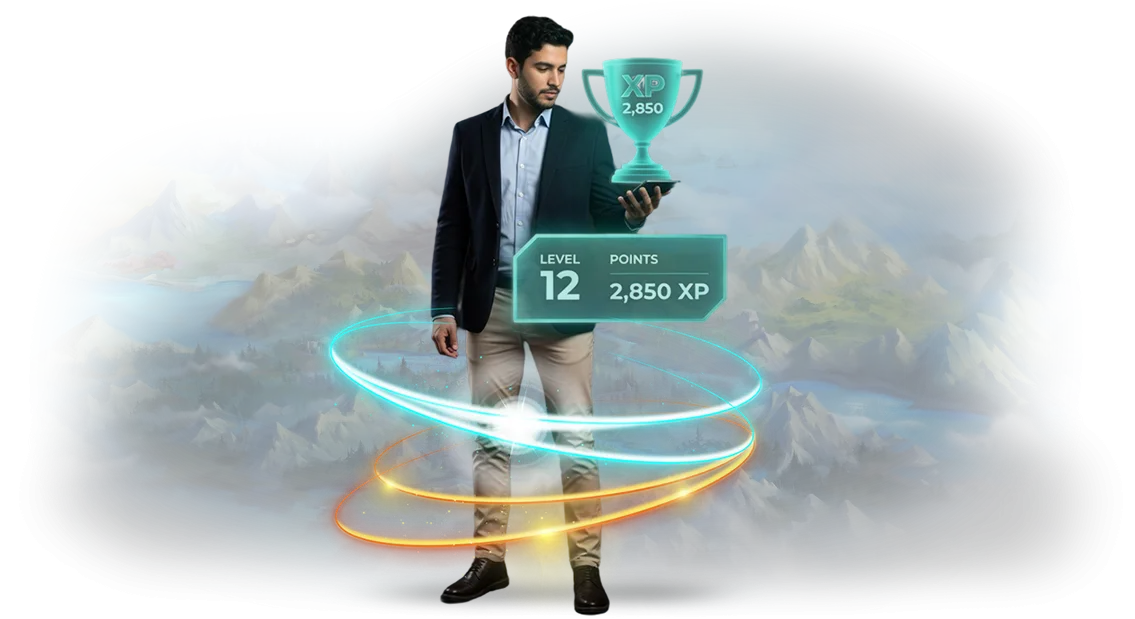
Why do clothing retail chains lose customers at every stage?
A customer walks into a store, looks at the display, flips through the racks — and ten minutes later leaves without buying anything. Not because the right model wasn't there, but because the selection process felt boring and tiring.
In fashion retail, where emotions decide, lack of engagement turns into lost customers at every stage: from entering the store to completing a purchase and making a repeat visit.
Low in-store engagement is not about product quality. It's about how a person feels during the process: trying on items, comparing looks, making a decision.
If the customer doesn't enjoy the journey, they easily postpone the purchase "for later" and go to competitors where it's more interesting. As a result, the chain spends budget on acquisition, while conversion stays low and the average ticket doesn't grow.
This is especially visible in clothing retail chains, where the assortment and prices are similar to neighboring brands. The winner is the one who creates a bright, memorable experience that customers want to repeat.
Regular discounts and promotions no longer deliver the needed effect — customers have grown used to them, and they don't build long-term loyalty.
Boring shopping becomes the main reason for churn: the guest comes in but doesn't engage in the process, doesn't try things on, doesn't consult the staff, and doesn't come back. Each such visit is lost revenue and a lost customer who becomes harder and harder to win back.
Without motivation, the customer doesn't stay in the store, doesn't tell friends about it, and easily switches to another brand.
We close this pain point by turning ordinary shopping into an engaging journey: the customer participates, earns bonuses, completes small challenges, and shares results with friends.
Gamification of business processes brings emotion back into the purchase, increases time in the store, average ticket, and the number of repeat visits — and works systematically, at every stage of the funnel.
You get not a one-off campaign, but a tool that strengthens loyalty and increases the chain's revenue.
What gamification delivers: emotions, reach, and repeat visits
A clothing chain customer comes in for one item and leaves with an emotion and the desire to return. It's the emotion that determines where they'll go next: to you or to a competitor.
Gamification on a web portal turns ordinary shopping into a game: virtual fitting rooms, style challenges, style diaries, and accumulation mechanics.
As a result, the customer spends more time in the store, and time directly affects the number of try-ons and the size of the ticket. Each level in the game reminds about a new category — accessories, footwear, capsule collection.
This gently nudges toward additional purchases and builds the habit of visiting the portal regularly — and that's how repeat visits appear.
The game works as a data collection tool: we track which looks the customer likes, which rewards they choose, which promotions they engage with, and send signals to the marketing system.
This way gamification connects with the loyalty database and CRM — for example, on the Mindbox platform — and activates personal offers for each customer segment.
The mechanics run without a separate app: the customer opens the portal via QR code in the store or a link from an email. You set the rules yourself and decide what earns points — registration, a review, a photo in new clothes, or a repeat order.
The result is stronger customer loyalty, more repeat visits, a higher average ticket, and clear marketing analytics.
Gamification formats for fashion retail: choose your solution
For fashion retail, gamification is not entertainment for likes, but a tool that directly impacts the average ticket, repeat visit frequency, and brand awareness.
The format can be matched to a specific goal: bring the in-store flow to life, build a base of loyal customers, or promote a new collection.
Below are three proven gamification formats that we adapt to the business processes of a clothing retail chain.
| Format | For whom | What it gives the customer |
|---|---|---|
| In-store quests | Retail chains that need to boost traffic on specific days and hours | The customer follows a scenario: finds products by clues, completes tasks, and receives a promo code or gift. This increases time spent in the store by 20–30%, and each participant makes 3–5 additional interactions with the product. |
| Accumulating points (loyalty program) | Stores with frequent repeat purchases that need retention | Points are awarded for purchases, reviews, completing a profile, and participating in promotions. The customer sees progress and strives for the next level — this builds the habit of coming back to you. The owner gets a base of predictable repeat sales. |
| AR fitting | Fashion brands with active online sales or a desire to bring fitting rooms to life | Augmented reality lets customers "try on" an item without physical contact: they just point the camera at the product or open a virtual fitting room in the app. This reduces returns and increases purchase conversion, while the process itself looks modern and makes people want to share it on social media. |
The formats combine easily: for example, an in-store quest can award loyalty points, and AR fitting can activate at the moment of product selection.
We choose the right combination for your goals: increasing the average ticket, attracting a new audience, or increasing visit frequency.
The main thing the client gets from each solution is a measurable result and clear analytics. We don't just implement the mechanics — we configure them so you can see how many participants came, how the ticket changed, and which products became more popular after launch. This lets you quickly adjust strategy and get more value from every launch.
How we implement game mechanics: 7 steps to the result
We've structured the process so you understand what's happening at every stage. Below are 7 steps from the first brief to launch and support. Usually a project completes this path in 4–8 weeks.
- Brief and business immersion. We study your goals, audience, and current processes. You get a clear understanding of which game mechanics will benefit your project specifically.
- Gamification strategy. We determine which customer or employee actions need to be strengthened and choose suitable mechanics: from points and levels to team competitions.
- Design concept. We show mockups of the future portal so you can approve the style and logic before development begins. No surprises at the final stage.
- Development and integration. We build the portal on a professional platform and connect it to your systems — customer records, inventory, loyalty program. Everything works in a single loop.
- Testing. We check all scenarios on different devices and eliminate errors. You get a stable product ready for load.
- Launch and training. We roll out the solution, prepare instructions for administrators and staff, and help run the first activities.
- Support and growth. We monitor metrics, make adjustments, and add new mechanics as the business grows. We don't abandon the project after launch.
What's included in delivery: a complete package for launch
You get not just "development," but a ready-made tool you can launch immediately after handover. Everything needed to run the portal and engage employees is already included in the delivery — no hidden stages or extra orders. The package is assembled so your team can start using the system on launch day.
What's included in the delivery:
- A ready-made game portal adapted to the needs of clothing retail chains and fashion retail. It's already configured, filled with scenarios, and ready to work from day one.
- An admin panel for management: you change tasks, levels, and prizes yourself and see employee activity in clear reports. No developers needed.
- Clear instructions for the administrator and management: how to launch the system, add a store or employee, adjust the game rules.
- Training materials for staff — short cheat sheets and videos that explain how to use the portal. Employees will quickly join the game without lengthy training.
- Technical documentation and structure description: you understand how the system works and, if needed, can hand it over to another team.
We also formalize result guarantees: before launch we check together that all scenarios work correctly, and we provide support in the first weeks after the start. If something goes wrong — you come to us instead of looking for a new contractor. Documentation and system access stay with you, eliminating dependence on the developer.
In the end, you buy a working solution with a clear management system, not a "black box." Your stores get a tool that's easy to scale to new locations, and you get control over the process and peace of mind about the result.
Case study: +18% to revenue thanks to game mechanics
In fashion retail, a customer easily switches between brands: today they're with you, tomorrow with a competitor running a flashier promotion. Keeping their attention and motivating them to return is getting harder. Gamification solves this problem by turning shopping into a game with rewards and statuses.
We developed a game portal for the clothing chain ModaNova — 12 locations in major cities. The loyalty program used to be classic: card discounts, but customers quickly got used to it and didn't feel engaged.
We replaced it with a system of levels, missions, and action-based bonuses: trying on, reviews, participating in challenges. The client got a clear tool that unites online and offline purchases.
Project results
Over six months of portal operation, the chain's revenue grew by 18%, and customer churn dropped by almost a third. Repeat visit frequency doubled, and regular customers began generating about 60% of turnover.
At the same time, the average ticket didn't change — the growth came precisely from engagement, not additional discounts.
Client testimonial
"We were looking for a way to stand out from competitors and retain customers. Gamification delivered a measurable result: +18% to revenue and lower churn.
We appreciated that everything was done turnkey — from scenarios to launch," comments the marketing director of ModaNova.
The case study confirms that game mechanics work in clothing and retail when based on real customer behavior. We didn't just add points — we built a system that motivates your specific audience.
How to choose a gamification format for your brand's specifics?
There's no single "universal" gamification format for fashion retail — what works great for a hypermarket chain can fail in a luxury boutique.
What matters most is your brand's specifics, customer profile, and current business goals: attracting a new audience, retaining regular visitors, or increasing the average ticket.
We approach the choice not as picking a "toy," but as a strategic decision. First we analyze your niche, customer behavior, and competitive landscape, then the budget and expected ROI.
Only after that do we propose 2-3 formats that best match your specifics: from simple "collect points and get a discount" mechanics to a full personalized loyalty program with virtual fitting room elements.
For clothing retail chains, mechanics that shorten the path from interest to purchase are especially effective. For example, digital customer loyalty cards with a level system and personal offers based on preferences.
Or seasonal quests: the customer completes tasks in the app — puts together looks, rates new arrivals — and gets exclusive access to private sales. This increases visit frequency and loyalty while giving you valuable data about customer tastes.
The optimal scenario for most of our clients is to start with a pilot format on a limited assortment or product category. This lets you test the hypothesis with minimal investment, measure conversion, and scale the mechanics to the entire store or chain based on real data.
If you're not sure which format fits your brand, start with an audit — within 2-3 days we'll match a solution to your budget and goals.
Addressing the fears: what if gamification doesn't work?
Fear before a launch is normal. Any project with new mechanics raises questions: "what if it doesn't work?", "what if employees don't understand?", "will it pay off?" We hear them from every client, so let's address the three most common concerns.
What if the portal breaks on the first day?
We design gamification with a built-in safety margin from the start: load is distributed so the system can withstand peak activity — morning shifts, sale days, campaign launches.
Before launch we run load testing, and after that we take the project into support with 24/7 monitoring of key indicators. If something goes wrong, you'll find out before users notice it.
Implementation is too complex, employees won't figure it out?
Our goal is to make the mechanics understandable for any sales associate or cashier without instructions. The interface is built on familiar actions: a task board, a progress bar, rewards.
We don't launch the system "in one day" — first a pilot in one or two stores, quick tuning to your specifics, and short training for supervisors. Employees get engaged in the game rather than figuring out the interface.
What if it doesn't pay off?
The payback of gamification is measured not by a "pretty picture" but by concrete metrics: average ticket growth, sales plan fulfillment, reduced turnover, and speed of onboarding new staff.
We build control checkpoints into the project from the very start — you see the dynamics for each store and understand which mechanics deliver results. If something performs below expectations, we adjust the scenario instead of waiting for the end of the quarter.
Gamification risks are removed not with words, but with engineering resilience and transparent analytics. We've been designing game mechanics for retail chains for over 10 years — we have a proven implementation process that addresses each of these fears before the contract is signed. Below are answers to the questions marketing directors most often ask before the start.Ready to discuss game mechanics for your business?
Every clothing chain wants customers to come back again and choose exactly your brand. Gamification turns ordinary purchases into an engaging process: accumulating points, levels, personal challenges — all of this increases engagement and boosts repeat sales.
We suggest starting with a short consultation: we'll discuss your goals and choose game mechanics that will work specifically in fashion retail.
After the conversation, you'll receive a commercial proposal and a clear implementation plan — without unnecessary costs or trial versions.
What's included in the consultation and proposal:
- Analysis of current business processes: from the loyalty program to customer behavior scenarios in stores and on the website.
- Defining business goals: increasing the average ticket, increasing purchase frequency, boosting engagement in the mobile app.
- Selecting game mechanics for your format: points for purchases, virtual fitting rooms, challenges, and rewards for social actions.
- Calculating the expected impact: which metrics will grow, how quickly, and what's needed to achieve the result.
- A commercial proposal with a fixed scope of work and timelines.
- A phased implementation plan: from prototype to launch, with clear control checkpoints.
- Support after launch: analytics, refinements, and developing mechanics based on data.
Leave a request for a consultation — we'll contact you within one business day, clarify the details, and prepare a personalized proposal. This way you can assess risk-free how game mechanics will affect customer loyalty and sales in your chain.