

How to Retain Trainers in Fitness Clubs and Yoga Studios When Motivation Drops?
A trainer is the face of your club. They greet the client at every session, remember their progress, and bring them back to the gym when they are ready to give up.
But months of repetitive classes, evening shifts, and the absence of career milestones gradually lead to burnout — the trainer starts working "on autopilot," shows up late, cancels sessions, and eventually leaves for a competitor or the profession altogether.
For the club owner, this is a chain of direct losses: studio occupancy drops, clients follow their specialist, and hiring and training a new trainer eats up time and budget.
The goal is not just to retain a person with a salary, but to restore their interest in results — their own, their clients', and the club's as a whole. We address this need by developing a gamified motivation system that turns routine into excitement and reduces staff turnover.
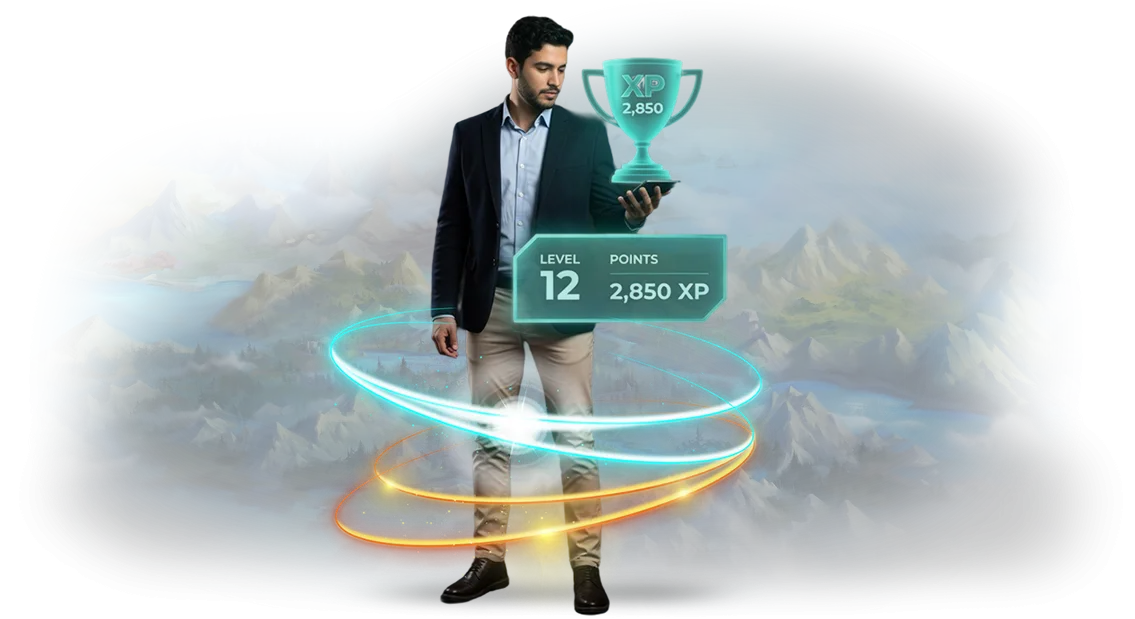
Gamification tailored to your club turns the trainer's work into a game with transparent rules. For hitting targets, growing repeat clients, and receiving positive feedback, they earn points, ranks, and bonuses.
Instead of dull KPIs — visible progress, healthy competition, and a community where people want to win, not just "sit out" a shift. This is a case where the system works for trainer loyalty because it is built on their internal desire to grow and gain recognition.
We implement gamification in stages, without disrupting current processes. First, we analyze what exactly frustrates your trainers, then we design mechanics around your objectives and integrate them into your internal scheduling and reporting.
As a result, you get a motivated team, low turnover, and trainers who bring in new clients themselves — because they don't need to leave to feel like they are growing.
What a Gamified Motivation System Delivers for the Club and Its Staff
Fitness club managers often face a dilemma: how to retain a trainer without constantly inflating the payroll. A gamified motivation system solves this by tapping into internal drivers — recognition, competition, development.
That is why it works even when material bonuses no longer motivate. Our team have been designing such systems for the service industry for over 10 years and know how to turn them into measurable revenue growth.
Revenue Grows Thanks to Responsible Trainers
When a trainer sees their progress in a personal dashboard and understands how their actions affect the club's results, they become personally invested in additional sales and client retention.
Game mechanics show them exactly what steps to take — invite a guest, close a membership, increase the average check. As a result, attendance rises and clients stay longer, delivering steady revenue.
Loyalty Without Major Costs
Non-financial motivation is not a replacement for salary — it is a smart way to boost engagement. Levels, ranks, public recognition of achievements, and symbolic prizes create a sense that the trainer's work is valued.
This approach builds loyalty far more effectively than occasional bonuses, and staff are less likely to defect to competitors.
Teamwork Instead of Burnout
When every trainer is out for themselves, the club sees infighting and unhealthy competition. A gamified system is built not only on individual achievements but also on team competitions.
This unites staff, reduces stress, and creates an atmosphere people enjoy coming to work in — and that clients notice.
Gamification Formats for Trainers: From Leaderboards to Team Quests
Competition for strong trainers is growing, and keeping them with salary alone is getting harder. Within 3–6 months of hiring, interest in the routine drops, and top employees start eyeing other studios — a classic pain point for any manager.
We design motivation systems that translate routine tasks into game dynamics. Instead of "I have to fill out the log," it becomes "unlock a new level"; instead of vague KPIs, a clear growth trajectory. Below are the formats most commonly used by fitness club and yoga studio owners.
| Gamification Format | Who It's For | What It Gives the Client |
|---|---|---|
| Trainer leaderboard | Clubs with multiple branches and teams | Healthy competition: it's clear who's leading, who's caught up, and who has slipped. Management decisions take 5 minutes, not long deliberations |
| Achievement levels | Studios where class quality is critical | The trainer motivates themselves to grow: mastered a new format — moved up a level. The owner doesn't spend time on constant oversight |
| Team quests | Teams where mutual support matters | A shared result instead of "every man for himself." Quests unite the team, reduce turnover, and keep trainers in the club |
| Quick goals and challenges | Seasonal businesses with peak loads | Fast response to changes: launch a promotion — trainers are on board within a day. Metrics are visible immediately, well before month-end |
The formats don't compete with each other — they layer on top of one another. The leaderboard provides regular dynamics, quests build team spirit, and levels create a sense of career growth without a salary increase.
We select the right combination for each club: your team size, workout types, and pain points. At the start, we run a short audit so the mechanics drive business results — growth in bookings, trainer retention, and a higher average check — rather than just being cosmetic.
How Gamification Implementation Works: Stages and Timelines
We understand: when you order gamification, you don't want an "interesting project" — you want a working team management tool. That is why we structured the process so that at every step you know what is happening, what results you're getting, and when it will go live.
Implementation is divided into six stages, from analyzing your objectives to handing over the finished system. The average launch time is 4–5 weeks from the moment the scenario is approved.
-
Brief and motivation audit. We examine how trainers interact with you today and which metrics you want to strengthen (attendance, plan attainment, training, client reviews). We determine which actions will be rewarded.
-
Game logic design. We select mechanics for your team: points, levels, team competitions, monthly challenges. We approve the rules so they are fair, clear, and dispute-free.
-
Design and interface. We create a visual style around your brand — from a calm dark palette for a yoga studio to an energetic identity for a fitness club. You receive screen mockups before development starts.
-
Development and testing. We build a working prototype, verify points calculation logic, leaderboard accuracy, and smartphone functionality. After your approval, we "ship" the final version.
-
Launch and team training. You administer the system yourself, without intermediaries or developer dependency.
-
Support and evolution. For the first while, we are in touch daily, fine-tune rewards, and help you announce the system to trainers. After a month, we collect feedback and rebalance it so engagement stays high.
Each stage ends with a clear deliverable — a document, mockup, or working version. You always know where the project stands and what will happen the following week.
What's Included in the Delivery: A Ready Motivation Plan and Tools
You receive not a "game for the sake of a game," but a complete kit for launching a trainer motivation system from day one. All materials are already developed, tested, and packaged: from the rules to the monitoring tools. All that's left is implementation.
- Game rules. A clear system of points, levels, and rewards adapted for a fitness club or yoga studio. Trainers immediately see what earns them points and understand how that translates into income and recognition.
- Quest scenarios. Ready-made storylines and tasks: hitting sales targets, growing repeat clients, building the trainer's personal brand. Each quest launches in a couple of clicks.
- Staff guides. Simple instructions for administrators and managers: how to award points, resolve disputes, announce winners, and keep the excitement alive.
- Admin dashboard. A motivation tracking tool: see trainer activity, successes, and growth areas in real time. No spreadsheets or manual calculations.
- Communication templates. Pre-written messages and announcements to regularly remind trainers of the rules, goals, and results — without extra admin work.
- Implementation plan. A step-by-step schedule: from introducing the team to the rules to the first award ceremony. It's clear what to do in weeks one and two, and who is responsible for what.
- Team training. We run a short session with trainers and administrators: explain the mechanics, answer questions, and show how to use the tools.
Case Study: How a Club Network Increased Revenue by 15% in One Quarter
A fitness club network came to us with a pain point typical of the market: trainers were putting in hours just "for show," had no interest in client retention, and new memberships were sold only through marketing.
The development of a motivation system turned routine work into a game where every trainer became the leader of a mini-community.
We rolled out gamification in three stages: first, we digitized key performance indicators; then, we configured the rewards and leaderboard system; and only then did we introduce the ongoing competitive dynamic inside the club. The result was measurable within the first quarter.
Implementation Numbers
The network's revenue grew by 15% in the quarter — not from acquiring new clients, but from improving the quality of work with existing ones. Trainer retention rose by 20%, and group class schedule occupancy reached 92%.
Each trainer began bringing in 2–3 new clients per month on their own, because the game mechanics turned group building into a personal win.
Most importantly, the system still works today, without constant oversight from management. Trainers don't just hit the plan — they compete for the title of best mentor of the month.
This created healthy competition and boosted staff loyalty, as employees see a transparent connection between their efforts and their rewards.
Client Testimonial
"Before the implementation, we believed trainer motivation was all about salary. It turned out people want recognition, rankings, and challenges. Within a quarter, we saw attendance grow by a third and the average check rise thanks to additional services.
Now we plan to scale the system across all clubs in the network," — Director of Development, Athletica club network.
This project confirms: gamification is not entertainment — it is a working tool for increasing profit. We adapt the mechanics to the objectives of each specific business rather than offering a template.
We track the results of every implementation and present them to the client in numbers, so you can see the impact of your investment.
How to Choose the Right Gamification Format for Your Team?
There is no universal gamification format — what motivates a team of ten trainers in a large fitness club won't work in a yoga studio with five instructors. The right choice starts with analyzing three parameters: team size, club goals, and the specifics of the workouts.
These determine whether to use competitive mechanics, team levels, or individual achievement systems.
Team size determines system complexity. In a small studio, a transparent leaderboard and shared tasks are enough — they create healthy competition without a complicated hierarchy.
In a club with 20–30 trainers, multi-level statuses and team competitions work better, as they unite the team and distribute the load.
Goals are the second criterion. If the objective is to boost sales of additional services, the gamification should include bonuses for hitting targets and bringing in new clients.
To retain existing visitors, the focus goes on training quality and trainer loyalty: rewards for consistency and positive reviews.
The specifics also matter. In yoga, inner practice and personal progress are valued, so "level achievement" mechanics or "quests based on number of classes taught" are a better fit.
In a fitness club with group programs, public leaderboards and team tournaments deliver — they amplify excitement and engagement.
We don't offer a one-size-fits-all solution — we first study your team, goals, and club format, then design a system that fits naturally into your operations. You get a format choice that actually works, not just pretty points.
Frequently Asked Questions: Addressing Doubts Before You Start
Before launching game mechanics, managers tend to have the same doubts: will trainers understand it, will it overload the admin work, and most importantly — will it deliver a real return? Below are answers to the questions that come up most often in meetings with our clients.
We answer honestly, without fluff: we show how it works in practice, what's included in the project, and what we take responsibility for at each stage.
Trainers will see gamification as monitoring — won't they resist?
The game system is built not as an overseer but as a tool for personal growth. The trainer sees their achievements, progress, and recognition from management and colleagues.
We involve the team in shaping the rules in advance, so the game reflects the values of your specific team — and then it's embraced willingly.
What does it cost, and how do we know the investment is justified?
The estimate depends on the number of trainers, the number of locations, and the complexity of the scenario. Before we start, we lock in the goals: attendance growth, client retention, increased sales of additional training sessions.
You see the cost and the payback point before signing the contract — no hidden fees, no forced extras.
What guarantees do we have that there will actually be a result?
We work from a brief with clear metrics and launch the project within the agreed timeline. After launch, we support the system: if we see that a certain element isn't landing with trainers, we quickly adjust the settings.
The guarantee in the contract is not a formality — it's our commitment to making the game work for your business metrics.
Will this format work for our studio or club?
We adapt the scenario to your specifics: schedule, class sizes, trainer motivation patterns, and the standards already in place at your network. You won't have to rebuild your existing processes — the game integrates neatly into your current system. We handle the configuration and team training ourselves.
What do trainers who have already been through such projects say?
In most cases, trainers say gamification adds excitement and cuts through the routine: it's clear what to learn, which goals are achievable, and what the rewards are for.
We collect participant feedback during the pilot and use it to fine-tune the system — you get a solution backed by practice, not just a presentation.
Order Gamification: Get a Plan and Cost Estimate Today
Want trainers in fitness clubs and yoga studios to stop just getting through their shifts — and instead engage clients and drive revenue growth?
Gamification turns routine into a game: trainers see their achievements, compete for activity, and earn recognition — while the club gains steady studio occupancy and loyal clients. We'll design a gamified motivation system around your club's objectives in 2–3 weeks.
Leave a request — and today you'll receive a preliminary implementation plan, a cost estimate, and an expert consultation. No "we'll call you in a week" and no vague proposals: we immediately show how gamification will pay off against your numbers.
What you get when you order gamification:
- A preliminary implementation plan: stages, timelines, and those responsible — no fluff.
- A cost estimate tailored to your club: format, number of trainers, and objectives.
- Expert consultation on motivation: we'll advise which mechanics will work specifically for you.
- Examples of mechanics for fitness and yoga: from trainer leagues to team challenges.
- A clear technical specification: you'll understand exactly what you're getting for your budget.
Each item is a step toward trainers driving clients to results on their own, rather than waiting for instructions. We've already implemented similar systems in fitness clubs and yoga studios, so we offer solutions that work — not "interesting theories."
Leave a request on this page — our manager will contact you within 15 minutes. We'll discuss your club's objectives, answer your questions, and prepare a plan and estimate by the next business day.
Ordering gamification now means getting a motivation system trainers enjoy using — and the club enjoys in revenue.
Translation provided as requested.