

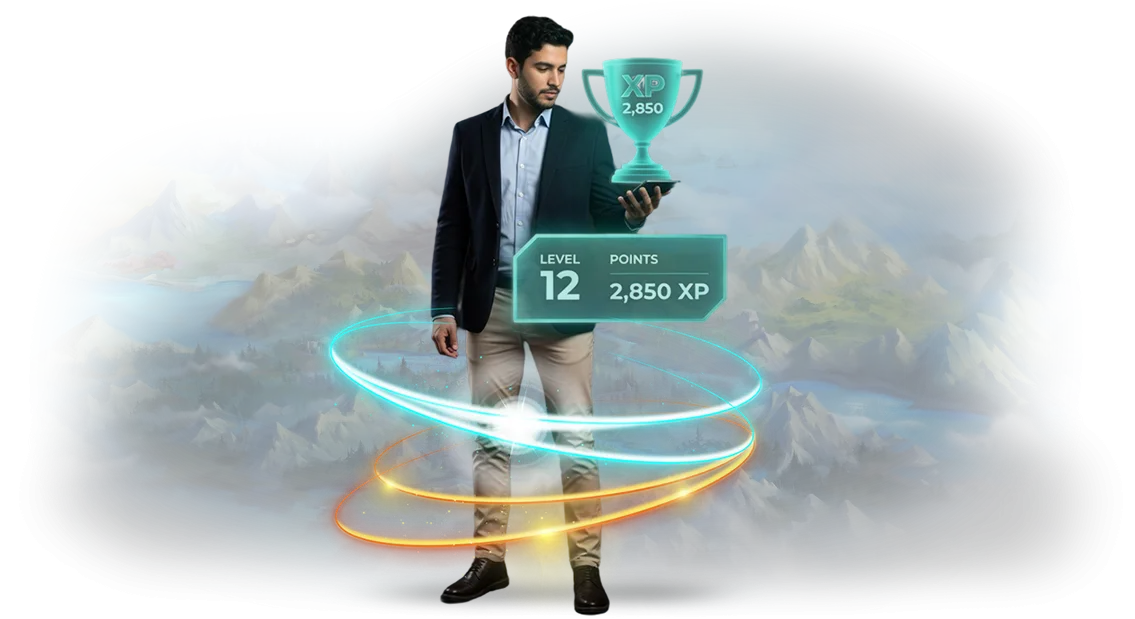
Play to Earn Telegram 2026: how to turn a game into a source of income?
Users come to a game for excitement and stay for tangible benefits. If your Telegram project only provides entertainment, the audience quickly loses interest: the average player switches to a competitor within a few days.
That’s why in 2026 more and more companies are adopting the Play to Earn Telegram 2026 model — it turns gameplay into a source of income for both the participant and the business.
Play to earn is not a “money giveaway,” but a well-designed mechanic in which player actions create value: completing tasks, inviting friends, daily activities.
The game’s profitability comes from Telegram monetization: in-app purchases, ad integrations, and a commission on game asset trading. At the same time, user retention grows because every step in the game is backed by a real reward — the player sees the result of their efforts.
For businesses, it is a working tool for attracting and retaining users: players return on their own, bring friends, and continue engaging with the brand.
Play to Earn Telegram 2026 makes it possible to launch an in-project economy where the audience is motivated not only by interest but also by benefit.
This approach pays off faster than classic games and provides predictable Telegram monetization from the very first days of launch.
If you think gamification is complicated and expensive, we’ll remind you: modern tools allow you to launch a play-to-earn game in Telegram within a few weeks, with a clear profitability model and configuration for your business goals.
We help turn a game into a stable channel of profit, retention, and growth, not a one-off entertainment project.
What game mechanics give to businesses and users
Game mechanics change the customer’s attitude toward the product: instead of boring purchases and routine actions, excitement and an emotional connection with the brand appear.
When every step brings points, bonuses, or status, the audience returns on its own — engagement stops being a marketing task and becomes a natural habit.
Thanks to this, retention grows: users visit more often and stay longer because they are interested in reaching new levels and earning rewards.
People want to share achievements, so game mechanics create organic reach — customers tell their friends about your product, expanding the audience without an additional advertising budget.
At the same time, the brand gains the image of a modern, innovative company that understands its audience and speaks to it in a familiar language.
The direct result is increased loyalty and repeat purchases. Customers who have already joined the game are more likely to return for another order, and the reward system encourages them to increase their average order value.
Over time, game mechanics turn one-off deals into long-term relationships, and revenue stops depending on cold leads — it is driven by a constant active base.
Play-to-earn mechanics in Telegram amplify this effect: the user gets involved right in their familiar messenger, without installing apps, and receives tangible value for their actions.
Business gamification is not a toy for entertainment but a working tool that leads to measurable results: higher retention, wider reach, stronger loyalty, and stable revenue.
We select game mechanics for your business goals and implement them so they start delivering value immediately after launch.
Game solution formats for business tasks
Each business task requires its own game format. Mini-games engage a broad audience in seconds, quizzes gently collect data and educate, simulators let users practice skills without risks, and hybrid mechanics solve several goals at once.
The right choice of format directly affects conversion: what works for beginners may not hold experienced users, and vice versa.
We don’t stick to templates. First, we analyze your funnel and audience, then select mechanics for a specific stage — and only then work out the scenario and visual style. This approach gives measurable results: growth in engagement, number of leads, or repeat orders.
| Format | For whom | What the client gets |
|---|---|---|
| Mini-games | Broad audience, ad campaigns, social media | Fast reach, virality, engagement in 30–60 seconds |
| Quizzes | Potential customers, lead generation | Collecting contacts and preferences, learning in a light format |
| Simulators | Employees, partners, experienced users | Skill practice without mistakes or costs, growing competencies |
| Hybrid mechanics | Companies with multiple tasks | Engagement + training + sales in one solution |
Often the best option is to combine formats. For example, a mini-game grabs attention in advertising, a quiz collects leads, and a simulator reinforces product knowledge among managers.
We help build this combination and adapt the mechanics to your audience — from mass-market to niche.
How the launch of a Play to Earn Telegram 2026 project works
We work transparently: you always know what stage the project is at and what happens next. We coordinate every step with you, set deadlines in advance, and stick to them. This makes launching a play-to-earn Telegram 2026 project a manageable process with a clear result.
What happens at each stage
- Brief and task. We break down your mechanics, audience, and goals — and determine how the game will attract and retain users. We set the budget and timeline.
- Concept and plan. We work out the game economy, scenario, and earning mechanics. We show the project structure and stages — you approve the plan before development starts.
- Design and logic approval. We discuss the interface, visual style, and user scenarios. We make edits while the game is not yet programmed — this saves time and budget.
- Development and integration. We build the game in Telegram: from bot entry to reward accrual. We connect the necessary payment services and analytics — all in one interface.
- Testing. We test the game on real scenarios: registration, completing tasks, withdrawing funds. We fix issues before launch so users have a positive experience from the start.
- Launch and promotion. We publish the game, set up referral mechanics, and run the first user acquisition campaigns. We help warm up the community.
- Post-release support. We monitor metrics and make changes to the economy and mechanics. We stay in touch and grow the project together.
What’s included in the finished product and delivery package
When you order game development, it’s important to understand in advance exactly what you’ll receive. We provide not just a link to an app but a complete package for independent work: from the scenario to code ownership. This removes dependence on the contractor and lets you develop the project on your own.
- Game scenario and mechanic descriptions. A detailed document covering every player action: how they earn tokens, what they spend them on, and how withdrawals affect your economy. The scenario becomes the basis for updates and marketing campaigns.
- Working game interface. A ready-made game in Telegram with a thoughtful design: clear screens, buttons, tips, and visual rewards. The player doesn’t need to figure anything out — they get involved right away and come back again.
- Admin panel for management. A dashboard where you can see player activity, balances, and economic indicators. You can change settings yourself — prices, rewards, limits — without involving developers.
- Launch and operation instructions. Step-by-step guides for your team: from installation to daily support. Written in plain language, they work even for employees without technical experience.
- Source materials and game rights. We transfer all source files, layouts, and usage rights. You are not tied to us and can continue development with any team or in-house.
- Development and monetization plan. A roadmap for growing audience and revenue: ideas for events, referral programs, and retention mechanics. You get not only a product but also a strategy for its growth.
Each element of the package serves a specific purpose: the scenario makes the economy clear, the interface holds attention, the admin panel provides control, the instructions give independence, and the rights ensure investment security. As a result, you get a transparent product ready for launch and scaling.
Case study: growing revenue and retention with game mechanics
Most businesses with repeat purchases face the same problem: a customer comes in two or three times and then leaves for competitors. Attracting a new customer is expensive, and winning back an old one is difficult if they have no reason to return.
We solved this problem for the Utro coffee chain using game mechanics inside a loyalty program. Regular guests got “levels,” bonus tasks, and a gift for a series of visits — turning a discount into a game, and the game into a habit of coming back.
What changed in two months
Revenue from regular guests grew by 23%, and the share of repeat orders increased by 18%. Almost half of the participants (41%) returned to the game after the first launch, and their average order value was 12% higher than for regular visitors.
The mechanics encourage exactly the actions that are profitable for the business: visits on “quiet” days, bigger baskets, and friend referrals.
At the same time, it integrates into an app or Telegram bot without changing familiar processes — the customer doesn’t notice the “technology” and simply sees a clear game.
Today, this approach scales to any business with regular purchases — from coffee shops to online schools. We choose the format based on your audience and manage the economics so that reward costs are covered by revenue growth.
How to choose a format for your task?
Choosing a format starts not with mechanics but with a business task. If the goal is to retain existing customers, a loyalty program with levels and rewards is enough. If you need to train employees, a corporate game with tests and ratings works well.
If you want to expand your audience and gain recognition, the best option is a Play-to-Earn game in a messenger.
To avoid overpaying, we define the key metric before development starts: repeat purchases, speed of completing training, or number of registrations. We select mechanics and scope around that metric, not the other way around.
A mini-mechanic for a month will cost several times less than a full game, but it still handles the current task. Compare the formats:
| Format | For whom | What the client gets |
|---|---|---|
| Loyalty program | Current customers | Growth in repeat orders and average order value |
| Corporate training game | Employees | Fast onboarding and productivity growth |
| Play-to-Earn game in Telegram | Broad audience | Influx of new users and long-term retention |
The table shows three typical scenarios that clients bring to us. Choose the one that matches your task, or share your own — we’ll recommend the best approach.
Whichever option you choose, the budget depends on two things: the depth of the game economy and the launch timeline. Simple mechanics can be implemented in 2–3 weeks; a full project with tournaments and rewards takes 2–3 months, but the return is also higher.
At the brief stage, we’ll prepare a calculation for your task: we’ll show the cost and payback forecast in concrete figures, not abstract “perks.” This way, you can make a decision without the risk of overpaying.
Frequently asked questions about game launch and support
Before launching a game, business owners usually ask the same questions: will we meet the deadlines, what happens after release, and who is responsible if something goes wrong.
We answer directly: deadlines are set in the contract, we handle the launch, and we stay in touch after the game is live.
The process is designed so you see results at every stage. First, a short questionnaire and prototype; then mechanics assembly and Telegram integration setup; and only then publication. At each step, you get a concrete intermediate result, not “sometime later.”
How long does it take to launch a game?
A typical project from describing the task to the first version takes 2–3 weeks. If the mechanics are simple and prizes are awarded right away, it’s faster. The timeline depends on complexity and the speed of approval, so we allow time for your edits and don’t miss the deadline.
What guarantees do we have that the game will actually work?
We are responsible for the result: the contract specifies stages, deadlines, and responsibilities. If our team hasn’t fulfilled its part, you don’t pay for that stage.
Before launch, the game is load-tested, so hundreds of players entering simultaneously and prize distribution won’t break the service.
What happens if something fails after launch?
We have technical support: we respond within one business day, and faster for critical issues. For example, in the project for the retail chain “Game with Prizes”, we restored access within two hours after an attack — players returned, and the brand didn’t lose trust.
Who supports the game after release?
You can choose a support package: updating mechanics, new prizes, technical monitoring. We don’t abandon the project after launch; we track metrics and suggest improvements so the game brings more benefit to the business.
Shall we discuss your Telegram game scenario?
If you want a game in Telegram that generates profit, let’s start with a short conversation. You don’t need a ready technical document — just your idea and a rough sense of your target audience.
We’ll analyze your scenario, suggest mechanics, and calculate the cost and timeline. This way, you’ll understand whether the project will pay off before signing the contract.
What we’ll cover in the brief
- Brief: you answer questions about your business, audience, and goals — then we gather all the necessary information ourselves.
- Cost estimate: we give a budget range and implementation timeline based on your requirements, with no hidden charges during the approval stage.
- Demo access: we show examples of our finished games or a prototype so you can see how the mechanics work in practice.
- Project discussion: we look for risks, define key metrics, and choose promotion channels so players start coming from day one.
- Development request: if everything suits you, we lock in the plan and start production within a few days.
No presentations just for the sake of presentations. In one hour-long call, you get a clear understanding of whether to build the game, how much it costs, and when the result will appear.
Leave a request in the form below — we’ll respond within one business day and find a time that fits your schedule.