

Customers Leave for Competitors: Tap-to-Earn Telegram 2026 Brings Them Back
Customers leaving for competitors is not just a number in a report — it's lost revenue and the need to spend acquisition budget all over again. Today, a buyer's attention is overloaded: dozens of notifications, ads, discount offers.
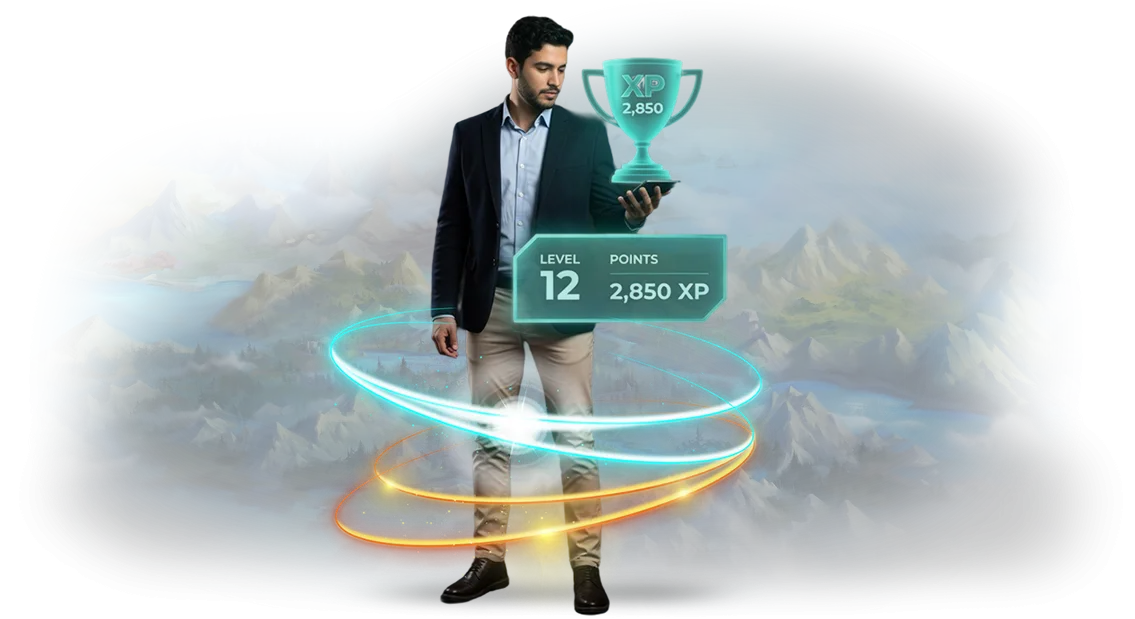
To keep a person, you need not a reminder but a reason to come back on their own. Tap-to-earn Telegram 2026 is business gamification that turns ordinary interaction with a brand into a game with a real reward.
The customer gets a simple, intuitive mechanic: screen taps, prizes, competitions. The business gets an audience engagement tool that works 24/7 and doesn't require a manager to be present.
Unlike one-off promotions, this kind of game builds a database, drives repeat purchases, and creates a community around the product. Customer retention stops being a problem — it becomes a systematic process.
Our team has long specialized in digital products and knows how to turn mechanics into business results. We design tap-to-earn Telegram 2026 for the needs of your industry: from idea to launch, with clear economics and clear metrics.
Customers come back, engagement grows, and you see a direct connection between the game and profit. That's how we solve the biggest pain point — customer loss.
What Business Gets from Gamification: 5 Key Benefits
Increased engagement is the first and most visible result. Game mechanics in Telegram hold the user's attention: they return every day to tap, complete tasks, and advance through levels. This regular interaction turns a one-time encounter into a long-term relationship.
Repeat visits and purchases happen naturally: accumulated points, rewards, and ratings motivate the customer to come back. They want to use bonuses and not lose progress, and each new purchase increases the average order value. Game mechanics boost repeat order frequency.
Loyalty is built through emotional attachment. The user sees their status, receives personal rewards, and feels that the brand values them. This is stronger than discounts: leaving for competitors and losing achievements no longer feels attractive.
Additional sales are built directly into the game: tasks encourage trying a related product, and a pleasant bonus is awarded for the target action.
In a tap-to-earn format, the offer appears at the moment of the player's peak activity, so conversion to an order is higher than with ordinary advertising.
Another advantage is viral reach. A "invite a friend and earn a reward" mechanic turns customers into advocates: they bring new users to the Telegram bot themselves.
This grows the database without acquisition costs, and every invited user is already positively inclined toward the brand.
In total, gamification works on all key metrics: engagement, purchase frequency, loyalty, and new customer flow. It pays for itself in the first months and remains a platform for regular sales.
Tap-to-Earn Formats: Matching Your Business Goal
Tap-to-earn is no longer just a toy — it's a working growth tool: the audience returns to the chat every day to earn points, and the business gets a constant touchpoint with the customer. We choose the format based on your goal, so here are the main options with clear scenarios.
| Format | Who it's for | What it gives the customer |
|---|---|---|
| Classic tap-clicker | For a short promotion or a new product announcement | Maximum reach in a few days: participants tap, accumulate points, and exchange them for a discount or a gift |
| Mini-app with tasks | For ongoing loyalty and bringing the audience back | The brand stays visible: daily bonuses, channel subscription, and friend invitations turn a one-time game into a habit |
| Marathon with a leaderboard | For a seasonal sale or product launch | Excitement and competition: participants return to outpace rivals — repeat launches and average order value grow |
| Training game for employees | For team training and practicing procedures | Learning without boredom: employees go through scenarios in game form, while managers see progress and weak points |
If you're unsure which option to choose, we'll calculate which one will deliver more repeat launches and conversions for your specific audience. We can start with a pilot on a small group, show results, and then scale the game.
How We Launch a Project: 7 Turnkey Steps
We start with a short brief — we discuss what business problem the game solves: customer retention, reach growth, or employee engagement. After that, you get a clear plan with timelines, budget, and the result of each stage.
Then we move in iterations and show intermediate versions so you see the project in progress, not just at the finish line.
-
Brief and goals. We define who we're attracting, which mechanics motivate the audience, and how the game fits into your processes. The result is a clear understanding of the task and success criteria.
-
Plan and estimate. We create a work schedule, break it into stages, and fix the cost. You know in advance how long the launch will take and what resources are needed.
-
Game concept. We design the scenario, economy, and reward system so the player wants to return daily. We agree it with you before development starts — no "surprises" along the way.
-
Prototype and approval. We build a working version of the interface and mechanics. You click, evaluate, and make edits — this is cheaper and faster than reworking a finished game.
-
Development and integration. Our engineers build the game in Telegram, connect the necessary services, and make sure it works stably under high load. You get a finished product, not a raw prototype.
-
Launch and testing. We test the game with real users, remove bugs, and only then publish. If something goes wrong, you have a backup plan, so the launch proceeds without missing deadlines.
-
Support and growth. After launch, we monitor metrics, fix bugs, and add new mechanics. The game lives and delivers value instead of turning into a "museum" after a month.
What's Included in the Delivery: A Complete Launch Kit
We deliver not just a game, but a fully working product with everything you need to launch and grow. Here's what you get at the start and what remains yours after the project is completed.
- Launch-ready game — a fully configured Telegram project: game mechanics, interface, reward system, and participant registration.
- Admin panel — you independently manage content, create promotions, change prizes, and see all players without involving developers.
- Documentation — clear instructions for launch, administration, and marketing: what to do to get players in and bring them back.
- Training for your team — a series of practical sessions for employees. After training, they can run the project, launch new rounds, and work with analytics.
- Analytics — clear reports on key indicators: number of players, registration conversion, retention, average order value, and acquisition cost. You see what works and what needs adjustment.
- Launch and promotion plan — ready-made marketing scenarios: how to announce the start, where to place the announcement, and how to motivate players to invite friends.
- Technical support — warranty support, stable server operation, data backups, and updates. You don't have to face technical issues alone.
This complete kit lets you launch quickly and avoid depending on the contractor in daily operations: your team manages the game, and we remain as backup.
Case Study: A Messenger Game Brought Customers Back to the Business
Zerna is a chain of three coffee shops in a residential area. After a year of operation, regular guests became fewer: those who used to visit weekly turned into random passersby. Promotions and loyalty cards only caused a temporary spike.
So we suggested a simple Telegram game: for every purchase, the guest receives coins, accumulates them, and exchanges them for a free drink or dessert.
The launch took four weeks. Two months later, repeat visits within a month increased by 26%, and the average check grew by 12%. "We expected interest, but didn't think people would deliberately plan a visit just for a game status," says the chain's owner.
The project reached payback in the third month: development and support costs were fully covered by repeat sales.
The technology is reliable: the game works directly in Telegram, requires no app installation, and our server architecture handles load spikes during giveaway hours.
"It's nice that they remember me and give something in return. Now we often stop by for coffee with colleagues so we don't lose our collected bonuses," says a regular guest. "The game doesn't interfere with work; everything is automated.
Guests check their points themselves, and we don't need to calculate discounts manually," says the coffee shop manager.
The numbers speak for themselves: the project paid for itself in three months and generated a steady stream of repeat visits. If your business is also losing customers, maybe they just don't have a reason to return. A tap-to-earn game in a messenger is exactly that reason.
What If You Need a Non-Standard Game Format?
A non-standard format isn't a limitation — it's a reason to design specifically for your task. We don't force the game into a template. Instead, we first analyze what business problem it should solve, and only then propose mechanics that will deliver results.
Choosing a format always starts with questions: who is your audience, what scenario is convenient for them, and where do you want a measurable impact — reach growth, repeat visits, purchase conversion, employee training, or data collection.
Specific requirements such as industry constraints, corporate style, product features, or seasonality are taken into account during the requirements discussion and translated into clear game mechanics.
Sometimes a client thinks their request is too complex, but for our team it's routine work: we've already built projects for different businesses, so we know how to adapt an idea without losing its meaning.
If you already have a clear vision of the mechanics — great, we'll enhance it and strengthen it from the standpoint of attention retention and engagement.
If you don't have a vision — we'll help you choose a format: from simple taps to multi-level scenarios with tasks and rewards. The main thing is that the game fits into your marketing and doesn't require unnecessary actions from users.
Just describe your task and wishes — our team will propose 2-3 format options with approximate timelines and an estimate. We always start with a consultation to discuss goals, audience, and constraints, and only then finalize the technical specification. That way you get not an abstract game, but a tool that works toward your result.
Answering Questions Before Launch: Guarantees and Details
Before launch, any manager has reasonable questions: what happens if the mechanics fail, who handles support, and what it will really cost. We answer directly — no fine print and no technical details that say nothing about the result.
What happens if the game breaks or users don't like it?
We provide a warranty on the game's functionality for the entire agreed period after launch. If a failure occurs, we fix it as a priority, with no hidden fees for "urgency."
Before launch, we establish key metrics: reach, retention, and conversion to the target action. If after launch we see that the mechanics aren't resonating with the audience, we suggest scenario adjustments — from reward tuning to changing the frequency of events.
How often will the game be updated, and who handles it?
We take care of technical maintenance: we ensure the game runs stably in Telegram and adapt it to platform changes. This removes all the routine work from your team.
Content updates — new levels, seasonal promotions, expanding the prize pool — are done on your request. Usually that's once a month, but we adjust the schedule to your marketing goals, not the other way around.
Is it safe for the business and users?
The game works inside the official Telegram interface — users don't need to install anything or share unnecessary data. We only collect the information required for the game mechanics and reward distribution.
Access to the admin panel remains with you: you see statistics and manage prizes and rules without involving developers. Access is protected, and data is not shared with third parties.
How much does development cost, and what determines the price?
The cost depends on the complexity of the mechanics, the number of levels, and integration with your loyalty system. We give the final price after a short brief — before work starts, and it doesn't change during the process.
The estimate includes game development, admin panel setup, testing, and launch. Technical support and updates are a separate option, so you only pay for what you actually use.
If you still have questions, ask them before launch — we'll honestly tell you what is and isn't included in the result. That way you get a clear project with a predictable budget and no surprises after launch.Let's Discuss Your Project: We'll Calculate the Format and Cost
You already know that Tap-to-Earn games in Telegram attract millions of users, but you're not sure where to start or what it costs.
The right approach is to begin with a short consultation, where we analyze your business task and propose the optimal format: from simple mechanics to a full-fledged gaming ecosystem.
After you reach out, you'll receive:
- Consultation — we discuss business goals, target audience, and the expected result from the game.
- Preliminary cost estimate — we give you a budget range within 1-2 business days, not "it all depends."
- Launch timeline assessment — we show when the game can go live in Telegram and when user flow will start.
- Mechanics selection for your niche — we suggest scenarios that drive engagement and retention, not just a "tapper."
- Pilot project plan — we launch a mini version with a limited audience to test hypotheses without large investments.
- Development roadmap — how to scale the game, monetize it, and integrate it with your processes.
No pressure and no technical jargon — only clear options, timelines, and numbers. Leave a request on this page, and we'll get in touch to discuss your task and calculate the cost.
And if you're unsure about the format, we'll suggest launching a pilot project so you can see real results before full-scale development.