

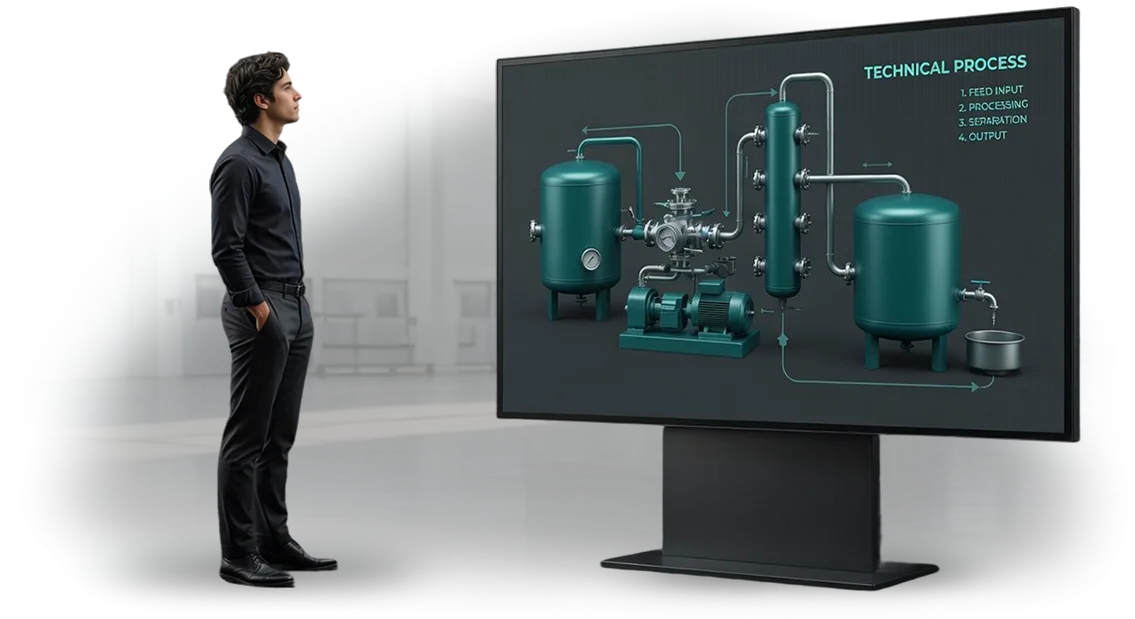
Staff Errors in Veterinary Medicine: Hidden Losses for the Clinic
Every day in a veterinary clinic, a patient’s fate is decided, and the cost of a mistake is measured not only in money but also in the trust of pet owners.
An incorrectly calculated drug dose, misinterpretation of test results, a failure in surgical preparation—all of this leads to complications, repeat appointments, and reputational damage.
Moreover, most such situations occur not because of physician incompetence but because of the lack of unified, well-established staff work standards.
When employees act on intuition or learn from their own mistakes, the clinic loses money every month on spoiled consumables, damaged client relationships, and legal risks. A pet owner does not see internal processes—they see the result.
One bad experience, and they leave for competitors, taking repeat visits, referrals, and loyalty with them.
Staff training in veterinary medicine most often comes down to one-off lectures or studying paper instructions. This does not work: a week later, the information is forgotten, and everyone starts working their own way.
Systematic training built on real clinic scenarios solves this problem. Video instructions help solidify correct actions until they become automatic: from patient intake to emergency protocols.
We develop corporate video instructions that turn knowledge into skill. These are not boring lectures but visual scenarios with analysis of typical mistakes and correct actions.
This format is clear to both a new assistant and an experienced nurse—it relieves the burden on mentors and levels the quality of work across the whole team. By implementing a unified standard once, you reduce clinic losses and protect its reputation.
If every mistake in your clinic is lost money, take a close look at how your staff are trained today. Systematic video instructions address the main pain points: speed of onboarding, fewer mistakes, and staff confidence in unusual situations. This translates into stable revenue and peace of mind for the business owner.
What You Get from Video Instructions for Employees
Employees at a veterinary clinic or pharmaceutical production facility absorb work processes differently: some remember things the first time, others act on intuition. As a result, errors occur in animal care, discrepancies in dosages, and time lost redoing procedures.
Video instructions for employees turn scattered knowledge into a single visual standard that is equally clear to beginners and experienced specialists.
Corporate video training removes the dependence on the human factor. Instead of relying on a mentor’s memory or verbal explanations, an employee sees the reference process: from instrument preparation to recording the outcome.
This is especially important in veterinary medicine, where the cost of a mistake is the animal’s health and life. Every step is recorded, reducing the risk of errors and increasing staff confidence in their actions.
Video instructions speed up the onboarding of new employees and reduce the workload on experienced specialists.
The clinic no longer needs to pull a doctor away to re-explain the same procedure every time—a new employee reviews the material at their own pace and arrives ready to practice. This directly impacts revenue: less time spent on training, more time for seeing patients.
Finally, video materials serve as a permanent knowledge base. When a disputable situation arises or a regulation is updated, you only need to update one video rather than hold a meeting and re-explain the rules to everyone.
Our team develops such instructions with the specifics of veterinary processes in mind, so you get not just videos but a tool for managing quality and standardizing procedures.
In the next section, we’ll answer common questions about timelines, formats, and integrating video instructions into the workflow.
CGI Video Instruction Formats for Veterinary Tasks
In a veterinary clinic, the same tasks repeat every day: patient intake, surgical preparation, anesthesia management, and paperwork. A mistake at any stage is a risk to the animal, the clinic’s reputation, and extra time costs. Video instructions help reduce these risks, but only if the format matches the task.
There is no universal video. What works for quickly onboarding a newbie will not show the details of a complex process. That’s why, before development, we analyze the veterinary task and choose a format that employees will actually use.
Comparison of Formats
| Format | For which veterinary tasks | What it gives the client |
|---|---|---|
| 2D animation | Onboarding, care standards, intake algorithms | Quick absorption of basic rules and unified work standards for the whole team |
| CGI animation | Surgical stages, anatomy, operation of complex equipment | Visual study of processes that cannot be captured on camera |
| Combined format | Training linked to real clinic conditions | Clear connection between theory and actual employee actions |
| Series of short videos | Reinforcing regulations and analyzing common mistakes | Regular skill reinforcement without interrupting work |
How do you know the right format was chosen? An employee watches the video once and already works without prompts. We test the scenario on a real task: we identify where questions usually arise and embed the answers into the animation.
As a result, the instruction responds not to abstract standards but to the specific situation in your clinic.
Clients order such video instructions for various departments—from specialized clinicians to administrators. The main result is consistent work quality regardless of employee experience and less time spent on training by the manager. You get ready-made training material that can be used repeatedly.
Video Instruction Development Stages: From Brief to Launch
We start with a brief—a short interview where we analyze the target audience, typical error scenarios, and the desired presentation format. Next, we show a storyboard of the future video so you can see the logic of each scene before production.
This approach eliminates revisions at late stages and shortens the time to launch your video course.
Our team has refined the process across dozens of corporate projects—on average, it takes 3–4 weeks. You get not just a "video for its own sake" but a working training tool that teaches employees to act correctly.
- Brief and material audit. We define the training objective, collect regulations, instructions, and recordings of real procedures if available. The result is a technical specification agreed with you.
- Script and storyboard. We turn the technical process into short scenes with visual highlights. You approve the text and style, and we show in advance what the key frame will look like.
- 3D model development. We create digital replicas of equipment, tools, and work areas. This is the foundation of the video: it provides a "sense of presence" and eliminates the need to film the production environment.
- Process animation. We bring the models to life—showing operator movements, machine mechanics, and material behavior. Everything that is difficult to explain in words becomes clear in 30–60 seconds.
- Voiceover and subtitles. We prepare the narration, select a voice, and add explanatory captions. The video can be watched without sound—this is important for work areas.
- Video course launch. We deliver the final files in the needed formats: for LMS, corporate portal, or offline screens. We help with uploading and provide a short guide for the administrator.
The result is a video course that employees actually complete rather than abandoning three minutes in. The next stage can always be launched in parallel if you need to accelerate implementation.
What Is Included in the Delivery: A Complete Training Materials Kit
When the project is completed, you receive not just a finished video but a complete training kit for your staff. All materials are organized so you can launch the program immediately and track its results without involving developers or instructional designers.
- Video script — a detailed text explaining each stage of the technical process. It has been reviewed by subject-matter experts, so it can be used as the basis for updating instructions when regulations change.
- Animated video — a visual CGI instruction that employees can review at their own pace and return to when needed. The video easily integrates into a learning management system or can be played on tablets and in training rooms.
- Textual reference guide — a short step-by-step instruction that helps refresh knowledge quickly without watching the video. You can print this guide and place it at the workstation.
- Control checklist — a list of key process points that mentors or managers use to check how well employees have absorbed the material. It is a ready-made form for evaluation and feedback.
- Knowledge check test — questions for each block of the video instruction, allowing you to assess the level of preparation before and after the training.
- Methodological recommendations for the mentor — guidance on how to incorporate the video material into onboarding, probation, and ongoing professional development programs, which topics to discuss, and what to point out to new staff.
This kit covers the full cycle: from learning theory to verifying practical skills. All you need to do is assign responsible people—everything else is ready to implement.
Case Study: How a Veterinary Clinic Network Reduced Errors by 40%
When we started the project with a veterinary clinic network, their main pain point was training new assistants.
Trainees got lost between rooms, mixed up the order of instrument preparation, and made up to 15–20 mistakes per shift in their first months—from mislabeling test tubes to improper surgical field preparation.
We proposed not classic lectures but a series of short CGI video instructions that mirror the clinic’s real technological processes.
Instead of abstract diagrams—step-by-step scenarios with an emphasis on critical points: where mistakes most often happen and what must occur to avoid them.
What Changed After Two Months
Clients don’t see internal processes, but they immediately notice their quality. After implementing the instructions, the network reduced the number of medical errors by 40%—this was a control measurement across the entire network over two months.
Clinic managers also noted an indirect effect: new employees become ready for independent work two weeks faster. Previously, a mentor spent up to 70% of their time repeating the same rules; now it takes a 3–4 minute video.
Why Video Worked
Textual regulations are skimmed diagonally, while video reproduces the process through the employee’s eyes—from the first step to final control. Even complex manipulations with veterinary equipment become clear without a mentor’s involvement.
The client especially appreciated the format’s flexibility: the videos are split into 2–3 minute modules that can be rewatched before a procedure.
This is particularly important for rare but responsible procedures that an assistant performs once a month and is afraid to get wrong.
The network continued the partnership and expanded the instruction library to all branch clinics. Instead of hiring additional mentors, they scale training through content—this is measurable savings that pays for video production within the first month.
How to Choose the Right Video Instruction Format?
There is no one-size-fits-all answer to this question—and that’s normal. The choice of video instruction format depends on what exactly employees need to do after watching: quickly recall a sequence of steps or understand a rare, complex procedure.
So the first rule is to base the decision not on format trends but on the clinic’s real needs and the staff’s skill level.
For frequent operations—patient intake, instrument preparation, standard care procedures—short 1–2 minute videos work well. They can be watched just before a shift or at the workstation without interrupting the workflow.
For complex technological processes, extensive procedures, and rare scenarios, detailed instructions with stages, pauses, and control points perform better.
This approach accelerates a newcomer’s path to productive work and reduces the number of errors related to the human factor.
When selecting video instructions, the clinic’s specifics matter: number of shifts, presence of branches, equipment features, and staff habits. An instruction that is inconvenient to watch on a tablet in a procedure room will be useless no matter how high-quality it is.
We always analyze the work process before development begins so that the format doesn’t require extra effort from employees and fits into their current work rhythms.
The same process can be shown in different ways: in detail with a demonstration on real equipment, or as an animated diagram focusing on key points.
Our approach is to offer the client two or three format options for a single process, explain their strengths, and choose together the one that best fits the specific clinic. This way, you get not "beautiful video" but a working staff training tool.
Choosing the right format is always a compromise between depth of detail and ease of understanding.
We help maintain this balance by drawing on experience from dozens of projects in the medical and veterinary fields, and we lock in the chosen format through a series of videos with consistent style and logic.
In the end, you get a predictable result: employees master work standards faster, and you gain the confidence that everyone is acting correctly in the same way.
Frequently Asked Questions About Development and Implementation
Before ordering training video instructions, every manager has common questions: will we meet the development timeline, how reasonable is the cost of the service, and how can we ensure the material will be understandable to employees.
This is especially acute in veterinary medicine, where technological processes are complex and require precise visualization. We have collected answers to typical concerns—they will help you make an informed decision.
Below are honest answers to the questions we hear most often. If your question isn’t on the list, just write to us—we’ll discuss the details of your task.
How long does development take?
The timeline depends on the volume and detail of the script. On average, one video instruction takes 2–4 weeks: we agree on the script, create the animation, add voiceover, and make revisions. Exact deadlines are fixed in the contract.
How is the cost of the service calculated?
The cost is calculated after an audit and depends on the number of scenes, the complexity of the animation, and the need for voiceover. After the brief, we send a transparent estimate with no hidden fees. You see exactly what you are paying for and what results you will receive at each stage.
What if the video turns out to be unclear?
We work iteratively: first we show a draft, take into account your team’s comments, then test the material with a focus group of specialists. This ensures that the video is genuinely useful to your employees.
Order Video Instruction Development for Your Team
Staff training in veterinary medicine is not just about giving lectures. Mistakes in working with equipment or failure to follow procedures are costly: they cost time, reputation, and patient health.
Video instructions standardize knowledge, speed up a newcomer’s path to a working rhythm, and relieve the burden on mentors. Employees learn at their own pace, and the result doesn’t depend on who explained the material or how.
We create CGI animation of technological processes: it shows every stage accurately and clearly, without risk to patients and without stopping the clinic. You can order video instructions for any process—from equipment setup to veterinary procedure algorithms.
The finished video library becomes the foundation for systematic staff training and is used in hiring, certification, and professional development.
After ordering, you receive:
- an analysis of your processes and a script adapted to the specifics of the clinic or production facility;
- animated video with voiceover built on approved work standards;
- final videos in formats for learning management systems, tablets, and smartphones;
- the right to make revisions during the approval stage—you approve the content before final delivery;
- support when integrating the videos into the staff training program;
- technical support and the ability to expand the instruction library as your team grows.
To discuss your project, leave a request through the contacts on the website—we’ll share timelines, the work process, and show examples from the veterinary industry.
Start with one video and see how quickly it pays off through unified standards, fewer errors, and faster employee onboarding.