

How CGI for Automotive Boosts Training Effectiveness
Plain text regulations and static diagrams overwhelm new employees: they have to memorize information abstractly and then apply it to real components and mechanisms.
In the automotive industry, the cost of error is high: a wrongly torqued component or a missed diagnostic step results in defects, downtime, and extra rework expenses. Classic instructions miss the main point—a clear picture of correct actions in the correct sequence.
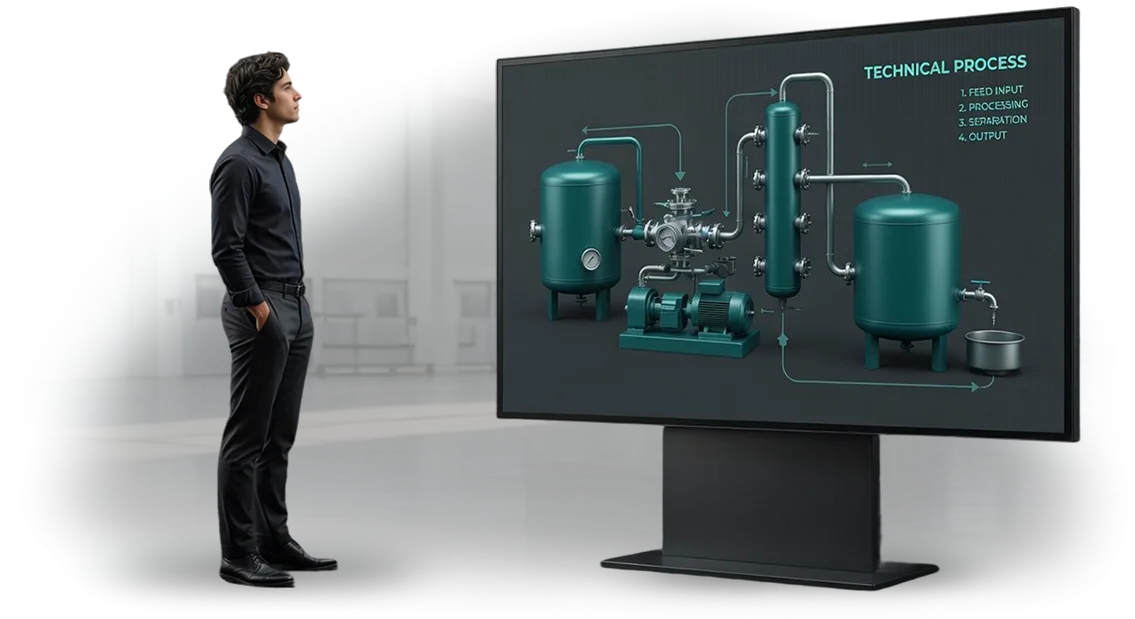
This is where CGI for automotive comes in. We create video instructions where each step is shown "from the inside": transparent housings, exploded parts, and highlights on critical points.
The employee sees not a flat image but a three-dimensional model—so staff training moves faster because the brain processes motion and spatial relationships more effectively than text with photos.
CGI visualization is especially useful when working with new models or rare operations. Instead of disassembling a real vehicle and risking damage, the trainee studies the process on a digital copy.
They can rewatch the video instruction at their own pace, return to difficult fragments, and lock in the skill before starting hands-on practice on a real car. This reduces the load on mentors and shortens initial training time by 1.5–2 times.
In the end, CGI for automotive turns scattered knowledge into a single system. Video instructions increase training effectiveness, reduce the number of errors, and make employee preparation predictable.
You get a quality standard that works the same way in any branch—a new hire reaches independent work faster, and existing specialists master new procedures without difficulty.
Key Business Benefits of CGI Instructions
CGI for automotive is not just a pretty picture but a working training tool. When a new hire joins a service department, the first weeks are spent on explanations and mistakes.
CGI instructions show how components are built and how operations are sequenced, without the risk of breaking expensive equipment, so the employee starts working independently faster.
Our team translates procedures and diagrams into clear videos: from vehicle intake to complex repair operations. Here's what changes in the business after implementation:
- Up to 2 times faster onboarding — a new hire completes training in days instead of weeks because they see the whole process rather than reading text instructions.
- 30–40% fewer errors — employees repeat the actions from the video and don't skip steps, which means fewer reworks and defects.
- Improved safety — hazardous operations are first practiced on a virtual model, so the risk of injuries and equipment damage decreases.
- A consistent training standard — all branches receive the same material, and work quality no longer depends on a mentor's "personal experience."
- Savings on mentors — experienced technicians focus on current tasks instead of spending hours repeating the same things.
For example, for the AvtoPrime dealership group, we produced a series of 12 pre-delivery preparation instructions. Within a month, repeat warranty claims dropped by a quarter, and the service department began onboarding new employees twice as fast.
Every point is backed by results after launch—you see the concrete impact in your own numbers, not a "broad average."
Corporate Video Instruction Formats for Your Task
The choice of training video format directly affects how quickly an employee masters the process and how many mistakes they make in the first month. Overly complex materials intimidate beginners, while overly simple ones bore experienced specialists.
We compare three main formats—interactive instructions, 3D animation, and classic video recording—and select the optimal one for your task.
Interactive instructions let employees choose their own scenario: click on the relevant components, switch difficulty levels, and return to challenging stages. This is especially valuable for technical processes and vehicle repairs where every step matters.
3D animation shows the process from the inside, in cross-section, without unnecessary detail—ideal for studying component structure. Video recording provides a realistic view of the work environment and is easier to absorb at the start.
Format Comparison
| Format | For whom | What it gives the client |
|---|---|---|
| Interactive instructions | New employees, technical staff | Reach target accuracy faster, fewer reworks |
| 3D animation | Repair specialists, engineers | Clearly shows internal structure without disassembling equipment |
| Video recording | Production and service staff | Simple engagement, minimal format adaptation |
All formats can be uploaded to your learning management system (for example, Moodle) and work on any device—from a computer to a tablet on the workshop floor.
We also help combine formats: short video recordings for overall context and interactive scenarios for practicing complex operations.
We'll advise which format or combination will deliver maximum results for your employees and develop turnkey instructions. Leave a request—we'll prepare a proposal for your task within two days.
Stages of Video Instruction Development for Your Company
We've structured the video instruction development process so that every stage is clear and transparent for you. You make key decisions at early stages, monitor intermediate results, and receive a video that genuinely accelerates employee training.
- Brief and task analysis. We dive into your business process, clarify the target audience, and determine which employee action needs to be developed.
- Script and storyboard. We align on the texts and visual plan: every minute of the video serves a clear instruction, with no fluff or unnecessary details.
- 3D animation (CGI for automotive) and material preparation. We create clear visuals of components, mechanisms, and system interfaces—the employee sees the process as it looks in reality and remembers the sequence of actions.
- Draft edit. You receive an intermediate version and can make corrections early—this prevents unexpected rework at the end.
- Final video, voiceover, and subtitles. We add professional narration and text support so the material is equally well absorbed in any format.
- Launch and integration. We deliver finished files for your target platforms and, if needed, place the video in your learning management system.
- Post-delivery support. We update instructions and make changes when procedures or equipment change.
What's Included in the Video Instruction Delivery
We hand over each video not as a "raw file" but as a complete ready-to-use package. You immediately have everything you need to launch training—no rework, guesswork, or hunting for subcontractors over minor details.
- Approved script — the agreed video text that can be used as a standalone reference or for knowledge checks.
- Video files in the required formats — for your training portal, corporate storage, or messengers. Nothing to convert: just upload and go.
- Embedded subtitles — employees can watch the video without sound in a noisy workshop or an open-space office without missing anything. This also addresses accessibility for the hearing-impaired.
- Usage guide — brief instructions on how to integrate the video into the training process: where to place it, who to send it to, how to verify that employees have reviewed it.
- Source materials — all video elements remain yours. If a procedure changes later, we can make quick edits without reshooting.
No more puzzling over "what's in the box" or how to apply it. You get a package you can implement the same day, and we've already handled all integration questions at the handover stage.
Case Study: How CGI Instruction Training Cut Onboarding Time by 30%
For the large dealership group AvtoPrime, we developed a series of training video instructions for staff.
New sales managers and service engineers spent up to two months learning procedures: text documents and old presentations didn't provide a complete picture, and mentors were constantly distracted by re-explaining the same steps.
We replaced part of the training with clear CGI videos where each process—from arranging a test drive to vehicle intake at the service center—is shown step by step.
This is CGI for automotive in practical application: the employee sees the vehicle model, the relevant interface buttons, and the correct sequence of actions without needing a real car nearby.
What Changed After Launch
New employee onboarding time dropped by 30%, document errors were cut in half, and mentors gained time for quality control and handling atypical situations.
The dealership brings new hires to target revenue faster, and customers no longer encounter incompetent staff in the early stages of service.
The results convinced management to order an extension of the series for other departments. We're now preparing similar instructions for the parts warehouse and the accessory department to maintain the same quality standard at every customer touchpoint.
Frequently Asked Questions About Employee Video Instructions
Many managers hesitate before launching video instructions: it seems time-consuming, expensive, and hard to implement. In practice, with proper organization, timelines are tight, the budget is fixed upfront, and employees adopt new videos without special training. We work on a transparent model and address each of these concerns before the project starts.
For example, CGI for automotive makes it possible to create training videos about vehicle structure and repair without shooting real cars.
This removes constraints related to location, lighting, and sample availability—employees get clear instructions faster and more cost-effectively than with classic video production.
How long does it take to create one video instruction?
The typical timeline is 2 to 4 weeks depending on script complexity and the number of scenes. At the start, we set the exact deadline in the contract, so you know in advance when you'll receive the finished videos.
Urgent projects can be compressed to a few days if the instruction is short and the objects are already digitized.
What is the development budget?
We calculate the estimate before work begins and don't change it along the way. The cost depends on the number of videos, duration, complexity of the 3D models, and audio. For typical instructions, a cost calculated after audit is often sufficient per video.
Using CGI instead of live shoots reduces expenses for location rental, equipment, and travel—you pay for the result, not the logistics.
Is it difficult to integrate video instructions into employee training?
No. We deliver finished videos in a format that opens on any device—computer, tablet, smartphone. They can be placed in your learning management system, on an internal portal, or simply shared as a link in a messenger. For staff, it's straightforward viewing; for you, it's tracking completion through standard tools.
How do you update instructions when models or procedures change?
There's no need to reshoot the video from scratch. We keep the source models and projects, so changes take anywhere from a few days to a week. The update cost is agreed separately and is often 2–3 times lower than creating a new video. You save budget and get current materials without lengthy approvals or repeat shoots.
We provide personal timelines, fix the budget, and support the instructions after launch. Leave a request—in a 15-minute consultation we'll give you the figures for your project and select a format that solves your training task without unnecessary complexity.Order CGI Video Instruction Development
Leave a request for CGI video instruction development—and we'll prepare a proposal for your task. First, we'll work through the scenario: which operations need to be shown to employees and which components and details should be emphasized.
Then we'll suggest a video format and estimate the budget so you can make a decision based on clear numbers.
If needed, we'll build a prototype right away—a test fragment of the future instruction. It shows the presentation style, graphic approach, and level of detail. This way, you know what you're getting before full payment.
After your inquiry, you receive:
- Task analysis and video script. We study your procedure or technology process and propose the video instruction structure.
- Prototype or CGI test fragment. You see what the future video looks like and make changes at the start.
- A transparent commercial proposal. The scope of work, cost, and timeline are fixed—no hidden charges or fine print.
- A phased production plan. You understand when and what you'll receive: script, storyboard, draft edit, final version.
- A dedicated project team. A manager, scriptwriter, 3D artist, and producer work with you in a single chat—no lost information.
- A guarantee on the result. If the video contains inaccuracies or something isn't right—we refine it at no charge.
- Source material archive. After delivery, you can use the rendered scenes for other materials—presentations, manuals.
The request is non-binding. We'll get in touch within one business day, discuss your task, and propose a solution tailored to you. No spam and no pushy calls—just specifics and value.
How to Choose the Right Video Instruction Format?
There is no universal format. The choice shouldn't be driven by trends but by three parameters: task, audience, and cost. If you look only at price, it's easy to overpay for an unnecessary level of detail that employees never use.
The first thing we look at is the complexity and frequency of the processes. Simple operations that change every month are cheaper to record as short screencast videos.
Long, multi-step instructions for rare operations call for recording with a narrator and detailed cutaways—otherwise, the employee loses focus and makes a mistake.
The second question is where and how the video will be watched. If the instruction is needed on the workshop floor or in a warehouse, close-up shots and minimal text are better, so it can be seen on a phone while wearing work gloves.
If the employee sits at a computer, you can create detailed animation with pauses and replays. The question shouldn't be "what format is trendy" but "what is easiest for our people to absorb."
Third—budget and speed. The good news: often a simple screen recording with voiceover is enough, and it solves 90% of the task. There's no point in overpaying for CGI for automotive if it's an internal instruction for a logistics department.
We honestly tell you which option will deliver the required result at a reasonable cost, and we don't sell unnecessary complexity. We help you find the right balance between cost, timeline, and quality—and then produce a video that genuinely works.