

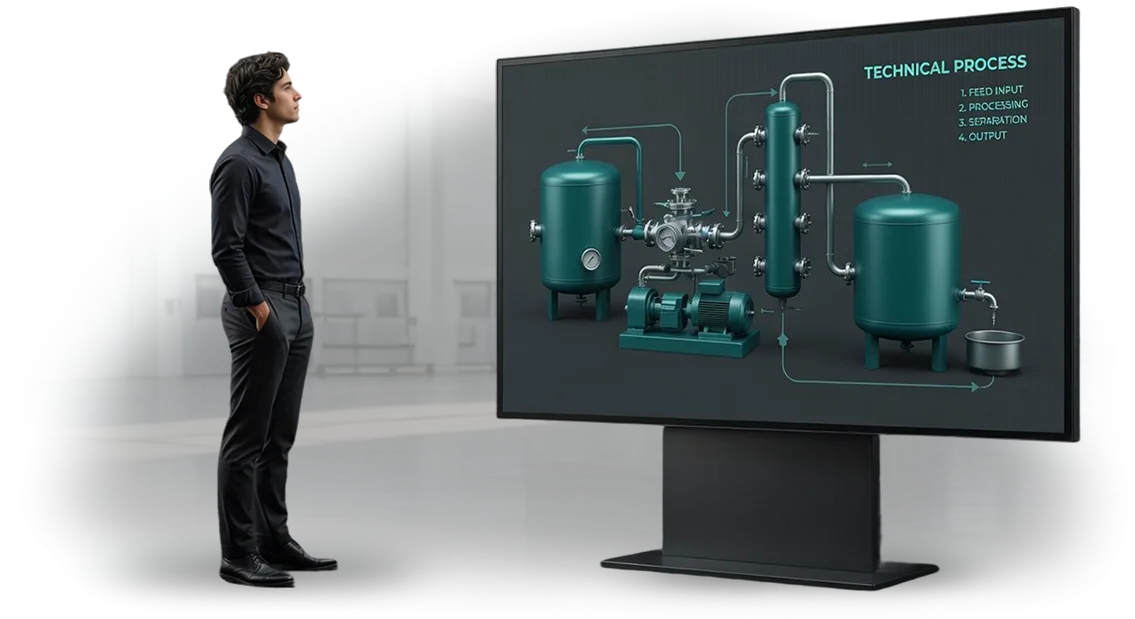
What are the dangers of errors during X-ray system assembly?
Assembling X-ray systems is one of the most critical stages of putting equipment into operation.
Approximation and "hoping for the best" are unacceptable here: an improperly secured stand, an error in connecting cooling, or inaccurate alignment may at first glance look like a trifle, but they turn into consequences that are difficult to predict.
For your business, this means direct losses: downtime of the diagnostic room, rescheduling of patient appointments, unplanned repair costs, and fines from supervisory authorities. And if an error leads to an incident involving staff, the question of legal liability also arises.
One wrong step by an installer negates months of approvals and the costs of purchasing X-ray equipment.
The particular difficulty is that X-ray machines operate at high energies and require strict adherence to safety precautions during installation. Deviation from the regulations can produce incorrect images, an increased dose load, or premature wear of components.
The most unpleasant thing is that defects do not appear immediately, but after weeks, when it is already impossible to return to installation without major costs.
That is why modern personnel training begins with high-quality visual instructions. Video materials filmed according to the actual assembly technology allow each specialist to reinforce the correct sequence of actions and compare their operations with the reference. This is insurance that costs an order of magnitude less than correcting an error.
What benefits does an enterprise get from video instructions
Video instructions turn personnel training from a long and costly process into a manageable procedure. An employee receives a clear action scenario — from switching on equipment to complex maintenance operations.
Onboarding time is reduced several times over, and work quality no longer depends on the personal experience of a mentor.
For X-ray systems, precision is especially important: an operator error means downtime for expensive equipment or a safety risk. Video recording of correct techniques eliminates discrepancies — all employees work to a single standard.
This reduces the number of errors and defects, and therefore lowers the costs of rework and repairs.
Training becomes standardized: you no longer depend on how thoroughly an experienced specialist passes on knowledge. A new employee always sees the same example of actions.
At the same time, video instructions can be reviewed at any moment — for example, before scheduled maintenance or after a long break in work.
We create exactly such instructions — with a focus on the technological details that are critical for your equipment. Filming and editing are performed with professional equipment, while the text and highlighting of key operations are adapted to your production tasks.
As a result, you get ready-to-use training material that is easy to update and scale to new groups of employees.
Video instructions pay for themselves through faster training and fewer errors. Faster onboarding means an employee starts delivering value sooner. Fewer incorrect actions means more stable operation and lower costs for correcting consequences.
This is an investment in process predictability and safety that directly affects the operational performance of the enterprise.
Formats of 3D video instructions for X-ray units
Different tasks require different training formats: some need a full course for onboarding, others need a short module before a complex procedure.
The format should reduce training time and lower the risk of errors, not just "look good." 3D video instructions let you choose the depth of immersion for each employee role.
Below are the typical formats we use for X-ray units, and who each of them suits.
| Format | For whom | What it gives the client |
|---|---|---|
| Full video course on assembly and maintenance | New service engineers, technical specialists | Fast onboarding without pulling experienced mentors away; standardization of knowledge across the entire service network |
| Module on a specific unit or operation | Experienced engineers filling gaps | Targeted upskilling; quick access to the needed instruction before traveling to a site |
| 3D animation of disassembly and inspection processes | Medical staff, equipment administrators | A clear demonstration of correct actions without complex drawings; fewer support requests |
| Short video reminders on common faults | All categories of employees | Fast diagnostics of typical problems; reduced equipment downtime |
Each format is built from a single source — a detailed 3D model of the unit. Therefore, regardless of the chosen option, you get accurate geometry, a clear sequence of operations, and a consistent presentation style. Updating a single video element does not require re-shooting the entire course lineup.
How a training video course is developed
Developing a training video instruction is not a one-off shoot, but a structured process with checkpoints. At every stage you see the intermediate result and can make edits before time and budget are spent on the final stage.
This eliminates the situation where, after editing, it turns out that the script does not solve the training objective.
In our team, we have built the process so that the client always understands what is happening and what they are paying for.
- Brief and task audit. We dive into your specifics: what operations employees perform, where they most often make mistakes, what level of training newcomers have. The output is a clear technical specification that both the client and the contractor understand in the same way.
- Script development. We create a frame-by-frame script with narrator text and timing notes. You receive a document that can be approved with X-ray machine service engineers even before shooting starts.
- Storyboard approval. We show how each frame will look: diagrams, graphic elements, accents. This is a "draft" of the video — it can be revised without the cost of re-shooting.
- Preparation and shooting. We use professional equipment, and for X-ray machines — safe conditions and 3D graphics where real shooting is impossible or risky.
- Editing and voice-over. We assemble the frames, add graphics, subtitles and professional voice-over. You see the rough cut and make edits to the content and pacing.
- Final approval and delivery. You receive the finished file in formats for a corporate portal or a distance learning system, as well as source files for future updates.
- Post-delivery support. If the instruction becomes outdated over time, we quickly update the necessary fragments — the entire project is stored in a structured form, so edits do not require shooting "from scratch" again.
What is included in the corporate video course package
The complete package is a ready-made solution for launching employee training without searching for additional materials. You get everything you need to start from day one: from ready-made videos to methodological guidelines for mentors.
The video course includes:
- Training videos on the assembly and maintenance of X-ray systems — in formats for computers and mobile devices, so employees can learn at a convenient time.
- Methodological materials for mentors: step-by-step lesson scenarios, knowledge-check checklists, and typical questions to verify material comprehension.
- Scripts and editing sheets for each video — you can update the content when regulations change or new equipment models appear.
- Source project files: video assets, graphics, and audio tracks. They remain your property, so you do not depend on the contractor when making edits.
- Access to files via cloud storage or a corporate portal — we configure it for your infrastructure. All materials are structured by course sections.
- Documentation on working with the course: a brief instruction for the administrator on uploading videos to the LMS or placing them on the internal portal.
- Course methodology passport: learning objectives, target audience, recommended lesson duration, and result evaluation criteria.
Such a package covers the entire training cycle: you assign videos, issue manuals, check knowledge, and if necessary adjust materials. You will not have to engage developers or contractors to launch and support the course.
Case study: reducing installer training time
A manufacturer of X-ray systems faced a typical problem: training new installers took up to three weeks. Experienced specialists were pulled away from sites to pass on knowledge, while newcomers still made mistakes during assembly — especially in non-standard situations.
We proposed converting the instructions into a 3D video format. Instead of dry texts and drawings, employees received step-by-step videos where each operation is shown on an accurate model of the system. The company МедТехСервис chose this format to standardize installer training across the country.
Training results
Time savings proved to be the main effect: the course was reduced from three weeks to three days. An installer is ready to go on site 80% faster, and mentor supervision is needed only on the first two site visits.
The number of assembly errors also decreased — defects caused by an incorrect sequence of operations have virtually disappeared.
The company trained 40 installers using the new methodology in two months, without involving the core service team in this. Experienced engineers continued working on their own sites, while training ran in parallel — via tablets and the internal portal.
The metrics speak for themselves: the transition to independent installation accelerated, and repeat warranty claims due to installation errors decreased by a third.
After the first pilot project, the customer expanded the format to maintenance and service support — now the company uses the same videos to retrain existing specialists.
The main takeaway: investments in 3D instructions pay off through the speed of personnel training and quality of work. For a business, this is not just "training videos" but a tool that reduces operational risks and strengthens the service team.
How to choose a video instruction format for your task?
The choice of format directly depends on three things: the complexity of the equipment, the number of employees who need to be trained, and how often the regulations are updated.
For X-ray units, where an error is costly, it is better to be safe and choose a format with maximum detail, rather than saving on a single video for all cases.
A simple linear video is a good baseline for introductory training. It is shot quickly, is moderately priced, and covers the task of familiarizing employees with general operating principles.
But as soon as it comes to disassembling components, calibration, or actions in an emergency, this format becomes insufficient: the employee sees the picture from the outside but cannot pause at a complex moment and examine it from the desired angle.
If you have more than ten people working or the equipment has complex mechanical components, take a closer look at interactive videos with camera switching and a step-by-step mode.
This format allows the employee to choose the pace of learning — they can return to a complex stage, slow it down, or watch the operation from beginning to end without an operator's involvement.
Practice shows: employees get up to speed in their role faster, and the number of errors during maintenance decreases.
Pay attention to how often the instructions are updated. If the regulations change once a year and involve minor edits, a video with a single professional voice-over is sufficient.
If the equipment is being upgraded or you have high staff turnover, it is more advantageous to choose a format in which edits are made quickly and do not require shooting from scratch.
The optimal path is to start with one short pilot video on the most critical operation. You will assess how employees perceive the material, how much time their training takes, and based on this data you will decide whether to scale it to the entire fleet of X-ray units. This approach eliminates unnecessary costs and immediately shows the effect.
Answers to frequently asked questions from video course customers
When ordering a video course on assembling X-ray systems, you are probably concerned about timelines, adaptation to your equipment, and warranties. We answer directly.
How long will it take to develop the video course?
On average, four to six weeks — from analysis to editing and approval. We fix the timeline in the contract so you can plan your training.
Do you adapt the course to our equipment? Yes, this is our specialty. We analyze your schematics and drawings, and if necessary, we visit your site. The video will show exactly your model of the system.
What if the material does not meet expectations at the acceptance stage? You approve the script and see the rough cut before the final version, so we make edits as we go. After delivery — a month of free support.
How is the cost calculated? The cost depends on the scope of operations, the number of locations, and the format. We fix the exact estimate after discussion, with no hidden expenses.
Behind the answers is a predictable process and clear guarantees. You get a course that speeds up employee training and reduces the number of errors in equipment maintenance. Leave a request — we will prepare a preliminary plan and timeline within two days.
Order the development of video instructions for your team
Submit a request for development — and we will get in touch the very next day to discuss the task. You don't need to understand filming or editing: we take on the script, production, voice-over and final assembly.
As a result, your team will receive clear video instructions for the assembly and maintenance of X-ray units, which are easy to adapt to changes in regulations.
The work follows a transparent schedule. First, we hold a consultation: we clarify which operations most often raise questions and which regulations and safety requirements are in force at your company.
Then we prepare a project estimate — we fix the timelines, stages and cost after studying the equipment and processes. This eliminates unexpected expenses and delays at the start.
Key steps:
- Request for development: you describe the task, we ask clarifying questions.
- Interview and analysis: we study the workplaces, operations and typical mistakes.
- Script and storyboard: we show the structure of each video instruction.
- Demo video: we shoot a fragment of the future video so that you can evaluate the style and presentation.
- Production: filming, 3D modeling, voice-over, editing, subtitles.
- Approval and revisions: we bring the material into full compliance with your standards.
- Handover: finished files in the required formats and recommendations for implementation.
What you get as a result:
- onboarding of new employees 2-3 times faster — no need to wait for a mentor to become available;
- fewer errors during the assembly and maintenance of X-ray units;
- uniform standards for all shifts, branches and contractors;
- materials that remain with the company and keep working without additional costs;
- support after delivery: we will help update the videos if the regulations change.
Submit a request for development right now — it commits you to nothing. We will get in touch, answer your questions and, if necessary, arrange a consultation with an engineer.
You will receive a clear plan, an accurate project estimate and a demo video so you can make a well-informed decision.