

Why Do Sporting Goods Shoppers Leave Without Buying?
Every day, hundreds of potential customers walk into sporting goods stores. Many of them have a specific need — running shoes, fitness gear, team sports equipment, or sports nutrition. But a significant share of those visitors leave without buying anything. This isn't a coincidence; it's a systemic problem that can be fixed.
The cause is a large assortment combined with the shopper's limited time. When a person can't quickly find the right size, color, or model, they start to hesitate. The sales consultant may be busy with another customer, and searching the shelves alone takes time and effort.
In the end, the visitor puts off the decision and goes to another store or turns to the internet. That way, the business loses not only the current sale but also that customer's future purchases.
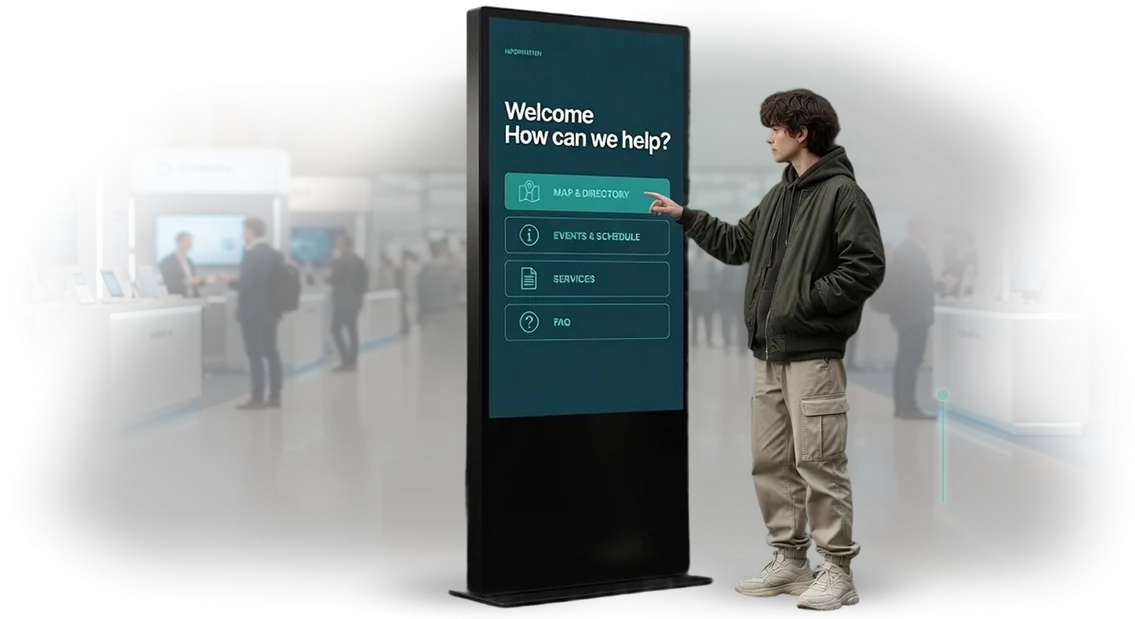
An interactive kiosk helps solve this problem. A store catalog puts the entire assortment on a large, convenient screen: the shopper finds the right product in a couple of taps and sees its characteristics, size availability, price, and photos.
This is especially important for sporting goods, where the customer often doesn't know which model suits their activity — running, CrossFit, or tennis. The kiosk gives clear prompts and cuts selection time from long minutes to a few seconds.
The business benefit is obvious: fewer lost customers, more completed sales, and greater customer loyalty. A visitor who quickly found what they needed feels satisfied and comes back again.
An interactive catalog works without breaks, doesn't get tired, and answers repetitive questions, freeing up staff and letting salespeople focus on those who genuinely need a live consultation.
Because we understand the specifics of sporting goods sales, we build interactive kiosks that turn choosing into a comfortable experience and bring lost revenue back to the store.
This isn't just a screen with a catalog; it's a tool that helps shoppers make a decision — and does it in your favor.
What an Interactive Catalog Gives a Sporting Goods Store
An interactive catalog for a sporting goods store isn't a replacement for the sales staff — it amplifies them. The shopper explores the product on screen while the employee spends time on consultation and the sale. The kiosk works for the store even at peak hours and doesn't fade by evening.
Benefit: Higher Average Ticket
When a visitor sees complete bundles on screen — sneakers with socks and insoles, a bicycle with a helmet and water bottle — they're more willing to add companion items. The kiosk suggests what a busy salesperson might miss in the queue. In our projects, the average ticket grows by 15–20%.
Benefit: Full Assortment Coverage
The sales floor has limited space, but the catalog shows the entire assortment across the chain. A customer finds a rare size or last year's model and immediately leaves a delivery request. The store doesn't lose a sale just because the item isn't on the shelf.
Benefit: Brand Recognition
The screen is designed in the brand's style: logo, colors, atmospheric photos, and videos. Every touch works toward brand recall. During promotions and new collection launches, this becomes an extra communication channel with the customer.
Benefit: High-Intent Lead Requests
A visitor asks to be notified when a size arrives or requests a consultation, leaving their contact details. The store gets not just a view, but a request from a person ready to buy.
Benefit: Client Confirmation
The Atletika store chain installed catalogs in three locations: within the first month — 80 delivery requests, and repeat visits grew by a third. After that, they ordered kiosks for five more stores.
Interactive Kiosk Formats for Your Task
Choosing a kiosk "by eye" is risky: a unit that looks great at a hypermarket entrance will get in the way in a small store, while a compact countertop won't provide the visibility needed in a large location.
The format is determined by where the terminal is installed and which business task it solves: navigation, a catalog with stock levels, consultant support, or self-service ordering.
Let's review the three main formats we use most often in sporting goods stores, and which one fits your situation.
| Kiosk format | For whom | What it gives the customer |
|---|---|---|
| Floor-standing kiosk | Tennis sections and new-arrival displays | Holds attention at the entrance: helps the guest navigate the store, find the right department, and locate products by characteristics. Increases engagement with the assortment — shoppers spend more time browsing the new-arrivals and promotions catalog. |
| Countertop kiosk | Checkout area, order pickup, information desk | Speeds up service: a consultant can show product availability, compare models and prices within a minute. Reduces staff load at peak hours and shortens queues. |
| In-store kiosk | Sales floor, space near clothing and footwear racks | Gives shoppers independence: they can check remaining sizes on screen, order an out-of-stock item, or find an alternative. The result — fewer lost sales, because customers don't leave just because the right size isn't on the shelf. |
These aren't just three different enclosures — the interface logic and interaction scenario change too.
A floor-standing unit needs a large screen and fast navigation by department; a countertop needs a compact "availability–price" menu; an in-store kiosk needs a full catalog with filters and a cart.
We'll help you choose the format that fits your tasks and store size, then design the interface and catalog specifically for that enclosure type. Leave a request — a our team specialist will suggest a solution that suits your location and budget.
How We Build a Kiosk: From Brief to Launch
For a sporting goods store, an interactive kiosk solves several tasks at once: it helps shoppers quickly find sneakers in the right size, shows promotions and new arrivals, and reduces queues.
To make sure the result doesn't disappoint, we follow a transparent plan — you see the development stages and know when the terminal will go live.
- Brief and task analysis. We clarify the assortment, seasonality, and typical customer questions. This is the foundation for the catalog structure.
- Scenario and catalog structure. We design search paths: by categories, brands, sports, and size chart. The customer finds what they need in 3–4 taps.
- Interface design prototype. We create a clear screen with large buttons and a branded look. You see the mockup before development starts.
- Assembly and content loading. We upload products, prices, promotions, and photos. We connect updates from your inventory system, if you have one.
- Testing on a terminal. We check response speed, data accuracy, and fault tolerance. We fix any issues before launch.
- Launch and staff training. We install the software, help connect the hardware, and show employees how to operate the kiosk.
- Post-launch support. We answer questions, update the catalog, add promotions. The kiosk runs stably — you're never left alone with problems.
What You Get in the Project Delivery
You get more than just a touchscreen kiosk — a complete delivery package: hardware, content, installation, and staff training. The team handles every stage, from delivery to commissioning, so all you need to do is watch the results.
- Hardware package: touchscreen terminal in a protected enclosure, mounting hardware, cables, and power supply. We'll deliver it, install it in the right spot, and connect it — you won't have to find contractors or figure out component compatibility.
- Interface and content catalog: a showcase of products and services in your brand style, with search and detailed descriptions. Shoppers quickly find what they need on their own — this reduces the load on sales staff and speeds up selection.
- Integration with your product database: if needed, we'll connect the kiosk to your inventory system so prices and stock levels update automatically. No manual edits and no mistakes from the human factor.
- Kiosk installation: an engineer comes to the site, mounts the terminal, configures the network and software, and runs a test. Everything works right away — no downtime and no hidden costs.
- Staff training: a short hands-on session for cashiers and consultants — how to switch the kiosk on, update information, and resolve common issues. Your employees won't need IT specialists on hand.
- Documentation: a clear operation manual, maintenance schedule, and administrator guide. Even with staff turnover, you can quickly bring a new employee up to speed.
- Warranty and support: maintenance of equipment and software, remote diagnostics, and a request handling system. If something breaks or you have a question — we help remotely or send an engineer to the site.
The result is a working sales channel, not a "box" with unclear settings. The project scope is fixed before we start, and any changes are approved with you in advance — the whole process is transparent and turnkey.
Case Study: A Gear Store Increased Its Average Ticket
Before buying gear, people compare dozens of models — from tents to boots. This takes a lot of time, and consultants can't show everything to everyone. Every other visitor already roughly knows what they're looking for but wants to be sure of their choice.
The owner of a gear store chain came to us with this pain point: visitors take a long time to choose, but often leave without buying.
We proposed an interactive catalog example — a touchscreen kiosk that took on the role of an "all-knowing consultant." On screen, the shopper finds a product in a couple of taps, compares characteristics, sees the price, availability, and suitable accessories.
For the Atlet chain, the terminal was installed at the entrance — it greeted guests, showed the assortment before they even stepped into the store, and drew them into the selection process. The kiosk worked without staff involvement, which was especially important at peak hours.
Project Results
Within a month, the average ticket at stores with the catalog grew by 18%, and time at the display doubled. Shoppers added companion items more often — the system suggested "frequently bought together" — and were less likely to leave without buying.
Conversion to purchase grew from 35% to 42%, and consultants switched to complex questions instead of repeating the descriptions from price tags.
The key result of the project was a change in customer behavior, not just a higher session count. After seeing the assortment on screen, they planned their next purchase in advance and came back for new categories.
Within a quarter, the client expanded the project to five more locations, confirming the solution's value across the entire chain. The catalog paid for itself within two months of active sales.
How to Choose the Right Format for Your Store?
In a sporting goods store, a shopper either knows what they're looking for or needs help. So choosing a kiosk format starts with one question: how will the first contact with the product happen? Those who come for a specific pair of sneakers or a ball care about search speed.
Those choosing a gift need visuals and the ability to compare. A branded store needs emotion and a memorable image.
There's no universal solution, but there is a proven approach: each task gets either a classic floor-standing or wall-mounted catalog, or a custom kiosk built into the interior. The difference is clear in this mini table:
| Situation | Format | Result |
|---|---|---|
| Large store, hundreds of items | Floor-standing touchscreen catalog | Fast search, less load on consultants |
| Small location, little space | Wall-mounted kiosk | Full assortment without losing floor space |
| Branded store | Custom kiosk | Memorable, generates social media coverage |
A custom format doesn't mean a premium price today.
Using the same modular structures and materials as a regular kiosk, we make the terminal part of your retail concept — for example, in the shape of a barbell, a treadmill, or a wall "showcase." This increases engagement and extends time in the store, which directly affects your average ticket.
If you're not sure which format fits your store — send us your floor plan and describe the purchase scenarios. We'll suggest 2–3 options tailored to the specifics of sports retail, and install the chosen one within a reasonable timeframe.
Frequently Asked Questions About Interactive Kiosk Development
Before ordering an interactive kiosk for a sporting goods store, clients always have a few key questions. The answers below clear up the main doubts and help you get started faster.
Who is responsible if the kiosk stops working?
We provide a warranty on both the hardware and the software. In case of a malfunction, we replace the component or the terminal within the warranty period, and 90% of issues are resolved remotely on the same day.
our team always keeps the client with a working kiosk — in 10 years of practice, there have been no exceptions.
How long does kiosk development take?
Usually 3–4 weeks. During that time, we prepare the design mockup, build the showcase around your assortment, and test the shopper scenario. If the catalog already exists in Excel or an inventory system, the launch is faster. The exact timeline is fixed in the contract before work starts.
How do I change prices and product availability?
You'll be able to update products without a developer. The admin panel lets you change prices, upload photos and descriptions, and with an inventory system, data syncs automatically. Training takes no more than an hour.
Let's Discuss Your Project — Leave a Request
Let's talk about how an interactive catalog can increase sales at your sporting goods store. Leave a request — during the consultation we'll review your tasks, recommend the optimal format, and calculate the project for your assortment.
You don't need to get into technical details: we'll explain what equipment suits you and how catalog management will work.
At the meeting, we'll show where the kiosk brings the most value — at the entrance, in the popular categories zone, or near the fitting rooms. We'll review how shoppers will find products by size, brand, and sport, compare models, and make purchase decisions faster. This reduces the load on your staff and shortens the visit.
What you get after contacting us:
- a cost estimate and timeline for project implementation;
- a consultation on interactive catalog scenarios;
- recommendations on kiosk placement and content;
- a launch plan with clear stages and timelines;
- solution options tailored to your sporting goods store;
- answers to your questions and an understanding of how the kiosk will pay off.
After our discussion, we'll prepare a transparent proposal with no hidden work. Once the interactive catalog is live, you'll be able to update products, promotions, and prices yourself — without lengthy approvals or bringing in developers.
Leave a request for a kiosk right now — we'll call you back at a convenient time, answer your questions, and prepare the project estimate. We'll start with a short conversation about your store and show you how an interactive catalog can start delivering value.