

Customers Are Switching to Competitors — How to Retain Them in Winemaking?
A guest arrives at a winery, tastes three to five samples, takes one photo against the oak barrels — and drives off to the next producer.
Sales are built on personal consultations, but at peak hours the tasting room can't handle the flow: the sommelier is busy, questions go unanswered, and the wine goes unbought.
Retaining guests in wine tourism turns into a race for repeat visits, and the one who loses is the one who didn't give the guest a reason to stay at least half an hour longer.
A paper folder or corkboard catalog in the tasting room doesn't tell the estate's history and doesn't help with the choice.
The guest doesn't understand the difference between the lines, feels awkward asking again, and leaves with a single souvenir glass instead of a case of wine.
A month later, they won't remember the name of your winery — the money goes to whoever managed to impress and hold their attention.
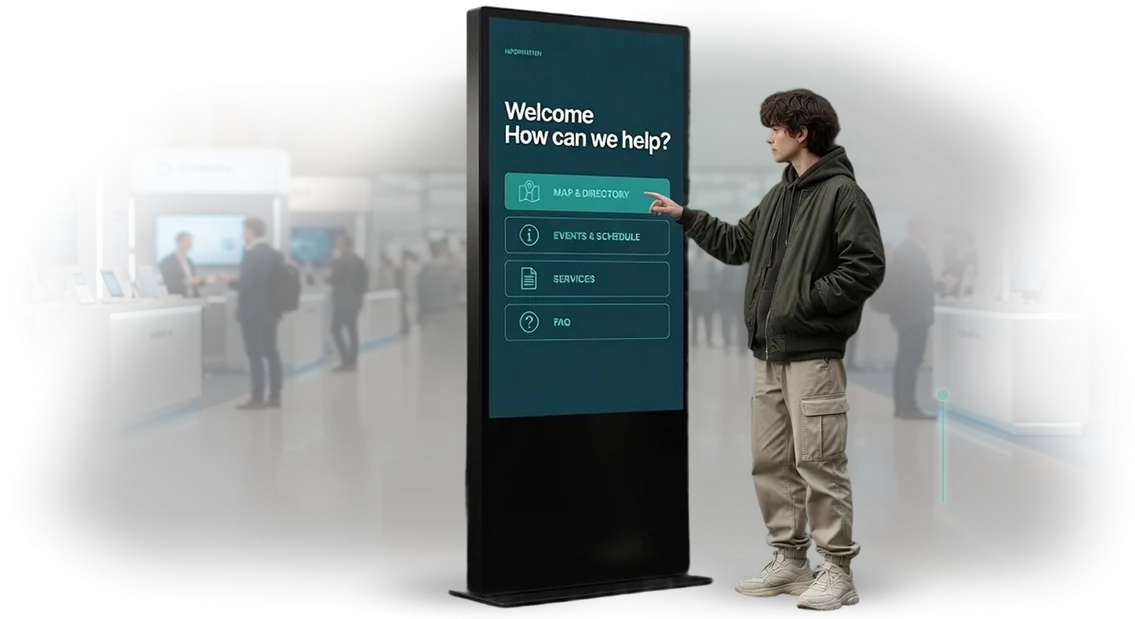
An interactive kiosk for a winery solves this pain: the guest explores the collection at their own pace, gets to know the terroir, views wine and food pairings, and places an order right there.
They don't need to download anything or search online — the screen at the counter works instantly and is easy for any age to understand.
The kiosk relieves the staff, raises the average check, and captures a contact for the return visit: a reminder of the new harvest, an invitation to a private tasting, a personalized selection.
That's how a one-time visit turns into regular visits, and your winery becomes that place guests return to with friends.
Three Reasons to Install an Interactive Kiosk in the Tasting Room
An interactive kiosk in the tasting room is not a replacement for live sommelier conversations but a sales booster. A guest who came to try one wine can easily discover three or four positions they wouldn't have noticed before.
An engaging catalog with descriptions and wine stories works like a personal guide: it suggests, selects options by taste, and leads the guest toward a more expensive position — that's exactly how the average check grows.
The second reason is guest engagement. An interactive catalog turns wine selection into a game: a touchscreen, beautiful label photos, winery stories, food pairings.
The guest spends a few minutes at the screen, tastes, compares, consults friends — and leaves with a bottle they chose themselves. This happens noticeably more often than when the choice is random or based on a waiter's recommendation.
The third reason is data collection. The kiosk records which wines are viewed most often, which positions are in demand, and which pairings guests choose. This data helps adjust the display, the menu, and procurement: you know which positions to strengthen and which to replace. This way the interactive kiosk becomes a tool for assortment development, not just a point of sale.
As a result, the kiosk pays for itself not only through direct sales but also through a higher average check, a deeper guest acquaintance with your wine list, and clear analytics. Every guest gets more, sales go up, and assortment management becomes more precise.
Interactive Catalog Formats for Winemaking and Tourism
Paragraph 1: An interactive catalog is not just an electronic display. For a winery, wine boutique, or tourist site, it becomes a personal guide: it helps the guest navigate the assortment, learn the estate's history, and choose a wine for purchase or tasting.
Context: The form factor directly affects guest convenience and how the catalog fits into your space. We select equipment based on the area and style of the premises, rather than offering a template solution.
Main Implementation Options
| Format | Who It's For | What It Gives the Customer |
|---|---|---|
| Stand (floor kiosk) | Wine boutique, tasting room, tourist center entrance | Attracts attention, handles high traffic, works as a display and guide at the same time |
| Wall-mounted kiosk | Small space, café or shop at the winery | Saves space, always in view, helps quickly find wine and place an order |
| Tablet | Sommelier, consultant, winery tour | Mobility: individual catalog presentation, live dialogue with the guest, convenient during the tour |
In any option, the guest gets clear navigation by grape variety, vintage year, gastronomic pairings, and price. For you this means a higher average check and less consultant time spent on routine questions — the team can focus on guests who really need attention.
How We Build a Terminal for Your Business: From Brief to Launch
Predictability matters to the client. We structured the process so you understand what happens at each stage of kiosk development and when you'll get the result. No magic and no hidden work — only clear steps and precise deadlines.
- Brief and objectives. We discuss where the terminal will be located, who its main users will be, and what products or services need to be shown. We also lock in the budget and desired launch dates.
- Design mockup. We design the screen appearance around your brand: menu structure, fonts, colors, button placement. You see the mockup before development starts and can make edits right away.
- Mockup approval. We build an interactive prototype — it shows how a visitor will browse the catalog and select products. Mockup approval takes a couple of days, and only after your "ok" do we move forward.
- Development and content. We program the terminal logic and upload your products, prices, photos, and descriptions. If you have a wine production, we specifically work on the presentation of wine lists so guests can quickly find what they need.
- Interactive terminal launch. We deliver the equipment, install it, connect it, and test it in real conditions. Our specialists train your staff — they'll be able to manage the system themselves and handle typical issues.
- Support and updates. After the launch, we stay in touch: we help update the assortment, change prices and promotions. If the business grows — we add new sections and features on the same platform.
Each stage is documented in a short report, so you always know what's been done and what's left. This approach has already helped dozens of projects in HoReCa and retail — typically, two to three weeks pass from brief to launch.
What's Included in the Interactive Kiosk Delivery
The client doesn't need to buy anything extra or approve things piece by piece — the kiosk arrives ready to work. The basic package includes the equipment, pre-installed software, catalog content, and documents for launch. All your staff need to do is turn on the terminal and follow a short instruction.
The terminal warranty is active from day one and covers the hardware and factory defects. We don't treat the warranty as a formality: if the equipment fails, the contract provides for fast replacement or repair so the kiosk doesn't sit idle on the busiest day.
Catalog content is prepared around your wine line and seasonal offers and can be updated on request whenever needed.
Kiosk Delivery Package
- Touch terminal with a vandal-resistant enclosure — suitable for tasting rooms, winery shops, and waiting areas.
- Pre-installed software — the interface is already configured for the product catalog, with no need to find a contractor for launch.
- Catalog content — section structure, wine descriptions, photos, and current prices. You get a finished display and can easily add new items if you like.
- Product passport and operating instructions — in Russian, with clear actions for staff without technical training.
- Admin access keys — so you can change content yourself, manage special offers, and track activity.
- Warranty card with service terms — replacement and repair terms, engineering support contacts.
Service support remains available after launch: we answer questions, help with content updates, and remotely check system health on request. That way the kiosk runs stably and doesn't distract staff from their main job — helping guests choose wine.
Case Study: How a Wine Boutique Increased Sales with a Terminal
A wine boutique came to us with a familiar pain point: the assortment had grown, and consultants physically couldn't cover every item. Guests got lost in the catalog, took a long time choosing, and left without buying.
Weoffered an interactive display based on a touch kiosk — an unobtrusive replacement for paper catalogs and a live hint right next to the shelves.
The kiosk was installed at the entrance to the hall. The guest picks a category: wine for dinner, a gift, by region, or by grape variety. The system shows cards with descriptions, gastronomic pairings, and prices. The controls are simple — even those who've never used touchscreens manage fine.
What Changed at the Boutique
- Sales grew by a third in the first month after launch.
- Guests started spending an average of 7 minutes at the display instead of 2 — enough time to study the offer and make a choice.
- The average check went up: customers more often took a second bottle after seeing a suitable dinner pairing.
- Consultant workload decreased — they focused on those who need live advice.
Six months later the boutique ordered a second terminal for the second hall, and then another one for their second location.
The kiosk paid off not only through higher sales but also through a change in guest behavior: they now arrive with an idea of which wine they want and buy more confidently.
How to Choose the Right Format for Your Winery?
A kiosk format should be chosen not by appearance but by the guest flow scenario at the winery. A stationary terminal makes sense where visitors spend time deliberately: the entrance area, tasting room, winery shop.
It becomes a navigation hub and an interactive wine catalog the guest returns to several times. For the business, it's an opportunity to show the entire line, tell the story of each variety, and gently guide toward a purchase without staff involvement.
A mobile terminal is needed when your staff are on the move: vineyard tours, off-site tastings, festival participation, or restaurant presentations.
With a tablet on a stand or in a consultant's hands, you can open the interactive catalog right by the bottle shelf or in the cellar. This is especially convenient for small wineries where one person combines the roles of guide and seller. The guest gets answers instantly, and you increase the average check with additional items.
Practical advice: identify the main point where the purchase decision is made. If guests choose wine after a tasting in the hall — install a stationary kiosk with a large screen and convenient search by taste and price.
If the decision matures during a tour or on the open terrace — choose a mobile format that doesn't depend on a power outlet and can easily move between zones.
Consider hybrid scenarios: a stationary terminal in the shop and a mobile one with the tour guide. That way you cover both sales channels and collect more contacts.
Our specialists will help assess the guest route and suggest a format that truly pays off — without overpaying for unnecessary options.
It's important to understand: choosing a kiosk format is not a technical task but a decision about how the guest gets to know your assortment.
An interactive catalog for a winery should be convenient for your specific customer — and then the kiosk will become a sales growth tool, not just an interior decoration.
Frequently Asked Questions About Support and Warranties
Before launching an interactive product and service catalog in winemaking, owners and managers tend to ask the same questions: how to protect against terminal breakdown, who will update the content, and whether they'll need to hire a dedicated specialist. Let's break down the most common scenarios — from warranty service to staff training.
What does the warranty on a winery terminal cover?
The warranty covers the entire equipment package and the pre-installed software. During the warranty period, repairs and component replacements are carried out at our expense, and the troubleshooting time is fixed in the contract — usually two to three business days.
In case of a lengthy repair, we arrange a backup kit or remote diagnostics so the catalog keeps working during the season.
How quickly is the interactive kiosk content updated and who does it?
Updating kiosk content is your task, not a programmer's. Simply upload new data to your personal account: prices, catalog items, wine photos, promotions, and events. The changes appear on the terminal within minutes, without downtime and without involving a contractor. This makes it easy to react to seasonal offers or new releases from winemakers.
Do you train staff to work with the kiosk?
Yes, at launch we conduct training for employees: how to turn the terminal on and restart it, change the assortment manually, and respond to errors. We also leave short video instructions available at any time.
This is especially convenient when new employees join the winery — they can be trained without involving a contractor.
What should we do if the terminal stops working in the middle of the season?
If any malfunction occurs, you call the support service. First, we do remote diagnostics — more than half of the issues are resolved over the phone or through remote access.
If physical intervention is required, we visit according to the schedule agreed in the kiosk maintenance contract. For critical locations, we work out a rapid equipment replacement scenario in advance so guests don't notice any downtime.
Order Interactive Catalog Development Today
Submitting a request for an interactive catalog for a winery isn't just a request for "another screen." It's a chance to get a complete solution that helps guests navigate the assortment, tells the winery's story, and increases the average check.
We'll send a cost estimate for the terminal and a presentation of solutions tailored to your needs right after the first short conversation.
What you need to order an interactive kiosk:
- Describe the task: how many varieties and items are in the catalog, which points of sale or tasting zones need to be covered.
- Specify how guests should interact: search by variety, pairing with food, winery history, or vineyard map.
- Determine the terminal location: entrance, tasting room, winery shop — this affects the format and construction.
- Think through what data to show on the display: price, volume, gastronomic pairs, awards, ratings.
- Decide whether you need an integration with an accounting system or a standalone catalog — we'll suggest the optimal option.
After that, we'll prepare a commercial proposal and a solution presentation for the winery: a placement diagram, design concept, equipment list, and launch timeline. You'll be able to see how the kiosk fits into the interior and what effect it will deliver for guests and staff.
You don't need to understand technical details — we handle everything: from interface development to installation and staff training. Submit a request, and the very next day you'll receive a cost estimate and an implementation plan.