

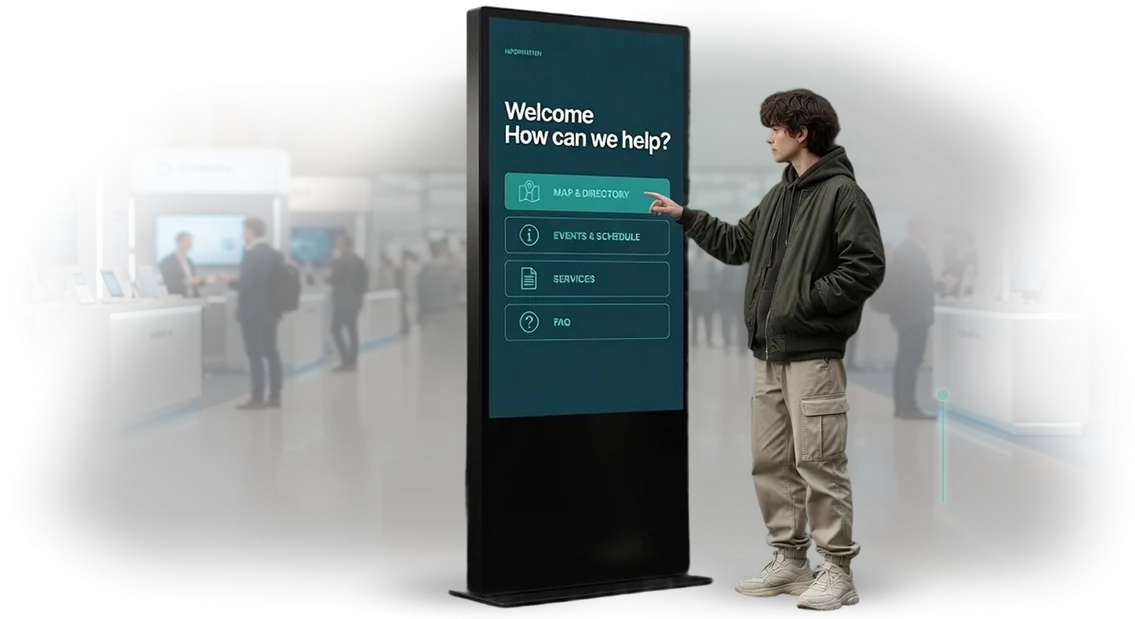
Why do water park guests get bored without interactive experiences?
Guests come to the water park for emotions, but first impressions are often spoiled by queues. At popular attractions during peak hours, people wait 20-30 minutes — children get tired and cranky, parents get annoyed. Time that could be part of the fun turns into a test of patience.
The calm zones lose just as much: cafes by the pool, corridors to the locker rooms, waiting areas at the front desk. They take up space but don't create impressions or a reason to stay longer. Guests walk past without stopping — and the water park gets neither emotions nor additional orders.
All of this hits revenue: guests leave earlier, return less often, and write "crowded and boring" on social media instead of sharing great photos. Brand reach suffers where nothing interesting happens — the venue loses both money and mentions. And yet, the situation is easier to fix than it seems.
We solve this pain with our team: we design interactive information kiosks that turn waiting into a game.
While the family stands in line for an attraction, kids take a quiz or a fun trivia game, and parents get a park map and bonus tips — time flies by, and the impression of the visit becomes completely different. Guests leave with vivid memories and return willingly.
Five benefits guests and you will experience
Guests spend more time and come back again
The main benefits of interactive kiosks in a water park are visible on day one: guests choose their own route, learn about attractions, and get more done.
A user-friendly interface reduces the fatigue of waiting — which means higher visitor loyalty and a stronger desire to return.
Additional sales without being pushy
The kiosk suggests what guests actually need: cabana rental, a workshop in the kids' zone, or lunch at the cafe when it's time for a bite. While guests explore their options, the brand earns on services that would otherwise often go unnoticed.
Staff focus on real work instead of answering the same questions
Water park employees stop being a help desk and can devote more attention to guest comfort: helping at the slides, monitoring safety, cleaning zones. Staff workload is directly reduced — fewer routine inquiries, higher service quality.
Queues dissolve because some services move to the kiosk
Buying tickets, booking a slide time, or ordering drinks — guests handle all of this themselves in a couple of taps. Wait times shrink, and visitors stay in a great mood even at peak hours.
You see what's in demand and make data-driven decisions
Behind every screen there's clear analytics: which services are chosen most often, where guests linger, what they skip. This lets you quickly improve service and increase the average check without extra ad spend.
Interactive kiosk formats for water parks
Water park visitors come to relax, not to figure out navigation. A kiosk should show the way to the slides, cafe, or locker room in seconds, and also entertain guests in line.
That's why we offer three formats that cover different water park needs — from guest logistics to additional revenue and entertainment.
Three formats for water park needs
| Format | For whom | What it gives the client |
|---|---|---|
| Navigation kiosk | Families with children, new guests, first-time visitors | Reduces staff workload, cuts queues at information desks, and helps guests find their way to the right zones faster |
| Game kiosk | Children and teens waiting in lines | Captures guests' attention, creates positive emotions and extra reasons for social media photos |
| Info stand | All visitors, as well as water park management | Shows current promotions, safety rules, and attraction schedules in real time |
Game kiosks pay off especially well: while the child is busy, parents can calmly browse the cafe menu or buy tickets for future visits. And navigation kiosks save dozens of inquiries to administrators every day — staff focus on guests instead of repeating the same directions.
We also combine formats in a single enclosure: navigation, games, and info stand work as one integrated system. The water park gets a flexible tool that can easily be extended with a new feature — for example, selling photos from the slides or a loyalty program.
How we develop kiosks for water parks: 7 turnkey stages
We understand that a kiosk in a water park isn't just a stand with a screen — it's a complete tool that relieves staff, speeds up guest service, and increases sales of additional services.
To deliver exactly that result, we've built a transparent 7-stage process — from the first meeting to launch and ongoing support.
-
Brief and immersion in the task. You tell us about visitor flows, points of sale, and the problems you need to solve. We study the water park's specifics: peak loads, seasonality, navigation needs of guests with children.
-
Scenario design. We propose the menu structure and screen logic — so guests find what they need in 2-3 taps, and administrators get clear analytics. We approve the prototype before development begins.
-
Design mockup. We create an interface in your brand style: bright, large buttons, adapted for the pool's bright lighting and possible splashes. We approve the mockup — edits are made before programming starts.
-
Development and integration. We program the kiosk logic and connect it to your accounting system, cash registers, and season pass database. At this stage, you see intermediate demos and adjust details.
-
Testing in real conditions. We test scenarios: ticket purchase, slide reservation, locker payment. We account for the behavior of guests of different ages — from kids who reach for the screen to adults who don't like figuring things out for long.
-
Launch and staff training. We install the kiosk and run a short training for administrators and cashiers: how a shift works, what to do if errors occur, where to find reports. We make sure staff work confidently with the system.
-
Support and development. After launch, we stay in touch: we update content, add new services, monitor load, and resolve issues promptly. You get reliable kiosk operation without involving your own IT department.
This approach has already helped water parks cut ticket office queues during peak hours and increase the average check through additional offers on screen.
And for you, the key point is that the whole process is transparent: you always know what stage the project is at and when the result will be ready.
What's included in the interactive kiosk delivery
When ordering an interactive kiosk, it's easy to think that the main thing is a nice "stand with a screen." But the real value for a water park is that the kiosk works flawlessly on the busiest day, staff know how to use it, and the content serves its purpose: navigation, additional service sales, entertaining guests in line. That's why the delivery includes not just equipment, but a complete turnkey solution.
Here's everything you get:
- Working software configured for your water park's needs — zone map, attraction and entertainer schedules, cafe menu, ticket sales, and additional services in competitive positions.
- Interactive content for visitors — venue navigator, a "you are here" map, and game mechanics for children so waiting in line becomes part of the experience rather than a reason for tantrums.
- Full documentation in Russian — short instructions for staff, an administrator's guide, and procedures for unusual situations. No "figure it out yourself."
- Staff training — entertainers, cashiers, and administrators will understand how to manage the kiosk, change prices and promotions, and launch promo screens without calling a programmer.
- Design adapted to your brand — screen styling in the water park's signature colors so the kiosk looks like part of the space, not an out-of-place element.
- Warranty on software and hardware — fixed commitments on system uptime; if something goes wrong, we resolve it per procedure, without "that's not our responsibility."
- Post-launch support — content updates, technical support, and feature improvements as your business grows, such as connecting new services or holiday promotions.
- Future-proof headroom — the entire package is designed so you can add screens and scenarios as the water park develops, without rebuilding the system from scratch.
This delivery saves you time and stress: no need to hunt for a software contractor, then a designer, then a training provider, and then stitch it all together yourself. You get a well-oiled machine that starts delivering value from day one.
Case study: interactive kiosks increased attraction attendance
A water park guest comes for emotions, and any delay — at the cloakroom, buying a pass, entering a slide — reduces the desire to return. We installed interactive kiosks with zone maps and attraction recommendations at «Aquatoria» park. With their help, visitors planned their route in a minute instead of waiting in line for advice.
Numbers after launch
Two months after the kiosks went live, attraction attendance grew by a third. The average time a guest spent in the park increased from 3.5 to 5 hours — people found more activities and didn't waste time searching. The share of guests who returned for a second visit within the season rose by 20 percentage points.
The kiosks cut entrance queues in half. Guests chose a free attraction through the screen and immediately saw where fewer people were — this took pressure off popular slides and brought distant zones into use. Foot traffic at smaller rental points and cafes grew: visitors discovered them through kiosk tips.
Why it worked
The kiosk doesn't replace staff, it takes on the routine: navigation, wait times, activity selection. Guests don't need to ask questions — the system itself suggests options by age and boldness level. The client didn't just get screens; they got a crowd-management tool.
Within a month, the client came back — asking to add a second floor and a kids' zone. That's the best measure of value: when kiosks pay off not in a report, but in the desire to keep going. We're ready to deliver the same result at your water park.
How to choose a kiosk format for your water park's needs?
Choosing a kiosk for a water park starts not with the model but with the task. What should the kiosk do: relieve the ticket counters, help with navigation, sell additional services? A clear task narrows down the types and saves the budget. Otherwise, the kiosk risks becoming an expensive toy that guests walk past.
Large floor-standing kiosks suit the lobby and entrance: quick ticket sales and schedules. Compact wall-mounted stations work well in cafes, by locker rooms, and near water slides — they don't block walkways and help with navigation. This way you cover both sales and service without extra stands and queues.
When choosing a solution, look at peak load, queue locations, and who will use the kiosk. A clear interface with large buttons and the right languages is critical: if a guest can't figure it out in half a minute, the kiosk isn't working. This directly affects queue speed and guest impressions.
The optimal format depends on the zone: at the entrance — fast ticket sales, by the pool — information and wait times, at the cafe — pre-ordering. In practice, one kiosk rarely covers all roles, so we design a combination of different types. This approach pays off within the first season.
We help you navigate kiosk types, select a configuration for your water park's visitor flows, and design scenarios around real guests. You get not just a kiosk, but a working tool: shorter queues, higher additional sales, and satisfied reviews.
Common concerns: answering before you start
Before launching kiosks in a water park, clients tend to have the same doubts: will the equipment break, will guests actually use it, will content updates become a headache?
We answer the main fears — briefly and to the point, as we've done across dozens of projects for water parks and family entertainment centers.
What if the kiosk breaks on the very first day?
We work with professional equipment built for intensive use — up to 10,000 touches per day. All kiosks come with a warranty, and our team at our team provides remote health monitoring.
If something does go wrong, you're never left alone with the failure: requests are handled within one business day, and an engineer will come out if needed.
What if guests simply don't use the kiosk?
A kiosk only pays off when it's actually used. That's why we design the interface around the water park audience: large buttons, hints, minimal fields to fill in. Guests don't read manuals — they immediately see how to buy a ticket, rent a wetsuit, or order a cocktail.
After launch, we analyze usage scenarios and refine the interface if needed to grow the number of sessions.
Is it difficult to update prices and schedules?
Updates take just a few minutes and don't require a programmer. You change prices, promotions, and schedules through a simple control panel — as easy as using social media. Data appears on kiosk screens instantly, without stopping operations or causing downtime for visitors.
Won't the launch drag on or cost more than planned?
Timelines and costs are fixed in the contract before work begins. We break the project into stages and show intermediate results — you see how the launch is progressing and keep the budget under control. Usually, it takes 3-4 weeks from brief to working kiosk, including on-site testing.
If you still have doubts, ask us directly. We'll send examples of our kiosks in water parks and explain how to integrate the solution into your infrastructure without stopping operations.Discuss your project today: submit a request
In a water park, every minute of a visitor's time counts: guests want to get to the slides faster, and administrators want to relieve the information desks.
Interactive kiosks solve these problems: they help with wayfinding, ticket purchases, and show real-time attraction occupancy. This boosts guest satisfaction and reduces staff workload.
We develop kiosks for the specific needs of your water park — accounting for the layout, visitor flow, and your business goals. To discuss the project, submit a request.
We'll call you back at a convenient time, answer your questions, and advise on how to implement the solution with maximum benefit.
After your request, you'll get:
- a consultation with an engineer and designer on your scenario;
- a cost calculation based on the number of kiosks and required features;
- a demonstration of solutions from real water park projects;
- an estimate of installation and launch timelines;
- recommendations on placement and navigation;
- a personalized offer tailored to your budget.
We work remotely across the entire country and have already completed projects for entertainment parks. You won't need to dig into technical details — we'll handle everything: from design to launch and support.
Don't put it off: the sooner we start, the sooner guests will appreciate the new convenience. Submit a request today — we'll provide a preliminary estimate within one business day.