

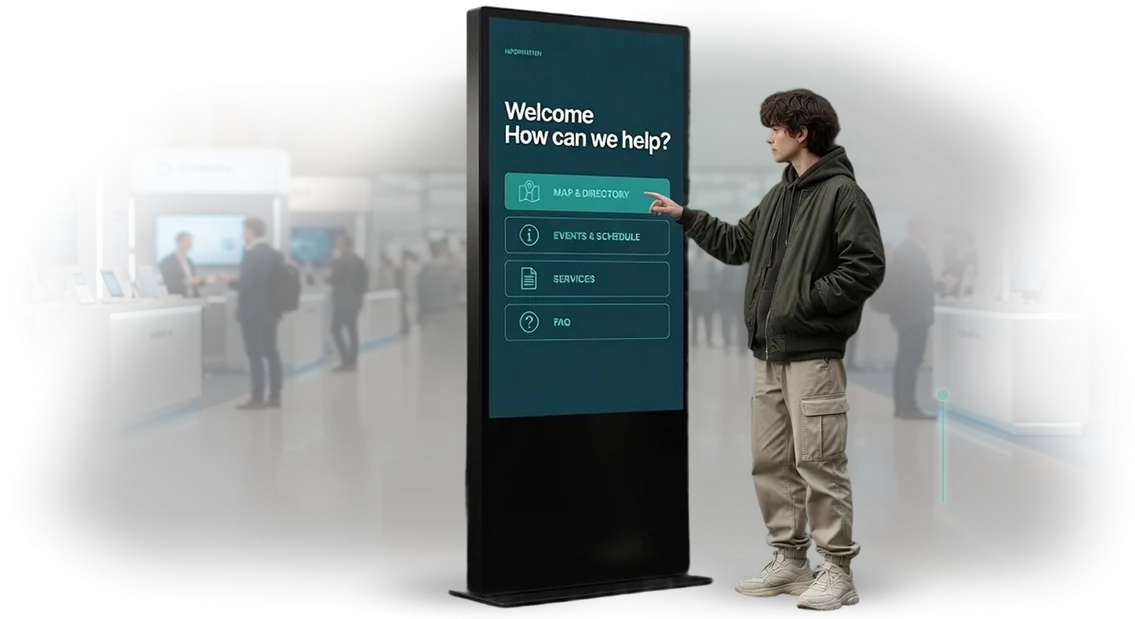
Interactive Table for Preschool Children: Development and Engagement
Parents who bring their child to a children's center expect the wait to be spent productively. But ordinary chairs and toys quickly grow boring: the toddler gets restless and fussy, and adults can neither complete paperwork nor simply catch their breath.
This is exactly where an interactive table for preschool children turns chaos into calm, productive leisure.
This format is both entertainment for children and a child development tool at the same time. Vivid scenarios, logic tasks, memory exercises, and motor skills activities keep a child engaged for 15–20 minutes — enough for a parent to handle their own matters.
At the same time, the child is not just playing but gaining new skills, and the center gains a strong argument: "Come to us — it's fun and educational."
For a children's center owner, this works on key metrics: visitors stay longer, return more willingly, and bring friends along.
While the little one is absorbed in the interactive experience, adults have time to check out the café menu, sign up for classes, or order additional services. In this way, a single table becomes a focal point and a reason for positive reviews.
We create interactive experiences for young children with age-specific needs and safety requirements in mind: no sharp corners, complicated instructions, or fragile parts.
The solution is tailored to your interior and visitor flow — from a compact stand to a full-fledged play area.
The unit requires no constant staff supervision, and the games are easy to update for new scenarios and holidays. In the end, you get not an expensive toy but a working tool that puts parents at ease, develops children, and increases the center's revenue.
What Benefits Your Center Will Gain from Interactive Solutions
Parents choose a center where their child is genuinely engaged. When the little one is absorbed, mom and dad get time for themselves — and they come back again.
An interactive table for preschool children turns ordinary waiting into an adventure, and your center into the family's favorite place.
The first thing you'll notice is increased attendance. The table draws children in and sparks a lively response, and parents tell others about it. Dwell time also grows: after a class, children want to keep playing, and parents gladly order drinks or extra services. Each such visit increases the average check without additional advertising spend.
The second important result is loyalty. The child asks to come back, and parents associate that with your center. Over time, visits become regular, and you become not just a leisure spot but part of a family habit.
Plus, built-in educational programs help children master counting, logic, and speech through play — parents value that and trust you more.
Finally, interactive solutions build recognition and generate leads. A bright zone attracts attention, guests photograph it and tag your brand on social media.
And if you enable a booking or request feature right at the table, you get parents' contacts and warm leads that easily turn into new memberships.
As a result, the table pays for itself through higher attendance, a larger average check, and repeat visits — comprehensively strengthening all of the center's metrics.
Interactive Table Formats: Choose the One for Your Task
Preschool children perceive the world through play, so the interactive table format directly affects the value it brings to your facility. The key question is where it will work: in the lobby, in the playroom, or during educational sessions. Each location has its own solution, and we match it to your goals, space, and budget.
Below are the standard formats we implement. They differ in purpose but share one thing in common: the child is engaged, and you get a modern space where children want to be and come back.
| Format | For whom and where | What it delivers to the client |
|---|---|---|
| For lobby and waiting areas | Children and parents waiting for an appointment or a class to start | Keeps the child occupied while waiting, reduces fussing, and creates the impression of a modern, caring venue |
| For playrooms | Preschool children in a kindergarten or entertainment center | Brings children together in shared games, develops attention and motor skills, and becomes a center of attraction during free time |
| For educational sessions | Educators and teachers working with groups | Turns learning into play: counting, letters, logic, the world around us. Ready-made tasks are easy to adapt to the lesson plan |
| Compact format for individual work | A child and an educator for focused sessions | Helps practice skills at a calm pace, convenient for small spaces and specialized classes |
In every format, we design age-appropriate scenarios, train your staff, and build in the ability to update content without involving developers. You get not just a table but a ready-made solution that starts working from day one and benefits both children and your facility.
How a Project Unfolds: From Brief to Launch
A clear process is half the success: you always know what's happening, when the result will be ready, and at which stage you can adjust the task. That's why we follow a transparent workflow: each stage ends with a concrete deliverable that you can see and approve.
- Brief and task discovery. We discuss the age and number of children the interactive table is needed for, and which educational or game scenarios matter. We clarify where the equipment will be placed — a kindergarten group, a development center, or a lobby.
- Preliminary plan and estimate. We prepare a clear work plan, timelines, and a budget with no hidden payments. You know in advance what each stage costs and what's included in the final price.
- Concept approval. We show what the interface will look like and which games and exercises will be included. For preschool children, we use large elements, bright visuals, and simple controls — no complex menus.
- Implementation. We develop the software and fill the table with content tailored to your curriculum: the alphabet, counting, logic, creativity. At each step, we send intermediate results — you see the product taking shape.
- Testing together with you. We hand over a working version, and you try it with children and educators. We collect feedback and make revisions before the project is finalized.
- Launch and training. We install and set up the table, check every scenario, and train your staff. You receive instructions — simple and clear, with no technical jargon.
- Post-launch support. We stay in touch: update content, answer questions, and quickly resolve any issues. On request, we add new games or change the design for seasonal activities.
A typical project takes two to four weeks, depending on content complexity and the number of stations. We don't disappear after launch: all agreements and deadlines are recorded in the plan, and you can reach out to our manager at any time.
In the end, you get not just a device but a complete solution that works from day one for children's development and staff convenience.
What's Included in the Delivery: A Complete Package for Your Center
We've put the package together so you don't have to figure anything out or buy anything separately. You get a complete turnkey set: from equipment and software to installation, staff training, and warranty — the interactive table is ready to work on day one.
- Equipment and hardware — a pre-assembled table with a built-in touchscreen and protection suitable for preschoolers. Everything is tested before delivery; all you have to do is plug it in.
- Games and educational programs — a library of tasks for logic, memory, attention, and motor skills, adapted for ages 3–7. The content can be extended or modified to fit your educational curriculum.
- Installation and on-site setup — our engineers come at a convenient time, install the table, connect it, and check all modes. No need to look for external contractors or configure anything yourself.
- Staff training — a short practical course for educators and teachers: how to launch activities, switch games, and use the tools. Your team starts working confidently on launch day.
- Equipment warranty — an official warranty and a free consultation line. If an unexpected situation arises, we resolve it quickly and without unnecessary approvals.
- After-sales support — regular content updates and technical support throughout the entire service life. The table doesn't become outdated and stays interesting for new groups of children.
- Teaching materials — ready-made lesson scenarios and tips for educators. Teachers won't have to figure out how to use the table: built-in task formats save preparation time.
Case Study: How We Revived a Children's Center Waiting Area
Situation
We worked with the children's development center "Umka", where the waiting area was simply a corridor with a couple of benches.
Parents would spend 20–30 minutes on their phones while children got bored and fussy — the pre-class atmosphere affected both the mood and the desire to come back. Some families picked up their child right after the lesson without staying a minute longer.
We proposed installing an interactive table for preschool children — with educational games and creative tasks that start with a single touch. The goal was not just to install equipment but to fit it into the interior and make it safe for young visitors.
Our engineers assembled the table, configured the content, and trained the administrators themselves: there's nothing for them to set up — the child gets engaged on their own, even without adult help.
Result
Results after two months: the average time a family spends at the center grew by 40%, and repeat visits increased by a quarter.
Parents now arrive early because the child asks for "a little more playtime," and the center gained an extra reason for social media mentions — photos of happy children work as free advertising.
From a business standpoint, this isn't just a "toy by the wall" but a tool that increases loyalty and revenue per family.
The center's director noted that children talk about the activities at home and ask to come back — this increased visitor flow without additional advertising investment. The table paid for itself in three months and continues to work as a magnet for new visitors.
Want to bring your waiting area to life the same way? We'll show you how the solution fits into your space and calculate the economics for your visitor flow.
Frequently Asked Questions About Interactive Solutions
Before ordering an interactive table for a kindergarten or development center, we hear the same questions over and over. Here are the answers to the four main ones: what happens if it breaks down, how safe the unit is, how easy it is to operate, and how maintenance works.
What happens if the table breaks down?
We provide an official warranty on the equipment and installation work. If an issue arises during the warranty period, just call us — we'll run a remote diagnostic and advise you on what to do. If needed, we'll quickly deliver spare parts, replace the device, or send an engineer. We do our best to minimize downtime so classes aren't disrupted.
How safe is it for preschoolers?
The unit uses impact-resistant coating, rounded corners, and enclosed power components — no sharp protrusions or accessible wires. The voltage is safe for a child, and the housing is stable, so the table won't tip over even during active play.
Content is strictly age-appropriate: children stay within an educational environment and never encounter unrelated materials.
Is the interactive table hard to operate?
The interface is designed for a child to use independently: large elements, clear icons, minimal text. Adults only need a short training session — getting familiar with the basic functions usually takes no more than an hour.
After that, educators and teachers simply select the desired scenario, and children work through the tasks without constant help.
How do we maintain the table and keep it in good working order?
Maintenance comes down to regularly wiping the screen and keeping things clean — no more effort than caring for ordinary furniture. We upload content and software updates remotely, so you don't need to dig into settings.
If you wish, we can sign a contract for periodic technical inspections to keep the equipment running reliably for years.
Discuss Your Project with Our Team
Leave a request on the website — we'll get in touch within one business day, answer your questions, and offer options.
We'll provide a consultation on the needs of a kindergarten, school, or development center: what to consider when placing the table and what content will suit your children best.
After you reach out, we assign a personal manager and work through all the stages in sequence:
- Consultation: we clarify goals, the number of children, class formats, and educators' preferences.
- Format and configuration selection: we offer an interactive table to fit your budget and space.
- Preliminary cost and timeline estimate — we lock in the estimate before work begins.
- Design project: we adapt the look and interface to your group or the institution's brand.
- Implementation: we prepare the table, install it, and verify it works on site.
- Educator training: we show how to conduct classes and use the built-in scenarios.
- Support: we stay in touch after launch, help update content, and address any questions.
We work as a single team — the client doesn't need to understand technical details. You get a working tool that engages children in learning, while educators save time on lesson preparation.
Leave a request to get an estimate and a selection tailored to your task. It's completely non-binding: together we'll discuss which interactive table for preschool children will bring the most value to your institution.
How to Choose the Right Format of Interactive Equipment?
To choose the right format, you don't need to understand technology. Simply answer three questions: how many children will use the table at once, how large the room is, and what budget is allocated for the project.
The answers determine whether to buy a compact floor station or a full-fledged convertible table, as well as which set of games and methods to include in the package.
For preschool children, the key criteria are safety and ease of use. We select equipment with an impact-resistant coating and an intuitive interface so an educator can launch an activity without special training, while a child can work independently.
If space is limited, we recommend wall-mounted models or mobile stands that are easy to put away after a session.
The budget determines not only the cost of the device itself but also the amount of educational content. We offer several configurations: from a basic set with 10–15 games to an expanded package with proprietary methods and regular updates.
In any case, you get a fixed estimate with no hidden surcharges and a warranty on both hardware and software.
Our team helps you go through this journey from brief to launch: we clarify the requirements, measure the space, select the format, and agree on the budget before starting work.
You don't overpay for unnecessary features; instead, you get a solution that pays for itself through children's engagement and teachers' convenience.
Still have doubts? Send us your room dimensions and the number of children, and we'll put together two or three options with prices and timelines. It's completely non-binding.