

Losing photo-video archives: how to keep memories from vanishing
Your photo-video archive is not just files; it's the story you show guests. But when media become outdated, some records won't open, important shots are lost — and showcasing the heritage becomes impossible. Visitors leave without emotion, and the brand loses a unique opportunity to tell its story.
This is especially acute at events, museums, and corporate centers where quick access to archives is needed. Guests want to see faces, events, the dynamics of growth — but instead you show old films or try to recover files. Time slips away, trust declines, and the atmosphere of the event weakens.
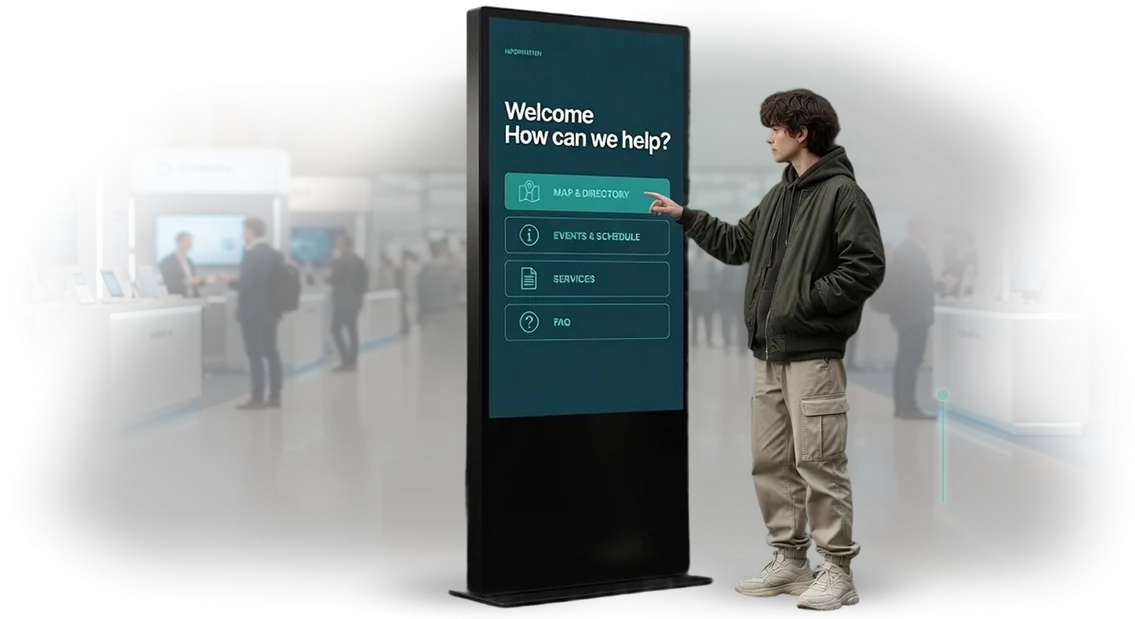
An interactive kiosk solves the task of digitizing the archive and makes it accessible at a single touch. Any guest can find the right year, event, or person on their own — without an administrator's help. That is true memory preservation: it doesn't lie in storage; it works for you.
For events, exhibitions, and presentations, such a kiosk is also an engagement tool: guests control the viewing, switch between eras, and find themselves among archival photos.
Interaction is remembered more strongly than a static presentation and creates a living connection with the brand.
Wehave been developing interactive formats for over 10 years. We handle the entire digitization of the archive: from preparing source materials to a simple, understandable interface that requires no training.
You get a sustainable result that will preserve your memory for years to come — and present it to guests as it deserves.
What an interactive kiosk gives businesses and visitors
An interactive kiosk for photo-video archives turns passive viewing into lively interaction. Guests choose the theme themselves, browse materials, leave feedback — and carry away an emotion they'll tell others about.
For the organization, this is a clear tool: it boosts visitor engagement, increases recognition, and works for the organization's image.
Check which kiosk benefits and interactive kiosk advantages matter to you:
- Emotions for guests: convenient search, large images, and interactive scenarios hold attention, while the ability to leave feedback turns a viewer into a participant.
- Organization's image: the kiosk looks modern, presents the archive with care, and underscores the venue's status.
- Contact collection: built-in questionnaires and a feedback form help build a base of interested visitors for invitations to new events.
- Reach without advertising: scenarios for photos and social media posts strengthen brand recognition without a promotion budget.
Our team handles the entire journey: interface design, equipment installation, archive content loading, and staff training.
You get not a "kiosk for show," but a point of attraction with clear metrics — number of interactions, viewing depth, completed questionnaires, warm reviews. Such a solution pays off every month, bringing new guests and strengthening trust in the organization.
Formats of interactive kiosks for photo-video archives
For working with a photo-video archive, we offer two proven formats: an interactive memory book and an archive kiosk. Each solves its own task — one creates a vivid emotional response among event guests, the other makes the archive accessible to visitors on any day of the year.
The choice of format depends on where you plan to use the kiosk: a one-time event or a permanent exhibition. Below is a brief comparison to help you navigate.
| Format | For whom | What it gives the client |
|---|---|---|
| Interactive memory book | Anniversaries, corporate events, memorial evenings, exhibitions and festivals | Guests browse the brand's or family's history, leave wishes, share photos on social media — the event is remembered and gains additional reach |
| Archive kiosk | Museums, libraries, administrations, company offices, permanent exhibitions | Visitors find the needed materials in the photo-video archive themselves, while the organization looks modern and open |
The interactive memory book builds a live dialogue with guests and collects feedback right at the event. The archive kiosk, by contrast, works for the long term — it keeps history accessible every day without staff involvement.
We help you choose the right format, design an interface for your visitors, and fill the system with your materials. In the end, you get a tool that enhances the event experience and increases the value of the archive.
How a kiosk is created for your task
To ensure the kiosk solves your task and pays off, we have broken the work into transparent stages. At every step, you understand what is happening and make key decisions — without surprises or prolonged pauses.
-
Brief and task immersion. We discuss who will use the kiosk, which materials are important to show, and where it will be placed. You receive a preliminary plan and an accurate estimate before the work starts.
-
Scenario and structure design. We define how visitors will interact with the archive: search by surname, browsing photo albums, watching videos. At this stage, you see the kiosk's logic and can make changes.
-
Interface design mockup. We develop a visual style for your brand or the theme of the memorial place. You approve the look before programming begins — no rework will be needed later.
-
Assembly and content loading. We transfer your photographs, videos, and documents into the kiosk structure. If materials have survived only in paper form, we'll help digitize them. You receive a prototype ready for use.
-
Testing and debugging. We check the kiosk in real conditions: touch responsiveness, search speed, correct display on the screen. We fix issues before visitors notice them.
-
Launch and support. We install the kiosk at the venue, train your staff, and take over technical support. If content updates are needed, we update without stopping operations.
In the end, you get a working point of attraction, not just a screen with files. The next step is a short call or email describing your archive, and we'll send an implementation plan the same day.
What is included in the interactive kiosk package
Ordering an interactive kiosk gives you not just a touch terminal, but a complete turnkey solution. We handle the entire path — from enclosure design to installation and staff training.
Below is the delivery scope, so you know exactly what is included in the cost and what to expect at launch.
Basic kiosk package:
- Vandal-resistant enclosure — withstands high foot traffic and does not require frequent repairs.
- Touchscreen with a responsive interface — visitors understand it in seconds, without instructions.
- Pre-installed software with your photo and video content, archive structure, and navigation.
- On-site kiosk installation: connection to the network, setup, and operational check.
- Staff training — at least 2 hours, so your employees can confidently manage the system.
- Equipment warranty and technical support for the entire service life.
Additional options — for specific tasks:
| Option | For whom | What it gives the client |
|---|---|---|
| Custom enclosure design | Museums, showrooms, branded spaces | The kiosk fits into the interior and boosts recognition |
| Remote management module | Network projects, branches | Content updates without an on-site visit |
| Statistics collection system | Marketing and event teams | Clear reports: how many visitors opened the archive, which sections are popular |
| Integration with your CRM or database | Companies with their own software | A single point of access to information |
We are always ready to adjust the configuration to your task: add a card reader, a custom screen size, or special vandal-resistant protection.
The main thing is that every element of the delivery is aimed at making the kiosk run stably and giving visitors the right experience with the archive.
Case study: how a kiosk revived a museum's archive
Task and solution
The Heritage Museum Complex held a unique photo and video archive: hundreds of hours of film, tens of thousands of images, and documents. But it could only be seen through a separate request to the collections — difficult, time-consuming, and most visitors left without results.
We proposed placing an interactive kiosk right in the permanent exhibition hall. On the touchscreen, a guest chooses the year, theme, or surname by themselves — like flipping through a family album, but with the depth of a real archive.
It became an example of implementation where the technology stayed unobtrusive and the material itself came to the forefront.
Project result
In the first three months, the kiosk attracted more than 12,000 visitors; every third person stopped at the screen for longer than three minutes. The average session grew to five minutes, and repeat visits to the terminal accounted for 27% of all interactions. Guests didn't just watch — they searched for themselves, relatives, and familiar places.
The digital archive became a standalone exhibit and a point of attraction. A photo zone constantly forms around the kiosk, and mentions of the museum on social media grew without an additional advertising budget.
The museum director summed it up:
"The archive used to be our pride, which was impossible to show. Now it is the liveliest part of the exhibition: visitors suggest adding new materials and return with their families to find their own stories."
This interactive kiosk case study shows the main point: the archive stopped being a closed storage room and became a live dialogue with guests. If you have a similar task, let's discuss how to bring your materials to life.
How to choose the kiosk format for your task?
First of all, define the goal: what should the visitor do — find a specific photo, browse a memory archive, leave a note, or simply immerse themselves in history. Both the interface and the construction depend on this.
A large-screen touch table is better suited for group viewing of photo-video archives, a vertical panel for quick catalog search, and an interactive memory book for ceremonial and memorial zones where atmosphere and page-by-page flipping matter.
To avoid making a mistake in choosing the format, ask yourself three questions: who your visitors are (children, adults, senior citizens), what content is more prevalent (photos, videos, document scans), and how much time a person is willing to spend at the kiosk.
Imagine the guest's path at the screen: if they need to find one person out of a thousand in a minute — the format will be one thing. If they should connect with the story and take a memorable photo — a completely different one.
Our experience in selecting kiosks for photo-video archives at various sites — from museums to corporate events — helps quickly understand which solution suits you.
You send a description of the scenario, we ask a few clarifying questions, and we offer two or three options with an approximate layout and screen structure.
This is not an abstract consultation about kiosks, but concrete recommendations tailored to your material volume and audience behavior.
The result is simple: first formulate the task from the guest's perspective, then consult with us. The consultation is conducted remotely — already at this stage you'll understand which format will become a working tool rather than just a striking installation.
Frequently asked questions about interactive kiosks
Owners of museums and exhibition spaces often postpone ordering an interactive kiosk: it seems complicated, time-consuming, and they fear they will constantly have to purchase additional equipment.
In fact, a modern archive kiosk is a self-contained device that works immediately after being plugged into an outlet. Let's review the most common doubts so you can make a decision in one day.
What if the kiosk breaks down? Who will fix it?
We design the device for round-the-clock operation in public spaces. Inside are industrial components with a lifespan of tens of thousands of hours, so sudden failures are practically eliminated.
All kiosk elements come with an official warranty of at least 12 months, including free repair or replacement at a service center. You don't need to do anything: you submit a request — we pick up the device, repair it, and return it to its place.
How do we update the archive when new photos and videos appear?
Uploading new materials does not require access to a designer or engineer. The administrator receives a password and uploads photos, videos, and captions through a regular browser — from any computer in the museum. Content appears on the kiosk instantly after saving.
How long does turnkey kiosk development take?
We prepare a standard archive kiosk with a design in your corporate style and a loaded archive in 4-6 weeks. A project with a custom enclosure or complex search logic takes up to 8 weeks.
The timeframe already includes design mockup approval, assembly, software installation, and testing on real data.
Will I need to buy additional equipment?
No. The kiosk comes as a ready-made solution: touchscreen, protected enclosure, built-in computer, audio system, and Wi-Fi module — everything is already inside. To launch, you only need a 220V power outlet and internet access for remote content updates.
We work with museums, libraries, and archives across the country, so we understand well how important it is to preserve exhibits and not overpay for unnecessary features. Leave a request on the website to get an estimate tailored specifically to your archive.Order interactive kiosk development
A memory kiosk is not just a stand with a touchscreen, but an independent communication channel with visitors. It turns archival photos and videos into a living story that guests explore without staff assistance.
The client receives a tool that works around the clock: attracts attention, holds the audience, and creates a reason to return.
We develop interactive kiosks turnkey — from concept and design to equipment delivery and launch. We work remotely, so we take on projects across the country and beyond.
Over 10 years, we have implemented dozens of solutions for museums, exhibition spaces, and corporate archives, so we know how to make a project useful specifically for your tasks.
What you get when ordering kiosk development:
- Project estimate within 2 business days — with a clear scope of work and deadlines.
- Custom interface design for your corporate style and audience.
- Flexible content structure: you add photos, videos, and texts yourself after launch.
- Staff training and a clear manual for administrators.
- Technical support and equipment warranty after launch.
- Analytics module: you see which materials are viewed most often and improve the exhibition.
Leave a request for interactive kiosk development — we'll tell you how it will fit into your space, show design options, and answer your questions. We'll send an estimate at the agreed time, and after the launch we'll stay in touch for further development of the project.