

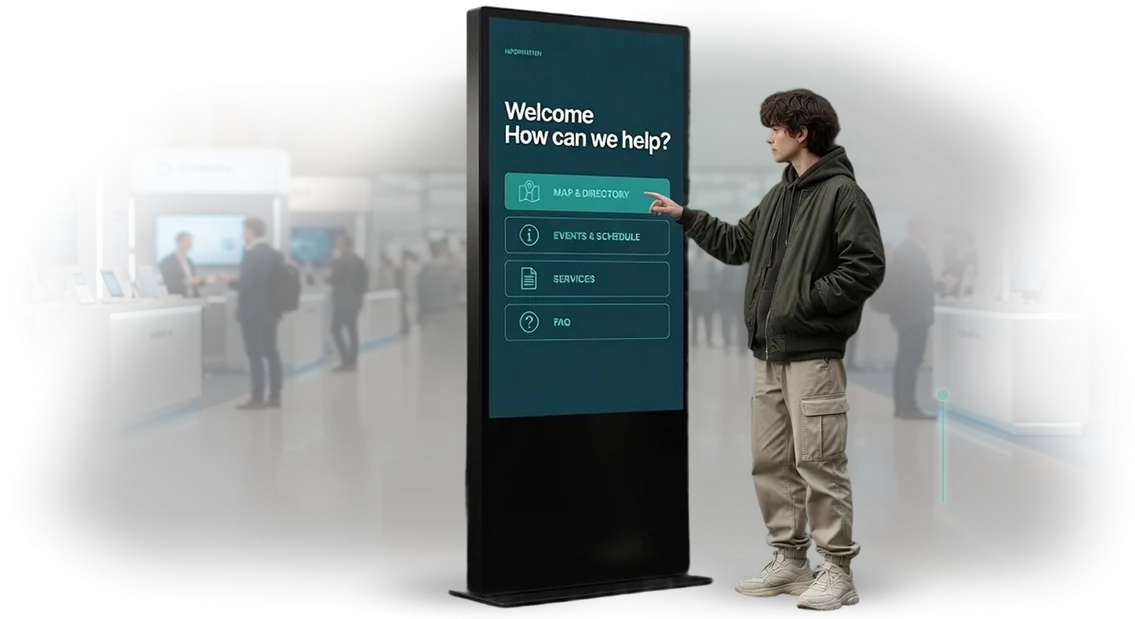
Why the tax inspectorate loses visitors because of queues
Every visitor to the tax inspectorate arrives with a specific task — to file a declaration, obtain a certificate, or check a status. But instead of a quick resolution, they spend an hour or an hour and a half in line, sometimes longer.
Such waiting time is perceived not as a necessary formality, but as a disrespect to the individual — and this is the first thing that shapes an impression of the entire tax service.
Long queues create a vicious-circle effect: the more people wait, the higher the tension, the more frequent arguments and conflicts at the windows, and the slower service moves.
Visitors arrive irritated even before speaking with an inspector, and staff are forced to spend their energy not on helping, but on smoothing over emotions.
For the inspectorate itself, this results in three losses at once: the hall’s throughput drops, the number of complaints grows, and visitor loyalty declines.
People begin to postpone visits, incur missed deadlines, and the negative experience sooner or later becomes public — through reviews, social media, and word of mouth. As a result, the tax service loses reputation even though its employees do their work diligently.
The solution is not to add more windows or ask people to come less often. What is needed is visitor flow management — and that is where interactive information kiosks with electronic queueing and appointment booking come in.
They turn a chaotic crowd into a clear process: each visitor sees their number, the estimated waiting time, and the right window, while the inspector works without extra noise.
Thus, the tax inspectorate stops being a place where time is lost and becomes a service where time is saved. We help make this happen — we design and implement electronic queue systems that relieve visitor pain and put control back into the hands of administrators.
What an interactive kiosk gives your visitors and staff
The key benefits of a kiosk for the tax inspectorate are speed, convenience, and reduced staff workload. Visitors stop wasting time in live queues, and employees get the opportunity to focus on truly important tasks instead of repeating the same thing ten times.
First of all, the kiosk dramatically speeds up service. A visitor independently selects the needed service, receives a ticket, and sees the current queue status — without having to approach the counter and ask for details.
Electronic booking makes it possible to plan the visit in advance, and inside the building waiting time is minimized because the flow is distributed evenly throughout the day.
The second important effect is visitor convenience. The kiosk interface is intuitive, requires no assistance, and is accessible to people of different ages and skill levels.
Guests control the process themselves: they can choose a convenient time, change their appointment, or get reference information without distracting staff. Such service creates a positive impression of the agency and reduces tension in the hall.
Finally, the kiosk relieves tax office staff. Professionals no longer have to perform routine functions — issuing tickets, answering basic questions, and redirecting visitors. The time freed up is directed to actual work with documents and complex requests.
As a result, the burden on the team is reduced, the number of conflict situations caused by waiting decreases, and productivity increases.
In addition, the kiosk enhances process transparency: management sees the real workload of the hall and can flexibly manage the number of windows. This is not just technology but a tool that makes the inspectorate’s work calmer and more efficient.
Implementing such a solution pays off not through a month of downtime but through daily time savings for everyone involved — visitors and staff alike.
Interactive kiosk formats for a tax inspectorate
A tax office visitor arrives with different tasks: some want to submit documents, some need a consultation, some have an appointment. A single kiosk format does not cover all scenarios.
Therefore, we select a configuration to fit the specific branch — taking into account visitor traffic, the number of windows, and staff workload.
Three basic formats
A universal approach is to split functionality into three formats. They work either individually or as a set, combined into a common electronic queue and booking system. Here is what that looks like in practice:
| Format | For whom | What it gives visitors and staff |
|---|---|---|
| Electronic queue kiosk | Visitors without prior appointment | Transparent queuing: the visitor gets a ticket and goes to the right window when invited |
| Appointment booking kiosk | Taxpayers planning a visit | Choice of convenient time, less peak load during opening hours |
| Information kiosk | Guests with questions about documents and procedures | Self-service information: list of documents, forms, application status |
Such separation reduces chaos in the lobby: every visitor quickly understands where to go, and staff stop getting distracted by repeated questions. As a result, the queue moves faster, and people have more time for the procedure itself.
Kiosks are easy to combine: for example, combine ticket issuance and information services in one enclosure, or place a separate appointment terminal at the entrance. The main thing is that the visitor always sees the next step, and you can control the branch’s workload.
How we develop and implement the kiosk: 6 steps
Work on a kiosk for a tax inspectorate proceeds through clear stages — you see what is happening at every moment and control the timeline. We handle development, implementation, launch, and ongoing support, so your staff deal with visitors, not with equipment setup.
- Brief and visitor flow analysis. We study how many people arrive during peak hours, which services are requested most often, and where the kiosk is best placed. Based on this, we form requirements for booking and electronic queue scenarios.
- Prototype and approval. We present a screen mockup and operating logic: service selection, booking the right time, printing a ticket. We review texts, service names, and step order before development starts — so nothing needs to be redone after launch.
- Interface development and integration. We configure the kiosk to your inspectorate’s procedures, connect entry to the electronic queue, and transmit data to relevant systems. All changes are made in a working version that can be viewed in advance.
- Testing with real scenarios. We check how the system behaves with a large number of visitors, incorrect input, and connection failures. We fine-tune ticket printing and correct booking into the schedule for specific days and time slots.
- Implementation and launch. We install the kiosk, set up the link to the main queue, and provide short training for staff who will help visitors. We launch into operation at a convenient time so as not to create queues on the first day.
- Support and development. After launch, we stay in touch: we update the list of services, change schedules, refine prompts, and add features if the inspectorate’s operating procedures change.
In the end, you get a working tool that reduces the load on operators and shortens waiting time for visitors. Each stage has a clear result, so the project goes predictably and without surprises.
What is included in the kiosk supply and commissioning
A kiosk for a tax inspectorate is a ready-made service point that relieves staff and reduces queues. We deliver a complete package to the customer: from reliable hardware to configured software that works immediately after powering on.
The final delivery includes:
- Ready-to-work hardware. A touch-screen kiosk with industrial components that withstand constant visitor use. The device runs reliably under active usage.
- On-site commissioning. We deliver, install, connect, and test the system in your premises. On launch day, the kiosk is already serving the first visitors.
- Electronic queue and booking software. An interface adapted for tax office visitors: service selection, receiving a ticket, and booking a convenient time in advance.
- Integration with your processes. We set up operation with the ticket system, staff schedules, and your back end, so visit and booking data are available in a single view.
- Staff training. We provide instructions for employees: how to manage the queue, view statistics, and adjust schedules. You will not have to work your way through complicated manuals.
- Warranty and maintenance. We provide a warranty on hardware and software. When needed, we quickly dispatch a replacement or resolve issues remotely.
You get not just a device, but a working mechanism that improves service from day one: visitors reach the right specialist faster, and employees are freed from routine explanations and phone calls.
Implementation result: queues cut in half
Queues in a tax inspectorate are a pain everyone knows: visitors lose hours in the lobby, staff are forced to answer the same questions ten times, and management receives a stream of complaints. The problem is not people, but an unmanaged flow. We solve it with interactive kiosks that turn chaos into a clear system.
Case study: how it happened
In one tax inspectorate, we implemented a comprehensive solution — an electronic queue with the ability to book in advance through a kiosk. our team approached the task not as equipment installation, but as a redesign of the entire visitor reception process.
Before the launch, the average wait was 45 minutes, and more than an hour during peak hours. After, the queue was cut in half: waiting decreased to 20 minutes, and throughput increased by a third without adding staff or extra windows. Visitors book a convenient time, arrive when called, and do not crowd the corridors.
Staff also felt the difference: no need to be distracted by questions like “where do I go?” and “what documents are needed?” — the kiosk provides all the information. Less routine, more time for real tasks.
Management got transparent statistics: how many people came, at what hours, which services are in demand. Based on this data, it is easy to redistribute workload and improve operations.
The effect was so obvious that the customer scaled the solution to neighboring branches — the best proof there is. Same speed, same numbers, same result. If your goal is to eliminate queues and increase loyalty, we know how to do it.
How to choose the right queue format for your institution?
The choice of queue format depends not on trendy technology, but on the specific needs of your institution and visitor flow.
A tax inspectorate has its own specifics: people come with a range of questions — from simple certificates to complex consultations — and each person needs a clear path.
Before making a decision, evaluate three things: how many visitors pass through your branch during peak hours, which services they request most often, and how long an appointment with a specialist takes.
For high-traffic institutions, the electronic queue format with universal booking terminals becomes optimal. A visitor selects the needed service on the touch screen, receives a ticket, and sees how much time remains before their number is called.
This relieves pressure at the counter, eliminates arguments over the live queue, and lets your staff work more calmly — they know who is coming to them and why.
If the visitor flow is moderate and most questions are repetitive, a kiosk with an appointment booking function and reference information is sufficient.
A person can independently review the list of documents, learn opening hours, or book a specific time — this frees up administrators and shortens the reception queue.
In any case, it is important that the system adapts easily to changes: adding a new service, changing an office, or rescheduling a specialist — all of this can be done without stopping operations.
There is no universal “ideal” format, but there is a proven principle: the easier it is for visitors to understand where to go and how long they will wait, the higher their satisfaction and the lower the burden on staff.
We help you choose a solution tailored to your branch’s specifics — we analyze flows, the number of windows, and the services in demand, and propose a configuration that runs smoothly during peak hours. You get not just equipment, but a streamlined process that saves time for you and your visitors.
Frequently asked questions about kiosk implementation and maintenance
The first thing managers ask about when implementing kiosks in a tax office is risk. An agency cannot afford downtime in visitor service, so questions about integration, warranties, and response procedures come up even before signing a contract. Below we address typical customer concerns — briefly and to the point, without technical details.
Does the kiosk work with your record-keeping system?
How does integration with our electronic queue and booking system work?
We configure the kiosk to your procedures: tickets, booking with a specific specialist, and workload distribution across windows. The system connects to your internal infrastructure through secure channels, and visit data is transmitted centrally.
Implementation proceeds in several stages: first we test with a limited flow, then launch in full mode. The whole process takes from a few days to a couple of weeks, depending on the size of the branch, and we do not stop the current queue during setup.
Who is responsible for reliable operation after launch?
What if the kiosk freezes or breaks down?
For a tax inspectorate, a kiosk outage means queues and dissatisfied visitors. That is why we take on full support: remote status monitoring, regular software updates, and equipment replacement when needed.
You receive a service policy with the response time spelled out — usually two to four hours from the moment of request. Most issues are resolved remotely: we quickly restore operation without dispatching a specialist.
Who handles kiosk maintenance — you or our side?
We operate on a full-cycle model. You deal with a single company that is responsible for equipment reliability, software, and visitor support through the interface.
Maintenance is included in the contract: preventive checks, updates to reference data and work schedules, and ticket print control. Your staff do not need to understand the technical side — they just contact the support service.
Stability and protection against failures
What happens if the internet or electricity in the branch goes down?
The kiosk continues to work autonomously: appointment data is stored locally and synchronizes after the network is restored. The queue does not stop, and visitors receive tickets in the usual way.
Protection against voltage spikes is also included, so the equipment does not fail. This reduces the risk of downtime and extra repair costs, and most importantly, it removes the need for your staff to manage the flow manually.
Guarantees and support at every stage
We set out all obligations in the contract: launch deadlines, response policies, and warranty terms for equipment. You get a dedicated manager and technical support for the entire operating period.
Implementing a kiosk in a tax inspectorate is a working tool, not an additional headache: you reduce staff workload, speed up visitor service, and eliminate queue chaos.
Order the development of an interactive kiosk for your organization
Submit a request, and we will prepare a solution for your kiosk tailored to the specifics of a tax inspectorate. Tell us which scenarios need to be covered: appointment booking, electronic queue, certificate issuance, or visitor information. Then we will propose a format that reduces staff workload and shortens queues.
What you get after reaching out
- Consultation — we will review your task and advise which kiosk suits you best.
- Preliminary time estimate — you will immediately understand when the system will be up and running.
- Interface prototype — we will approve the design and scenarios before development begins.
- Transparent cost estimate — we set out the work scope and cost, with no hidden surcharges.
- Staff training — your team will quickly master the system and be able to help visitors.
- Warranty support — we help with maintenance and updates after launch.
After that it’s simple: you leave a request, we contact you within one business day and clarify the details. Then we prepare a proposal with a work plan, timeline, and budget — you pay nothing until the project is approved.
Submit your request now — and within a few days you will receive a ready kiosk concept adapted to your inspectorate. It is the first step toward comfortable visitor service and lighter workloads for your specialists.