

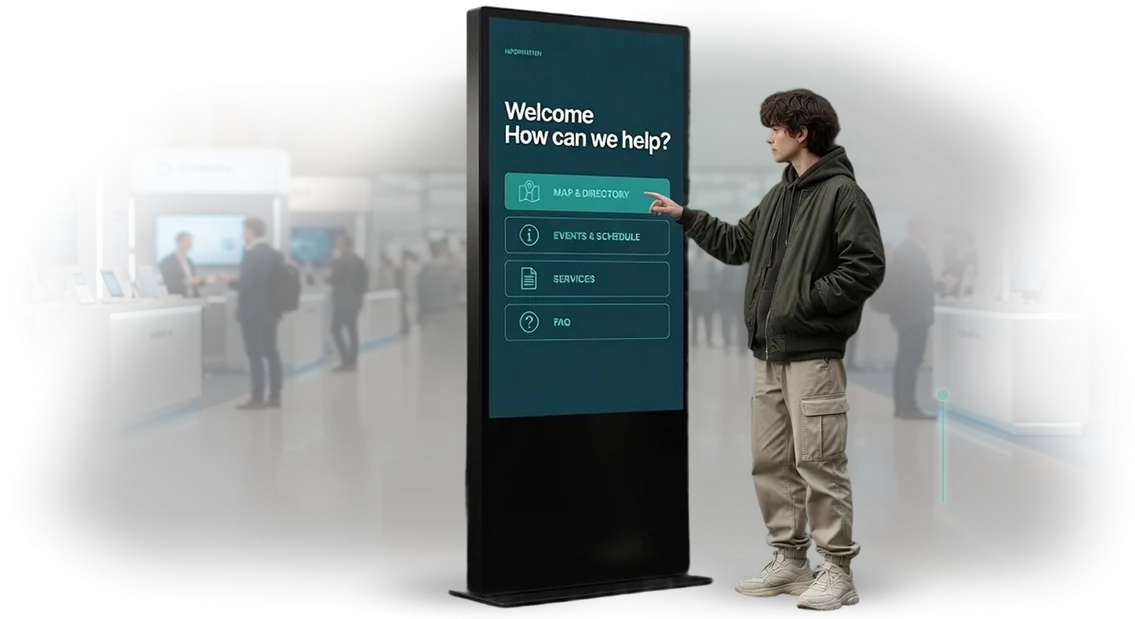
Restaurant queues: why guests leave and don't come back
Every restaurant owner knows what queues at the restaurant during peak hours are like. It would seem that a live queue is a sign of popularity, but in reality it scares away up to a third of potential guests.
People don't like to wait, especially when they are hungry, and if a table doesn't become available within a few minutes, they simply go to a neighboring establishment.
Guests leave not only because of the waiting itself, but also because of its unpredictability. When it's impossible to estimate how long they'll have to wait for a free table, anxiety and irritation set in. That's why service speed becomes the key factor that determines whether a visitor returns.
The resulting loss of profit is obvious: one guest who leaves is not only a lost check today, but also lost repeat visits for years to come. In addition, an unhappy visitor leaves negative reviews online, and this reduces the flow of new customers. Thus a small problem turns into strategic damage.
A solution exists — an electronic queue and check-in via an interactive kiosk. The guest walks in, sees a clear system, learns the exact waiting time, and gets the opportunity to spend time at the bar or in the waiting area. All of this turns chaos into a manageable process and retains the customer.
We help restaurants implement such kiosks turnkey. Already at the first discussion, we understand where queues most often arise and propose a solution that requires no extra effort from the staff.
The result: guests stay, the check grows, and the manager gets transparent statistics on hall occupancy.
What installing an interactive kiosk will give: 5 measurable results
An interactive kiosk in a restaurant is not a replacement for a waiter, but a tool that pays off through measurable changes in the business. You will see five specific results in numbers within the first weeks of operation.
Growth in the average check. The kiosk offers additional items: sauces, drinks, desserts. Guests who order through the screen are more likely to agree to an upsell because they see a picture and description — and the check grows by 15–20% compared to a regular order.
Speed of service. The kiosk takes an order in a minute and a half, while talking to a waiter takes two to three times longer. During peak hours, this allows you to serve 30–40% more guests without expanding your staff.
Guest satisfaction. People love independence: no one rushes them, the menu on the screen is easier to browse, and order errors are reduced to zero. This reduces the number of dissatisfied reviews and increases the venue's average rating on aggregators. Loyalty and repeat visits.
The kiosk remembers the guest's preferences, offers their favorite dishes and individual discounts — so guests return more often. Plus a loyalty program tied to the kiosk gives you direct data on customer behavior.
Reduced staff load. Waiters stop spending time repeating the menu and taking orders on the terminal — they focus on service and creating an atmosphere. This improves service quality and reduces staff turnover.
In the end, you get a predictable business economy: more orders per hour, a higher check, stable hall occupancy. We support the kiosk launch until the first results and help you set up the menu so that each of the five points is truly reflected in your reporting.
Electronic queue formats for your restaurant and your task
For a restaurant, a queue means lost guests: someone leaves, someone gets angry, and waiters waste time repeating the menu.
An electronic queue and self-service kiosk change the scenario: the guest chooses a dish, places an order, or checks in for a table without staff involvement.
At the same time, the kiosk format must match the task — fast food, a coffee shop, and a busy location in the center have different requirements.
We work with restaurants of different seating capacities and traffic, so we don't select "universal hardware" but a suitable format for your scenario. The table below shows the main options that cover typical restaurant tasks.
| Kiosk format | Who it suits | What it gives the customer |
|---|---|---|
| Self-service kiosk with electronic queue | Fast food, burger joints, street food | The guest places and pays for the order themselves and receives a number; the queue becomes transparent, no cashier overload |
| Table check-in or waitlist kiosk | Coffee shops, sit-down restaurants | The guest checks in at the kiosk, sees available times, and doesn't crowd at the entrance; staff don't need to keep a paper list |
| Pre-order and pickup kiosk | Busy central locations, venues with delivery | The guest books a dish in advance and picks it up without waiting; traffic is distributed evenly during peak hours |
| Combined "order + check-in" format | Full-cycle restaurants, large cafes | One kiosk handles both self-order and check-in — the guest chooses the scenario, staff are relieved |
These are not rigid schemes: for one location, a kiosk with number dispensing is enough; for another, full pre-order with payment is needed. We will adjust the logic to your guest flow and help you choose a format that will pay off in the first month of operation.
How we will launch a self-service kiosk: 7 steps with your participation
We know that for a restaurant, launching a self-service kiosk is not just installing a terminal, but changing familiar processes. To help you feel confident, we don't simply hand over a "turnkey project" without explanation; we guide you through clear stages. At each step, you see the result and make decisions — from the first brief to launch and support.
-
Kiosk brief. You tell us how service is organized: how guests choose dishes, how orders are taken, what promotions there are. We propose a kiosk operation scenario for your format — quick service, coffee shop, or full-service restaurant.
-
Layout approval. We show the screen design — from the main menu to payment. You see what the kiosk will look like and make edits before the main development. This saves time and money.
-
Development and configuration for your menu. We load dishes, prices, photos, and descriptions. We connect the kiosk to your accounting system so orders automatically go to the kitchen, and inventory and reporting are updated without a cashier's involvement.
-
Test launch. We install the kiosk in the restaurant and go through the full cycle — from choosing a dish to payment. Together with you, we check contentious issues: allergen handling, order cancellation, refunds. We train staff to help guests and handle non-standard situations.
-
Launch for guests. We place the kiosk in the working area and test it on a real visitor flow. In the first days, we stay nearby to quickly solve any problem and advise your team.
-
Post-launch support. We stay in touch: update the menu, add new promotions, help with reports. If a guest didn't understand something or an error occurred, we resolve it remotely or come on site.
What is included in delivery: turnkey kit for your establishment
We will prepare a complete turnkey kit: from configured software to instructions and staff training. You won't have to finish anything or order anything separately — after acceptance, the kiosk is ready for work.
- Self-service software — guests independently select dishes, add them to the order, and pay by card or through a payment system. This relieves waiters and speeds up service.
- Interface under your brand — we adapt the design, menu, food photos, and texts to the style of your establishment. The kiosk looks like part of the restaurant, not an alien screen.
- Integration with your cash register program and kitchen printers — the order automatically goes to the kitchen, eliminating transmission errors and reducing wait time.
- Staff training — we conduct a training session for waiters, administrators, and cashiers: how to help guests, handle standard situations, and monitor the kiosk.
- Documentation — we provide clear instructions on launch, operation, menu configuration, and common issues. Everything is written in plain language, without technical details.
- Administrative panel — you can independently change prices, add items, and view order statistics. No programmer needed.
- Technical support and updates — we stay in touch during business hours, help with failures, and regularly update the system so the kiosk runs stably.
This kit allows you to launch the kiosk in the coming days and calmly develop functionality further — for example, add mobile pre-order or a loyalty program. Everything needed for growth is already built into the base delivery.
Case study: how a kiosk paid off at a burger joint in two months
At a burger joint in a food court, a queue of 10–15 people formed on weekdays at lunchtime. Guests abandoned their orders if the wait exceeded five minutes, and cashiers couldn't both take orders and pack them. Management was losing a significant portion of lunchtime revenue. We proposed installing two information kiosks to relieve peak load.
Implementation progress
We installed the equipment in two days: kiosks with a touchscreen menu, automatic check calculation, and kitchen integration.
For the «Ugolyok» burger chain, this was the first such project, so the staff went through a short training session — after a week, no one remembered the paper menus.
Numbers after launch
After a month, the average order time dropped from six to two minutes. The average check grew by 18% — the kiosk prompts customers to add fries and a drink, and guests in line no longer pressure others.
During peak hours, throughput doubled, and the number of customers leaving without ordering nearly became zero. The kiosks also worked without failures — not a single technical incident in the first month.
Payback
The burger joint reached payback in two months. Revenue during the lunch window increased by a quarter, and repeat visits became more frequent: guests understood that they could quickly grab a bite here without a queue.
Now the chain has ordered kiosks for two more locations — for us, this is the main indicator that the project solves business problems.
How to choose a kiosk format for your task?
Choosing a kiosk format starts not with the model lineup, but with the question: what exactly do you want to achieve in your restaurant?
If the goal is to speed up service during peak hours, you need one scenario; if it's to collect pre-orders and reduce the entrance queue, another. Define the main task, and the design and software are selected accordingly.
The first criterion is guest flow and hall area. For a small coffee shop with one counter, a compact desktop kiosk is enough — it doesn't take up useful space and pays off quickly.
For a restaurant with a constant live queue, a floor-standing unit with a large screen is more suitable — it visibly relieves staff and doesn't get lost in the interior.
The second criterion is the usage scenario. If the kiosk must receive orders and immediately send them to the kitchen, integration with your accounting system is important.
If it works as an electronic queue, interface simplicity comes first so the guest doesn't have to figure out the menu or look for help. Think about who will use the kiosk: visitors of different ages, and the screen should be understandable to everyone without staff involvement.
The third criterion is reliability requirements. In a restaurant, the kiosk works all day, so the equipment must be professional grade and withstand intensive use.
We design the system so it doesn't require constant attention: updates and diagnostics are performed remotely, and in case of a failure, you quickly get support.
If you're not sure which option suits you, you don't have to figure out the details yourself. Just describe your task, and we'll propose a format for your conditions: we'll take into account the area, guest flow, menu, and work scenario. It creates no obligation.
Frequent owner concerns: we answer before the project starts
It's clear that a kiosk means additional expenses and changes in the hall. So questions arise first: what if the equipment fails? Staff can't figure it out? We can't connect the cash register?
We answer these concerns before you start — so you can make a calm decision, counting on the result.
What if the kiosk breaks down?
A kiosk is technology, and like any technology, it can fail.
Therefore, we provide a warranty on the equipment and ensure service maintenance: in case of a breakdown, we restore operation as quickly as possible, and during repairs we offer a clear backup scenario — guests aren't left without orders. You are not left alone with the problem.
Is it difficult to train staff?
Training takes a couple of hours: the interface is designed so that a waiter or administrator can understand it without special skills. We provide a short instruction manual and support the team at the start until new processes become habitual. Your employees spend less time explaining and less time "fighting" with technology.
Will there be integration problems with the cash register?
The kiosk connects to your existing cash register system: orders are transmitted directly, menu and prices are synchronized, and accounting and reporting remain familiar.
We check compatibility with your equipment in advance and configure everything before launch, so during peak hours work runs without failures or manual data transfer.
How long does launch take?
A typical time frame is two to four weeks from the brief. During this time, we prepare the menu structure, configure integration, test order scenarios, and conduct staff training. You get a clear plan with stages and know when the kiosk will start accepting its first orders.
These are the main concerns we hear from restaurant owners. If you still have your own questions — ask them before the work begins: together we'll look at your situation and offer a solution that won't let you down on the busiest evening.Leave a request: get a plan and launch timeline for the kiosk
Leave a request for a kiosk — and the very next day you'll receive a clear plan: what we do, how long it takes, and when the kiosk will start working. No technical complexity: we translate your task into business language — timelines, stages, cost.
You remove the main uncertainty before the start: an accurate estimate, a realistic schedule, and a clear result. We take on design, integration with your MENU and cash register system, while you continue running the restaurant.
What you get after contacting us:
- Kiosk request — you describe which dishes and items should be in the system and how many guests you have during peak hours.
- Consultation — we help you choose a kiosk format for your hall and guest flow and answer all questions.
- Cost calculation — we fix an estimate without hidden fees or "surprises" during the work.
- Kiosk project — we show screen mockups and the order logic so you can see what the guest will receive.
- Launch plan — we lay out day-by-day stages: preparation, configuration, testing, launch.
- Support — we continue after launch: quickly edit the menu, help with updates.
The sooner you send your request, the sooner you'll get a plan and timeline for your restaurant. Leave your contacts — and within an hour we'll send you questions to calculate the cost. After that, we'll prepare the kiosk project and launch schedule.