

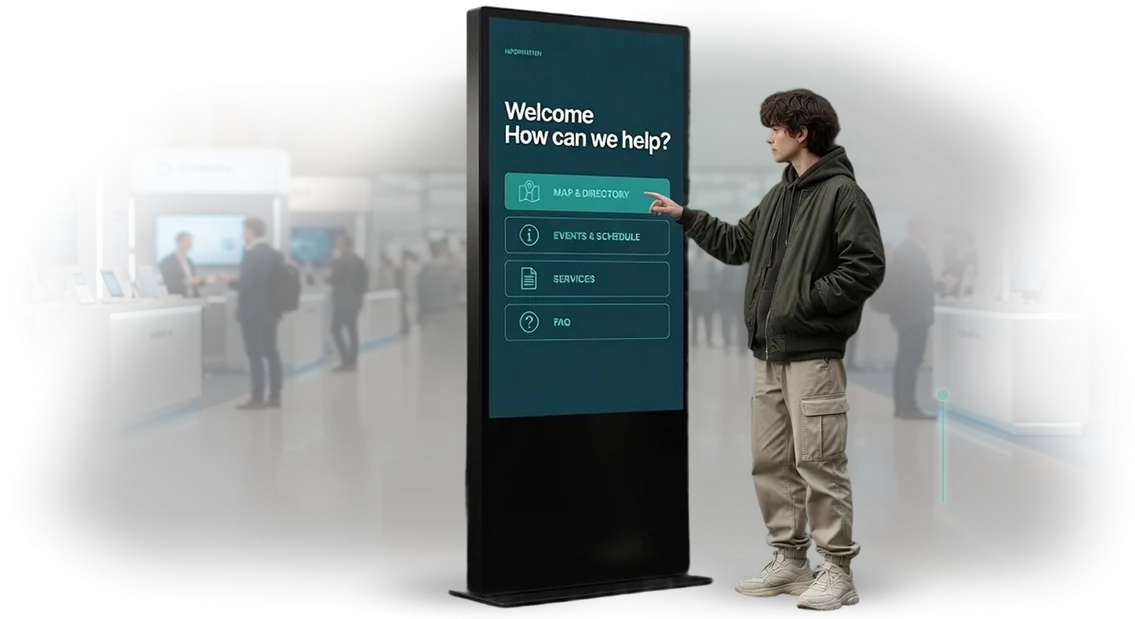
Interactive wall for a museum: how to keep visitors in the hall
Visitors come to a museum for an experience, but if the halls look like a storage facility, they walk through them in five minutes and head to the souvenir shop.
The most common complaints: "boring," "everything is behind glass," "nothing to touch." When an exhibition is static, the eye slides across display cases and doesn't linger on a single exhibit. The average visit duration drops, and with it — revenue from the cafe and souvenir shop.
The problem is not the visitors, but the format of presentation. Text labels and standard display cases don't deliver emotion, and it's emotion that makes a person stay in the hall and come back again.
This is especially noticeable with young families and school groups — they need interaction, not passive viewing.
An interactive wall for a museum turns the exhibition into a living space: the visitor touches history, moves fragments of a painting, launches mechanisms. Such a wall holds attention for 10-15 minutes and becomes a separate point of attraction.
Guests photograph the wall and share it on social media — that's free marketing for the museum. The experience of the Science Museum in London shows that after introducing such zones, the time spent at exhibits grows severalfold.
We design interactive walls for the specific tasks of a particular museum — from historical chronicles to children's illustrations. Our engineers take on everything: scenario, design, installation, and setup. We work remotely, so distance doesn't interfere with deadlines. All you have to do is watch visitors linger in the halls and bring their friends with them.
What multimedia design will give your exhibition: 5 benefits
Multimedia design transforms an exhibition from a static display case into a living scenario in which the visitor is the main character. We highlight five key benefits, and the first is visitor engagement.
An interactive wall invites touching, moving, exploring — the guest stops being an observer and becomes a participant. This kind of interaction is memorable and creates the desire to tell friends about the museum, which delivers free organic reach.
The second benefit is increased visit duration. Multimedia zones hold attention: people spend multiple times longer at them than at ordinary display cases. The longer a guest stays in the museum, the higher their loyalty and spending at the cafe or souvenir shop.
Third — increased attendance. Cool interactive formats become a news hook: visitors share photos and videos, local media and bloggers readily write about the museum.
This attracts a new audience — young people, families with children, and tourists who wouldn't have come to a classic exhibition.
Fourth — a deeper connection with content. Complex historical or scientific topics become simple and visual through multimedia. The guest gets not dry facts but an experience — and it's emotion that makes people return and recommend the museum to their friends and family.
The fifth benefit — flexibility. Multimedia design is easy to update for new exhibitions and seasonal projects without changing the building's architecture. You get a modern image for the museum that stays relevant for years and stands out among other cultural venues.
Multimedia solution formats for exhibition halls
An exhibition hall is a space where a visitor decides in a few seconds whether to stay and examine the exhibit or move on.
Multimedia helps extend this attention: interactive wall formats, multimedia kiosks, projection mapping — each solves its own task: to engage, to inform, to amaze.
To choose the right format, focus on your audience and goal: for high visitor flow, interactive walls suit best; for individual study — kiosks; for events — projections. Below is a comparison of typical solutions for exhibition halls.
| Format | For whom | What it gives the client |
|---|---|---|
| Touch wall for a museum | Mass visitors, families with children | Keeps a group at the exhibition, provides tactile contact with digital copies without risk to the originals |
| Multimedia kiosk | Individual visitors, researchers | Quick access to detailed materials about exhibits, audio guide and navigation in one interface |
| Projection mapping | Public events, key objects | Creates a vivid show, attracts new guests and gives a reason to come back again |
| Touch panels in the exhibition | Local zones with additional content | Complement physical exhibits with interactivity without overloading the hall space |
Each format can be installed into an existing exhibition without major renovation. Our engineers will select a solution for your tasks and help with integration — from idea to launch.
How a digital exhibition is created: 7 stages
Creating an interactive wall is not buying a ready-made screen but a joint project with clear stages of interactive development. We've structured the process so you see the result at every step: from exhibition design to multimedia project launch.
Here's how to create an interactive zone that attracts visitors and won't require constant reworking.
-
Brief and immersion in the task. We study your collection, audience, and exhibition goals. We determine how the interactive will fit into the visitor's route and what tasks it will cover.
-
Scenario design. We think through how the guest will interact with content: what they'll see, what they'll touch, what stories they'll want to tell friends. The output is a detailed description of the future zone.
-
Design concept. We create a visual style in tune with the exhibition, so the interactive looks like a continuation of it, not an add-on. We select graphics, fonts, and animations with the museum's brand in mind.
-
Prototype development. We build a working version and show it to you. At this stage, we make revisions without extra costs — before full production begins.
-
Installation and setup. Our engineers install the equipment and configure lighting, sound, and sensors. We test stability in real conditions — both on weekdays and at peak hours.
-
Content filling. We load information about your exhibits and adapt materials for different visit scenarios. We add "living" details that increase guest engagement.
-
Launch and training. We hand over the zone for operation and train hall attendants and tour guides. We leave instructions and stay in touch for support and future updates.
What's included in the final solution: a complete package for the exhibition
You get not just a screen on the wall but a ready-made interactive exhibit that brings the exhibition to life and holds visitors' attention.
The solution includes everything needed — from equipment to content and instructions — so you won't have to buy or finish anything separately.
- Equipment tailored to your exhibition. A touch panel or projection system that responds to movement and touch. The hardware part is already configured and ready to operate in the hall.
- Custom content. Scenarios, graphics, and animations developed around your museum's theme. The materials explain exhibits simply and engagingly — visitors stay longer and come back again.
- On-site installation and launch. Our engineers bring the kit, install, connect, and test the interactive wall in your space. You get a working exhibit without involving your IT specialist.
- Instructions and staff training. Clear guides for employees: how to turn it on, restart it, and quickly resolve minor issues if needed. We provide a short training for hall attendants.
- Warranty and service support. During the warranty period, we support the project: remote diagnostics, consultations, and an engineer visit if necessary. You're not left alone with the technology.
- Content update capability. Change materials for temporary exhibitions or seasonal programs without a programmer — via a simple control panel. Or order a new visualization from us for a specific event.
This package allows you to launch an interactive wall in the museum quickly and with minimal load on staff. We support the project after launch and stay in touch so the interactive runs reliably and brings value for years.
Case study: how a multimedia installation brought back visitors' interest
When a museum loses visitors' attention, you see it right away: people run through the halls in 20 minutes and leave without emotions. We proposed a solution — an interactive wall for the museum that turns passive viewing into a live dialogue.
Our interactive wall case study shows how one multimedia installation restores interest and changes guest behavior.
Example of implementation in a museum
For the museum "History", we created a large touch wall with stories of exhibits. A visitor touches an image — and an archival photo comes to life in front of them, a narrative and reconstruction of events appear.
The controls are intuitive: the wall works immediately and attracts the attention of even those who usually walk past.
Result of the multimedia installation
After launch, we measured the changes. The average time in the hall grew from 20 to 55 minutes — people started reading, watching, and discussing what they saw.
Every third guest photographed the wall and shared it on social media — the museum got free coverage in thousands of posts. The share of repeat visits increased by 40%: visitors come back with friends to show them the "living" exhibition.
This successful project is an example of how a multimedia installation pays off: the museum gained a growing audience and the ability to update content without new investments.
An interactive wall for a museum is not just a screen but a tool that turns guests into regular visitors.
Is it difficult to introduce interactivity in a museum?
Introducing interactivity into a museum looks complicated: architectural monuments, strict conservation departments, hall closures. In reality, most concerns are resolved at the planning stage.
We prepared an average museum for an interactive wall in four weeks — and the exhibition didn't close for a single day.
The main constraints are not technical but organizational. The space must allow setting up a zone with clearance for visitors and have access to a power outlet and stable lighting.
Historic buildings rarely have prepared niches, so we use lightweight frame structures that don't touch the walls and are easy to dismantle.
The second group of challenges — museum rules: fire safety, preservation of exhibits, noise and heat emission limits. Our engineers select components with low power consumption and no heat-generating parts, and the production process follows the ISO 9001 quality standard. We perform installation at night and hide cables in anti-vandal cable ducts.
We handle approvals with the museum's internal departments and prepare documentation to meet the exhibition's requirements. If necessary, we train hall attendants to turn on and calibrate the system in a couple of minutes.
So for you, interactivity is a predictable project with a fixed cost estimate, not a source of stress.
Frequently asked questions about implementing multimedia solutions in an exhibition
Before ordering an interactive solution, museum teams always have doubts: will the equipment break down, will it distract visitors from the exhibits, will there be enough internal resources for maintenance.
We answer these questions honestly — based on fifteen implementations in museums and exhibition spaces.
How long will an interactive wall last and who will maintain it?
The equipment withstands year-round operation in museum mode: we choose enclosures with protection against dust and accidental impacts. Preventive maintenance happens once a quarter, and the average response time to a failure is one day. The first year of maintenance and support is included in the contract.
Won't the interactive distract from museum exhibits?
The interactive adds layers to the object's story: hidden restoration stages, travel maps, archival footage. The visitor decides how much time to spend at the screen — usually two to five minutes — and then returns to the exhibition with a deeper understanding.
Can visitors of different ages use the wall without instructions?
We test the interface on focus groups before launch. Large touch zones and simple gestures are understandable to both children and older adults — hall attendants don't have to constantly explain how to use the screen.
How long does implementation take and when will we see the result?
A turnkey project takes from three weeks to two months, depending on the format. This period includes the prototype, scenario approval with your methodologists, installation, and a test period — by the time it opens to visitors, everything is already working.
We don't just install screens: we take on content, integration with the exhibition, and post-launch support. From the start, you get a working multimedia solution that doesn't require special technical skills from your staff.Discuss your project with our engineers today
Every interactive wall project starts with a conversation about the museum's tasks: which exhibits need to be shown, how many visitors pass through per day, what should surprise and hold attention.
Our engineers will already at the first consultation tell you which solutions will deliver the maximum effect and what can be skipped without losing quality. It's non-binding — you get an honest assessment of whether interactivity fits your space.
We work with museums of different scales — from local history museums to federal venues — so we understand the specifics: careful handling of exhibits, visitor flows, staff shortages.
An interactive wall solves these tasks: it replaces some of the tour guides, relieves busy employees, and gives guests an independent scenario for exploring the collection. Let's discuss your task — we'll propose a format that fits your budget and timeline.
What you get after contacting us
- Cost and timeline calculation — a preliminary estimate for your scale, without hidden surcharges
- Format selection for your space — wall projection, touch panel, or a combined solution
- Content scenario — we'll think through how to engage different age groups
- Launch plan — a step-by-step schedule from layout approval to installation and staff training
- Post-launch support — content updates, maintenance, and quick refinements
How to get started
- Leave a request on the website or call us — we'll agree on a convenient time to talk
- Tell us about the museum, the audience, and current tasks — we'll ask clarifying questions
- Get a preliminary solution with implementation options and cost guidance
- We'll approve the concept and, if necessary, visit the site to take measurements
- We prepare, install, configure, and train your team
- We launch the interactive wall and support it after the launch
One conversation with an engineer saves weeks of independent market research and protects you from mistakes when choosing a contractor. You'll learn the real timelines, scope of work, and technical nuances that are usually only remembered during installation.
Contact us today — we'll discuss your project, calculate a cost estimate, and show you how to launch interactivity in the museum faster and without unnecessary costs.