

Interactive Kiosks for Veterinary Clinics: No More Queues
Pet owners don't like waiting — especially when their pet is unwell or needs a routine vaccination. During peak hours, a veterinary clinic turns into a queue: the front desk is flooded with phone calls, the administrator can't keep up, and visitors nervously wait at the counter. Some silently leave and book with competitors — each such case is lost revenue and reputation.
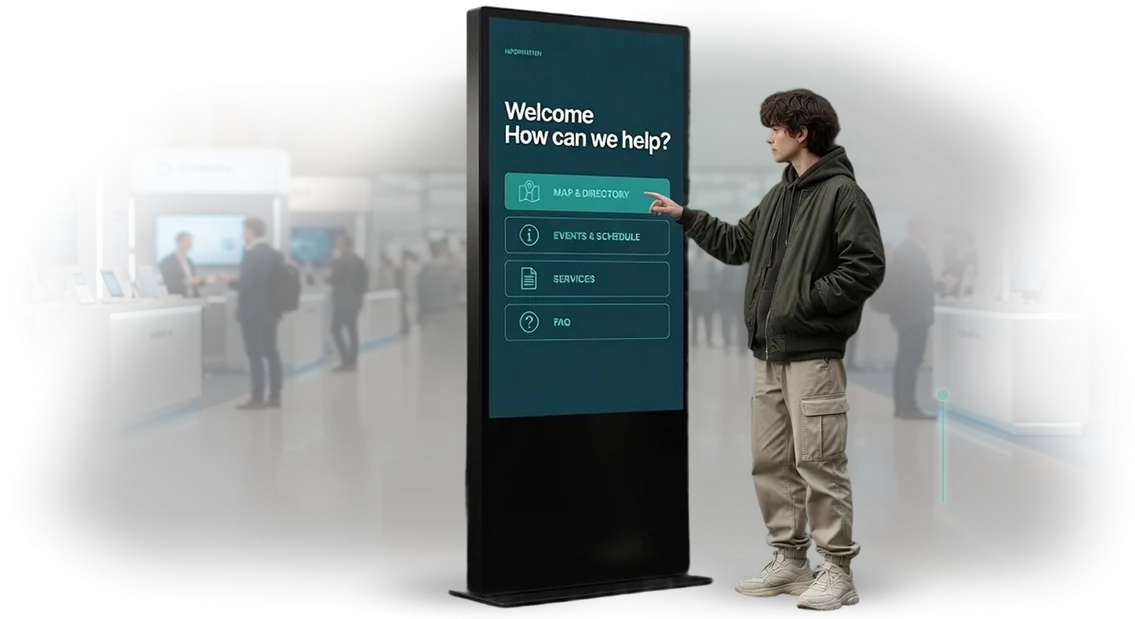
An interactive kiosk in the lobby removes the main pain point — long waiting. Visitors choose their doctor, convenient time, and see how many people are ahead of them.
Self-booking takes less than a minute, requires no staff assistance, and relieves the front desk: the administrator handles calls and complex requests instead of repeating the same thing ten times over.
We have been developing such solutions for service businesses for ten years and deliver turnkey interactive kiosks for veterinary clinics. We customize the interface for your clinic: add a list of doctors, services, promotions, and a location map. We install the kiosk, connect it to your booking system, and train your staff in one day.
You get a predictable patient flow and fewer people lost to waiting. The clinic looks modern and caring — and that's a direct path to repeat visits and recommendations among pet owners.
What the Kiosk Gives Visitors and Administrators
Visitors don't like queues and uncertainty, and administrators don't like routine. An interactive kiosk solves both problems: it turns standard operations into a self-service format. Guests get to their appointment faster, and staff spends less time on organizational matters.
Self-booking for an appointment lets a pet owner choose a convenient time and immediately reserve the visit. It's simpler than calling and relying on a "paper" schedule.
Data automatically enters the shared calendar, eliminating errors and overlaps, and the administrator doesn't need to waste time re-entering information.
The electronic queue removes anxiety in the waiting area. Visitors see their number and approximate time and can calmly wait anywhere in the clinic — they'll be called. This relieves the front desk and makes the appointment process clear.
Clinic navigation helps quickly find an exam room, analytical laboratory, or waiting area. For first-time visitors, this reduces stress, and for staff, it cuts down the number of "where is your...?" questions.
Freed-up time is redirected toward caring for pets and attentive communication with owners — that's what builds a clinic's reputation.
The main result is less load on the administrator and more time for quality service. Guests feel cared for, return, and recommend the clinic to friends. The kiosk pays off not just on installation day but works as part of the long-term impression of the clinic.
Interactive Kiosk Formats for Veterinary Clinics
Each zone of a veterinary clinic serves its purpose: the lobby should ease the anxiety of waiting, the reception should relieve the administrator, and a separate room should give the pet owner full information without rushing.
There is no one-size-fits-all kiosk: the format affects how a visitor interacts with the interface, how much time they're willing to spend there, and what actions they take.
We'll help you choose the right hardware configuration for your layout, patient flow, and usage scenario. Below is a basic comparison of three popular formats so you can see which option suits your clinic best.
| Kiosk format | For whom | What it gives the client |
|---|---|---|
| Floor-standing kiosk | Spacious lobby, high foot traffic, queue waiting | Draws attention, works as a mini-counter: booking, payment, certificates, clinic map. Reduces reception load and shortens the queue. |
| Wall-mounted info terminal | Narrow corridor, waiting room, areas near exam rooms | Takes minimal space, always in sight. Shows doctor schedules, promotions, reminds about visits — visitors find what they need without distracting staff. |
| Self-booking station | Reception overloaded during peak hours | Lets clients independently choose a time and doctor and book in a couple of taps. The administrator handles only complex questions. |
Choosing a format isn't a design question — it's a scenario question. If the kiosk isn't integrated into foot traffic flows, it won't be used even with a great interface.
We account for outlet locations, foot traffic, visitor height, the presence of assistants for elderly owners, and even how a dog might behave near the kiosk. That's why before development we visit the site or request a floor plan.
In the end, you get not just a "screen on a stand" but a tool integrated into the clinic's workflow: it shortens queues, collects booking data, and frees up staff. If you're unsure which format is right for you, we'll send a comparative estimate based on your layout.
How the Kiosk Launch Works: Step by Step
Launching a kiosk isn't a one-time equipment delivery but a clear process with fixed stages. We accompany the clinic at every step so you get a working tool, not a "raw" structure. Here's what it looks like in practice.
-
Brief and immersion in the task. We have a call, discuss patient flows in the clinic, typical questions, and bottlenecks.
We find out what the kiosk should solve: booking an appointment with a doctor, navigation to exam rooms, informing about prices, or entertaining while waiting.
-
Menu structure and logic. We design scenarios so that clients can easily use them even without staff guidance. We define the main screen and sections — from booking to clinic promotions.
-
Layout and design approval. We present the visual concept: color scheme, fonts, button placement. You make edits before approval — at this stage changes don't affect deadlines.
-
Content and filling. We collect information about doctors, services, prices, and working hours. You verify texts and rates before publication — all data remains correct at launch.
-
Assembly and testing on real equipment. We configure the kiosk for the touchscreen, check performance speed and behavior under peak loads. We make sure that even at rush hour there's no queue at the counter.
-
Installation and launch. We deliver the kiosk, connect it to the network and power supply, update the firmware. We conduct a short training session for the administrator — literally 15 minutes so your staff knows how to reboot the system and handle simple situations.
-
Support and development. After launch we stay in touch: we update prices and schedules upon your request and monitor stable operation. If the kiosk needs refinement for a new season — expanding the menu or adding a section — we do it under a separate scenario.
The entire path from brief to a working kiosk takes on average 2–3 weeks. You always know what stage the project is at and get a result that pays off by relieving administrators and speeding up booking.
What's Included in Delivery and Support
We've prepared a complete package for launching an interactive kiosk in a veterinary clinic. Below is the delivery and support scope so you know exactly what you get at each stage and what you're paying for.
What's included in delivery and support:
- Equipment — a touchscreen kiosk or panel installed in the waiting area or at the reception. We select it based on room size and visitor flow, and handle installation and connection.
- Interface development — we create screens for your tasks: appointment booking, service catalog, price list, doctor information. The design matches the clinic's brand style, and navigation is clear even for those seeing a kiosk for the first time.
- Content and filling — we help gather information about services, prices, and promotions. We prepare the structure and texts, upload photos and descriptions. You get a kiosk ready to work, not an "empty shell."
- Staff training — we conduct a short training for administrators and doctors: how to use the kiosk, how to change information, what to do in unusual situations. This takes no more than an hour but saves you from a flow of questions in the first days.
- Technical support — available by phone and messengers during working hours. We help with settings, update content, and fix issues. If needed, we connect remotely and resolve the matter the same day.
- Warranty and development — the equipment and work are covered by a warranty. After a year or two, you can update the interface or add new features without replacing the kiosk itself — the modular structure allows it.
What does this mean for your clinic? You keep the entire process under control: from the first layout to daily kiosk operation.
Staff isn't distracted by technical issues, visitors use the kiosk without administrator assistance, and you get a tool that saves time and increases bookings.
Real Example: We Cut Waiting Time in the Lobby
The lobby of a veterinary clinic is where the decision about returning is made. Queues and waiting irritate the owner, the pet, and the staff.
In the VetLife network this was especially noticeable: at peak times up to ten people gathered at the counter, some bookings fell through, and administrators worked themselves to exhaustion.
We installed interactive kiosks in the lobbies: self-booking, live doctor schedules, visit reminders, and navigation to exam rooms. No one needed to learn the technology — guests figured it out within a day.
What changed after implementation
- Average waiting time in the queue dropped from 25 to 8 minutes.
- Missed appointments decreased by a third — the kiosk reminds about visits in advance.
- Reception load during peak hours halved.
- The share of repeat visits grew by 18% — comfort is remembered.
Network manager's testimonial
"Rush hour stopped being chaos. Owners book themselves, see their appointment status, and administrators answer real questions. We measured the result: waiting time was cut threefold.
The kiosks quickly justified the investment, so now they operate in all five branches" — Anna Kovaleva, Managing Director of the VetLife network.
The VetLife case shows that interactive kiosks eliminate queues and give staff time back for real work. The same result is achievable without restructuring the clinic — starting with a single lobby.
Answering Frequently Asked Questions About Kiosks
Introducing a kiosk into a veterinary clinic raises questions — and that's normal. Most often owners worry that the equipment will break down at the worst possible moment, that elderly clients won't figure out the screen, and that the launch will interrupt patient reception. We address these concerns in order.
What if the kiosk stops working?
Breakdowns are rare — we use professional equipment and a well-tuned server architecture. But if a failure occurs, the system is preconfigured for remote monitoring: we see the problem immediately and resolve it as quickly as possible.
All work is covered by warranty, and client and booking data is duplicated, so nothing will be lost.
Is the kiosk difficult for elderly clients to use?
We build the interface with large buttons, clear prompts, and a minimal number of steps — booking takes less than a minute even for those seeing a touchscreen for the first time.
Staff training is already included in the project, so reception employees can assist visitors in the first weeks. The kiosk is perceived as convenience, not a barrier.
Will we have to pause patient reception during launch?
No. We perform installation and configuration during low-traffic hours or after the clinic closes, so patient reception isn't interrupted.
For some time, the usual reception counter operates alongside the kiosk — clients and staff transition to the new format gradually, without chaos or queues.
Still have doubts — ask your question during a consultation. We'll explain how the kiosk will fit into your clinic and show implementation examples from similar projects.How to Choose a Format for Your Task
The choice comes down to three questions: how much space you have in the waiting area, what visitor flow you get during peak hours, and how you want to book clients — self-service or through an administrator.
The answers determine how many kiosks you need, what screen size works best, and what interaction scenarios to build in.
If the waiting area is small and 2–4 owners with pets arrive at a time, one compact kiosk is enough. It doesn't block passage, and clients can fill out a pet card or browse services while waiting for the appointment.
For clinics with a constant flow of 10+ people per hour and multiple exam rooms, it's better to install two devices — this eliminates queues and reduces the administrator's load.
The booking scenario also affects the format. The kiosk can provide self-booking with a choice of specialist and time — convenient for those who arrive without an appointment.
You can also create an interactive service catalog with prices and care recommendations so visitors explore information without staff assistance.
| Format | For whom | What it gives the clinic |
|---|---|---|
| One kiosk at the counter | Small clinics, up to 6 exam rooms | Fast booking without queues, administrator relief |
| Two kiosks in the waiting area | Clinics with a flow of 10+ people per hour | Minimal queues, clients engaged with useful content |
| Kiosk with self-booking module | Clinics with online scheduling | Fewer phone calls and "just checking" visits |
| Service catalog kiosk | Clinics with additional sales | Revenue growth through informing about extra services |
We help you choose a configuration after a short audit: we review the layout, number of exam rooms, peak hours, and typical visitor questions.
Based on that, we propose a format that fits your space and solves a specific task — from self-booking to increasing additional service sales.
Arrange a Kiosk Demonstration
Clients walk into a veterinary clinic with questions about vaccinations, bookings, prices — each such question distracts administrators from their work. An interactive kiosk answers standard requests itself, tells about services, and helps book an appointment. To see how it works in your specific case, arrange a demonstration.
The demonstration takes 30 minutes and can be held online or at your clinic. You'll see how the kiosk interacts with visitors and immediately assess the convenience.
After submitting a request to our team, you'll receive:
- A consultation on your clinic's tasks — we'll analyze which scenarios are useful for your visitors.
- A kiosk demonstration with real examples: booking a vet appointment, vaccination information, navigation to exam rooms.
- A project estimate: timeline, cost calculated after audit, and implementation plan tailored to your clinic.
- Answers to questions about integration with your internal booking and payment system.
- Recommendations on kiosk placement — to get maximum return from the device.
- Within a day after the call — a commercial proposal with precise figures.
We work remotely and adapt the solution to your processes, so the demonstration isn't a presentation but a conversation about your specific situation. Leave a request — we'll show how the kiosk will shorten queues, remove routine from administrators, and increase visitor loyalty. No obligations: you simply see the solution in action.