

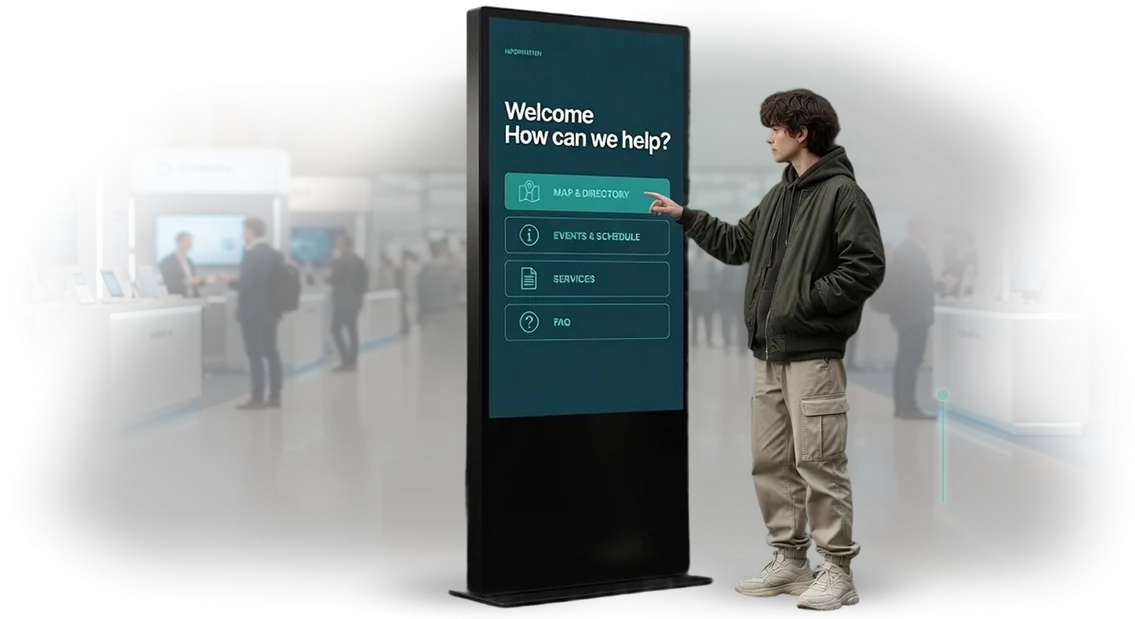
Self-service shredding kiosk Singapore: why your business needs it
The problem is familiar to anyone who works with documents: modern customers and employees no longer want to wait for someone to help them destroy paper.
Privacy has become a matter of principle — especially in Singapore, where an information leak hits both reputation and revenue. If you do not have a self service shredding kiosk Singapore, visitors silently go to those who do.
Every day you lose those who came for quick disposal: outdated reports, bank statements, HR documents. Waiting in line, having to call a manager, and being unable to drop off paper after hours — all of this turns into an abandoned service.
Each such departure is not just lost revenue, but also negative word-of-mouth that spreads faster than you can react.
A self-service shredding kiosk Singapore puts control back in the hands of the customer. The customer loads documents, starts the shredding process, and receives confirmation that the papers can no longer be read.
For a business, this is simultaneously a new service, an additional stream of visitors, and a strong argument for your commitment to data protection. The kiosk works around the clock and does not require hiring a dedicated employee.
We design, manufacture, and install such kiosks for your specific task, and we also offer kiosk rental — with equipment, maintenance, and software. At the start, we calculate payback based on your numbers: average receipt value, traffic, utilization.
We’ll show when your investment will pay off and configure the kiosk so that it earns money instead of just taking up floor space.
What a self-service kiosk gives the business owner
A business owner in Singapore is constantly looking for ways to increase turnover without increasing costs. A self-service document shredding kiosk is a ready-made service the customer pays for themselves.
This format is already familiar from global services such as Shred-it, and at your location it becomes an automatic source of income and a sign of care for privacy.
Revenue growth
Every shredding session is a new transaction that requires no staff involvement. The kiosk operates 24/7: the customer brings documents, pays by card, and receives a guarantee of secure disposal.
In our projects, at high-traffic locations such a kiosk brings in a monthly income calculated after audit and pays for itself within 8–12 months.
Customer loyalty
When a company shows it cares about personal data, trust grows. The guest watches their documents being shredded right before their eyes and remembers the responsible approach. This turns a one-time visit into a regular one — the person returns to you for other services.
Staff savings
Accepting paper for shredding does not require someone behind the counter. The guest selects the mode, pays, and receives a receipt. Employees spend the freed-up hours on core customers instead of routine tasks. A single kiosk saves up to 8–10 person-hours per day.
Image and sustainability
The kiosk looks like part of a modern office: clean, fast, and environmentally responsible. Paper goes to recycling instead of the general trash — this supports the company’s environmental policy. Partners and clients see that you work to global standards.
Analytics for decisions
We connect the kiosk to your accounting system and open a dashboard with reports: number of sessions, peak hours, average receipt value. This data helps adjust pricing and equipment placement. You stop guessing what works and rely on facts.
Implementation formats: from rental to turnkey purchase
Some clients need a document shredding kiosk for a single event or a seasonal promotion; others need an ongoing service across dozens of locations. Running both scenarios with the same investment is unwise: you overpay where traffic is low and miss out on profit where it is high.
That is why we have prepared three implementation formats — from rental to full purchase — including for the Singapore market with its dense flow of offices and shopping centers.
Most importantly, together with you we will assess the kiosk’s utilization and average receipt value, rather than simply offering the most expensive option. If you are unsure, start with a rental, and once you see the real numbers, switch to a more advantageous format. Below is a comparison across key questions.
| Format | Who it is for | What the client gets |
|---|---|---|
| Rental | Shopping centers, offices, banks with irregular foot traffic | Low entry threshold, monthly payments, demand test without capital investment; delivery, installation and maintenance are included |
| Installment plan | Companies that want their own kiosk without a large one-time payment | The kiosk is installed immediately, payments are spread out, and service revenue starts covering them from the first month |
| Turnkey purchase | Chains, operators, investors with confident traffic | Full ownership: equipment, built-in software, staff training and service; revenue does not need to be shared, payback is usually 6–9 months |
With a rental, you test the hypothesis within 1–2 months, and a turnkey purchase turns the kiosk into a margin-generating business. In any format, we stay in touch: we monitor operations, update the embedded system, and help with consumables.
How launch works: from brief to first load
We have launched dozens of kiosks for various tasks, including self-service document shredding, and we know that a project’s success depends on a clear process. Instead of a black box, you get a transparent plan with fixed deadlines and control at every stage.
Launch typically takes 4 to 8 weeks depending on complexity. Your involvement is only needed at key points: approving requirements, layout, and accepting the result. Here are the seven steps the project goes through from brief to first load.
- Brief and task audit. We analyze what operations the kiosk must perform, who the user will be, and how the device will fit into your customer flow.
- Implementation plan and estimate. We fix the functionality, timeline, and budget. You receive a document that makes it easy to monitor progress.
- Layout and logic approval. We show a prototype of the screens and operating scenarios, and make edits before assembly starts.
- Equipment assembly and setup. We select professional components for your location, from vandalism protection to payment integration.
- Software development and testing. We check all scenarios — from document intake to receipt issuance and actions in unexpected situations.
- Pilot launch and training. We install the kiosk at your site, run test operations with your team, and train staff.
- Support and development. After launch, we stay in touch: technical assistance, updates, and refinements for new tasks.
As a result, you get a working kiosk that delivers value from day one, not just a technical solution. Each stage ends with a concrete deliverable, so you always know what is happening now and what comes next.
What is included in delivery and support
We are responsible for a turnkey result, so the delivery includes everything needed to launch a self-service document shredding kiosk at your site. It is a complete solution: from equipment to daily support, with no need to delve into technical details.
Delivery set:
- Equipment: the kiosk itself with a secure paper compartment and a system that shreds documents to an unreadable state.
- Software: an intuitive interface for customers, automatic session tracking, and reporting for you.
- Installation and connection: our engineers deliver, install, and test the kiosk at your site.
- Staff briefing: short training for your employees on how to accept payment, replace consumables, and handle common issues.
- Warranty and service: official warranty on equipment and software, regular maintenance.
- 24/7 support: a dedicated communication channel with our team for urgent situations.
- Documentation: simple manuals for the operator and for customers using the kiosk.
This package covers all your concerns: you do not need to find contractors separately or dive into technical details. You get a working service, and we stay in touch after launch.
Support includes preventive visits, software updates, and replacement of wear parts. If a kiosk needs attention, you let us know — we take the task into work and solve it within the agreed timelines.
As a result, the kiosk runs reliably, and your customers get a fast, secure way to destroy documents at any time.
Case study: how we deployed the service and increased revenue
When a network of business centers in Singapore reached out to us, the problem was familiar: tenants did not know where to put confidential paper. Standard bins did not guarantee destruction, and a specialist visit took several days. Some documents were simply thrown away — creating a risk of leaks and fines.
We proposed an automatic document shredding kiosk right on the ground floor. An employee taps their card, gets a bag, drops the paper into the intake — the kiosk shreds it immediately and issues a report for the company.
The managing organization sees statistics for each tenant, and employees save time on trips to the records department.
The results for the first six months are visible and measurable. The average rental transaction value grew by 12% — the service became part of the “safe office” package and is now included in negotiations with new tenants.
Lines at the reception and meeting rooms were cut in half: the habit of rushing to the operator disappeared, and documents are destroyed in a minute.
The kiosk paid for itself in 7 months, and by the end of the year contract renewals grew by almost a third — the building owner gained a new argument in the competitive struggle.
We are now rolling out this solution in business centers, banks, and government institutions. ShredStop, one of our first clients, also noted a reduced load on staff: no need to track pickup orders or oversee contractors.
All analytics are in the dashboard, and satisfied tenants are more willing to renew contracts. This confirms that a properly configured kiosk is not just another gadget, but a tool that brings both revenue and order.
How to choose the right format for your business?
The choice between rental, purchase, and turnkey development depends not on technical details, but on your business goal. If you need a kiosk for a one-time event or to test demand, rental reduces risk and requires no investment in maintenance.
If you plan to earn steadily from the service over several years, buying a ready-made solution pays for itself faster and gives you full control.
But when you need a kiosk with a unique design, integration with your CRM, or special security requirements, only turnkey development fully solves the task.
To avoid mistakes, assess three things: customer flow, payback period, and support resources. For a small office or business center, a single rented unit is enough — you pay for the result, and we handle service and updates.
For a branch network or a busy lobby, buying is more advantageous: the cost of one kiosk is quickly covered by revenue, and repeat customer visits become your stable income.
Turnkey should be ordered when standard solutions do not solve the task — for example, when you need to integrate the kiosk into an existing service area or meet special confidentiality standards.
The right format is one that brings profit in the first months rather than creating new complications. Our engineers help select an option for your specifics: we calculate the load, suggest a model with the required capacity and speed, and prepare a launch plan.
You do not overpay for unnecessary functionality and do not risk losing technical support at the most crucial moment.
One of our clients in Singapore started by renting a kiosk in a business center — within a month it was clear that demand was stable, and he switched to purchase.
The result: the same money that would have gone into useless advertising turned into an asset of his own, paying for itself in six months.
We suggested this path during a consultation, took his traffic into account, and prepared a calculation rather than simply selling a box.
Contact us — in 30 minutes we will analyze your scenario and give you the exact cost calculated after audit and timelines for each of the three formats. You will get a clear recommendation: what is more profitable right now — rent, buy, or build turnkey. The consultation is non-binding, but it will save you from a mistake that costs many times more.
Frequently asked questions about document shredding kiosks
A document shredding kiosk is self-service equipment that operates 24/7 and does not require staff presence.
If you are choosing one for a shopping center, bank, or government institution in Singapore, it is important to understand how common concerns are addressed: breakdowns, security, payback, and space.
What happens if the kiosk breaks down?
The kiosk is not a black box. We can see its status, fill level, and errors remotely. In the event of a malfunction, an engineer visits or resolves the problem online within a few hours. Spare parts and consumables are kept at a local warehouse — downtime does not exceed 1–2 days.
The equipment warranty is 12 months; afterwards, there is a service contract. Your customers will not notice a failure: while repairs are underway, we promptly replace the device with a backup unit.
How secure is document destruction?
Destruction happens right inside the kiosk: paper is cut into tiny pieces that cannot be reassembled. Before that, data is encrypted and transmitted only to a secure server. We follow the NAID standard — international requirements for secure information destruction.
This means that a passport copy, contract, or bill left by a customer will not leak or be used by fraudsters.
How quickly will the kiosk pay for itself?
Payback depends on traffic. If 50–100 people pass through the location per day, the kiosk pays for itself in 8–14 months.
Sources of income: a session fee (cost calculated after audit per page or document), on-screen advertising, and sales of compacted paper briquettes to recyclers.
On average, a kiosk brings in 2–3 times more than a coffee machine — for the same space and electricity costs.
What are the space requirements?
All you need is 2–3 square meters of free space, a standard 220V outlet, and an internet connection (Wi-Fi or wired). Quiet operation allows the kiosk to be placed in a food court area or near the entrance — this increases its visibility and revenue.
We handle delivery, installation, and setup — the kiosk is fully ready to accept documents when it opens.
Leave a request — we will calculate the economics for your traffic
Leave a request, and we will calculate the economics for your traffic. A self-service document shredding kiosk is a service customers pay for on the spot, and you do not need to hire staff.
The profitability of such a unit depends directly on the flow of visitors at your location, so we first calculate how many people will use the service and only then propose a format.
Our experts will select a solution for your location within one business day and provide a commercial proposal with transparent numbers.
We have already launched such kiosks and know how quickly they achieve payback in different places — from business centers to shopping complexes.
After your request, you will receive:
- an individual payback calculation based on your traffic and location;
- format selection: purchase, rental, or revenue sharing;
- consultation on legal aspects of document shredding in Singapore;
- a launch plan from scratch in 4–6 weeks;
- post-launch support and remote monitoring;
- real examples of profitability at similar locations.
We work with professional equipment and take on all setup, launch, and support. Leave a request — we will show when the kiosk will pay off in your conditions and how much it will generate per month.